Seven Seeds Review: Thirty-Four People Wake From Cryosleep to Find That the Future Destroyed Human Civilization
by Yumi Tamura
Read the first volume. If it doesn't hook you, put it down. It'll hook you.
Buy Seven Seeds on Amazon →*Affiliate link — I earn a small commission at no extra cost to you.
Quick Take
- Multiple groups of preserved young people wake in the future and must survive in a Japan that has been completely reshaped by catastrophe
- Yumi Tamura's survival science fiction — the natural world after humans is as detailed and terrifying as any creature design
- 35 volumes, complete; one of shojo manga's most ambitious sci-fi works
Who Is This Manga For?
- Readers who want long-form survival science fiction with ensemble character development
- Fans of post-apocalyptic manga with genuine natural world detail
- Anyone who wants completed shojo manga in a genre that shojo rarely occupies
- Readers who can commit to 35 volumes of gradual world discovery
Content Warnings & Age Rating
Age Rating: T (Teen) Content Warnings: Survival situations and death, isolation, some intense content in later volumes
Survival manga — death occurs but not gratuitously.
Yu's Rating
| Category | Score |
|---|---|
| Story Depth | ★★★★★ |
| Art Style | ★★★★☆ |
| Character Development | ★★★★★ |
| Accessibility for Non-Japanese Readers | ★★★★☆ |
| Reread Value | ★★★★☆ |
Story Overview
The Japanese government knew a catastrophe was coming. They selected young people across Japan — trained some of them, preserved all of them — in a project called Seven Seeds. They wake in the future to find Japan transformed: changed geography, extinct and new species, no trace of human civilization.
Five teams. Different regions. Different levels of preparation. They do not know where each other is or if anyone else survived.
The survival situations the manga creates are drawn from genuine knowledge of ecology and biology — the new species that evolved after humans are imagined with scientific consistency. The character development across 35 volumes accumulates into one of shojo's most complete ensemble arcs.
Characters
Natsu Iwashimizu — The main protagonist of Team Summer B — the unprepared group; her growth from terrified to capable is the series' primary character arc.
Hana — Team Summer A's main character; her determination and survival knowledge provide a contrast to Natsu's arc.
Arashi — A character whose search for someone he loves across the transformed world is the series' most sustained romantic subplot.
Ryusei — Team Summer B's experienced guide; his specific approach to survival training and his relationship with Team B provides the series' best early dynamic.
Art Style
Tamura's art handles both the human character work and the environmental design effectively — the transformed Japan environments, particularly the new ecosystem elements, are drawn with the specificity of someone who genuinely thought about what would evolve in human absence. Character expressions across the large cast are consistent and distinguishable.
Cultural Context
Seven Seeds engages with the Japanese concept of social selection — which people are preserved and why — and the government's management of catastrophe as a planning exercise. The selection criteria for the Seven Seeds project reveal Japanese anxieties about what "survival value" means.
What I Love About It
The Team Summer B dynamic. They are explicitly the unprepared group — selected not for survival skills but as a control against which the trained groups are measured. The specific humiliation of being told you are the group nobody expected to survive, and what the members of that group do with that information, is the series' most interesting character premise.
What English-Speaking Fans Say
Seven Seeds has a devoted Western fanbase among shojo science fiction readers — a demographic that manga serves infrequently. The ecological detail is praised specifically. The 35-volume length is the primary barrier cited for new readers.
Memorable Scene ⚠️ Spoiler Warning
The revelation of what happened in Ryuguu Shelter — the underground facility that some of the seeds' predecessors occupied — is the series' most significant historical revelation and among manga's finest survival horror sequences.
Similar Manga
- Nausicaa — Post-catastrophe ecology, similar world-building depth
- Attack on Titan — Post-catastrophe survival, secrets about what happened
- The Drifting Classroom — Children surviving in destroyed world
- 7 Seeds — This is it
Reading Order / Where to Start
Volume 1 — the multiple team structure establishes quickly.
Official English Translation Status
Not available in English. Seven Seeds has not been officially licensed in English print.
Pros & Cons
Pros
- 35 volumes, complete
- Ecological world-building is exceptional
- Ensemble character development across the full run is sustained
- Shojo sci-fi at its most ambitious
Cons
- 35 volumes is a very significant commitment
- Multiple team structure requires tracking across simultaneous storylines
- Pacing is slow in some mid-series arcs
Format Comparison
| Format | Notes |
|---|---|
| Individual Volumes | VIZ Media; standard |
| Digital | Available |
Where to Buy
No English release yet. That just means you find it before everyone else does.
This post contains affiliate links. If you purchase through these links, I may earn a small commission at no extra cost to you. As an Amazon Associate, I earn from qualifying purchases.
*Affiliate link — I earn a small commission at no extra cost to you.
More Manga You Might Like
Sci-Fi
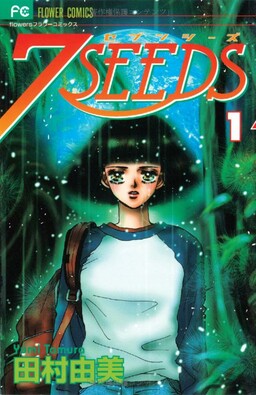
7SEEDS
Yu's review of 7SEEDS — after a meteor wipes out civilization, young people cryogenically frozen by a secret government project wake up in a transformed Japan with no instructions. Yumi Tamura's 35-volume survival epic about ordinary, frightened people who were never asked if they wanted to save the human race.
Sci-Fi / Fantasy
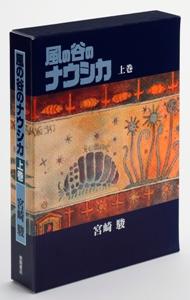
Nausicaa of the Valley of Wind
Yu's review of Nausicaa of the Valley of Wind — the manga Hayao Miyazaki serialized over twelve years, extending far beyond the film's scope: a post-catastrophic world where toxic forests cover Earth, and a princess who understands the insects that everyone else fears.
Sci-Fi / Slice of Life
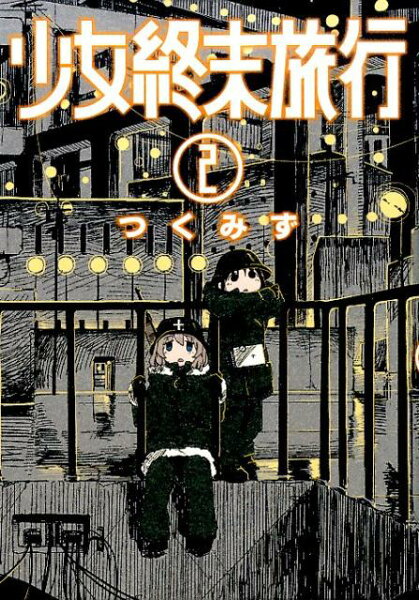
Girls' Last Tour
Yu's review of Girls' Last Tour — two girls travel through a massive post-apocalyptic city on a kettenrad, eating whatever they find, watching it snow, and thinking about what it means to be alive when almost nothing is left.
Sci-Fi
Yokohama Station SF
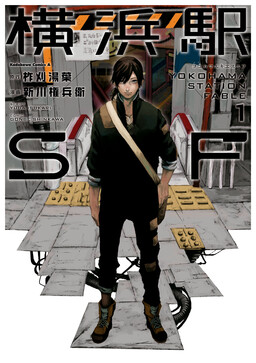
Yu's review of Yokohama Station SF — Yokohama Station has been self-expanding for centuries and now covers all of Honshu; the world outside is called the Outside; Hiroto, who has never been inside the Station, gets in; manga adaptation of Yuba Isukari's web novel about an infrastructure apocalypse.
Sci-Fi / Thriller
Future Diary
Yu's review of Future Diary (Mirai Nikki) — Yukiteru Amano is chosen as one of twelve participants in a death game where each person receives a diary that predicts their own future; the last survivor becomes God; the series is a thriller structured around information asymmetry and the uniquely disturbing character of Yuno Gasai.
Sci-Fi / Action
Eden: It's an Endless World!
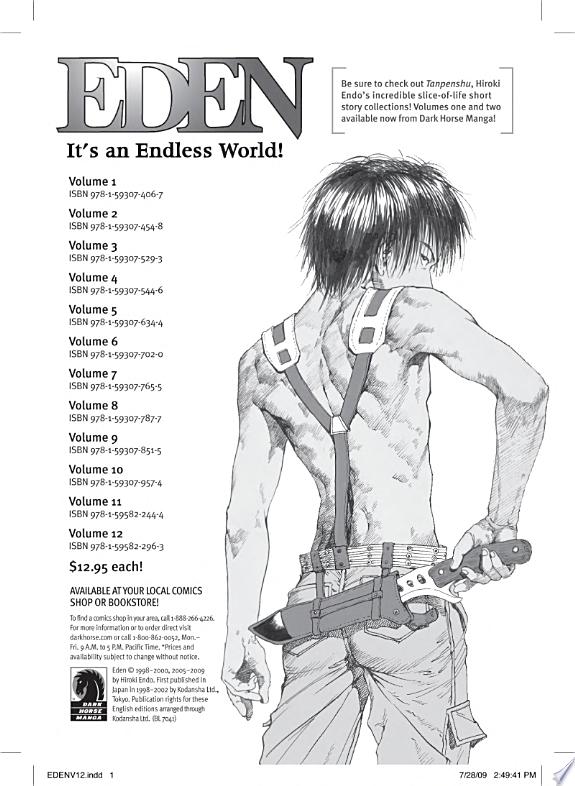
Yu's review of Eden: It's an Endless World! — a plague destroyed most of humanity; a boy named Elijah grows up in the aftermath, in a world run by the Propater organization and his father's network of resistance, becoming something neither of them intended.
Written by
Yu
Manga Enthusiast from Japan
I grew up in Japan and manga literally saved me during a tough time in elementary school. My English isn't perfect, but my love for manga is real — and I want to share it with you.