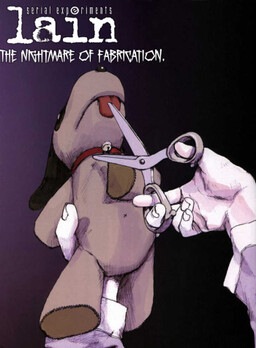
Serial Experiments Lain Review: A Girl Becomes the Network in a Manga That Still Feels Ahead of Its Time
by Chiaki J. Konaka (Concept) / Yoshitoshi ABe (Art)
*Affiliate link — I earn a small commission at no extra cost to you.
Quick Take
- The manga adaptation of one of the most influential psychological sci-fi anime, told from a different perspective than the original — Yoshitoshi ABe's art gives Lain's dissolution a visual language that is distinct from the anime
- The themes — identity, the internet as an alternative reality, the question of what constitutes a self — have only become more relevant since 1998
- 1 volume complete; essential for anyone interested in Lain and the ideas it explored
Who Is This Manga For?
- Readers interested in early cyberpunk/psychological sci-fi that remains relevant
- Anyone who loved the Serial Experiments Lain anime and wants to see ABe's visual take on the material
- Fans of manga that engage seriously with questions of identity and the internet
- Readers who want complete, short manga with dense thematic content
Content Warnings & Age Rating
Age Rating: T+ (Older Teen) Content Warnings: Psychological horror involving identity dissolution; reality distortion; suicide themes including a classmate's suicide that opens the story; existential dread as the sustained atmosphere
The T+ rating is accurate. The content is psychologically demanding.
Yu's Rating
| Category | Score |
|---|---|
| Story Depth | ★★★★★ |
| Art Style | ★★★★★ |
| Character Development | ★★★★☆ |
| Accessibility for Non-Japanese Readers | ★★★★☆ |
| Reread Value | ★★★★★ |
Story Overview
Lain Iwakura is a withdrawn middle school girl who receives an email from a classmate who has died. The classmate's message says she has not died; she has simply abandoned her body. Lain, who barely uses technology, becomes increasingly drawn into the Wired.
The manga adaptation by Yoshitoshi ABe (who designed the original anime's characters) tells the story from a different perspective — it is not a direct adaptation but a parallel interpretation of the same material. Lain's absorption into the Wired, her relationship with her family, and the erosion of the distinction between her offline and online self develop across the single volume.
Characters
Lain Iwakura — ABe's visual design — the enormous eyes, the specific quietness of her face — expresses the interior experience of a character who is more present inside networks than in physical space. Her quality is dissolution: she becomes progressively less located in any single reality.
Art Style
ABe's art for Lain is among the most distinctive visual languages in manga — his character design philosophy emphasizes a certain uncanny quality in faces that suits the material precisely. The technological environments are drawn with deliberate blurriness; the ordinary domestic spaces are too sharp. The visual emphasis inverts what you expect.
Cultural Context
Serial Experiments Lain was created at the moment the internet was becoming ubiquitous in Japan — the mid-1990s context of the work is visible in the specific anxieties it processes. That these anxieties have only intensified in the subsequent decades makes the material feel prescient rather than dated.
What I Love About It
The pages where the distinction between the Wired and the ordinary world becomes visually unclear — where ABe's art stops signaling which is which — are the manga adaptation's most distinctive contribution to the Lain material. The anime uses sound design for this effect; the manga uses visual ambiguity.
What English-Speaking Fans Say
Western readers describe Serial Experiments Lain manga as the companion piece to the anime rather than a replacement — the two works illuminate each other. ABe's art is consistently cited as the manga's primary reason to engage with it separately from the anime.
Memorable Scene ⚠️ Spoiler Warning
The sequence where Lain encounters another version of herself in the Wired — and the specific way this encounter is depicted visually — is the manga adaptation's clearest departure from the anime's approach and demonstrates what a manga-specific reading of the material produces.
Similar Manga
- Ghost in the Shell — Identity and consciousness in networked reality, more serious tone
- Chobits — Network consciousness, lighter approach
- Texhnolyze — Psychological dissolution in a different setting
- Blame! — Network-connected world gone wrong, different register
Reading Order / Where to Start
From the beginning — the story requires sequential reading.
Official English Translation Status
Dark Horse Comics published this single volume. Complete and available.
Pros & Cons
Pros
- Yoshitoshi ABe's visual interpretation of the material is essential
- The themes have aged into relevance rather than out of it
- Dense in a way that rewards rereading
- Complete in a single volume
Cons
- Requires familiarity with the anime to fully appreciate the differences
- The dense psychological content demands patience
- Dark Horse's edition may be harder to find
Format Comparison
| Format | Notes |
|---|---|
| Individual Volume | Dark Horse Comics; single volume |
| Digital | Limited availability |
Where to Buy
Get Serial Experiments Lain on Amazon →
This post contains affiliate links. If you purchase through these links, I may earn a small commission at no extra cost to you. As an Amazon Associate, I earn from qualifying purchases.
*Affiliate link — I earn a small commission at no extra cost to you.
Written by
Yu
Manga Enthusiast from Japan
I grew up in Japan and manga literally saved me during a tough time in elementary school. My English isn't perfect, but my love for manga is real — and I want to share it with you.
Disclosure: This post contains affiliate links. As an Amazon Associate, I earn from qualifying purchases at no extra cost to you.