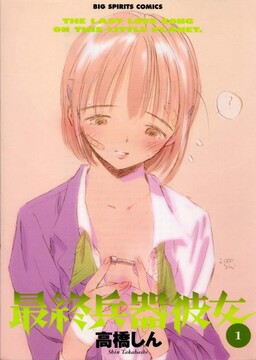
Saikano Review: She, the Ultimate Weapon — the Girl You Love Is Also a Country's Last Hope for Survival
by Shin Takahashi
Read the first volume. If it doesn't hook you, put it down. It'll hook you.
Buy Saikano on Amazon →*Affiliate link — I earn a small commission at no extra cost to you.
Quick Take
- The anti-war manga told as a love story — Saikano uses a girl's transformation into a weapon to make the cost of war personal rather than abstract
- Takahashi's prose style (the manga reads more like illustrated diary entries than conventional manga) creates an intimacy that makes what happens to Chise feel specific rather than allegorical
- 7 volumes complete; one of the most emotionally devastating manga available in English, and one of the most honest about what war costs
Who Is This Manga For?
- Readers who want sci-fi manga with genuine emotional ambition
- Anyone interested in the intersection of romance and war narrative
- Fans of completed manga that are willing to go all the way with their premise
- Readers who can accept significant emotional difficulty in exchange for exceptional sincerity
Content Warnings & Age Rating
Age Rating: T+ (Older Teen) Content Warnings: War including civilian casualties; Chise's progressive bodily transformation into a weapon system (body horror); death of significant characters; emotional violence throughout; some sexual content; the series does not provide comfort
The T+ rating understates the emotional difficulty. The content is not gory but the sustained tragedy is significant.
Yu's Rating
| Category | Score |
|---|---|
| Story Depth | ★★★★★ |
| Art Style | ★★★★☆ |
| Character Development | ★★★★★ |
| Accessibility for Non-Japanese Readers | ★★★★★ |
| Reread Value | ★★★★☆ |
Story Overview
Shuji and Chise are awkward with each other, newly dating, figuring out what they mean to each other. Chise is clumsy. She burns things when she tries to cook. She does not know how to be a girlfriend.
She is also, as Shuji discovers during an air raid, the ultimate weapon — a girl whose body has been modified with weapon systems that activate when her country is threatened. She can destroy aircraft, cities, armies. She has no control over when this happens.
The war escalates. The modifications spread. Chise becomes less girl and more weapon, the human parts receding as the military systems expand. Shuji stays. The series is about what it means to stay.
Characters
Chise — Her quality is the specific combination of her ordinariness and her transformation. She was never exceptional before she became a weapon; she was just a girl who liked Shuji. As the weapon systems take more of her, what remains of Chise — her voice, her specific humor, the way she talks about small things — becomes increasingly precious and increasingly fragile.
Shuji — His narrative voice is the series' primary register. He is not heroic; he is selfish and imperfect and does things that are wrong. His decision to stay with Chise despite what she is becoming is not portrayed as simple love — it is complicated and honest in ways that make it meaningful.
Art Style
Takahashi's rough, sketch-like style is unusual and suits the material — the war destruction and Chise's weapon forms are rendered with the same hand that draws their awkward domesticity, which creates the tonal unity the series needs. The weapon sequences are not glorified; they look like damage.
Cultural Context
Saikano is specifically about Japan and war in ways that resonate with the country's postwar relationship to its own military history. The unnamed war and unnamed enemy are deliberate absences; the series is about what war does to specific people rather than which war or who is right.
What I Love About It
The chapters where Chise and Shuji are simply together — in the domestic space between her deployments, doing ordinary things — are the series' most devastating content because of what surrounds them. Takahashi understood that the relationship had to be real for the tragedy to matter.
What English-Speaking Fans Say
Western readers describe Saikano as the manga that made them cry most and the one they think about longest afterward. The ending is described as the only possible ending — not satisfying, not comforting, but the only honest conclusion for this specific story.
Memorable Scene ⚠️ Spoiler Warning
The late scene where Chise is barely Chise anymore and tries to do something simple — to be a girlfriend in the way she was before — and what this costs her and what Shuji sees, is the series' most complete statement of its subject. It comes near the end and is not recoverable from.
Similar Manga
- Nausicaa of the Valley of the Wind — War and its cost, different register
- Grave of the Fireflies — (manga adaptation) War's civilian cost, similar emotional register
- From the New World — Humans modified beyond humanity, different structure
- Mobile Suit Gundam: The Origin — War and its cost at larger scale
Reading Order / Where to Start
Volume 1 — Shuji and Chise's awkward beginning, and what Shuji discovers.
Official English Translation Status
VIZ Media published all 7 volumes. Complete and available.
Pros & Cons
Pros
- One of the most emotionally honest treatments of war cost in manga
- The relationship is real enough to make the tragedy matter
- Complete in 7 volumes with a fully realized conclusion
- Takahashi's prose style is distinctive and effective
Cons
- Emotionally devastating in ways that some readers will find too much
- The T+ rating doesn't fully prepare readers for the sustained tragedy
- No comfort is offered
Format Comparison
| Format | Notes |
|---|---|
| Individual Volumes | VIZ Media; complete |
| Digital | Available |
Where to Buy
Read the first volume. If it doesn't hook you, put it down. It'll hook you.
This post contains affiliate links. If you purchase through these links, I may earn a small commission at no extra cost to you. As an Amazon Associate, I earn from qualifying purchases.
*Affiliate link — I earn a small commission at no extra cost to you.
More Manga You Might Like
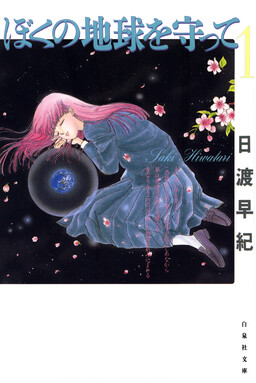
Sci-Fi / Romance
Please Save My Earth
Yu's review of Please Save My Earth — Alice Sakaguchi and six other teenagers in contemporary Tokyo discover they are the reincarnations of seven alien scientists who lived on the Moon observing Earth; their past life memories surface through shared dreams; past life emotions and relationships carry into present lives in ways that are not always welcome.
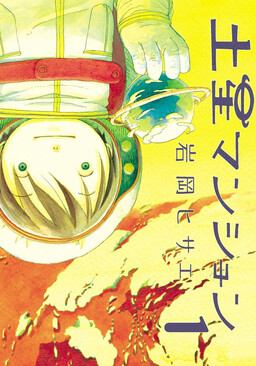
Sci-Fi
Saturn Apartments
Yu's review of Saturn Apartments — humanity lives in a ring habitat orbiting Earth; the surface is a nature preserve; Mitsu is a young window washer who cleans the outer windows of the habitat; his father was also a window washer and disappeared; Hisae Iwaoka's quiet science fiction manga about class, memory, and the view from the outside.
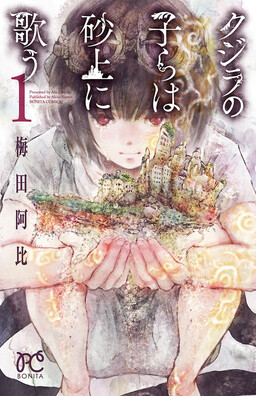
Sci-Fi / Fantasy
Children of the Whales
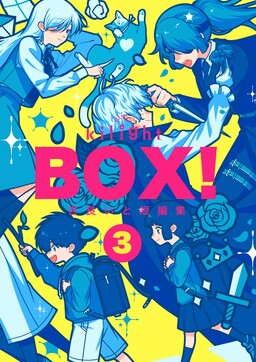
Yu's review of Children of the Whales — the Mud Whale drifts across an endless Sea of Sand carrying people called the Marked, who can move things with a power named thymia but die young for it. When archivist Chakuro finds a girl on a ghost ship, the world that has been hidden from his island comes for them.
Sci-Fi
World End Economica
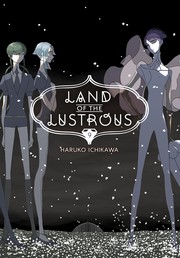
Yu's review of World End Economica — Hal lives in a lunar colony slum and dreams of reaching deep space; he discovers he has an exceptional gift for stock trading and uses it to pursue his dream; manga adaptation of Isuna Hasekura's visual novel about finance and ambition in a near-future lunar society.
Sci-Fi / Action
Spriggan
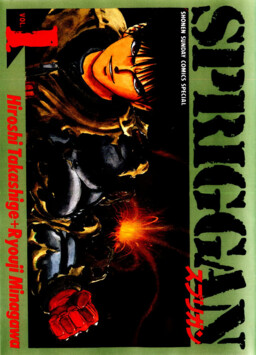
Yu's review of Spriggan — Yu Ominae is a Spriggan agent for ARCAM, a secret organization that locates ancient artifacts of catastrophic power and prevents governments and criminal organizations from weaponizing them; a 90s action sci-fi manga with excellent set-piece design and geopolitical scope.
Sci-Fi / Action
Origin
Yu's review of Origin by Boichi — a robot built as a killing machine has been living as a human boy for years, hiding his true nature while protecting the family he has come to care for; when other robots of his kind begin appearing and killing, he must fight while continuing to conceal what he is; a sci-fi action manga about identity, purpose, and what makes life meaningful.
Written by
Yu
Manga Enthusiast from Japan
I grew up in Japan and manga literally saved me during a tough time in elementary school. My English isn't perfect, but my love for manga is real — and I want to share it with you.
Disclosure: This post contains affiliate links. As an Amazon Associate, I earn from qualifying purchases at no extra cost to you.