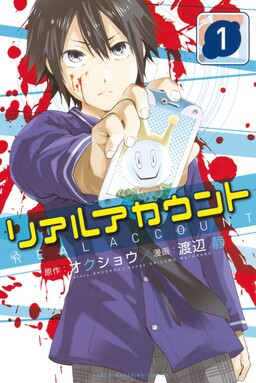
Real Account Review — A Death Game Where You Die When Your Followers Stop Caring About You
by Okushou (Story) / Shizumu Watanabe (Art)
Read the first volume. If it doesn't hook you, put it down. It'll hook you.
Buy Real Account on Amazon →*Affiliate link — I earn a small commission at no extra cost to you.
I have a Twitter account I haven't logged into in three years. I have an Instagram account I check once a week. I have a Facebook account I haven't touched in a decade. Each of those accounts has a follower count. Each of those follower counts is, in some way I cannot fully account for, part of how I think about myself.
Real Account is a manga that asks what would happen if those follower counts were lethal — and what we would do, in that scenario, to be the kind of person other people would want to keep alive.
Quick Take
- The death game manga with the most immediate, contemporary thematic engine: your followers die when you do
- A tightly constructed thriller that uses social media as the structure, not the decoration
- Age rating: T+ (Older Teen) — 16+ — graphic death game content; the M rating would also be defensible
What Is Real Account About?
Ataru Kashiwagi is a high school student. He has a moderate but not impressive presence on Real Account — a fictional Japanese social media platform similar to Twitter/X but with stricter "real identity" enforcement (every account is verified to a single real person). Ataru has approximately a few hundred followers. He posts ordinary things. He doesn't think much about his Real Account presence.
One evening, while Ataru is using the app, a system message appears. So does it for every Real Account user in Japan simultaneously. The message: a special test will now begin.
Millions of users — Ataru included — are pulled into a virtual world rendered by the platform. They appear in a vast hall, each as their own avatar. The administrator — a smiling pig-mask figure called Marble — explains the rules:
- The users will play a series of challenges
- Players who fail or are eliminated are killed
- When a player dies, every Real Account follower they have dies simultaneously in the real world
- The challenges will test the players' relationships with their followers
- The way to escape is unclear; the way to survive is to keep your players' games going
The first challenge begins immediately. The first deaths happen within the first volume. Bodies of users who were eliminated appear in their real-world locations — at home, at work, in the street. Their followers, by the thousands or millions, die simultaneously. By the end of volume 1, the world outside the game knows that Real Account is killing people.
The next 22 volumes (in Japanese) and 16 volumes (in English so far) follow:
- Ataru's progress through the games, alongside his twin sister Yuri (initially separated from him)
- The expanding cast of players, each with their own social media identity to defend
- The slowly revealed truth about Marble, the administrator
- The escalating challenges, each of which tests a different aspect of social media identity (anonymity vs identity, performed self vs real self, popularity vs depth)
- The broader question of why this game exists and who benefits from it
The English release ended at volume 16 — Kodansha Comics paused publication, and the remaining 7 volumes are currently Japanese-only. The series completed in Japan in 2023 with 23 volumes.
Who Is This Manga For?
- Death game thriller fans (Liar Game, Doubt, Battle Royale, Squid Game)
- Social media critics who want their concerns engaged with thriller seriousness
- Readers of contemporary dystopian fiction (Black Mirror, etc.)
- Anime adaptation viewers — though the anime only covers a portion of the manga
- Not for: readers who cannot tolerate graphic deaths; readers who need fully resolved English releases (volumes 17–23 are Japanese-only)
Content Warnings & Age Rating
Age Rating: T+ (Older Teen) — 16+ Content Warnings: Death game premise (frequent character deaths, sometimes graphic); psychological violence (the games are designed to expose players' real relationships with social media); mass death (millions of "follower" deaths happen off-page across the series); some sexual themes; child endangerment (some players are middle-school age); social media themes including doxxing, trolling, parasocial obsession, and online harassment
The T+ rating is the floor. The content is genuinely disturbing in places. Sensitive readers should be aware.
Story Overview (Light Spoilers)
Volumes 1–4 — The first wave of games. Ataru meets the recurring cast — players who become recurring allies or antagonists. Yuri, Ataru's sister, is separated from him at the game's start; their paths converge gradually. The first games establish the manga's thematic concerns: identity, follower-relationships, the performance of self.
Volumes 5–9 — The middle games. The structure of the larger virtual world becomes clearer. Multiple "areas" within the game test different aspects of social media (the "Honesty Game," various information-asymmetry games, identity-revelation games). The recurring cast expands; some major characters die.
Volumes 10–16 (English release endpoint) — The deeper plot emerges. Marble's actual identity and motivation become subject of investigation. The relationship between the game and the real world becomes more complicated. The English release ends here without resolving the larger plot.
Volumes 17–23 (Japanese only) — The endgame. The truth about the game, about Marble, and about why this is happening becomes clear. The final arcs resolve in Japan. English readers wanting closure currently have to use Japanese editions or fan translations.
Characters
Ataru Kashiwagi — The protagonist whose specific advantage is observational. He is not the strongest player, not the most popular, not the smartest. He pays attention. The manga shows him surviving by reading the games' actual rules rather than the apparent rules — a death game protagonist trait that the manga handles without making Ataru feel artificially gifted.
Yuri Kashiwagi — Ataru's twin sister. Separated from him at the game's start. Her path through the games is different — she encounters different players, faces different challenges. The manga uses the twin-separated structure to build parallel narratives that converge across volumes. Yuri is one of the manga's most carefully written female protagonists in the death game genre.
Marble — The smiling pig-mask administrator. Calm, theatrical, dangerous. Marble's identity is the manga's central mystery. The reveals about Marble across the run reshape the manga's meaning.
The recurring players — A large rotating cast. The manga's most distinctive choice is that player social media identities matter. Each major recurring character is associated with a specific type of online presence — the popular influencer, the anonymous troll, the parasocial fan, the catfish, the verified celebrity, the politician, the activist. The games are designed to test each type's specific dynamics. The character cast functions almost as a typology of mid-2010s online life.
Art Style
Shizumu Watanabe's art is clean and built for clarity. Death game manga lives or dies on whether the rules of each game are visually legible; Watanabe consistently delivers. Floor plans, scoring systems, kill mechanisms, and player positions are all drawn so the reader can follow what is happening.
The character designs are distinct across a large cast. Faces carry real emotional information; the manga's biggest scenes — confessions, betrayals, deaths — are rendered with weight.
The death imagery is restrained but not minimized. Most deaths happen on-page; the violence is more disturbing than gratuitous.
Cultural Context
Real Account ran in Bessatsu Shounen Magazine from 2014 to 2023. The manga is a product of the mid-2010s Japanese conversation about social media, which had specific concerns:
- Real-name verification (Real Account's premise about every account being a real person) was a major Japanese discourse topic in the 2010s, with platforms like LINE pushing real-identity verification harder than international counterparts
- Follower count as social capital intensified in the mid-2010s with the rise of Japanese influencer culture (especially on Instagram and Twitter)
- Online harassment, doxxing, and "炎上" (enjou, "flaming") became persistent social concerns
- The mismatch between online persona and real self became a major topic in Japanese pop sociology
Real Account's death game is engaging directly with these concerns. The manga is not allegorical — it is using thriller stakes to literalize what social media already is psychologically. Your "followers" matter to your sense of self. The game just makes that fact lethal.
The 2016 anime adaptation by Mahō Film (now Sotsu) covered approximately the first 4 volumes and was generally considered too short to do the manga justice. The manga continued long past where the anime ended.
What I Love About It
The Honesty Game.
I won't spoil specifics. Somewhere in the middle of the run, the players are forced into a game where they must answer questions about each other — and themselves — with the truth. The mechanism is enforced: lying in the game causes death. Players can choose to refuse to answer, but refusal also has costs.
What makes the Honesty Game interesting is what the questions are. They are not about strategy. They are not about the game. They are about social media: what do you actually think of your most popular follower? What did you actually mean by the post you made last week? Who do you actually love in your follower list?
The answers reveal players' real interior lives in ways that the game's other challenges have not. People who had been allies discover that their alliance was based on mutual misreading. People who had been enemies discover that their conflict was based on misunderstanding. Some players survive the game and then cannot continue to perform their pre-game social selves because they have heard the truth out loud.
What I love is the manga's refusal to make this a clean moral lesson. The Honesty Game does not say "online lies are bad and real truth is good." It says: the gap between what we say online and what we actually think is large. The game forces the gap closed. Some players are better people than their online selves; some are worse. Most are simply different. The honesty does not redeem or condemn. It just clarifies.
I think about this when I write a tweet now. The me who writes the tweet is a specific performance of the me who lives in this apartment. Real Account asked, with thriller stakes, what would happen if I had to be that me for everything I posted. I don't know what I would post. I don't think I would post much.
That uncertainty is the manga's contribution. It made me think about how I use social media, and I don't usually think about it. That is a lot for a death game manga to accomplish.
What English-Speaking Fans Say
Real Account had a strong English-language reception during its Kodansha Comics run. The 2016 anime brought initial visibility; the manga's stronger material in the middle volumes (5–10) won readers who stayed through the longer arcs.
The English release's pause at volume 16 has been the primary fan frustration. The remaining 7 volumes are widely considered the manga's strongest, and English readers have either learned Japanese, used fan translations, or accepted that the series ends mid-arc for them.
The thematic engagement with social media is consistently praised. The manga is occasionally cited in academic-adjacent discussions of "anti-social-media fiction" alongside Black Mirror episodes.
Memorable Scene ⚠️ Spoiler Warning
The first challenge's resolution.
I won't spoil the specifics. The first death game challenge is structured to teach the players — and the reader — what the game actually is. It is not the most elaborate game in the series. It is the most thematically clean.
What happens at the end of the first challenge: a player dies. The manga then cuts away from the virtual world to show, for the first time, what happens to that player's followers in the real world. The page is structured as a series of small panels — a young woman in a café, an office worker on a train, a teenager in a bedroom, an elderly man at home, a child at a school — each panel showing one of the dead player's followers dying suddenly. There are dozens of panels. The page sequence runs longer than the dying player's actual on-screen death.
The sequence is not satisfying in any conventional sense. It is upsetting. The reader is forced to look at the abstraction "the player's followers" and see it as actual humans who had nothing to do with the game.
The manga's moral architecture is established in this sequence. The game is not just about the players. The game is about the cost of being followed by people who do not deserve to die because of decisions you make. Every subsequent challenge in the manga carries this weight: the cost of failing is not just your own life. The follower mechanism is doing thematic work, not just thriller work.
After this scene, the reader cannot read Real Account as just a death game. The death game is a vehicle for a more uncomfortable question: what do you owe people who follow you? What do they owe you?
Similar Manga
| Title | Its Approach | How Real Account Differs |
|---|---|---|
| Liar Game | Psychological game thriller, money-based stakes | Liar Game is more cerebral; Real Account is more thematic |
| Doubt | Death game with limited information | Doubt is more horror; Real Account is more social |
| Squid Game | Survival death game with economic critique | Same thriller-with-theme structure; Real Account focuses on online life specifically |
| Tomodachi Game | Death game testing real friendships | More directly comparable; Tomodachi tests friendship; Real Account tests follower-relationships |
Reading Order / Where to Start
Volume 1. The series builds; do not skip.
For English readers: 16 volumes available; the remaining 7 are Japanese-only. The English release pause is mid-arc. Be aware before committing.
Official English Translation Status
Kodansha Comics published 16 volumes in English between 2016 and 2020. The English release was paused; the remaining 7 volumes (17–23) are not currently available in English. The Japanese series concluded in 2023 at volume 23.
The 2016 anime adaptation (Mahō Film) is available on Crunchyroll with English subtitles and covers the first 4 volumes only.
For complete-story English readers: the current state is incomplete. Watch for license revival announcements.
Pros & Cons
Pros
- The social media premise is thematically integrated, not decorative
- The cast is large and well-developed
- The thriller is genuinely tense
- Yuri (Ataru's sister) is a strong protagonist parallel to Ataru
- Contemporary relevance makes the manga age well
Cons
- English release paused at volume 16; the final 7 volumes are Japanese-only
- Some games follow familiar death-game conventions
- The graphic death content is heavy and frequent
- The death game genre is an acquired taste. It won't land for everyone, especially readers uncomfortable with on-page violence.
Is Real Account Worth Reading?
For death game / social media thriller fans: yes — with the caveat that the English release is incomplete. The 16 available volumes are a strong run; the ending requires Japanese.
If you need complete English releases: wait for license revival or skip.
Format Comparison
| Format | Notes |
|---|---|
| Physical English (Kodansha) | Volumes 1–16 available; release paused |
| Digital English | Available via Kindle and Kodansha digital for volumes 1–16 |
| Japanese | All 23 volumes available physically and digitally |
| Anime (2016) | 13 episodes covering approximately volumes 1–4; on Crunchyroll |
Where to Buy
Read the first volume. If it doesn't hook you, put it down. It'll hook you.
This post contains affiliate links. If you purchase through these links, I may earn a small commission at no extra cost to you. As an Amazon Associate, I earn from qualifying purchases.
*Affiliate link — I earn a small commission at no extra cost to you.
More Manga You Might Like

Sci-Fi / Thriller
Future Diary
Yu's review of Future Diary (Mirai Nikki) — Yukiteru Amano is chosen as one of twelve participants in a death game where each person receives a diary that predicts their own future; the last survivor becomes God; the series is a thriller structured around information asymmetry and the uniquely disturbing character of Yuno Gasai.
Mystery / Thriller
Erased
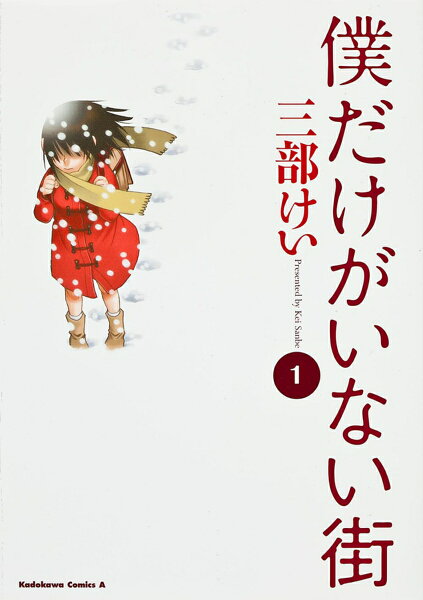
Satoru Fujinuma is a 29-year-old struggling Tokyo manga artist with an involuntary supernatural ability he calls 'Revival' — when something bad is about to happen near him, time rewinds a few minutes. When his mother is murdered in his apartment, the Revival sends him back further than ever before: to his fifth-grade self in 1988 Hokkaido, three months before his classmate Kayo Hinazuki was kidnapped and killed. Kei Sanbe's 8-volume manga is complete in English from Yen Press.

Sci-Fi / Psychological
Welcome to the NHK
Yu's review of Welcome to the NHK — Tatsuhiro Sato has been a hikikomori (shut-in) for four years, convinced that Japan's public broadcaster NHK is running a conspiracy to create hikikomori; a mysterious girl named Misaki begins visiting him and offers to help him rejoin society, for reasons he cannot understand.

Sci-Fi / Thriller
Summer Time Rendering
Yu's review of Summer Time Rendering — Shinpei Ajiro returns to Hitogashima island for the funeral of his childhood friend Ushio; something is wrong; the shadows of people on the island are not quite right; Shinpei discovers a supernatural threat that copies humans through their shadows and a time loop mechanic that allows him to restart from the same point when he dies.

Sci-Fi / Thriller
Mardock Scramble
Yu's review of Mardock Scramble — Rune Balot, a teenage prostitute, is murdered by casino mogul Shell Septinos; resurrected under Mardock Scramble 09, an emergency law that allows dead people to be brought back as cyborgs to testify, she must survive long enough to bring Shell to justice with the help of her partner Oeufcoque.
Sci-Fi / Psychological Thriller
Liar Game
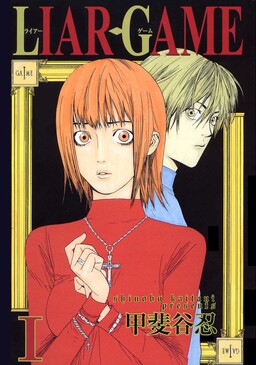
Yu's review of Liar Game — Nao Kanzaki, an honest person to the point of being a liability, receives a package with 100 million yen and instructions for the Liar Game: she must deceive and be deceived; the last person holding the most money wins; she enlists the help of a recently released con man named Shinichi Akiyama.
Written by
Yu
Manga Enthusiast from Japan
I grew up in Japan and manga literally saved me during a tough time in elementary school. My English isn't perfect, but my love for manga is real — and I want to share it with you.
Disclosure: This post contains affiliate links. As an Amazon Associate, I earn from qualifying purchases at no extra cost to you.