
RahXephon Manga Review — A Tokyo Teenager Pilots an Ancient Clay God Against the Alien Civilization That Trapped His City
by Yutaka Izubuchi (story) / Takeaki Momose (art)
Read the first volume. If it doesn't hook you, put it down. It'll hook you.
Buy RahXephon on Amazon →*Affiliate link — I earn a small commission at no extra cost to you.
The 2002 RahXephon anime was the show I watched after Evangelion to find out what came next. I had heard it called the Evangelion-clone-that-was-actually-different. I watched it. I understood why people defended it. It was different, and it was good, and it did things Evangelion did not do.
The manga adaptation is its own work. The director said as much. Reading it is encountering a parallel version of the same story.
Quick Take
- 3-volume manga adaptation of the 2002 RahXephon TV anime by Bones
- The director (Yutaka Izubuchi) explicitly designed the manga as "another version" — significant plot, character, and emotional differences from the anime
- Age rating: T (Teen) — mecha combat, occasional body horror, themes of age-gap romance handled with care
What Is RahXephon About?
Tokyo, 2027. Fourteen years ago, an alien civilization called the MU (the Murians) invaded Earth. They did not destroy Tokyo. They sealed it — surrounded the city in a dimensional barrier called TOKYO JUPITER, freezing 23 million residents inside an isolated bubble that has not aged with the outside world. Within the bubble, Tokyo's residents have lived for fourteen years thinking nothing unusual is happening. Time itself has been altered.
Ayato Kamina (神名 綾人) is a seventeen-year-old high school student inside TOKYO JUPITER. He has been having strange dreams. His mother is one of the few adults who seems aware that something is wrong with their world. He has met a mysterious blue-haired girl named Reika who appears to know him but who he cannot place.
A military organization from outside the bubble — TERRA — penetrates TOKYO JUPITER. Ayato's mother is revealed to be MU. Ayato escapes the bubble for the first time in fourteen years, into a world that has aged while he has not. TERRA's operative Haruka Shitou (紫東 遥) — who turns out to be a young woman from Ayato's past, twelve years older than him because of the time differential — guides him.
Ayato is then revealed to be the "Orin" — the only person who can pilot RahXephon (ラーゼフォン), a massive clay-god mecha that responds to no other operator. RahXephon was built or grown or created (the manga is mysterious about this) by an ancient civilization. Its pilot has the power to "tune" reality itself — to alter the structure of the world through musical-mathematical operations the pilot performs from inside the mecha.
The next 3 volumes of the manga follow Ayato as he:
- Adjusts to a world that has continued for fourteen years without him
- Confronts the MU and the question of his own mixed-blood identity (he is part-MU)
- Pilots RahXephon against MU's biomechanical weapons (the Dolem)
- Navigates relationships with Haruka, Reika, and the various TERRA personnel
- Approaches the central question: what is RahXephon actually for, and what happens when its pilot uses it for its actual purpose
RahXephon Manga vs Anime: They Are Different Stories
This is important: the manga is not a faithful adaptation of the anime.
Director Yutaka Izubuchi explicitly framed the manga (by artist Takeaki Momose) as "another version" — a parallel narrative using the same setting and core characters but making different choices. Significant differences include:
- Haruka's personality — the anime Haruka is composed; the manga Haruka is shy
- The primary love interest — Reika rather than Haruka in the manga's emotional resolution
- Ayato's origin — the manga presents him as a clone, which the anime does not
- The Bahbem Foundation (a major anime subplot) is removed from the manga
- The "tuning" concept is more central to the manga's plot
- Themes — the anime focuses on metaphysical questions; the manga is more family-focused
For viewers approaching from the anime: the manga is an interesting alternative take rather than a strict adaptation. For manga-first readers: the manga is self-contained.
The 2003 theatrical film Pluralitas Concentio is yet a third version, reimagining the story with different relationship dynamics. Each of the three versions has its defenders.
Who Is This Manga For?
- 2002 anime fans curious about the alternative version
- Mecha manga readers willing to engage with a music-mythology approach rather than pure combat
- Evangelion-adjacent readers — the comparison is unavoidable, even if Izubuchi resists it
- Short manga commitment seekers — 3 volumes complete
- Not for: readers wanting a faithful manga adaptation of the anime
Content Warnings & Age Rating
Age Rating: T (Teen) — 13+ Content Warnings: Mecha combat with some body horror elements (Dolem destruction, RahXephon's organic-clay nature); age-gap romance (Ayato 17, Haruka 29, though the time-travel mechanics complicate the gap); some metaphysical horror imagery
The T rating is accurate.
Characters
Ayato Kamina — The protagonist. Quiet, slightly withdrawn, with a specific kind of disorientation from having lived inside TOKYO JUPITER for fourteen years while the outside world aged. The manga's Ayato is more emotionally direct than the anime's; some readers prefer this version.
Haruka Shitou — TERRA operative. In the manga, the shy version of the anime's composed character. Her relationship with Ayato carries the 12-year age gap that is part of the franchise's central romantic complication.
Reika Mishima — The mysterious blue-haired girl. In the manga, she becomes the primary romantic interest; in the anime, the role goes to Haruka. Her actual identity is part of the manga's central mystery.
Megumi Shitou (Haruka's younger sister) — TERRA personnel. Important supporting character with her own development.
Itsuki Kisaragi — TERRA officer with longer-running ties to the central characters.
Reika Mishima (as mystery figure) — The manga emphasizes Reika's role differently than the anime does. The reveals about Reika are different in each version.
Art Style
Takeaki Momose's art is clean, slightly more shounen-ace-traditional than the anime's stylized approach. Character designs are recognizable from the anime but reinterpreted for static page composition. Mecha sequences are dynamic; the RahXephon design is iconic and Momose draws it well.
The art is in service of the manga's specific tonal choices — slightly more emotionally direct than the anime's restraint, slightly more conventional in its romantic beats.
Cultural Context
RahXephon was Bones's first major TV anime production after the studio's formation in 1998. The 2002 series was part of the early-2000s wave of metaphysical-mecha series following Evangelion's influence. RahXephon is often grouped with Eureka Seven, Zegapain, and other works in this tradition.
Yutaka Izubuchi — director of the anime and credited author of the manga's story — is a major mecha designer in Japanese anime history (Mobile Suit Gundam designs, Patlabor, many others). RahXephon was his first full director credit.
The music in the anime is exceptional (Ichiko Hashimoto's score) and is integral to the franchise's identity. The manga cannot reproduce music, which is part of why the adaptation diverges — it works in the medium it has available rather than trying to mimic the anime's musical effects.
What I Love About It
The clay-god aesthetic.
RahXephon (the mecha) is not a steel robot. It is a clay figure — earth, water, organic material — that comes to life when its pilot enters it. Momose's manga renders this with attention. RahXephon's surfaces are textured. Its joints are organic. It bleeds, breathes, vibrates. When it sings (the mecha's "weapons" are musical in nature), the song is rendered visually — sound made visible through panel composition.
This is the manga's specific contribution to the franchise. The anime had music as audible material. The manga has music as visible material. Momose makes the silent medium into a music-rendering medium, and the visual choices around RahXephon's musical attacks are the manga's most distinctive craft.
I think about this often when I think about what manga can do that other media cannot. Sound is supposed to be impossible in silent media. Momose proves that you can render the experience of sound visually. RahXephon the manga is partly a demonstration of this principle.
Memorable Scene ⚠️ Light Spoiler
The first time Ayato sings inside RahXephon.
I won't spoil specifics. Across the manga's volume 1, Ayato has been adjusting to TOKYO JUPITER's escape, to the world that has aged, and to his role as RahXephon's pilot. The first time he genuinely sings while operating the mecha — using the music to alter reality rather than just to fight — is the manga's first true demonstration of what tuning is.
The visual sequence is Momose at his peak. The panels expand. The conventional mecha-fight choreography gives way to something more abstract. The reader is shown reality bending in response to song. The Dolem opponent is not defeated in the conventional sense; it is rewritten. The world after the song is slightly different than the world before it.
That sequence is what RahXephon is for. The manga is a music story dressed as a mecha story. The clay god is the conductor. The pilot is the musician. The world is the audience. Some of it is good. Some of it is too abstract for some readers. All of it is doing something unusual with the mecha genre.
Similar Manga / Anime
| Title | Its Approach | How RahXephon Differs |
|---|---|---|
| Neon Genesis Evangelion | Existential mecha with psychological focus | Evangelion is more famously dark; RahXephon is more dreamlike |
| Eureka Seven | Romantic mecha with social themes | Eureka is more action-focused; RahXephon is more contemplative |
| Zegapain | Metaphysical mecha | More plot-driven; RahXephon is more atmospheric |
| FLCL | Surreal coming-of-age with mecha elements | FLCL is more comedic; RahXephon is more serious |
Reading Order / Where to Start
The manga is self-contained at 3 volumes. Anime watchers should approach it as an alternative version rather than a continuation.
For new viewers: watch the 2002 TV anime first (Bones, 26 episodes, available with English subtitles in some regions). The anime is the primary work. Read the manga afterwards if interested in the alternative version.
Official English Translation Status
TOKYOPOP published all 3 manga volumes in English (2004–2005). The volumes are out of print but available on the secondhand market.
The 2002 TV anime by Bones is available with English subtitles on some streaming services. The 2003 theatrical film Pluralitas Concentio is also available with English subtitles.
Pros & Cons
Pros
- Distinctive music-mythology approach to mecha
- Yutaka Izubuchi's "another version" framing produces genuinely different story
- Clay-god aesthetic is unique in mecha
- Short — 3 volumes complete
- Music visualization is Momose's craft showcase
Cons
- Out of print English release (TOKYOPOP)
- The "alternative version" can confuse anime fans expecting faithful adaptation
- The dreamlike pace is divisive
- Mecha-mysticism subgenre is an acquired taste. It won't land for everyone, especially readers wanting straight mecha action.
Is RahXephon (Manga) Worth Reading?
For 2002 anime fans: yes, as an alternative-version supplement. For new readers: watch the anime first.
For mecha collectors: yes, but expect to source the volumes secondhand.
Format Comparison
| Format | Notes |
|---|---|
| Physical (TOKYOPOP) | 3 volumes; out of print; available secondhand |
| Digital | Limited availability |
| Anime (Bones, 2002) | 26 episodes; primary work; available on streaming with English subtitles |
| Film (Pluralitas Concentio, 2003) | Available with English subtitles in some regions |
Where to Buy
Read the first volume. If it doesn't hook you, put it down. It'll hook you.
This post contains affiliate links. If you purchase through these links, I may earn a small commission at no extra cost to you. As an Amazon Associate, I earn from qualifying purchases.
*Affiliate link — I earn a small commission at no extra cost to you.
More Manga You Might Like
Sci-Fi / Mecha
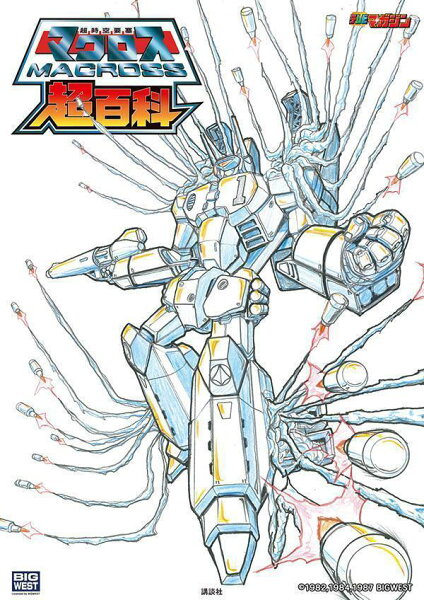
The Super Dimension Fortress Macross
A review of the original Macross manga, the classic that introduced the idea that pop music could end a war between species.

Sci-Fi / Action
Code Geass: Lelouch of the Rebellion
Yu's review of Code Geass: Lelouch of the Rebellion, the 8-volume manga by Majiko! that retells the Sunrise anime without its Knightmare Frame mecha. Exiled prince Lelouch gains Geass, the power of absolute obedience, from the mysterious C.C. and becomes the masked rebel Zero — but the manga is lighter, more comedic, and more romance-focused than the anime.
Sci-Fi / Mecha
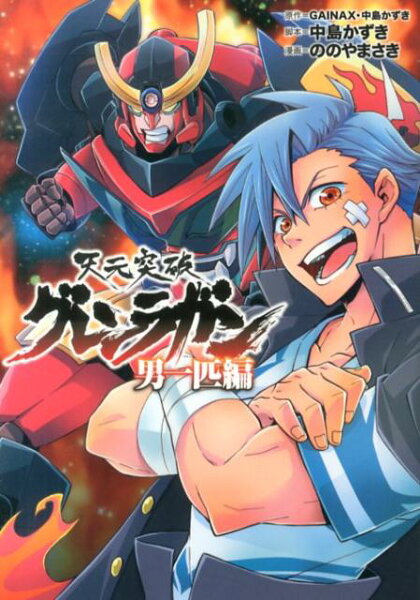
Gurren Lagann
A review of Gurren Lagann, the hyper-optimistic super robot manga about drilling through despair to reach the stars.
Sci-Fi / Military
Mobile Suit Gundam: The Origin
Yu's review of Mobile Suit Gundam: The Origin — Yoshikazu Yasuhiko, the original character designer for the 1979 Gundam anime, re-adapts and expands the One Year War, giving Char Aznable the backstory the original never showed and drawing the Universal Century with 40 years of additional craft.
Sci-Fi / Drama
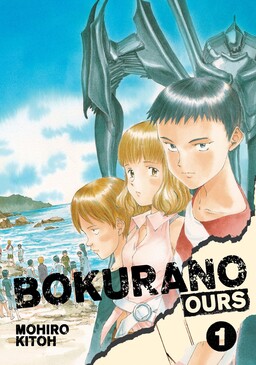
Bokurano
Yu's review of Bokurano by Mohiro Kitoh — fifteen children sign a contract to pilot a giant robot called Zearth, only to learn each victory costs the pilot's life, and that every battle won erases another Earth.

Sci-Fi / Military
86—EIGHTY-SIX
The Republic of San Magnolia tells its citizens the war is fought by unmanned drones. The drones have pilots — children stripped of citizenship and conscripted to die in squadrons the republic refuses to count. Lena is a military officer who refuses to lie. Shin is the squadron leader who has stopped expecting to live. The manga adaptation of Asato Asato's light novel ran 3 volumes (2018–2021) before being suspended due to the artist's health; the LN and anime cover the full story.
Written by
Yu
Manga Enthusiast from Japan
I grew up in Japan and manga literally saved me during a tough time in elementary school. My English isn't perfect, but my love for manga is real — and I want to share it with you.
Disclosure: This post contains affiliate links. As an Amazon Associate, I earn from qualifying purchases at no extra cost to you.