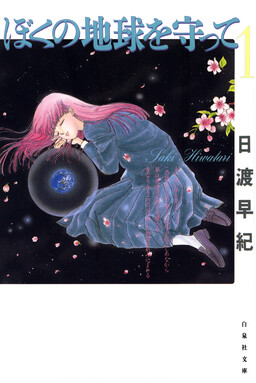
Please Save My Earth Review: Seven Tokyo Teenagers Dream of Being Scientists on the Moon in a Past Life
by Saki Hiwatari
Read the first volume. If it doesn't hook you, put it down. It'll hook you.
Buy Please Save My Earth on Amazon →*Affiliate link — I earn a small commission at no extra cost to you.
Quick Take
- One of the defining shojo manga of the 1990s — the reincarnation concept is executed with rare sophistication, and the past-life relationships creating present-life complications is handled with more emotional honesty than the premise suggests
- Hiwatari's construction of two timelines — the alien scientists on the Moon, the present-day Tokyo teenagers — is among the most accomplished narrative architecture in shojo manga
- 21 volumes complete in English; a landmark of the genre that rewards the commitment
Who Is This Manga For?
- Readers who want sci-fi romance with genuine narrative complexity
- Anyone interested in reincarnation as a plot mechanism used with seriousness
- Fans of 1990s shojo manga at its most ambitious
- Readers who want a completed long-form romance with genuine resolution
Content Warnings & Age Rating
Age Rating: T (Teen) Content Warnings: Past life trauma surfacing in present; supernatural content involving a child prodigy who may be more than he appears; romantic complications from past-life relationships; some emotionally heavy content
T rating — emotionally complex within teen content standards.
Yu's Rating
| Category | Score |
|---|---|
| Story Depth | ★★★★★ |
| Art Style | ★★★★☆ |
| Character Development | ★★★★★ |
| Accessibility for Non-Japanese Readers | ★★★★☆ |
| Reread Value | ★★★★★ |
Story Overview
Alice Sakaguchi, sixteen, lives in a Tokyo apartment building and has a connection to nature that feels different from ordinary sensitivity. She meets Jinpachi and Issei, two boys who have been sharing strange dreams — of being scientists on a moon base, observing Earth, from what feels like another species' perspective.
They were. In a previous life, seven alien scientists maintained a base on the Moon, cataloguing Earth's biology, forming relationships, experiencing everything that people do in any enclosed community — and eventually dying when the base was lost. They have been reincarnated as teenagers in 1990s Tokyo.
The past life relationships — who loved whom, who damaged whom, what unresolved feelings and old wounds were carried across the boundary between lives — complicate the present. The supernatural element is that one of the reincarnated scientists is Rin, who is eight years old in the present and is doing something with his past-life powers that the others haven't begun to understand.
Characters
Alice Sakaguchi — The protagonist who connects the other reincarnated scientists; her present-life perspective and her growing awareness of her past identity are the series' emotional center.
Rin — An eight-year-old whose past-life memories are the most complete and whose use of past-life abilities creates the series' supernatural stakes; the most disturbing character in a series that handles disturbance carefully.
The seven scientists — Each past-life character is developed fully, making the past-life sequences as emotionally engaging as the present-day ones.
Art Style
Hiwatari's art has the quality of 1990s shojo at its most accomplished — detailed character designs, emotional expressiveness, the narrative sophistication of two parallel timelines told with visual clarity. The Moon base sequences have a quality of genuine alienness that the present-day Tokyo sequences don't try to match, which distinguishes the two timelines effectively.
Cultural Context
Please Save My Earth ran from 1987 to 1994 in LaLa, making it a foundational work of the era that influenced subsequent shojo manga's approach to supernatural romance and reincarnation themes. The alien scientists concept — using extraterrestrial beings as the past-life identities rather than historical humans — gives the reincarnation premise more narrative flexibility than the tradition typically offers.
What I Love About It
The past-life relationships do not resolve into present-day replacements. When characters discover they loved or harmed each other in a previous life, this creates complications in the present that cannot be easily dissolved by the present-life versions of themselves. Hiwatari takes seriously the question of how much past-life identity carries over, and what obligation — if any — present-life people have to their past-life selves' unfinished emotional business.
What English-Speaking Fans Say
Western readers consistently describe Please Save My Earth as one of the best shojo manga available in English — specifically noted for the dual-timeline construction being more sophisticated than comparable series, for Rin's character being genuinely unsettling in a way the series earns, and for the emotional resolution being satisfying after 21 volumes. Considered essential reading for serious shojo manga readers.
Memorable Scene ⚠️ Spoiler Warning
The revelation of what the scientists' final days on the Moon actually looked like — and what this means for the present-life characters' understanding of who they were — is the series' most emotionally complete use of its dual-timeline structure.
Similar Manga
- Nana — Long-form shojo romance with similarly complex character relationships
- Ceres, Celestial Legend — Supernatural reincarnation romance by a contemporary author
- Red River — Historical/supernatural romance with similar emotional complexity
- Basara — Long-form shojo with similar narrative ambition
Reading Order / Where to Start
Volume 1 — Alice, the dreams, and the first emergence of past-life connection are established. The series rewards patience in the early volumes.
Official English Translation Status
VIZ Media has published the complete English series. All 21 volumes available.
Pros & Cons
Pros
- Dual-timeline construction is genuinely sophisticated
- Complete in 21 volumes with real resolution
- Past-life complications handled with emotional honesty
- Rin is one of shojo manga's most effective unsettling characters
Cons
- 21 volumes requires commitment
- Early volumes are slower than the series becomes
- Some 1990s art conventions to adjust to
Format Comparison
| Format | Notes |
|---|---|
| Individual Volumes | VIZ Media; complete series available |
| Digital | Available |
Where to Buy
Read the first volume. If it doesn't hook you, put it down. It'll hook you.
This post contains affiliate links. If you purchase through these links, I may earn a small commission at no extra cost to you. As an Amazon Associate, I earn from qualifying purchases.
*Affiliate link — I earn a small commission at no extra cost to you.
More Manga You Might Like
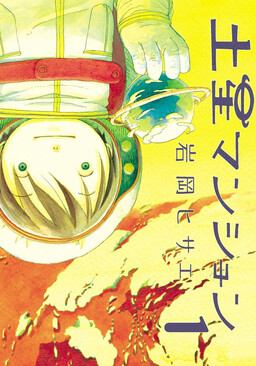
Sci-Fi
Saturn Apartments
Yu's review of Saturn Apartments — humanity lives in a ring habitat orbiting Earth; the surface is a nature preserve; Mitsu is a young window washer who cleans the outer windows of the habitat; his father was also a window washer and disappeared; Hisae Iwaoka's quiet science fiction manga about class, memory, and the view from the outside.
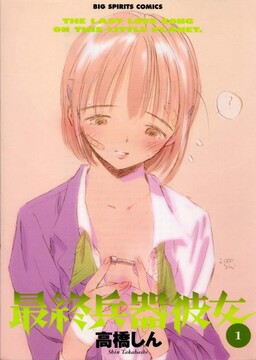
Sci-Fi / Romance
Saikano
Yu's review of Saikano — Chise is a clumsy, awkward high school girl who has recently started dating Shuji; she is also the last weapon, a girl whose body has been modified into a living weapon system for Japan's military; the series follows their relationship as the war escalates and Chise's modifications progressively replace her humanity.
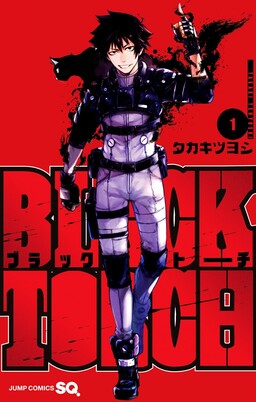
Sci-Fi / Action
Black Torch
Yu's review of Black Torch — Jiro Azuma is a ninja-trained kid bullied for talking to animals, until he rescues a black cat who turns out to be the immortal mononoke Rago. When Jiro is killed protecting him, Rago fuses with him to bring him back, and the two are dragged into the Bureau of Espionage's war against demonic spirits.
Sci-Fi / Action
Area 88
Yu's review of Area 88 — Shin Kazama, a Japanese airline trainee, is drugged and tricked by his best friend into signing a three-year mercenary contract with the air force of a fictional desert kingdom. Trapped at Area 88, he can only buy his freedom by killing — earning $1.5 million in combat bonuses. Kaoru Shintani's 1979 aviation classic about a good man becoming an ace he never wanted to be.

Sci-Fi / Drama
Galaxy Express 999
Galaxy Express 999 follows Tetsuro Hoshino, a young boy who boards the legendary space train 999 toward a planet where he can receive a free mechanical body — accompanied by the mysterious Maetel — and encounters, on each planet the train stops at, a different meditation on what it means to be human and whether eternity is worth what it costs.

Sci-Fi / Drama
Hyakuoku no Hiru to Senoku no Yoru
Hyakuoku no Hiru to Senoku no Yoru is Moto Hagio's manga adaptation of Ryu Mitsuse's celebrated science fiction novel — following the collapse of civilizations across billions of years, centered on figures from different historical periods who are drawn toward a single question: what is the nature of creation, and who is responsible for it?
Written by
Yu
Manga Enthusiast from Japan
I grew up in Japan and manga literally saved me during a tough time in elementary school. My English isn't perfect, but my love for manga is real — and I want to share it with you.
Disclosure: This post contains affiliate links. As an Amazon Associate, I earn from qualifying purchases at no extra cost to you.