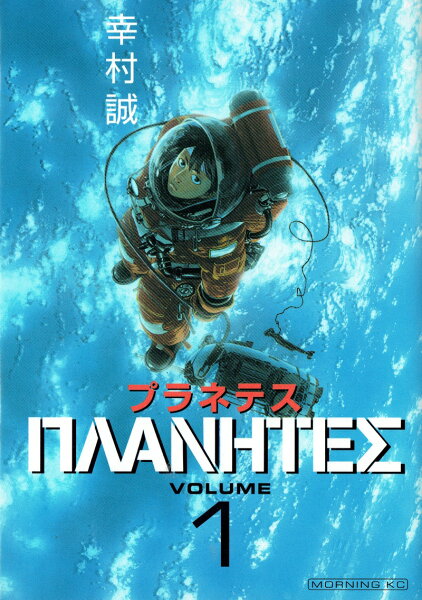
Planetes Review: Garbage Collectors in Space, and Why That's Perfect
by Makoto Yukimura
Read the first volume. If it doesn't hook you, put it down. It'll hook you.
Buy Planetes on Amazon →*Affiliate link — I earn a small commission at no extra cost to you.
Quick Take
- Garbage collectors in orbit in 2075, picking up space debris so it doesn't destroy satellites and stations — and one of them wants desperately to pilot a mission to Jupiter
- The most scientifically grounded and emotionally honest space manga ever made
- Only four volumes, complete, and one of the most concentrated great manga you can read
Who Is This Manga For?
- Readers who want science fiction that takes the physics and economics of space seriously
- Anyone who has ever had a dream so big they are not sure they are big enough for it
- Fans of human drama over action and spectacle
- Readers who want something short and perfect rather than long and epic
Content Warnings & Age Rating
Age Rating: T (Teen) Content Warnings: Death (particularly in space accident scenarios), themes of obsessive ambition, political commentary about space development and terrorism
Accessible but emotionally substantive.
Yu's Rating
| Category | Score |
|---|---|
| Story Depth | ★★★★★ |
| Art Style | ★★★★☆ |
| Character Development | ★★★★★ |
| Accessibility for Non-Japanese Readers | ★★★★★ |
| Reread Value | ★★★★★ |
Story Overview
It is 2075. Humans have colonized the moon, have permanent stations in orbit, and are planning a mission to Jupiter. Space has been open long enough that it has an infrastructure, a bureaucracy, and a garbage problem.
Hachimaki works for Technora Corporation's Debris Section — the crew that goes out in a small ship and collects space debris before it can damage anything important. He is young, impatient, talented, and desperate to get off the debris hauler and onto the Jupiter Mission. His crewmate Fee is a chain-smoking American woman who has seen enough of space to be realistic about it. Their new crewmate Tanabe believes in love and says so constantly, which Hachimaki finds infuriating.
The manga uses this small, ordinary crew to examine enormous questions — about what ambition costs, about whether a human being can live without other people, about what exploration is actually for. The political storyline about space terrorism and the unequal distribution of space's benefits is handled with more nuance than most explicitly political manga.
Characters
Hachimaki (Hoshino Hachirota) — A young man so focused on his dream that he is losing his humanity in pursuit of it. His arc — the question of whether reaching Jupiter is worth what he would have to sacrifice — is the manga's spine.
Fee Carmichael — One of my favorite characters in manga. Pragmatic, professional, a mother who misses her kid, and fiercely protective of her crew. Her subplot about a terrorist targeting their airlock because she smokes is genuinely funny and also genuinely tense.
Tanabe Ai — Her name means love, and she uses it constantly as an explanation for everything she does. She is either the most naive person on the crew or the wisest, and the manga makes that ambiguity work.
Yuri Mihairokov — A crewmember carrying a grief for his wife that shapes everything about him; his storyline in the final volumes is the manga's emotional culmination.
Art Style
Yukimura's space is rendered with the care of someone who has studied orbital mechanics and zero-gravity physics seriously. Objects in space move correctly. The debris field looks like what it is: the accumulated junk of decades of launches. The character designs are realistic without being clinical — faces that show age, experience, and specific emotion.
Cultural Context
Planetes engages directly with debates about who benefits from space exploration and who pays the costs — questions that were being asked in Japan in the early 2000s and are even more relevant now. The terrorism subplot, which involves extremists from developing nations who feel that space resources are being monopolized by wealthy nations, is politically thoughtful rather than politically simple.
What I Love About It
Planetes is the manga I recommend to people who say manga is just for kids, or just for action fans, or just for people who want fantasy. It is four volumes of hard science fiction and human drama and it is perfect.
I love Fee. I have always loved Fee. She is the most competent person in the manga and knows it without needing anyone to confirm it. Her patience with Hachimaki's dreams, and the moment she is not patient with them, is precisely judged.
I love what the manga says about dreams — that they are real and they are worth having and they can also eat you alive if you let them, and that the people who love you are not obstacles to your dreams but part of what makes your dreams worth having.
What English-Speaking Fans Say
Planetes has a devoted Western following among readers who want serious science fiction manga. It is consistently recommended on lists of the best short manga, the best sci-fi manga, and the best manga for readers who don't normally read manga. The complaint, when there is one, is only that there are only four volumes of it. Dark Horse Comics' translation is considered excellent.
Memorable Scene ⚠️ Spoiler Warning
Yuri's chapters in the final volume — the completion of his search for what he was looking for when he came to space — are the most purely beautiful thing in the manga. Yukimura made me feel the vastness of space as something comforting rather than terrifying in those pages. I did not expect it and I am grateful for it.
Similar Manga
- Ghost in the Shell — Hard sci-fi, different setting
- 20th Century Boys — Different genre, same seriousness about human stakes
- Vagabond — Different setting (historical Japan), same level of craft and emotional depth
- Dungeon Meshi — Also slice-of-life in an unusual setting; lighter in tone
Reading Order / Where to Start
Volume 1. Only four volumes — read them across a weekend. The omnibus edition (collecting all four volumes) is the most convenient format.
Official English Translation Status
Dark Horse Comics published the complete English edition. The omnibus is available and is the recommended format.
Pros & Cons
Pros
- Only four volumes — one of the best commitments-per-page ratios in manga
- Scientifically grounded space setting
- Characters who feel like real adults with real lives
- Complete, satisfying, and ends perfectly
Cons
- Four volumes is short — you will want more
- Political storyline may feel heavy-handed to some readers
- Slower-paced than most sci-fi action manga
Format Comparison
| Format | Notes |
|---|---|
| Omnibus (4-in-1) | The ideal format — all four volumes in one book |
| Individual Volumes | Available but omnibus is better value |
| Digital | Works well for this one |
Where to Buy
Read the first volume. If it doesn't hook you, put it down. It'll hook you.
This post contains affiliate links. If you purchase through these links, I may earn a small commission at no extra cost to you. As an Amazon Associate, I earn from qualifying purchases.
*Affiliate link — I earn a small commission at no extra cost to you.
More Manga You Might Like

Sci-Fi / Drama
Galaxy Express 999
Galaxy Express 999 follows Tetsuro Hoshino, a young boy who boards the legendary space train 999 toward a planet where he can receive a free mechanical body — accompanied by the mysterious Maetel — and encounters, on each planet the train stops at, a different meditation on what it means to be human and whether eternity is worth what it costs.
Sci-Fi / Slice of Life
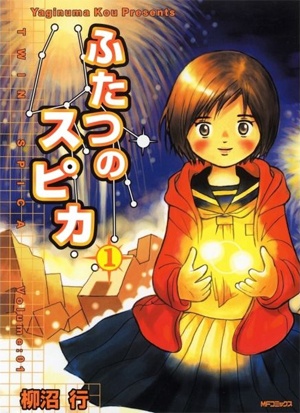
Twin Spica
Yu's review of Twin Spica — Asumi Kamogawa wants to become an astronaut; her mother died when a rocket crashed into their town when Asumi was an infant; a ghost in a lion's mask follows her through childhood and into the competitive astronaut training program, where she discovers what it actually takes to reach space.
Sci-Fi / Drama
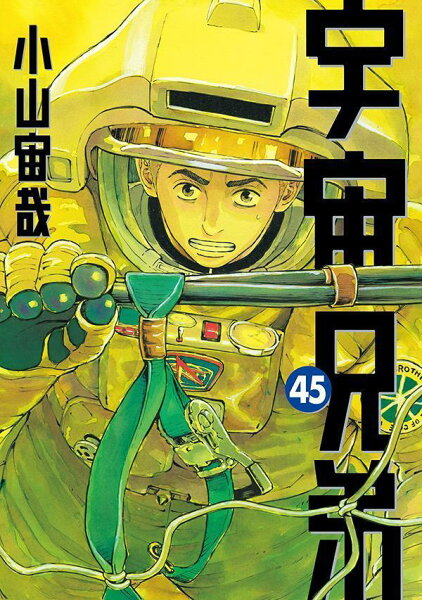
Space Brothers
Yu's review of Space Brothers — a 32-year-old man who was fired from his job reapplies to become a JAXA astronaut, following the dream he abandoned when his younger brother moved forward without him.
Sci-Fi
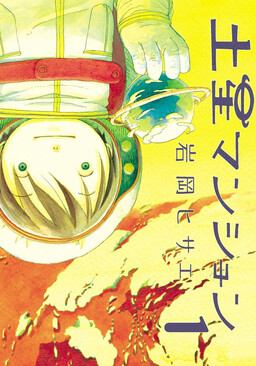
Saturn Apartments
Yu's review of Saturn Apartments — humanity lives in a ring habitat orbiting Earth; the surface is a nature preserve; Mitsu is a young window washer who cleans the outer windows of the habitat; his father was also a window washer and disappeared; Hisae Iwaoka's quiet science fiction manga about class, memory, and the view from the outside.

Sci-Fi / Drama
Hyakuoku no Hiru to Senoku no Yoru
Hyakuoku no Hiru to Senoku no Yoru is Moto Hagio's manga adaptation of Ryu Mitsuse's celebrated science fiction novel — following the collapse of civilizations across billions of years, centered on figures from different historical periods who are drawn toward a single question: what is the nature of creation, and who is responsible for it?
Sci-Fi / Drama
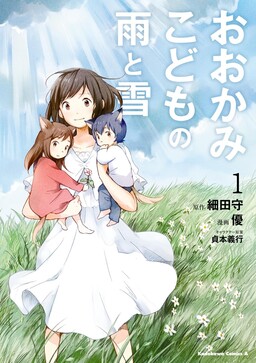
Wolf Children
Yu's review of Wolf Children — Hana falls in love with a man who is the last wolf-human; they have two children, Ame and Yuki, who can transform between human and wolf form; when their father dies suddenly, Hana must raise two wolf-children alone in a society that cannot know what they are.
Written by
Yu
Manga Enthusiast from Japan
I grew up in Japan and manga literally saved me during a tough time in elementary school. My English isn't perfect, but my love for manga is real — and I want to share it with you.
Disclosure: This post contains affiliate links. As an Amazon Associate, I earn from qualifying purchases at no extra cost to you.