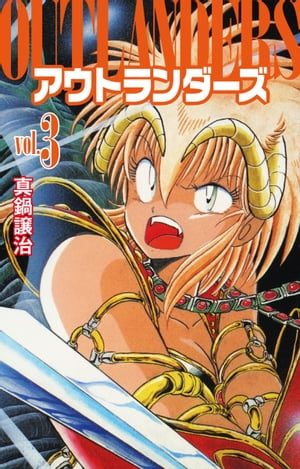
Outlanders Review: The 1985 Sci-Fi That Refused to Be Just an Alien Invasion Story
by Johji Manabe
Read the first volume. If it doesn't hook you, put it down. It'll hook you.
Buy Outlanders on Amazon →*Affiliate link — I earn a small commission at no extra cost to you.
Earth is being invaded. A princess with divine blood is leading the assault. A photojournalist is her choice of husband. The universe has not asked anyone's opinion.
Quick Take
- A classic 1985 sci-fi action manga with a romance premise that sounds absurd and actually works
- Dark Horse's English release was one of the pioneering translated manga publications of the late 1980s
- Contains mature content (nudity, violence) that reflects its original publication era
Who Is This Manga For?
- Fans of classic manga sci-fi looking for something outside the mainstream
- Readers interested in the history of translated manga in English
- People who enjoy alien invasion stories with human-scale emotional cores
- Adults comfortable with late-80s anime/manga aesthetics and content
Content Warnings & Age Rating
Age Rating: M (Mature) Content Warnings: Graphic violence, nudity, adult content, sci-fi warfare
This is unambiguously adult content for its era. The Dark Horse release was aimed at adults.
Yu's Rating
| Category | Score |
|---|---|
| Story Depth | ★★★☆☆ |
| Art Style | ★★★★☆ |
| Character Development | ★★★☆☆ |
| Accessibility for Non-Japanese Readers | ★★★★☆ |
| Reread Value | ★★★☆☆ |
Story Overview
Tetsuya Wakatsuki is a photojournalist covering the alien invasion of Earth — the Santovasku Empire's fleet appearing in orbit, beginning systematic destruction of the planet. In the chaos, he encounters Kahm: a Santovasku princess who decides, with aristocratic casualness, that he will be her husband.
Kahm is not joking. She is also not particularly interested in his opinion on the matter. She kills anyone who threatens him, fights alongside him, and gradually reveals the complexity of the Santovasku Empire: its internal politics, the religious prophecy that governs its expansion, and the personal history that makes Kahm different from the empire she nominally serves.
The story is a classic action-romance structure — two people who don't understand each other, from opposite sides of a conflict, finding connection through shared experience. What distinguishes it is the specific personality dynamics: Kahm is strong, determined, and used to getting what she wants, while Tetsuya is ordinary enough to be genuinely unequipped for any of this.
The empire's politics and the prophecy underlying the invasion give the story more depth than a pure action comic would manage. By the end, the scale has expanded far beyond a simple invasion story.
Characters
Tetsuya Wakatsuki — The ordinary-man-in-extraordinary-circumstances protagonist. His adjustment to alien warfare, alien culture, and alien marriage is the comic and human core of the story.
Kahm — Imperial, formidable, and surprisingly vulnerable about the things she cares about. Her combination of absolute confidence in combat and genuine uncertainty about personal connection makes her interesting.
Art Style
Manabe's 1985 art style is distinctive: detailed mechanical designs (ships, armor) combined with expressive character work and action sequences that use speed lines and impact effects with real energy. The alien civilization has consistent visual design — temples, costumes, and technology that feel coherently extraterrestrial. Some content would be modified or removed in modern publishing; the Dark Horse edition presents it largely intact.
Cultural Context
Outlanders was published in 1985-1987, during Japan's space opera manga boom — the same era as Macross and various other mecha/alien stories. The alien princess/human man setup was not uncommon in this period; what distinguished Outlanders was the harder edge and the maturity of its content.
Dark Horse Comics published it in English from 1988-1990, making it one of the earlier examples of translated manga in the American market — before the 1990s manga boom, before Viz and Tokyopop dominated. This makes it historically significant beyond its individual merit.
What I Love About It
The specific quality I appreciate in Outlanders is that Kahm never becomes a damsel. She's the one with power. She's the one making choices about the relationship. Tetsuya follows her lead, at least initially, and the story is honest about the imbalance rather than pretending it doesn't exist.
There's a genre of "alien princess chooses human man" stories where the human ends up as the savior. Outlanders goes another direction: the saving is mutual, the power dynamic shifts, and what they build together is actually built by both of them.
What English-Speaking Fans Say
Remembered primarily by readers who found it in the late 1980s and early 1990s, when Dark Horse was one of the few publishers bringing translated manga to America. Newer readers encounter it as historical artifact as much as story. The consensus among those who've read it: an entertaining action romance with good characters, dated content, historical interest.
Memorable Scene ⚠️ Spoiler Warning
The revelation about Kahm's place in the prophecy — and her response to it, choosing what she wants over what destiny demands — is the moment the story becomes something more than action adventure. She's been told her entire life what her purpose is. The scene where she rejects that purpose, not dramatically but practically (just deciding not to follow it), is the character arc in miniature.
Similar Manga
| Title | Its Approach | How Outlanders Differs |
|---|---|---|
| Urusei Yatsura | Alien girl attaches herself to human | Outlanders is darker and more serious in tone; less comedy |
| Dirty Pair | Female alien protagonists in space adventure | Outlanders has a more focused romantic core |
| Nausicaä of the Valley of the Wind | Female protagonist navigating war and nature | Outlanders is more action-oriented and less philosophical |
Reading Order / Where to Start
Volume 1, straight through. Eight volumes.
Official English Translation Status
Dark Horse Comics published all 8 volumes in English. Complete. Out of print but available used.
Pros & Cons
Pros
- Historically significant early translated manga
- Kahm is a strong female lead who doesn't need the protagonist to save her
- The space opera mythology has genuine depth
- 8 volumes is a complete, satisfying story
Cons
- Mature content (nudity, violence) is not for everyone
- 1985 art style requires adjustment for readers used to modern manga
- The comedy elements don't always land by contemporary standards
- Out of print — requires finding used copies
- The pacing reflects late-80s manga serialization norms
Is Outlanders Worth Reading?
For fans of classic sci-fi manga and manga history enthusiasts, yes. For general readers, it's a solid alien invasion romance if you can accept dated content. Worth seeking out as a historical artifact if nothing else.
Format Comparison
| Format | Pros | Cons |
|---|---|---|
| Physical | Original print experience | Out of print; used copies required |
| Digital | May be findable | — |
| Omnibus | No omnibus available | — |
Where to Buy
Read the first volume. If it doesn't hook you, put it down. It'll hook you.
This post contains affiliate links. If you purchase through these links, I may earn a small commission at no extra cost to you. As an Amazon Associate, I earn from qualifying purchases.
*Affiliate link — I earn a small commission at no extra cost to you.
More Manga You Might Like
Sci-Fi
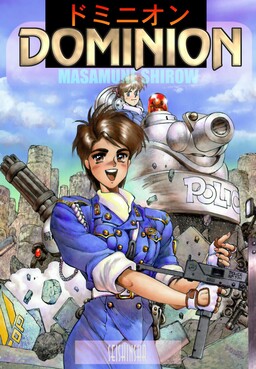
Dominion Tank Police
Yu's review of Dominion Tank Police — in a future city where crime requires a Tank Police division, officer Leona Ozaki is assigned to the unit and falls deeply in love with her miniature tank Bonaparte; Masamune Shirow's comedic sci-fi action, lighter than Ghost in the Shell but with the same worldbuilding attention.
Sci-Fi / Action
Battle Angel Alita
Yu's review of Battle Angel Alita (Gunnm) — a memoryless cyborg pulled from a junkyard fights through bounty hunting, Motorball, and a doomed first love in the brutal world beneath the sky city of Zalem.
Sci-Fi / Classic
Astro Boy
Yu's review of Astro Boy (鉄腕アトム) — Osamu Tezuka's foundational manga about a robot child built by Dr. Tenma to replace his dead son, abandoned, then raised by Professor Ochanomizu into a hero who defends both humans and robots. Includes 'The Greatest Robot on Earth.' Complete in 23 volumes from Dark Horse.
Sci-Fi / Action
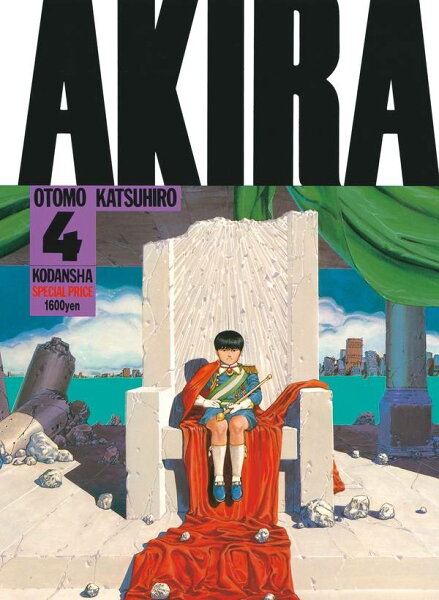
Akira
Yu's review of Akira — Katsuhiro Otomo's six-volume monster, serialized 1982–1990. Set in 2019 Neo-Tokyo, a teenage biker tries to save the best friend who suddenly has the power to end the world. The manga that dragged Japanese comics onto the world stage.
Sci-Fi / Action
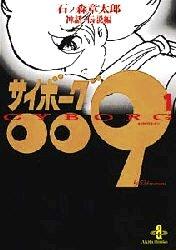
Cyborg 009
Nine people from around the world are kidnapped and turned into cyborg weapons against their will. Then they escape and have to decide what to do with the power they were given — fight for the people who made them, or fight for humanity itself.
Sci-Fi / Mecha
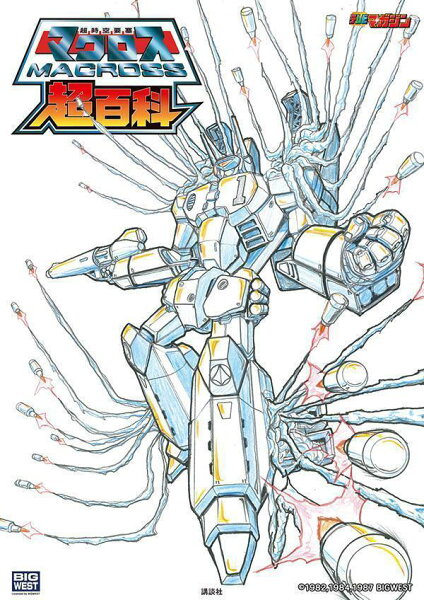
The Super Dimension Fortress Macross
A review of the original Macross manga, the classic that introduced the idea that pop music could end a war between species.
Written by
Yu
Manga Enthusiast from Japan
I grew up in Japan and manga literally saved me during a tough time in elementary school. My English isn't perfect, but my love for manga is real — and I want to share it with you.
Disclosure: This post contains affiliate links. As an Amazon Associate, I earn from qualifying purchases at no extra cost to you.