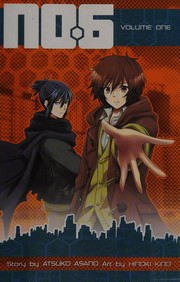
No. 6 Review: A Privileged Boy in a Perfect City Discovers the Price of That Perfection
by Atsuko Asano / Hinoki Kino
Read the first volume. If it doesn't hook you, put it down. It'll hook you.
Buy No. 6 on Amazon →*Affiliate link — I earn a small commission at no extra cost to you.
Quick Take
- The dystopian manga that handles its boy-meets-fugitive premise with emotional intelligence — the Shion/Rat relationship is the series' primary content and its most carefully developed element
- 9 volumes complete; a light novel adaptation that condenses effectively
- Recommended for readers who want dystopian fiction that takes character relationships as seriously as worldbuilding
Who Is This Manga For?
- Readers who want dystopian sci-fi with strong character focus
- Fans of YA dystopian fiction looking for Japanese manga equivalents
- Readers interested in LGBTQ+ manga with more subtlety than most explicit BL
- Anyone who wants complete 9-volume sci-fi with satisfying emotional resolution
Content Warnings & Age Rating
Age Rating: T (Teen) Content Warnings: Dystopian state violence; death of significant characters; parasitic horror elements (wasps); the implied LGBTQ+ content is central to the narrative
The T rating is appropriate but the content — particularly the parasite horror and state violence — is more intense than many T-rated series.
Yu's Rating
| Category | Score |
|---|---|
| Story Depth | ★★★★☆ |
| Art Style | ★★★★☆ |
| Character Development | ★★★★★ |
| Accessibility for Non-Japanese Readers | ★★★★☆ |
| Reread Value | ★★★★☆ |
Story Overview
No. 6 is one of six city-states that emerged from global catastrophe. It is clean, beautiful, technologically advanced, and managed by a central authority that ensures citizen safety through total surveillance and perfect resource allocation. Shion is an elite — a child identified as exceptional who has been given every advantage.
When he is twelve, a storm night. A boy appears at his window: bleeding, obviously having escaped from somewhere, calling himself Rat. Shion hides him. Gives him food. Lets him sleep. By morning, Rat is gone.
Four years later, Shion has lost his elite status because of that night. He is now a low-level city worker, his privileges stripped. A second encounter with mysterious wasp-related deaths — people aging rapidly and dying — pulls Shion out of the city entirely, into the West Block slum outside No. 6's walls, where Rat lives.
The series follows their navigation of the slum, the discovery of what No. 6 is actually doing, and their return to the city to confront the system that created both of them.
Characters
Shion — His genuine goodness — which the series distinguishes carefully from naivety — is the series' constant. He is not blind to No. 6's nature; he simply continues to act according to his values regardless of the cost.
Rat — His cynicism is the series' counterweight to Shion's optimism, and the tension between them — and their specific form of affection — is the series' emotional core.
Safu — Shion's childhood friend whose fate provides the series' external plot driver and the most direct statement of what No. 6 is willing to sacrifice.
Art Style
Kino's art is clean and slightly delicate — suited to the emotional content more than the sci-fi action elements. Character expressions and the Shion/Rat dynamic are the visual strength; the dystopian environment is functional without being exceptional.
Cultural Context
No. 6 adapts Atsuko Asano's nine-volume novel series, which was written for young adults and received significantly more critical attention than most manga adaptations of YA sci-fi. The Shion/Rat relationship is more explicit as an LGBTQ+ relationship in the novels; the manga adaptation is more restrained.
What I Love About It
The first shelter. Twelve-year-old Shion sheltering a fugitive he has no reason to help — the specific smallness of that act, and the complete transformation of his life that follows from it — is one of manga's best illustrations of consequence. The series keeps returning to that night as the origin point for everything.
What English-Speaking Fans Say
Western readers describe No. 6 as the dystopian manga with the best central relationship — the Shion/Rat dynamic is praised as genuinely affecting in ways that the sci-fi worldbuilding doesn't need to be. The parasite horror element surprises readers who expect a cleaner dystopian setup.
Memorable Scene ⚠️ Spoiler Warning
The Correctional Facility sequence — what is actually happening inside No. 6's most controlled zone, the specific nature of what the city has been doing, and the cost of confronting it — is the series' most emotionally devastating revelation and its most complete indictment of the utopian premise.
Similar Manga
- From the New World — Japanese dystopian sci-fi, similar controlled-society revelation structure
- Promised Neverland — Dystopian revelation structure, similar pacing
- Dorohedoro — Outside-the-wall slum existence, different register
- Attack on Titan — Walled community with hidden horror, larger scale
Reading Order / Where to Start
Volume 1 — the childhood shelter scene establishes the series' emotional foundation immediately.
Official English Translation Status
Kodansha Comics published the complete 9-volume manga. All volumes available.
Pros & Cons
Pros
- The Shion/Rat relationship is among manga's most carefully developed central bonds
- 9 volumes — complete and manageable
- The dystopian revelation is genuinely surprising
- The light novel source provides stronger plot structure than manga-original series
Cons
- The worldbuilding is less developed than the character content
- The LGBTQ+ content is less explicit than the source material
- The ending divides readers on whether it resolves satisfactorily
Format Comparison
| Format | Notes |
|---|---|
| Individual Volumes | Kodansha Comics; standard |
| Digital | Available |
Where to Buy
Read the first volume. If it doesn't hook you, put it down. It'll hook you.
This post contains affiliate links. If you purchase through these links, I may earn a small commission at no extra cost to you. As an Amazon Associate, I earn from qualifying purchases.
*Affiliate link — I earn a small commission at no extra cost to you.
More Manga You Might Like
Sci-Fi / Drama
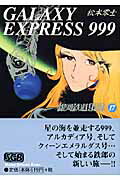
Galaxy Express 999
Galaxy Express 999 follows Tetsuro Hoshino, a young boy who boards the legendary space train 999 toward a planet where he can receive a free mechanical body — accompanied by the mysterious Maetel — and encounters, on each planet the train stops at, a different meditation on what it means to be human and whether eternity is worth what it costs.

Sci-Fi / Drama
Hyakuoku no Hiru to Senoku no Yoru
Hyakuoku no Hiru to Senoku no Yoru is Moto Hagio's manga adaptation of Ryu Mitsuse's celebrated science fiction novel — following the collapse of civilizations across billions of years, centered on figures from different historical periods who are drawn toward a single question: what is the nature of creation, and who is responsible for it?
Sci-Fi / Drama
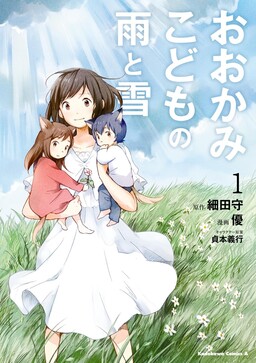
Wolf Children
Yu's review of Wolf Children — Hana falls in love with a man who is the last wolf-human; they have two children, Ame and Yuki, who can transform between human and wolf form; when their father dies suddenly, Hana must raise two wolf-children alone in a society that cannot know what they are.
Sci-Fi / Drama
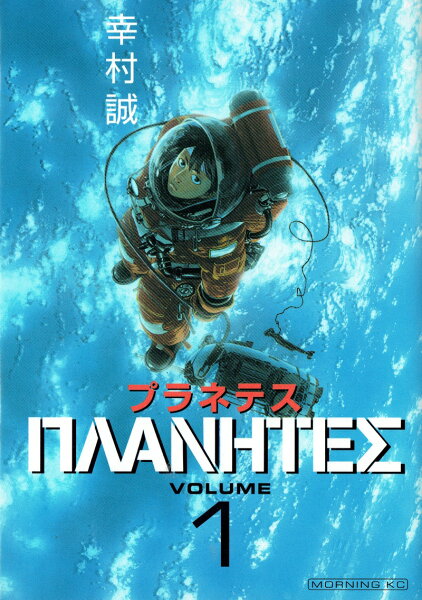
Planetes
Yu's review of Planetes — a crew of space debris collectors in the near future of 2075, where someone wants to be the first human to Jupiter and someone else just wants to survive the shift.
Sci-Fi / Drama
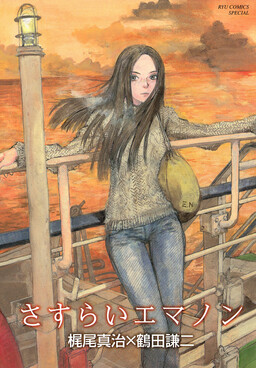
Emanon
Yu's review of Emanon — a young man on an overnight ferry meets a mysterious woman who claims to remember every life she has lived since the first single-celled organism; she carries within her the memories of three billion years of evolution; he doesn't know whether to believe her.
Sci-Fi / Drama
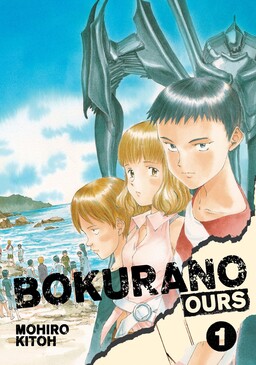
Bokurano
Yu's review of Bokurano by Mohiro Kitoh — fifteen children sign a contract to pilot a giant robot called Zearth, only to learn each victory costs the pilot's life, and that every battle won erases another Earth.
Written by
Yu
Manga Enthusiast from Japan
I grew up in Japan and manga literally saved me during a tough time in elementary school. My English isn't perfect, but my love for manga is real — and I want to share it with you.
Disclosure: This post contains affiliate links. As an Amazon Associate, I earn from qualifying purchases at no extra cost to you.