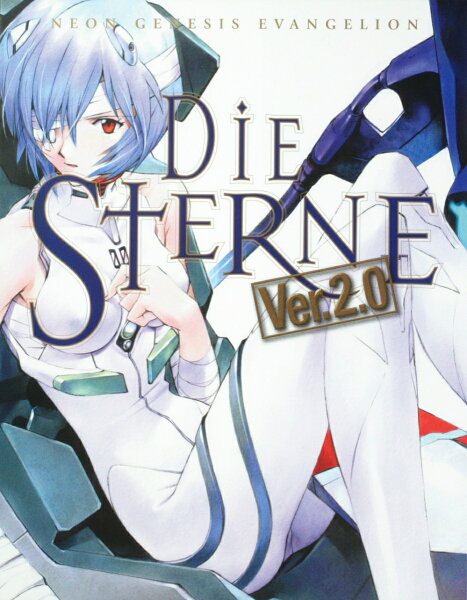
Neon Genesis Evangelion Review: Giant Robots and the Boy Who Could Not Pilot Them
by Yoshiyuki Sadamoto
Read the first volume. If it doesn't hook you, put it down. It'll hook you.
Buy Neon Genesis Evangelion on Amazon →*Affiliate link — I earn a small commission at no extra cost to you.
Quick Take
- A depressed fourteen-year-old is drafted to pilot a giant organic weapon against incomprehensible beings, by a father who abandoned him and now needs him
- The manga adaptation of one of anime's most influential works — different in tone from the series, more linear, and arguably more emotionally accessible
- 14 volumes, complete, with an ending that differs meaningfully from both the anime series and the films
Who Is This Manga For?
- Readers who know the Evangelion anime and want to see Sadamoto's vision of the same story
- Fans of psychological sci-fi who want mecha with genuine emotional depth
- Anyone interested in one of the foundational works of contemporary Japanese pop culture
- Readers who found the anime's ending frustrating and want a different resolution
Content Warnings & Age Rating
Age Rating: T (Teen) Content Warnings: Psychological trauma and depression (Shinji's internal state is the manga's primary subject), violence, existential themes, body horror in the nature of the Evas
The psychological content is substantive. Shinji's depression is taken seriously, not used as a quirk.
Yu's Rating
| Category | Score |
|---|---|
| Story Depth | ★★★★★ |
| Art Style | ★★★★★ |
| Character Development | ★★★★★ |
| Accessibility for Non-Japanese Readers | ★★★★☆ |
| Reread Value | ★★★★★ |
Story Overview
In 2015, fifteen years after a catastrophe called Second Impact killed half the world's population, beings called Angels attack Tokyo-3. The only things capable of fighting them are the Evangelions — massive biomechanical constructs that can only be piloted by fourteen-year-olds born after Second Impact.
Shinji Ikari is one of those children. His father, Commander Gendo Ikari, heads NERV, the organization that builds and operates the Evas. Gendo abandoned Shinji years ago. He has sent for him now because he needs him.
Shinji pilots Eva Unit-01. He is terrified. He does not want to be here. He wants to run away. He runs away, comes back, runs away again, and each time something happens that makes running away more costly than staying.
The manga follows the same story as the anime — the Angel battles, the development of Shinji's relationships with Rei and Asuka, the revelation of what the Evas actually are — while giving Sadamoto room to develop the characters differently. Shinji is somewhat more capable in the manga. The ending, reached after 18 years of serialization, is more resolved.
Characters
Shinji Ikari — One of the most honest portrayals of depression and anxiety in manga. His inability to assert himself, his desperate need for validation, his genuine terror in the Eva — all of it is rendered without judgment. You understand him, even when he infuriates you.
Rei Ayanami — Quiet, detached, mysterious. Her arc in the manga resolves differently than the anime, with more clarity about her nature and her choices.
Asuka Langley Soryu — Loud, brilliant, desperately fragile behind the confidence. Her backstory is given slightly more space in the manga and her arc is slightly more linear.
Gendo Ikari — One of manga's great absent fathers. The question of whether he loves Shinji, and what that love looks like when expressed by someone as fundamentally broken as Gendo, is one of the manga's most painful threads.
Misato Katsuragi — The operations director who takes Shinji in; her own trauma and her genuine care for the children under her command.
Art Style
Sadamoto is one of the great character designers in anime history — the manga allows his designs to exist in their full form without the compromises of animation. His pages are elegant and detailed, with strong emotional expressiveness for the character moments and appropriate visual complexity for the Eva battles. The Evas themselves — organic, monstrous, wrong in specific ways — are drawn with care for what they actually are.
Cultural Context
Evangelion emerged from a specific moment in 1990s Japan — economic stagnation, a feeling of institutional failure, the specific depression of a generation that inherited expectations they could not meet. Shinji's inability to engage is not simply a character flaw; it is a symptom of a cultural moment. This context enriches the manga but the emotional core translates completely.
What I Love About It
The scene in the manga where Shinji, alone in Unit-01, does something that the anime cuts away from — and the consequence of that action — is one of the most disturbing and most revealing moments of the entire Eva narrative. Sadamoto does not cut away. It clarifies something about Shinji that the anime left ambiguous.
I love the manga's ending. After years of building, it gives Shinji something the anime never quite does: a moment of genuine choice, made with full understanding of the options. Whether you find it satisfying depends on what you wanted from the story. I found it exactly right.
What English-Speaking Fans Say
Western Eva fans generally consider the manga a worthy complement to the anime rather than a replacement. The different pacing, the different ending, and Sadamoto's specific characterization of Shinji are all discussed in detail. Western readers who came to the manga before the anime sometimes prefer it for its linearity. The 18-year serialization is frequently noted — the manga genuinely changed as Sadamoto's relationship to the material changed.
Memorable Scene ⚠️ Spoiler Warning
Unit-01's awakening in the original series is one of the most famous moments in anime. The manga's version of this event — the same moment, rendered in Sadamoto's detailed art, with more space for what it means — is where the manga justifies its existence as a separate work. It is the same story told more quietly and more completely.
Similar Manga
- Berserk — Similar darkness, different genre; the Eva/Berserk connection is real
- Ghost in the Shell — Similar era of influential sci-fi
- Battle Angel Alita — Cyberpunk action with similar body-horror elements
- Devilman (Go Nagai) — Precursor to much of Eva's theological imagery
Reading Order / Where to Start
Volume 1. The manga can be read without knowledge of the anime; it is a complete story. Fans of the anime will notice the differences from the start.
The 3-in-1 omnibus editions from VIZ are the recommended format.
Official English Translation Status
VIZ Media published the complete 14-volume series, including omnibus editions. All volumes available.
Pros & Cons
Pros
- Sadamoto's art is among the best in sci-fi manga
- Shinji is rendered more accessibly than in the anime without being softened
- The ending provides more resolution than the original anime
- Complete in 14 volumes
Cons
- 18-year serialization means the art and tone shift across volumes
- Readers who love the anime's ambiguity may find the manga's resolution too clear
- Less dense thematically than the anime series and films
Format Comparison
| Format | Notes |
|---|---|
| Omnibus (3-in-1) | Recommended — VIZ's omnibus editions |
| Individual Volumes | Available; omnibus is better value |
| Digital | Available |
Where to Buy
Read the first volume. If it doesn't hook you, put it down. It'll hook you.
This post contains affiliate links. If you purchase through these links, I may earn a small commission at no extra cost to you. As an Amazon Associate, I earn from qualifying purchases.
*Affiliate link — I earn a small commission at no extra cost to you.
More Manga You Might Like
Sci-Fi / Military
Mobile Suit Gundam: The Origin
Yu's review of Mobile Suit Gundam: The Origin — Yoshikazu Yasuhiko, the original character designer for the 1979 Gundam anime, re-adapts and expands the One Year War, giving Char Aznable the backstory the original never showed and drawing the Universal Century with 40 years of additional craft.
Sci-Fi / Drama
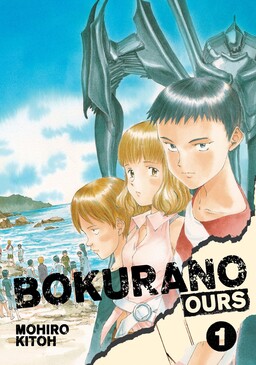
Bokurano
Yu's review of Bokurano by Mohiro Kitoh — fifteen children sign a contract to pilot a giant robot called Zearth, only to learn each victory costs the pilot's life, and that every battle won erases another Earth.
Sci-Fi / Drama
Galaxy Express 999
Galaxy Express 999 follows Tetsuro Hoshino, a young boy who boards the legendary space train 999 toward a planet where he can receive a free mechanical body — accompanied by the mysterious Maetel — and encounters, on each planet the train stops at, a different meditation on what it means to be human and whether eternity is worth what it costs.

Sci-Fi / Drama
Hyakuoku no Hiru to Senoku no Yoru
Hyakuoku no Hiru to Senoku no Yoru is Moto Hagio's manga adaptation of Ryu Mitsuse's celebrated science fiction novel — following the collapse of civilizations across billions of years, centered on figures from different historical periods who are drawn toward a single question: what is the nature of creation, and who is responsible for it?
Sci-Fi
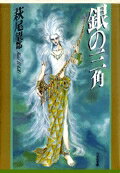
Gin no Sankaku
Gin no Sankaku follows characters trapped across multiple timelines by a silver triangle that connects them — a complex, demanding sci-fi work by Moto Hagio that uses time loop mechanics to explore the weight of memory and the impossible arithmetic of rescue and loss.
Sci-Fi / Psychological
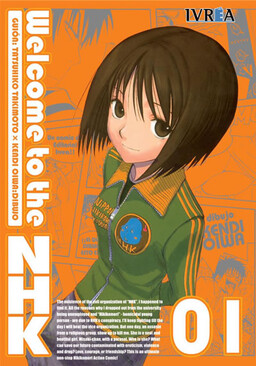
Welcome to the NHK
Yu's review of Welcome to the NHK — Tatsuhiro Sato has been a hikikomori (shut-in) for four years, convinced that Japan's public broadcaster NHK is running a conspiracy to create hikikomori; a mysterious girl named Misaki begins visiting him and offers to help him rejoin society, for reasons he cannot understand.
Written by
Yu
Manga Enthusiast from Japan
I grew up in Japan and manga literally saved me during a tough time in elementary school. My English isn't perfect, but my love for manga is real — and I want to share it with you.
Disclosure: This post contains affiliate links. As an Amazon Associate, I earn from qualifying purchases at no extra cost to you.