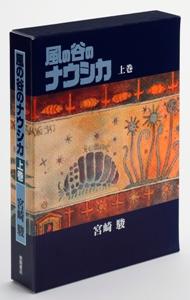
Nausicaa of the Valley of Wind Review: A Princess Navigates Ecology, War, and the Question of Whether Humanity Deserves Its Future
by Hayao Miyazaki
Read the first volume. If it doesn't hook you, put it down. It'll hook you.
Buy Nausicaa of the Valley of Wind on Amazon →*Affiliate link — I earn a small commission at no extra cost to you.
Quick Take
- The manga Miyazaki spent twelve years completing, going far beyond the film into philosophy about ecology, war, and whether humanity's survival is worth its cost
- One of the most important manga ever published — the foundation of Studio Ghibli's aesthetic and Miyazaki's philosophy
- 7 volumes, complete; the film covers only the first two
Who Is This Manga For?
- Readers who know and love the film and want the full story
- Fans of ecological science fiction with genuine philosophical ambition
- Anyone who wants to understand where Miyazaki's worldview comes from
- Readers who want complete manga with genuine depth and scope
Content Warnings & Age Rating
Age Rating: T (Teen) Content Warnings: War violence, ecological catastrophe, mature philosophical questions about whether humanity deserves survival
Deeper and darker than the film. Requires engagement with complex moral questions.
Yu's Rating
| Category | Score |
|---|---|
| Story Depth | ★★★★★ |
| Art Style | ★★★★★ |
| Character Development | ★★★★★ |
| Accessibility for Non-Japanese Readers | ★★★★★ |
| Reread Value | ★★★★★ |
Story Overview
One thousand years after an industrial civilization poisoned the world, toxic forests called the Sea of Corruption cover much of Earth. The spores are lethal to humans. Giant insects called Ohmu guard the forests.
Nausicaa is the princess of a small valley kingdom who can communicate with the Ohmu. While other humans fear and fight the Sea of Corruption, Nausicaa studies it.
The manga begins where the film begins and continues for five more volumes — into war between nations, into the secrets of the Sea of Corruption, into the question of what was done to make the world this way and whether the solution humans have prepared is a solution or another catastrophe.
Characters
Nausicaa — One of manga's finest protagonists: compassionate, brilliant, capable of violence when necessary and horrified by it afterward. Her evolution across seven volumes from hopeful princess to someone who has seen the full scope of human capacity is the series' most affecting arc.
The Ohmu — Not characters exactly, but a presence; their relationship with Nausicaa is the series' central ecological argument.
The Worm Handlers — The peoples who live in the Sea of Corruption; their existence is the series' most pointed argument about what humans label as threatening.
Art Style
Miyazaki's manga art is meticulous — the ecological designs, the aircraft designs, the insect designs, and the topographical environments of a world twelve centuries beyond our own are rendered with the specificity of someone who has thought about this world for decades. Every page is detailed at a level that rewards close examination.
Cultural Context
Nausicaa reflects Miyazaki's engagement with real ecological anxiety — written from 1982 to 1994, during the period of Japan's most intense environmental debate, the manga processed those anxieties through the lens of science fiction. Its question — whether humans can coexist with rather than dominate their environment — is Miyazaki's central preoccupation across his entire career.
What I Love About It
The revelation of what the Sea of Corruption actually is — what it is doing, what was designed into it, and what that means for Nausicaa's entire life of trying to understand it — is one of science fiction's great reveals. It reframes the ecology of the entire world and makes the question of what to do about it genuinely difficult.
What English-Speaking Fans Say
Western readers who know only the film consistently describe the manga as a different and more complete experience. The film is a beautiful adaptation of the first arc; the manga asks much harder questions. The final volumes are cited as among the most philosophically demanding content Miyazaki produced in any medium.
Memorable Scene ⚠️ Spoiler Warning
Nausicaa's conversation with the Master of the Garden — the confrontation with the architects of what was done to the world, and her response to what they offer — is the series' moral climax and one of manga's finest articulations of why hope is not the same as optimism.
Similar Manga
- Dorohedoro — Post-apocalyptic ecology, dark world with warmth at center
- Made in Abyss — Beautiful world with terrible secrets, ecological exploration
- Blame! — Post-technological apocalypse, vast scale
- Attack on Titan — Post-catastrophic world, secrets about its true nature
Reading Order / Where to Start
Volume 1 — the Ohmus and the Sea of Corruption establish in the opening chapters.
Official English Translation Status
VIZ Media published the complete 7-volume series in both individual and omnibus format. All volumes available.
Pros & Cons
Pros
- 7 volumes, complete
- Miyazaki's ecological philosophy is the most complete expression of his worldview in any medium
- The art is extraordinary throughout
- The ending is among the most philosophically complex in manga
Cons
- The film-only reader will find the manga significantly darker
- The final volumes are demanding — philosophical content requires engagement
- The scale of the world requires tracking across multiple factions
Format Comparison
| Format | Notes |
|---|---|
| Omnibus | VIZ; 4 large format volumes — recommended |
| Individual Volumes | Standard size |
| Digital | Available |
Where to Buy
Read the first volume. If it doesn't hook you, put it down. It'll hook you.
This post contains affiliate links. If you purchase through these links, I may earn a small commission at no extra cost to you. As an Amazon Associate, I earn from qualifying purchases.
*Affiliate link — I earn a small commission at no extra cost to you.
More Manga You Might Like
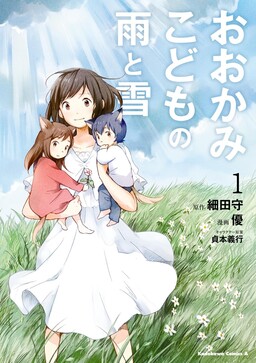
Sci-Fi / Drama
Wolf Children
Yu's review of Wolf Children — Hana falls in love with a man who is the last wolf-human; they have two children, Ame and Yuki, who can transform between human and wolf form; when their father dies suddenly, Hana must raise two wolf-children alone in a society that cannot know what they are.
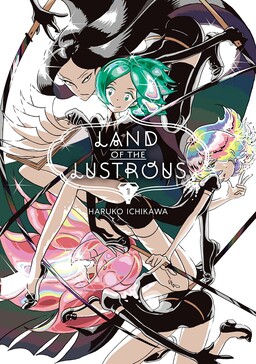
Sci-Fi / Fantasy
Land of the Lustrous
Yu's review of Land of the Lustrous — in a far future where humanity no longer exists, gem beings called Lustrous fight against Lunarians who wish to capture them for decoration; Phosphophyllite, the youngest and most fragile gem, wants to fight but is unfit for combat; the series follows Phos's transformation into something unrecognizable as their body is replaced piece by piece and their original self becomes inaccessible.
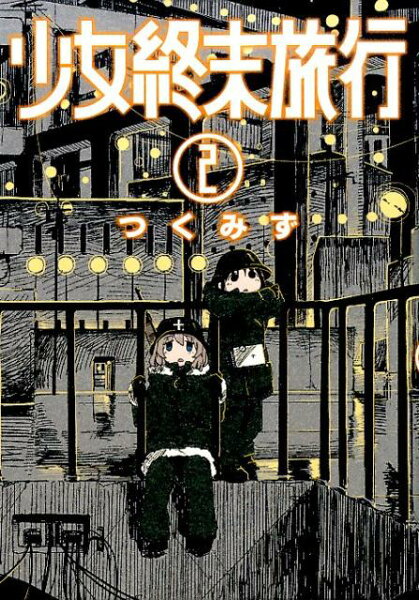
Sci-Fi / Slice of Life
Girls' Last Tour
Yu's review of Girls' Last Tour — two girls travel through a massive post-apocalyptic city on a kettenrad, eating whatever they find, watching it snow, and thinking about what it means to be alive when almost nothing is left.
Sci-Fi / Fantasy
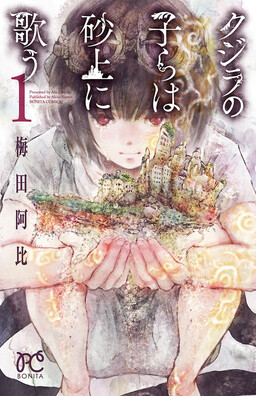
Children of the Whales
Yu's review of Children of the Whales — the Mud Whale drifts across an endless Sea of Sand carrying people called the Marked, who can move things with a power named thymia but die young for it. When archivist Chakuro finds a girl on a ghost ship, the world that has been hidden from his island comes for them.
Sci-Fi
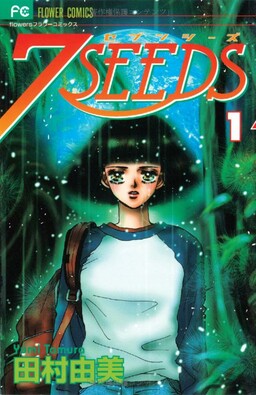
7SEEDS
Yu's review of 7SEEDS — after a meteor wipes out civilization, young people cryogenically frozen by a secret government project wake up in a transformed Japan with no instructions. Yumi Tamura's 35-volume survival epic about ordinary, frightened people who were never asked if they wanted to save the human race.
Sci-Fi
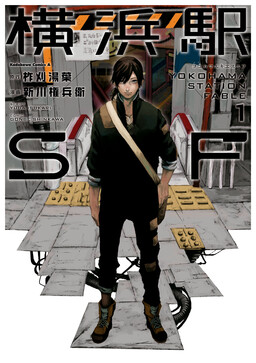
Yokohama Station SF
Yu's review of Yokohama Station SF — Yokohama Station has been self-expanding for centuries and now covers all of Honshu; the world outside is called the Outside; Hiroto, who has never been inside the Station, gets in; manga adaptation of Yuba Isukari's web novel about an infrastructure apocalypse.
Written by
Yu
Manga Enthusiast from Japan
I grew up in Japan and manga literally saved me during a tough time in elementary school. My English isn't perfect, but my love for manga is real — and I want to share it with you.
Disclosure: This post contains affiliate links. As an Amazon Associate, I earn from qualifying purchases at no extra cost to you.