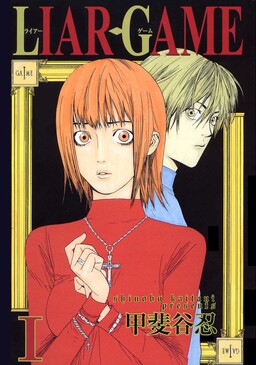
Liar Game Review: An Honest Girl and a Con Man Are Forced Into a Game Where the Rules Reward Deception
by Shinobu Kaitani
Read the first volume. If it doesn't hook you, put it down. It'll hook you.
Buy Liar Game on Amazon →*Affiliate link — I earn a small commission at no extra cost to you.
Quick Take
- The psychological game manga that uses deception as its primary mechanism — every round of the Liar Game has specific rules that create specific prisoner's dilemmas, and Akiyama solves them through understanding human psychology rather than through cleverness
- The Nao/Akiyama dynamic — her fundamental honesty and his fundamental understanding of dishonesty — is one of manga's most interesting protagonist pairings
- 19 volumes complete; essential for fans of psychological manga
Who Is This Manga For?
- Readers who want psychological thriller manga built around game theory and human psychology
- Fans of Akagi and One Outs by the same author
- Anyone interested in prisoner's dilemma structures and cooperation vs. defection dynamics
- Readers who want completed psychological manga with genuine intellectual content
Content Warnings & Age Rating
Age Rating: T (Teen) Content Warnings: Psychological manipulation is the series' primary content; financial stakes (large debt if you lose); trust exploitation is central to every round; the content is intense but not violent
Accessible for the age rating; the psychological content is the intensity.
Yu's Rating
| Category | Score |
|---|---|
| Story Depth | ★★★★★ |
| Art Style | ★★★★☆ |
| Character Development | ★★★★★ |
| Accessibility for Non-Japanese Readers | ★★★★★ |
| Reread Value | ★★★★★ |
Story Overview
Nao Kanzaki receives a package with 100 million yen and a card explaining she is enrolled in the Liar Game. She has a specific time period to deceive other players into giving her their money, ending with the player who holds the most money keeping it and the player who holds the least taking on the debt.
Nao is constitutionally incapable of deceiving anyone. She is also exactly the kind of person the game was designed to exploit.
She goes to the recently released con man Shinichi Akiyama, convicted for defrauding the company that destroyed his family. He refuses. She keeps asking. He agrees.
Each round of the Liar Game has different rules: a minority vote game, a musical chairs variant, a specific poker variant. Every game is a construction designed to reward defection in ways that make cooperation structurally difficult. Akiyama's specific skill is understanding exactly why people choose to defect — and constructing situations where cooperation becomes the rational choice despite that.
Characters
Nao Kanzaki — Her absolute honesty is not naivety; she understands what people are trying to do to her. She chooses to trust anyway. The series never stops asking whether this is a virtue or a vulnerability — and Nao's answer changes across 19 volumes.
Shinichi Akiyama — His understanding of human dishonesty is encyclopedic and clinical. His specific investment in Nao — a person whose trust he could destroy in ten minutes — is the series' most interesting character question.
Art Style
Kaitani's art is functional and clear — the game mechanics and psychological states are communicated through dialogue and expression. The art serves the psychological content rather than competing with it.
Cultural Context
Liar Game ran in Weekly Young Jump from 2005 to 2015, developing a cult following through the television drama adaptation. The series uses game theory — specifically the prisoner's dilemma and its variants — as the intellectual foundation for each round, making it one of the most formally rigorous psychological manga.
What I Love About It
Akiyama's solutions. Each round of the Liar Game ends with Akiyama explaining how he solved the specific game — what he knew about the other players, what he predicted they would do, and how he constructed the situation that made the right outcome structurally probable. The explanations are always specific and always work from genuine game theory reasoning.
What English-Speaking Fans Say
Western readers describe Liar Game as the manga that made them think most carefully about cooperation and defection — the game theory content is cited as genuinely educational. The Nao/Akiyama dynamic is praised as the most unusual protagonist pairing in psychological manga. The series is consistently cited alongside Death Note as psychological manga that demands active engagement.
Memorable Scene ⚠️ Spoiler Warning
The final game's revelation — what the Liar Game Organization was actually testing, who runs it, and why — connects to the Nao/Akiyama dynamic in ways the series has been building toward since the beginning, and delivers the series' ultimate statement about whether trust is rational.
Similar Manga
- Akagi — Same author, psychological intensity, gambling context
- One Outs — Same author, psychological sports competition
- Death Note — Psychological game between intelligence and counter-intelligence
- Kaiji — Psychological game manga, similar desperation stakes
Reading Order / Where to Start
Volume 1 — the Liar Game premise and Nao's recruitment of Akiyama establish immediately.
Official English Translation Status
Viz Media offers digital volumes. Physical editions are limited.
Pros & Cons
Pros
- The game theory framework is genuinely intellectually rigorous
- The Nao/Akiyama dynamic is unique in the genre
- Each round creates its own puzzle structure with satisfying resolution
- Complete with full revelation of the organization behind the game
Cons
- Physical editions are limited; digital is the primary format
- The psychological content requires close reading
- Some middle rounds are less inventive than others
Format Comparison
| Format | Notes |
|---|---|
| Individual Volumes | Limited physical; digital primary |
| Digital | Viz Media digital available |
Where to Buy
Read the first volume. If it doesn't hook you, put it down. It'll hook you.
This post contains affiliate links. If you purchase through these links, I may earn a small commission at no extra cost to you. As an Amazon Associate, I earn from qualifying purchases.
*Affiliate link — I earn a small commission at no extra cost to you.
More Manga You Might Like

Sci-Fi / Psychological
Welcome to the NHK
Yu's review of Welcome to the NHK — Tatsuhiro Sato has been a hikikomori (shut-in) for four years, convinced that Japan's public broadcaster NHK is running a conspiracy to create hikikomori; a mysterious girl named Misaki begins visiting him and offers to help him rejoin society, for reasons he cannot understand.
Sci-Fi / Drama
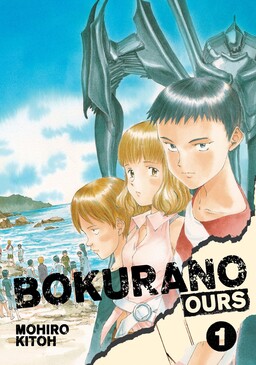
Bokurano
Yu's review of Bokurano by Mohiro Kitoh — fifteen children sign a contract to pilot a giant robot called Zearth, only to learn each victory costs the pilot's life, and that every battle won erases another Earth.

Sci-Fi / Action
Magical Girl Spec-Ops Asuka
Yu's review of Magical Girl Spec-Ops Asuka — three years after magical girls saved the world from an invasion of magical creatures, Asuka Otori is trying to live a normal high school life; she has PTSD; her allies need her back; she doesn't want to go back.
Sci-Fi / Horror
Alien Nine
Yu's review of Alien Nine — Yuri Otani, a frightened sixth-grader, is elected to her school's Alien Party and forced to fight the aliens that fall on the school grounds while wearing a symbiotic creature called a Borg on her head. Drawn in a soft, cute style that makes the body horror underneath it so much worse.

Sci-Fi / Drama
Galaxy Express 999
Galaxy Express 999 follows Tetsuro Hoshino, a young boy who boards the legendary space train 999 toward a planet where he can receive a free mechanical body — accompanied by the mysterious Maetel — and encounters, on each planet the train stops at, a different meditation on what it means to be human and whether eternity is worth what it costs.

Sci-Fi / Drama
Hyakuoku no Hiru to Senoku no Yoru
Hyakuoku no Hiru to Senoku no Yoru is Moto Hagio's manga adaptation of Ryu Mitsuse's celebrated science fiction novel — following the collapse of civilizations across billions of years, centered on figures from different historical periods who are drawn toward a single question: what is the nature of creation, and who is responsible for it?
Written by
Yu
Manga Enthusiast from Japan
I grew up in Japan and manga literally saved me during a tough time in elementary school. My English isn't perfect, but my love for manga is real — and I want to share it with you.
Disclosure: This post contains affiliate links. As an Amazon Associate, I earn from qualifying purchases at no extra cost to you.