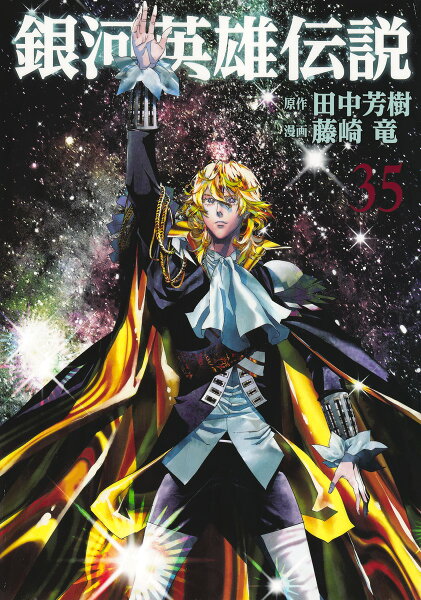
Legend of the Galactic Heroes Review: Two Geniuses on Opposite Sides of a War That Has Lasted a Century and a Half
by Yoshiki Tanaka / Katsumi Michihara
Read the first volume. If it doesn't hook you, put it down. It'll hook you.
Buy Legend of the Galactic Heroes on Amazon →*Affiliate link — I earn a small commission at no extra cost to you.
Quick Take
- Two brilliant commanders on opposite sides of a century-long war — one who wants to conquer the galaxy to fix it, one who wants to survive long enough for democracy to fix itself
- The manga adaptation of Yoshiki Tanaka's legendary novel series; 10 volumes, complete in English
- Space opera as political philosophy — the most intellectually serious military science fiction manga published in English
Who Is This Manga For?
- Readers who want science fiction that takes political theory and military history seriously
- Fans of complex antagonists who are more interesting than the protagonists on their own side
- Anyone who wants completed space opera manga at the highest level of narrative ambition
- Readers who enjoy the anime and want the manga adaptation
Content Warnings & Age Rating
Age Rating: T (Teen) Content Warnings: Large-scale war, political violence, themes of empire versus democracy as genuine debate rather than easy allegory
War is depicted at scale; individual deaths matter more than body count.
Yu's Rating
| Category | Score |
|---|---|
| Story Depth | ★★★★★ |
| Art Style | ★★★★☆ |
| Character Development | ★★★★★ |
| Accessibility for Non-Japanese Readers | ★★★★☆ |
| Reread Value | ★★★★★ |
Story Overview
The Galactic Empire and the Free Planets Alliance have been at war for over a century. Neither side is winning. Neither side has the will to end it. The war is infrastructure — economies built around it, families shaped by it, political systems that require it to justify themselves.
Into this war come two anomalies.
Reinhard von Lohengramm is a young Imperial admiral of low birth who rose through the aristocracy on talent alone, driven by a personal mission to tear down the system that humiliated his family and to forge a new empire worthy of the name. He is winning the war.
Yang Wen-li is an Alliance admiral who never wanted to be a soldier — he wanted to be a historian. He is a genius at war precisely because he understands what war is and what it costs. He is what stands between Reinhard and total victory.
The manga follows both men across campaigns, political crises, betrayals, and the slow question of what kind of future either side is actually fighting for.
Characters
Reinhard von Lohengramm — The most complete antagonist-protagonist in space opera manga. His vision of the galaxy is genuinely noble and genuinely dangerous. He wants to build something better. He is also building it alone and over the bodies of everyone who opposes him.
Yang Wen-li — A man who believes in democracy not because it works but because the alternative is worse, and who fights for a government he finds deeply frustrating because the alternative is a government he would find worse in ways that matter more. His strategic genius and his philosophical honesty are inseparable.
Siegfried Kircheis — Reinhard's oldest friend; his presence is what keeps Reinhard tethered to humanity's cost.
Julian Mintz — Yang's ward, who grows across the series into someone with his own relationship to the war and its meaning.
Art Style
Michihara's art handles the specific challenge of this source material well — large fleet battles that require visual clarity about what is happening strategically, and intimate character scenes that require the expressive work to carry the philosophical weight. The character designs are distinct and consistent across a large cast. The space battle sequences are cleaner than most military manga and more concerned with the geometry of engagements than with explosion spectacle.
Cultural Context
Legend of the Galactic Heroes was written in the 1980s when Japan's postwar political questions — about democracy, about institutional legitimacy, about whether a capable authoritarian could be preferable to a corrupt democratic system — were live debates rather than historical ones. The manga inherits those questions. Neither the Empire nor the Alliance is the right answer, and Tanaka's refusal to let either side be simply correct is the series' defining political honesty.
What I Love About It
The debates. Not just between characters across battle lines, but within Yang's own mind — he is a man fighting for a political system he can see the failures of in real time, and his refusal to stop believing in it anyway is the series' moral center. He does not fight because he thinks the Alliance deserves to win. He fights because what replaces it if it loses matters more than whether it deserves to survive.
What English-Speaking Fans Say
Western readers came to the manga through the OVA anime — one of the most acclaimed anime series of the 1980s-90s — and found the manga a different but complementary experience. The fan consensus is that the characterization at the core translates fully. The political philosophy discussion is cited as the series' most distinctive element.
Memorable Scene ⚠️ Spoiler Warning
The moment when Reinhard and Yang finally meet face to face — not as commanders at a distance but as two men who have been playing against each other for years — and what each says to the other about what the war means, is the series' most complete statement of its thesis about what genius costs.
Similar Manga
- Mobile Suit Gundam: The Origin — Military sci-fi, political scale, opposing-side structure
- Vinland Saga — War as philosophy, characters who understand what they are doing and why it might be wrong
- Kingdom — Military strategy as character, large-scale conflict with personal stakes
Reading Order / Where to Start
Volume 1 — establishes both protagonists and the nature of the conflict; the series builds from the first chapter.
Official English Translation Status
Seven Seas Entertainment published the complete 10-volume manga adaptation. All volumes available.
Pros & Cons
Pros
- 10 volumes, complete
- The most intellectually serious space opera manga published in English
- Both sides of the war are given genuine moral weight
- Reinhard and Yang together are one of manga's finest character pairings
Cons
- Large cast requires attention
- Political philosophy content is dense — not casual reading
- Readers unfamiliar with the source novels may want context for the scope
Format Comparison
| Format | Notes |
|---|---|
| Individual Volumes | Seven Seas; standard |
| Digital | Available |
Where to Buy
Read the first volume. If it doesn't hook you, put it down. It'll hook you.
This post contains affiliate links. If you purchase through these links, I may earn a small commission at no extra cost to you. As an Amazon Associate, I earn from qualifying purchases.
*Affiliate link — I earn a small commission at no extra cost to you.
More Manga You Might Like
Sci-Fi / Military
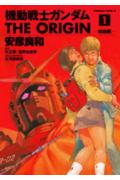
Mobile Suit Gundam: The Origin
Yu's review of Mobile Suit Gundam: The Origin — Yoshikazu Yasuhiko, the original character designer for the 1979 Gundam anime, re-adapts and expands the One Year War, giving Char Aznable the backstory the original never showed and drawing the Universal Century with 40 years of additional craft.
Sci-Fi / Action
Area 88
Yu's review of Area 88 — Shin Kazama, a Japanese airline trainee, is drugged and tricked by his best friend into signing a three-year mercenary contract with the air force of a fictional desert kingdom. Trapped at Area 88, he can only buy his freedom by killing — earning $1.5 million in combat bonuses. Kaoru Shintani's 1979 aviation classic about a good man becoming an ace he never wanted to be.
Sci-Fi / Action
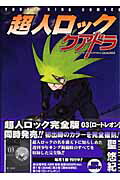
Choujin Locke
Choujin Locke is one of manga's longest-running sci-fi sagas — a galaxy-spanning space opera following Locke, an immortal esper who drifts through humanity's rise and fall, protecting people he knows he will outlive. Begun by Yuki Hijiri in 1967 and continued until his death in 2022.
Sci-Fi / Adventure
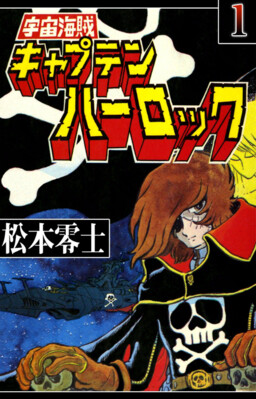
Captain Harlock
Yu's review of Captain Harlock — in 2977, humanity has grown comfortable and given up. Harlock is the one man who still fights. Aboard the Arcadia he stands against the Mazone, alien women who came back to reclaim the Earth they once seeded.
Sci-Fi / Drama
Galaxy Express 999
Galaxy Express 999 follows Tetsuro Hoshino, a young boy who boards the legendary space train 999 toward a planet where he can receive a free mechanical body — accompanied by the mysterious Maetel — and encounters, on each planet the train stops at, a different meditation on what it means to be human and whether eternity is worth what it costs.

Sci-Fi / Drama
Hyakuoku no Hiru to Senoku no Yoru
Hyakuoku no Hiru to Senoku no Yoru is Moto Hagio's manga adaptation of Ryu Mitsuse's celebrated science fiction novel — following the collapse of civilizations across billions of years, centered on figures from different historical periods who are drawn toward a single question: what is the nature of creation, and who is responsible for it?
Written by
Yu
Manga Enthusiast from Japan
I grew up in Japan and manga literally saved me during a tough time in elementary school. My English isn't perfect, but my love for manga is real — and I want to share it with you.