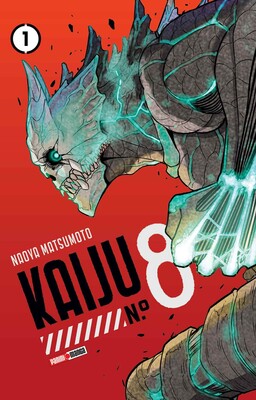
Kaiju No. 8 Review: A 32-Year-Old Cleanup Worker Gains Kaiju Transformation Ability and Finally Becomes a Hero
by Naoya Matsumoto
*Affiliate link — I earn a small commission at no extra cost to you.
Quick Take
- The manga that makes a 32-year-old protagonist feel fresh — Kafka's age, his failed dream, and his specific relationship with his own inadequacy distinguish him from standard shonen heroes
- The dual-identity structure — Defense Force member who is secretly the kaiju they're hunting — generates consistent tension without becoming repetitive
- 12 volumes complete; satisfying action sci-fi with an unusually likeable protagonist
Who Is This Manga For?
- Readers who want action manga with a protagonist who is not a teenager discovering their power
- Anyone interested in kaiju sci-fi with character-focused storytelling
- Fans of transformation power premises with secret identity complications
- Readers who want complete action manga with a clear ending
Content Warnings & Age Rating
Age Rating: T (Teen) Content Warnings: Monster violence; action combat including significant injuries; some body horror in transformation sequences
The T rating is accurate.
Yu's Rating
| Category | Score |
|---|---|
| Story Depth | ★★★★☆ |
| Art Style | ★★★★☆ |
| Character Development | ★★★★★ |
| Accessibility for Non-Japanese Readers | ★★★★★ |
| Reread Value | ★★★☆☆ |
Story Overview
Japan has developed a sophisticated infrastructure for dealing with kaiju — the Defense Force that fights them, the cleanup crews that process the remains, the regular threat that has become background to daily life. Kafka Hibino is in the cleanup crew at 32. He dreamed of the Defense Force as a child, alongside his childhood friend Mina who is now its most capable captain. He failed the entrance exam repeatedly and gave up.
After a chance encounter that leaves a small parasite kaiju inside him, Kafka can transform into a powerful kaiju form. He uses this to save lives during a crisis, which leads the Defense Force — which is trying to capture Kaiju No. 8 — to allow him another chance at the entrance exam. He joins. They don't know his secret.
Characters
Kafka Hibino — His quality is the specific warmth of someone who has been disappointed by life but not made bitter by it. He is genuinely delighted by others' success even when he has failed to achieve similar things. This is unusual and makes him immediately likeable.
Mina Ashiro — His childhood friend, now his commanding officer, who is a prodigy of the kind Kafka is not. Her relationship with Kafka and her knowledge of who he is forms the series' emotional center.
Soshiro Hoshina — The vice-captain whose suspicion of Kafka provides consistent threat and whose character development as he respects Kafka more is satisfying.
Art Style
Matsumoto's art is clean and effective for action — kaiju designs are distinctive, transformation sequences are visually striking, and fight choreography is readable. Character designs for the ensemble cast are varied enough to distinguish them clearly.
Cultural Context
Kaiju manga and the Defense Force premise draw on the Ultraman and Super Sentai traditions — giant monster threats that require organized military response. Kaiju No. 8 places a realistic protagonist within this genre infrastructure and asks what it feels like to be an ordinary person adjacent to the extraordinary.
What I Love About It
The scenes where Kafka's accumulated years of experience — in cleanup, in understanding kaiju behavior, in knowing the ecosystem from the ground level — give him advantages the formally trained young soldiers lack. His age is not just a character quirk; it gives him specific knowledge.
What English-Speaking Fans Say
Western readers describe Kaiju No. 8 as the jump series that surprised them by being about more than power escalation — Kafka's character and his specific adult perspective on the hero journey gave it resonance they didn't expect. The completed status is consistently cited as making it an easier recommendation.
Memorable Scene ⚠️ Spoiler Warning
The sequence where Mina discovers Kafka's identity — and what she does with that knowledge, and what it costs her professionally — is the series' most complete character moment and the one that makes the ending meaningful.
Similar Manga
- My Hero Academia — Hero society, different age focus
- Attack on Titan — Humanity vs. monsters, darker tone
- Dorohedoro — Transformation and identity, very different aesthetic
- I Am a Hero — Ordinary person in extraordinary threat, realistic approach
Reading Order / Where to Start
Volume 1 — Kafka's situation and the parasite kaiju encounter.
Official English Translation Status
VIZ Media published all 12 volumes. Complete and available.
Pros & Cons
Pros
- Kafka is one of the most likeable protagonists in recent shonen
- The dual identity structure generates consistent tension
- Complete in 12 volumes with a satisfying ending
- The adult perspective on the hero journey is genuinely unusual
Cons
- The action escalation follows familiar patterns in later volumes
- Secondary characters receive less development than Kafka
- The kaiju designs, while good, don't reach Evangelion/Attack on Titan levels of iconic
Format Comparison
| Format | Notes |
|---|---|
| Individual Volumes | VIZ Media; complete |
| Digital | Available |
Where to Buy
Get Kaiju No. 8 Vol. 1 on Amazon →
This post contains affiliate links. If you purchase through these links, I may earn a small commission at no extra cost to you. As an Amazon Associate, I earn from qualifying purchases.
*Affiliate link — I earn a small commission at no extra cost to you.
Written by
Yu
Manga Enthusiast from Japan
I grew up in Japan and manga literally saved me during a tough time in elementary school. My English isn't perfect, but my love for manga is real — and I want to share it with you.
Disclosure: This post contains affiliate links. As an Amazon Associate, I earn from qualifying purchases at no extra cost to you.