
Japan Sinks Review: When the Islands Themselves Are the Tragedy
by Kosaku Takahashi (story) / Kenji Teraoka (art)
Read the first volume. If it doesn't hook you, put it down. It'll hook you.
Buy Japan Sinks on Amazon →*Affiliate link — I earn a small commission at no extra cost to you.
Quick Take
- The manga adaptation of Japan's most significant disaster science fiction novel
- The premise is devastating precisely because it's Japan specifically, not a generic disaster
- Compact at 4 volumes and faithful to the emotional weight of its source material
Who Is This Manga For?
- Science fiction readers interested in disaster SF at a national scale
- Japanese culture enthusiasts who want to understand the cultural meaning of this particular story
- Readers drawn to Japanese national identity themes — this is a text about what Japan means to Japanese people
- Fans of Sakyo Komatsu or Japanese post-war science fiction
Content Warnings & Age Rating
Age Rating: T (Teen) Content Warnings: Geological disaster on national scale, mass death implied, themes of national loss and displacement
Serious content handled with the gravity it requires.
Yu's Rating
| Category | Score |
|---|---|
| Story Depth | ★★★★★ |
| Art Style | ★★★☆☆ |
| Character Development | ★★★★☆ |
| Accessibility for Non-Japanese Readers | ★★★★☆ |
| Reread Value | ★★★★☆ |
Story Overview
Marine geologist Yusuke Tadokoro discovers the unthinkable: the tectonic forces beneath Japan are shifting in ways that will, within two years, cause the entire Japanese archipelago to sink beneath the ocean.
The story operates on multiple scales simultaneously: the scientific discovery and its verification, the political response as the Japanese government confronts information it cannot fully share, the personal stories of people whose lives are defined by the nation that is about to cease to exist, and the vast logistical question of where 120 million people will go.
The original novel by Sakyo Komatsu (1973) was one of the best-selling Japanese novels ever written. The manga adaptation distills its scope into a visual medium with efficient character work and a faithful rendering of the novel's essential tragedy.
Characters
Yusuke Tadokoro: The scientist who discovers the truth and must carry it. His relationship to the information — what it means to know this before others, what responsibility that creates — is the series' moral center.
Various figures across Japanese society: The series follows multiple perspectives on the approaching disaster — government officials, ordinary citizens, people who escape early and people who cannot.
Art Style
Functional and expressive. The geological disaster sequences are rendered with visual impact appropriate to their scale. Character work is efficient — given the story's scope, individual psychology is communicated economically.
Cultural Context
Japan Sinks is uniquely Japanese in its emotional core. Japan is a nation acutely aware of its island geography and its geological vulnerability — earthquake, tsunami, and volcanic activity are constant presences in Japanese life and culture. The premise of the islands themselves disappearing speaks to something specific in the Japanese imagination about place, identity, and the land as the substance of the nation.
The novel appeared in 1973, following the economic miracle of postwar reconstruction and the specific anxiety of a nation that had rebuilt everything from destruction once and feared it might have to do so again.
What I Love About It
What I love is the specific quality of the tragedy.
Japan Sinks is not a story about people dying. It's a story about a place ceasing to exist. The loss is not individual but categorical — the ending of the Japan that has accumulated over thousands of years of human habitation. The food, the architecture, the language as spoken in specific places, the shrines and markets and mountain paths that are not interesting enough to preserve but are everything to the people who walk them.
This is harder to mourn than individual loss because it cannot be memorialized in the same way. You cannot hold a nation's geography in your hands. It sinks, and then it's gone, and the only record is the people who carry it.
That grief is what the story is about, and it is genuinely devastating.
What English-Speaking Fans Say
The original novel has been translated into English and has international readership. The manga adaptation is less known outside Japan. Readers who know the novel tend to appreciate the manga as a faithful condensation; readers who encounter the manga first sometimes find the story overwhelming for a four-volume work.
Memorable Scene ⚠️ Spoiler Warning
The scenes of ordinary Japanese daily life — markets, streets, homes — rendered with specificity just before the series makes clear these things are going away. The specificity is the tragedy. The ordinariness is what makes the loss real.
Similar Manga
- Nausicaä of the Valley of the Wind: Environmental catastrophe at civilizational scale, different emotional register
- Barefoot Gen: Different disaster (nuclear war), same quality of Japan confronting its own destruction
- Blame!: Very different tone; both imagine extreme geological/architectural transformation
Reading Order / Where to Start
Volume 1. Four volumes, complete.
Official English Translation Status
The manga adaptation has no official English translation. The source novel has been translated.
Pros & Cons
Pros
- Faithful to one of Japan's most significant SF novels
- The cultural specificity gives the tragedy unusual depth
- Compact at four volumes
- Emotionally significant for understanding Japan's relationship to catastrophe
Cons
- No English translation for the manga (novel is available)
- The scale makes individual attachment difficult
- Some readers find the disaster-fiction premise too bleak
Format Comparison
| Format | Notes |
|---|---|
| Physical | Japanese editions available |
| Digital | Available in Japanese |
| Omnibus | Short series — existing volumes serve as the complete work |
Where to Buy
No English release yet. That just means you find it before everyone else does.
*Affiliate link — I earn a small commission at no extra cost to you.
More Manga You Might Like
Sci-Fi / Drama
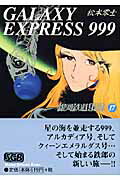
Galaxy Express 999
Galaxy Express 999 follows Tetsuro Hoshino, a young boy who boards the legendary space train 999 toward a planet where he can receive a free mechanical body — accompanied by the mysterious Maetel — and encounters, on each planet the train stops at, a different meditation on what it means to be human and whether eternity is worth what it costs.

Sci-Fi / Drama
Hyakuoku no Hiru to Senoku no Yoru
Hyakuoku no Hiru to Senoku no Yoru is Moto Hagio's manga adaptation of Ryu Mitsuse's celebrated science fiction novel — following the collapse of civilizations across billions of years, centered on figures from different historical periods who are drawn toward a single question: what is the nature of creation, and who is responsible for it?
Sci-Fi / Mystery / Thriller
20th Century Boys
Yu's review of 20th Century Boys — childhood friends once wrote a 'Book of Prophecy' about saving the world. Decades later a cult leader called 'Friend' is using it as a blueprint for real mass murder, and convenience store manager Kenji realizes he helped write the script.
Sci-Fi / Drama
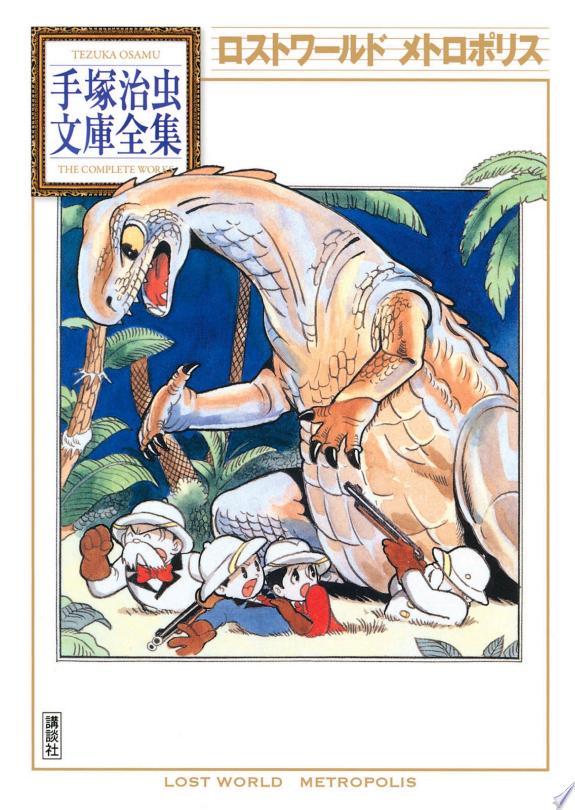
Metropolis
A review of Osamu Tezuka's Metropolis — serialized in Manga Shōnen in 1949, complete in one volume. A loose adaptation of Fritz Lang's film about a stratified city, an android child named Mitchi, and the question of what makes someone human. VIZ Media's English edition is complete.
Sci-Fi
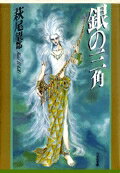
Gin no Sankaku
Gin no Sankaku follows characters trapped across multiple timelines by a silver triangle that connects them — a complex, demanding sci-fi work by Moto Hagio that uses time loop mechanics to explore the weight of memory and the impossible arithmetic of rescue and loss.
Drama / Sci-Fi
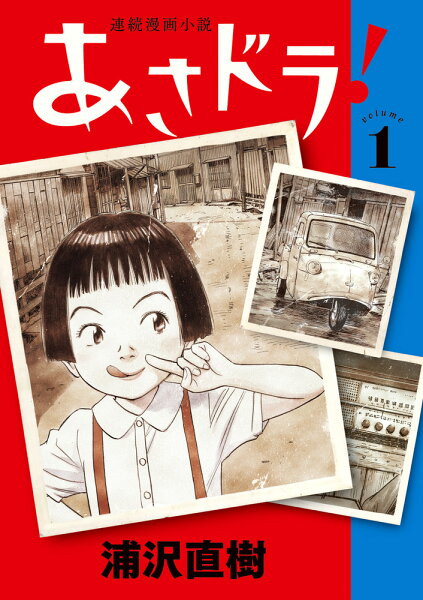
Asadora!
Nagoya, 1959. The Isewan Typhoon kills five thousand people. A tough fifth-grade girl named Asa is kidnapped by a young thief during the storm — and they survive together. Then they find a giant footprint. Naoki Urasawa's late-career masterwork builds slowly and patiently toward something much larger than the disaster it opens with.
Written by
Yu
Manga Enthusiast from Japan
I grew up in Japan and manga literally saved me during a tough time in elementary school. My English isn't perfect, but my love for manga is real — and I want to share it with you.