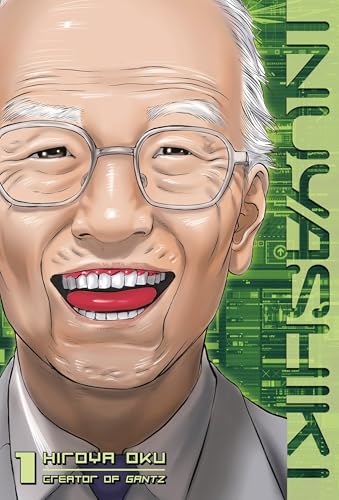
Inuyashiki Review: A Dying Old Man and a Teenage Boy Both Get Rebuilt as Weapons, and Choose Completely Different Things to Do With That
by Hiroya Oku
Read the first volume. If it doesn't hook you, put it down. It'll hook you.
Buy Inuyashiki on Amazon →*Affiliate link — I earn a small commission at no extra cost to you.
Quick Take
- An invisible old man and a beautiful teenager both become living weapons after an alien accident, and what each does with that power is determined entirely by who they already were
- Hiroya Oku (Gantz) at his most conceptually sharp — 10 volumes, complete, a direct examination of what humanity looks like when power removes all restraint
- The contrast between the two characters is the series' argument; the violence is the cost of making that argument
Who Is This Manga For?
- Readers who want science fiction that uses superhero power as a lens for examining human nature
- Fans of Gantz who want Oku's sensibility with more focused narrative
- Anyone who can handle M-rated content in exchange for genuine thematic clarity
- Readers who want completed sci-fi drama with an actual argument
Content Warnings & Age Rating
Age Rating: M (Mature) Content Warnings: Mass murder depicted in graphic detail, extreme violence — the content is significant and intentional; this is Oku's most violent series since Gantz, and the violence is structural to the story's point
Not for readers sensitive to depictions of violence against civilian populations.
Yu's Rating
| Category | Score |
|---|---|
| Story Depth | ★★★★☆ |
| Art Style | ★★★★☆ |
| Character Development | ★★★★★ |
| Accessibility for Non-Japanese Readers | ★★★★☆ |
| Reread Value | ★★★★☆ |
Story Overview
Ichiro Inuyashiki is 58. His family does not notice him. His coworkers barely acknowledge him. He was just diagnosed with stomach cancer. He is sitting in a park, crying quietly where no one can see, when aliens crash nearby and destroy him and a teenager named Hiro Shishigami in the explosion.
They are rebuilt — accurately, mechanically, as functional replicas — by the aliens before the aliens leave. Their bodies are now machines: weapons capable of healing others or destroying them.
Inuyashiki discovers he can heal the sick. He begins walking into hospital wards at night and healing the dying. He becomes, quietly and without recognition, a hero.
Hiro, a teenage boy who was admired and handsome and apparently well-adjusted, discovers that killing is easy now, and that he finds it interesting.
The ten volumes that follow track what both of them do with what they are, and what that says about who they already were.
Characters
Ichiro Inuyashiki — A man who never mattered, who is given power, and who uses it to matter in the purest way possible — by helping people who are dying, without any credit. His specific quiet heroism is the series' most emotionally affecting element.
Hiro Shishigami — One of manga's most unsettling antagonists because Oku refuses to make him simple: he is not evil in any conventional sense. He is a teenager whose specific psychology, when power removes all restraint, produces mass murder. His relationship with the one person he loves is the series' most complex element.
Mari Inuyashiki — Ichiro's daughter, who is the point at which Hiro's path and Ichiro's path finally intersect directly.
Art Style
Oku's art is photorealistic in his signature style — backgrounds drawn from photo reference, character faces recognizable as real types rather than manga archetypes. The violence is drawn with clinical precision rather than stylized impact, which makes it more disturbing than conventional action manga. Inuyashiki's aged, unremarkable face is the series' visual center, and Oku draws his small expressions — surprise, gratitude, quiet joy — with care.
Cultural Context
Inuyashiki is specifically about Japanese social invisibility — the salaryman who contributed to society for 30 years and is now discarded, literally unnoticeable to his family. Ichiro's irrelevance is a Japanese social archetype, and Oku uses the sci-fi premise to examine what that irrelevance means about what a person has built inside themselves when the outside never reflected it.
What I Love About It
The hospital scenes. Inuyashiki walks into hospitals at night and heals the dying. He does not do this for recognition — he cannot be recognized without revealing what he is. He does it because he has power and the people dying did not do anything to deserve dying. The gap between the scale of what he is doing and the quietness with which he does it is the series' most affecting contrast.
What English-Speaking Fans Say
Western readers consistently cite Inuyashiki as Oku's most thematically coherent work — the two-character parallel structure gives the sci-fi premise a clarity that Gantz never achieved. Hiro is the most discussed character: readers debate whether the series is too sympathetic to him or precisely sympathetic enough.
Memorable Scene ⚠️ Spoiler Warning
The moment when Inuyashiki and Hiro finally confront each other directly — two machines with the same capabilities, built from completely different interior lives — and what Inuyashiki says about why he fights, is the series' clearest statement of its thesis.
Similar Manga
- Gantz — Same author; longer, less focused, same basic sensibility
- Biomega — Post-civilization machine-human hybrid protagonist
- No Guns Life — Modified human protagonist, identity in power
- Fire Punch — Post-catastrophe, power as both gift and curse
Reading Order / Where to Start
Volume 1 — the parallel setup of both characters in the first volume is the entire series' foundation.
Official English Translation Status
Kodansha USA published the complete 10-volume series. All volumes available.
Pros & Cons
Pros
- 10 volumes, complete — efficient length for the story told
- The two-character contrast is the clearest thematic argument in Oku's work
- Inuyashiki himself is a genuinely moving protagonist
- The series earns its violence by making it mean something
Cons
- Extreme violence significantly limits the audience
- Hiro's sections are genuinely difficult content
- The alien threat element in the final volumes feels rushed
Format Comparison
| Format | Notes |
|---|---|
| Individual Volumes | Kodansha USA; standard |
| Digital | Available |
Where to Buy
Read the first volume. If it doesn't hook you, put it down. It'll hook you.
This post contains affiliate links. If you purchase through these links, I may earn a small commission at no extra cost to you. As an Amazon Associate, I earn from qualifying purchases.
*Affiliate link — I earn a small commission at no extra cost to you.
More Manga You Might Like
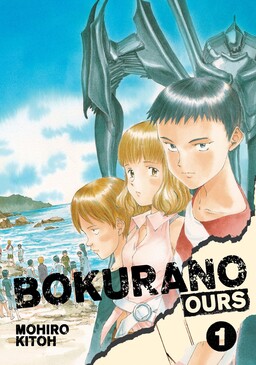
Sci-Fi / Drama
Bokurano
Yu's review of Bokurano by Mohiro Kitoh — fifteen children sign a contract to pilot a giant robot called Zearth, only to learn each victory costs the pilot's life, and that every battle won erases another Earth.
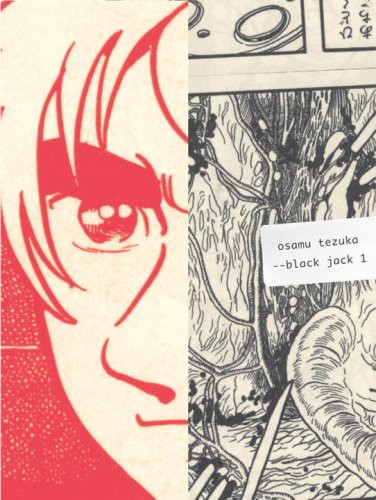
Sci-Fi
Swallowing the Earth
Yu's review of Swallowing the Earth — a mysterious woman named Zephyrus is so beautiful and charismatic that every powerful man who encounters her is destroyed; Gohonmatsu Seki pursues her across decades; Tezuka's adult drama about power, beauty, and what men do to themselves in pursuit of what they desire.
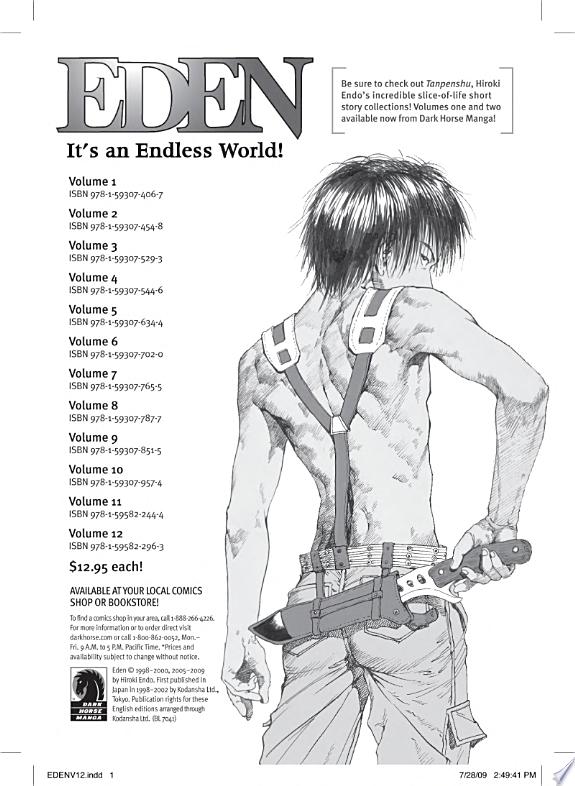
Sci-Fi / Action
Eden: It's an Endless World!
Yu's review of Eden: It's an Endless World! — a plague destroyed most of humanity; a boy named Elijah grows up in the aftermath, in a world run by the Propater organization and his father's network of resistance, becoming something neither of them intended.
Sci-Fi / Romance
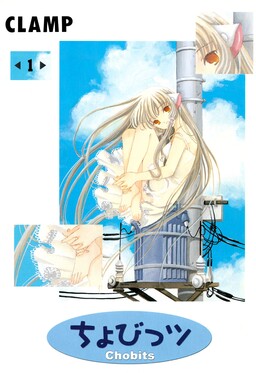
Chobits
Yu's review of Chobits by CLAMP — Hideki, a country boy in Tokyo, finds an abandoned persocom in the trash, names her Chi, and slowly learns she may be a legendary 'Chobit' capable of real feeling. A sci-fi romance about whether you can love a machine — and whether that question even matters.
Sci-Fi / Drama
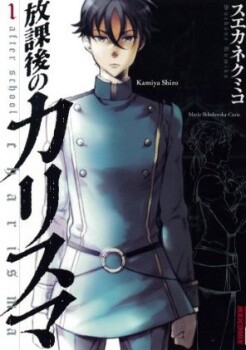
Afterschool Charisma
Yu's review of Afterschool Charisma — St. Kleio Academy raises clones of history's greatest people: Napoleon, Mozart, Marie Curie, Joan of Arc, Freud, Hitler. Shiro Kamiya is the only ordinary human student — until he learns who he really is. A 12-volume sci-fi drama about whether a clone is doomed to repeat the death of the person they were copied from.
Sci-Fi / Drama
Galaxy Express 999
Galaxy Express 999 follows Tetsuro Hoshino, a young boy who boards the legendary space train 999 toward a planet where he can receive a free mechanical body — accompanied by the mysterious Maetel — and encounters, on each planet the train stops at, a different meditation on what it means to be human and whether eternity is worth what it costs.
Written by
Yu
Manga Enthusiast from Japan
I grew up in Japan and manga literally saved me during a tough time in elementary school. My English isn't perfect, but my love for manga is real — and I want to share it with you.
Disclosure: This post contains affiliate links. As an Amazon Associate, I earn from qualifying purchases at no extra cost to you.