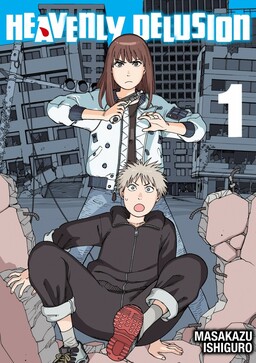
Heavenly Delusion Review: Two Children Cross a Post-Apocalyptic Japan While Another World Watches
by Masakazu Ishiguro
Read the first volume. If it doesn't hook you, put it down. It'll hook you.
Buy Heavenly Delusion on Amazon →*Affiliate link — I earn a small commission at no extra cost to you.
Quick Take
- One of the most compelling mystery structures in recent manga — two parallel storylines (children crossing post-apocalyptic Japan; children living in an apparently utopian facility) that seem unrelated but clearly connect in ways the series is building toward
- Ishiguro builds genuine dread through withholding — the "Man-eaters" that populate the ruined outside world are terrifying, and the facility's pleasant surface conceals something the series hints at without revealing
- 9 volumes ongoing; already one of the most discussed mystery-sci-fi manga of its era
Who Is This Manga For?
- Readers who love mystery narratives where the questions are more compelling than early answers
- Anyone drawn to post-apocalyptic sci-fi with genuine menace
- Fans of narrative structure where multiple timelines gradually converge
- Readers who want ongoing manga with sustained quality and deliberate pacing
Content Warnings & Age Rating
Age Rating: M (Mature) Content Warnings: Monster attacks depicted graphically; body horror elements; sexual content; the series includes transgender/gender identity themes handled with nuance; post-apocalyptic violence
An M rating that reflects genuine adult content throughout.
Yu's Rating
| Category | Score |
|---|---|
| Story Depth | ★★★★★ |
| Art Style | ★★★★★ |
| Character Development | ★★★★★ |
| Accessibility for Non-Japanese Readers | ★★★★★ |
| Reread Value | ★★★★★ |
Story Overview
Two storylines run in parallel:
Outside: Maru and Kiruko travel through a Japan that has been destroyed — civilization collapsed, monsters called Man-eaters roam the ruins, and survivors cluster in isolated settlements. Maru has heard there is a place called "heaven" somewhere, and they are searching for it.
Inside: In a walled, comfortable facility, children are raised and educated with no knowledge that the outside world exists. They are looked after by adults who give no explanation for why they never leave.
The series withholds the connection between these storylines, but makes the structural parallel unmistakable. Something happened. Both groups are approaching the truth from opposite sides.
Characters
Maru — A teenager with a specific and unexplained ability to detect and destroy Man-eaters — his origin is one of the series' central mysteries.
Kiruko — Maru's partner and protector, whose own history involves a specific tragedy that the series uses to explore identity and selfhood in ways that feel organic rather than imposed.
The facility children — Particularly Tokio, whose storyline raises questions about the facility's purpose that the outside storyline seems to answer — in fragments.
Art Style
Ishiguro's art is clean and controlled — the contrast between the overgrown, ruined exterior Japan and the neat, pleasant facility interior is visually precise. The Man-eaters are genuinely unsettling in design, and their appearance disrupts the visual grammar of the series in ways that feel intentional.
Cultural Context
Post-apocalyptic Japan is a recurring sci-fi setting in manga, but Heavenly Delusion distinguishes itself by making the apocalypse's specific cause and nature a mystery rather than a given. The "what happened" question is structural rather than backstory.
What I Love About It
The series trusts readers to hold uncertainty without resolution for extended periods — and rewards that patience with the occasional revelation that reframes everything before it. Reading it is the experience of knowing you don't have the full picture while the picture assembles around you.
What English-Speaking Fans Say
Western readers describe Heavenly Delusion as one of the few ongoing manga they follow chapter-by-chapter rather than waiting for volumes — the mystery structure creates genuine investment in what comes next. The anime adaptation increased Western visibility and brought new readers who then returned to the manga for the fuller experience.
Memorable Scene ⚠️ Spoiler Warning
The first time the two storylines make explicit contact — the moment a reader realizes the connection between the outside and inside is more literal than metaphorical — is the series' most effective structural reveal, and it happens earlier than readers expect.
Similar Manga
- Blame! — Post-apocalyptic mystery, similar dread and withholding
- Made in Abyss — Children in a dangerous world, similar mystery structure
- Biomega — Post-human sci-fi, similar tonal register
- I Am a Hero — Post-apocalyptic Japan, realistic survival approach
Reading Order / Where to Start
Volume 1 — Both storylines are established immediately. No prior knowledge required.
Official English Translation Status
Seven Seas Entertainment publishes the ongoing series. 8+ volumes currently available in English.
Pros & Cons
Pros
- Mystery structure that rewards sustained reading
- Both storylines are independently compelling
- Art that matches the tonal range from pleasant to horrifying
- One of the best ongoing sci-fi manga currently publishing
Cons
- M rating content is genuine and consistent
- Ongoing — full resolution years away
- Deliberate pacing may frustrate readers wanting answers
Format Comparison
| Format | Notes |
|---|---|
| Individual Volumes | Seven Seas Entertainment; ongoing |
| Digital | Available |
Where to Buy
Read the first volume. If it doesn't hook you, put it down. It'll hook you.
This post contains affiliate links. If you purchase through these links, I may earn a small commission at no extra cost to you. As an Amazon Associate, I earn from qualifying purchases.
*Affiliate link — I earn a small commission at no extra cost to you.
More Manga You Might Like

Sci-Fi
World's End Harem
Yu's review of World's End Harem — Reito Mizushima was cryogenically frozen to await a cure for his illness; when he wakes, a plague called the MK Virus has killed 99.9% of the world's male population; he is one of a small number of surviving men tasked with repopulating humanity while navigating a society radically transformed by the near-absence of men.

Sci-Fi / Thriller
Summer Time Rendering
Yu's review of Summer Time Rendering — Shinpei Ajiro returns to Hitogashima island for the funeral of his childhood friend Ushio; something is wrong; the shadows of people on the island are not quite right; Shinpei discovers a supernatural threat that copies humans through their shadows and a time loop mechanic that allows him to restart from the same point when he dies.
Sci-Fi
7SEEDS
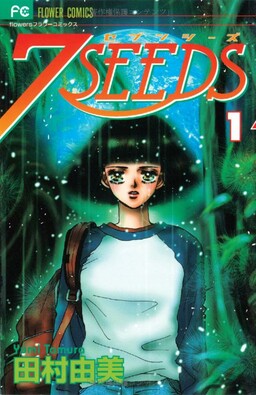
Yu's review of 7SEEDS — after a meteor wipes out civilization, young people cryogenically frozen by a secret government project wake up in a transformed Japan with no instructions. Yumi Tamura's 35-volume survival epic about ordinary, frightened people who were never asked if they wanted to save the human race.
Sci-Fi / Mystery / Thriller
20th Century Boys
Yu's review of 20th Century Boys — childhood friends once wrote a 'Book of Prophecy' about saving the world. Decades later a cult leader called 'Friend' is using it as a blueprint for real mass murder, and convenience store manager Kenji realizes he helped write the script.
Sci-Fi / Mystery
Billy Bat
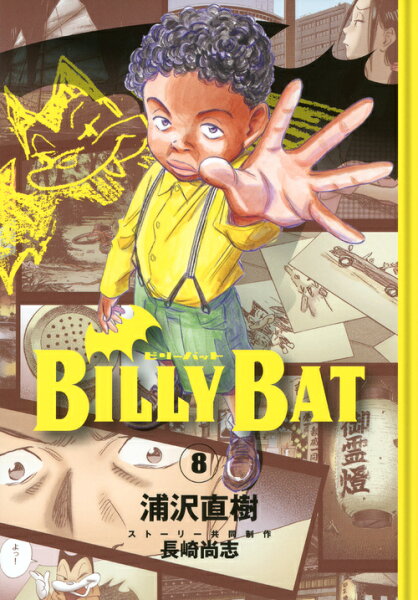
A review of Naoki Urasawa and Takashi Nagasaki's Billy Bat — 20 volumes in Morning from October 2008 to August 2016. A century-spanning conspiracy centered on a cartoon bat symbol that may have shaped human history.
Sci-Fi / Thriller
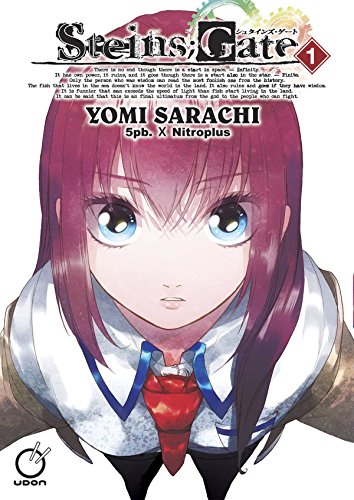
Steins;Gate
Yu's review of the Steins;Gate manga — a self-proclaimed mad scientist accidentally invents a way to send text messages to the past, and discovers that every change to the timeline costs someone something.
Written by
Yu
Manga Enthusiast from Japan
I grew up in Japan and manga literally saved me during a tough time in elementary school. My English isn't perfect, but my love for manga is real — and I want to share it with you.
Disclosure: This post contains affiliate links. As an Amazon Associate, I earn from qualifying purchases at no extra cost to you.