
The Melancholy of Haruhi Suzumiya Review: A Girl Who Can Rewrite Reality Wants Aliens, Time Travelers, and ESPers — and Got Them
by Nagaru Tanigawa / Gaku Tsugano
Read the first volume. If it doesn't hook you, put it down. It'll hook you.
Buy The Melancholy of Haruhi Suzumiya on Amazon →*Affiliate link — I earn a small commission at no extra cost to you.
Quick Take
- The manga adaptation captures the light novel's central premise and Kyon's deadpan narrative voice with sufficient fidelity to be a complete experience
- Haruhi is one of manga's most distinctive female leads — her complete confidence in her own desires and the world's obligation to meet them is specific and funny
- 9 volumes complete in English; complete adaptation of the first Haruhi arc
Who Is This Manga For?
- Readers who want sci-fi comedy with a genuinely unusual protagonist concept
- Anyone familiar with the Haruhi Suzumiya anime who wants the manga version
- Fans of light novel adaptations that use the source material's strengths
- Readers who want complete short sci-fi comedy manga
Content Warnings & Age Rating
Age Rating: T (Teen) Content Warnings: Sci-fi comedy with light supernatural elements; Haruhi's behavior includes manipulation and coercion treated as comedy; time loop and reality-altering content
T rating — sci-fi comedy content appropriate for teen readers.
Yu's Rating
| Category | Score |
|---|---|
| Story Depth | ★★★★☆ |
| Art Style | ★★★☆☆ |
| Character Development | ★★★★☆ |
| Accessibility for Non-Japanese Readers | ★★★★★ |
| Reread Value | ★★★★☆ |
Story Overview
Kyon was going to have a normal high school life. He sits down in front of Haruhi Suzumiya, who tells her class on the first day that she has no interest in ordinary humans — only supernatural entities need apply.
The SOS Brigade that Haruhi founds by conscripting the people around her turns out to have the supernatural density she demanded. Yuki Nagato is an alien information interface. Mikuru Asahina is a time traveler. Koizumi is an ESPer. Kyon is the only ordinary human present, which is the series' most reliable comedy position.
Haruhi does not know she is the center of this. She is an unconscious god who has warped reality to provide herself with what she wanted. The organizations that sent Yuki, Mikuru, and Koizumi are all monitoring her, each for their own reasons, while trying to keep her from discovering what she is.
The manga adapts the light novel's primary story arc — Haruhi's melancholy, the possibility that her boredom could end the world, and the SOS Brigade's management of this — across 9 volumes.
Characters
Haruhi Suzumiya — One of manga's most distinctive female protagonists: completely certain of what she wants, completely unaware of what she is, and genuinely funny because the gap between her self-image as a seeker of the supernatural and her actual status as its origin is never resolved.
Kyon — The narrator whose deadpan perspective on everything Haruhi does is the series' comedic anchor; his reluctant engagement with the SOS Brigade's activities provides the reader's point of entry.
Yuki, Mikuru, Koizumi — Three characters whose apparent archetypes — quiet bookworm, moe time traveler, charming ESPer — are complicated by what they actually are and what they are monitoring.
Art Style
Tsugano's art is clean and functional for the comedy sci-fi content. Character designs capture the light novel's source material effectively. The art serves the story without being its primary attraction — the manga is distinguished by its premise and characters rather than its visual approach.
Cultural Context
The Melancholy of Haruhi Suzumiya began as a light novel series in 2003 and became one of the defining franchise of mid-2000s anime/manga culture. The manga adaptation by Tsugano captures the essential elements. The concept of an unconscious god whose desires reshape reality — and whose boredom is an existential threat — engaged with the moe culture it emerged from while also critiquing it.
What I Love About It
Haruhi's total lack of self-awareness about what she is. She has created exactly the world she wanted and has no idea she did it. Every extraordinary thing she encounters is confirmation of a world she believed existed rather than evidence that she made it exist. The comedy of an unconscious creator interacting with her own creation — mediated by Kyon's exhausted narration — is one of the better high-concept jokes in manga.
What English-Speaking Fans Say
Western readers describe the Haruhi manga as a faithful and satisfying adaptation — specifically noted for Kyon's narrative voice translating well to manga format, for the primary arc having a satisfying complete resolution in 9 volumes, and for Haruhi's character being as effective in manga as in anime. Recommended for anime fans who want the manga format and for new readers as an entry point.
Memorable Scene ⚠️ Spoiler Warning
The revelation of what would happen if Haruhi's dissatisfaction exceeded a certain threshold — and what the people around her are preventing — recontextualizes the comedy into something with actual stakes.
Similar Manga
- Steins;Gate — Sci-fi light novel adaptation with time-manipulation premise
- The World God Only Knows — Self-aware meta comedy with female character dynamics
- Nichijou — Absurdist comedy in school setting with different energy
- Miss Kobayashi's Dragon Maid — Supernatural entity integrated into ordinary life
Reading Order / Where to Start
Volume 1 — the non-chronological original novel has been adapted into sequential order for the manga; start from the beginning.
Official English Translation Status
Yen Press has published the complete English series. All 9 volumes available.
Pros & Cons
Pros
- Haruhi is a genuinely distinctive protagonist
- Complete primary arc in 9 volumes
- Comedy of the unconscious-god premise holds throughout
- Kyon's narration translates well to manga
Cons
- Art is functional rather than distinctive
- Franchise's broader story (light novels) extends well beyond this adaptation
- Some comedy requires familiarity with anime culture conventions
Format Comparison
| Format | Notes |
|---|---|
| Individual Volumes | Yen Press; complete series available |
| Digital | Available |
Where to Buy
Read the first volume. If it doesn't hook you, put it down. It'll hook you.
This post contains affiliate links. If you purchase through these links, I may earn a small commission at no extra cost to you. As an Amazon Associate, I earn from qualifying purchases.
*Affiliate link — I earn a small commission at no extra cost to you.
More Manga You Might Like
Sci-Fi
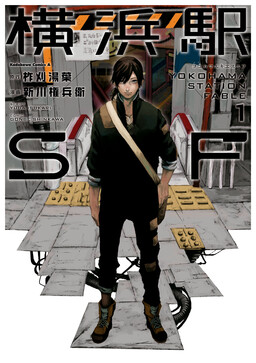
Yokohama Station SF
Yu's review of Yokohama Station SF — Yokohama Station has been self-expanding for centuries and now covers all of Honshu; the world outside is called the Outside; Hiroto, who has never been inside the Station, gets in; manga adaptation of Yuba Isukari's web novel about an infrastructure apocalypse.

Sci-Fi
Accel World
Yu's review of the Accel World manga — Hiroyuki Aigamo's adaptation of Reki Kawahara's light novels. Haruyuki Arita, a bullied middle schooler who hides inside online games, is handed Brain Burst by the school's vice president and becomes Silver Crow, the only avatar in the Accelerated World who can fly. Across 8 volumes the manga races from his recruitment through the Dusk Taker arc to the Hermes Cord.

Sci-Fi / Comedy
Full Metal Panic!
Yu's review of Full Metal Panic! — Sōsuke Sagara, a teenage military specialist from a private military organization, is assigned to protect high school girl Kaname Chidori who doesn't know why she needs protection; he attends her school undercover, treats every situation as a military operation, and creates chaos wherever he goes; military action comedy with genuine mecha sequences.
Sci-Fi / Action
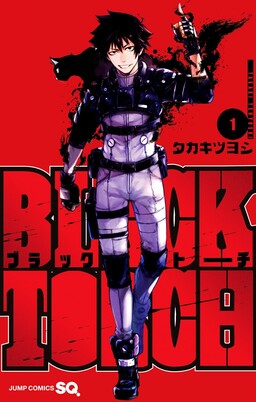
Black Torch
Yu's review of Black Torch — Jiro Azuma is a ninja-trained kid bullied for talking to animals, until he rescues a black cat who turns out to be the immortal mononoke Rago. When Jiro is killed protecting him, Rago fuses with him to bring him back, and the two are dragged into the Bureau of Espionage's war against demonic spirits.

Sci-Fi
A Certain Magical Index
Yu's review of the A Certain Magical Index manga — Touma Kamijou's right hand, the Imagine Breaker, nullifies every supernatural power it touches. When a nun named Index, whose mind holds 103,000 forbidden grimoires, falls onto his balcony, he is pulled into the war between Academy City's science espers and the Church's magicians. Manga adaptation of Kazuma Kamachi's light novel, drawn by Chuya Kogino.
Sci-Fi / Slice of Life
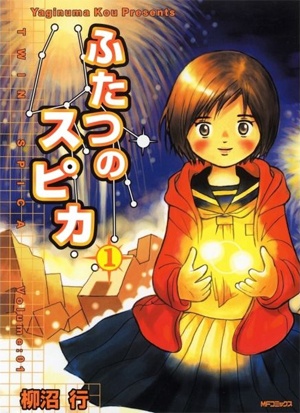
Twin Spica
Yu's review of Twin Spica — Asumi Kamogawa wants to become an astronaut; her mother died when a rocket crashed into their town when Asumi was an infant; a ghost in a lion's mask follows her through childhood and into the competitive astronaut training program, where she discovers what it actually takes to reach space.
Written by
Yu
Manga Enthusiast from Japan
I grew up in Japan and manga literally saved me during a tough time in elementary school. My English isn't perfect, but my love for manga is real — and I want to share it with you.
Disclosure: This post contains affiliate links. As an Amazon Associate, I earn from qualifying purchases at no extra cost to you.