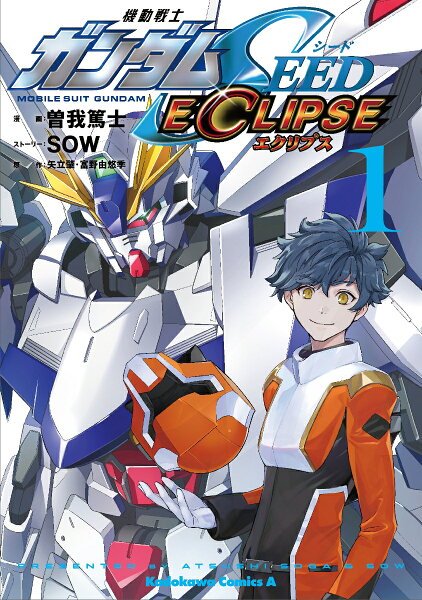
Gundam SEED Manga Review — A Five-Volume Adaptation of the Anime War Between Two Childhood Friends
by Masatsugu Iwase (manga) / Hajime Yatate, Yoshiyuki Tomino (original)
Read the first volume. If it doesn't hook you, put it down. It'll hook you.
Buy Mobile Suit Gundam SEED on Amazon →*Affiliate link — I earn a small commission at no extra cost to you.
I grew up in the years right after Gundam SEED aired in Japan. The anime was a phenomenon — its music, its mobile suit designs, its very specific brand of teenage soldier melodrama — and even kids who never watched a Gundam show before knew Kira Yamato's name. The manga adaptation by Masatsugu Iwase was how a lot of us in elementary school first read the story all the way through, since it was tighter and we could borrow it from the library.
It's not the best version of Gundam SEED. The anime is the canonical text and the novels go deeper. But Iwase's five-volume compression has a specific clarity the longer formats don't.
Quick Take
- A 5-volume manga adaptation of the 2002–2003 anime, condensing the same war between genetically enhanced Coordinators and unmodified Naturals
- Focuses on Kira Yamato and Athrun Zala — childhood friends drafted into opposite militaries — and the cost of fighting someone you grew up loving
- Age rating: T (Teen) — war violence, on-page deaths of named pilots, no graphic gore
Who Is This Manga For?
- Gundam fans who want a portable, condensed version of the SEED story
- Anime watchers who finished the 2002 series and want to revisit the story in print
- Mecha readers who like the "war between genetically defined groups" sub-genre
- Casual readers who want a complete 5-volume run with a real ending
Content Warnings & Age Rating
Age Rating: T (Teen) — 13+ Content Warnings: War violence; deaths of named teenage characters; themes of genetic discrimination and ethnic conflict; some emotionally intense romance subplots; mecha combat throughout
The T rating is accurate. Violence is consistent but not graphic; deaths are emotionally weighty but rendered without gore.
Story Overview
The Cosmic Era. Earth's space colonies have been settled by humanity for decades. Coordinators — humans genetically engineered before birth for enhanced physical and mental capacity — live mostly in the space colonies, while Naturals — unmodified humans — live mostly on Earth. War has broken out between the Earth Alliance (Naturals) and ZAFT (Coordinators).
Kira Yamato is a sixteen-year-old engineering student at the neutral colony Heliopolis. He doesn't tell anyone he is, in fact, a Coordinator raised among Naturals. When ZAFT raids Heliopolis to steal five prototype Earth Alliance mobile suits, Kira ends up in the cockpit of the Strike Gundam by accident. He survives.
The Strike's pilot is now the only mobile suit defender on the Earth Alliance warship Archangel. ZAFT keeps coming. Each engagement, Kira fights — increasingly well, because his Coordinator reflexes make him better than any Natural pilot — and each engagement, he hates what he is doing more.
The ZAFT pilots include Athrun Zala, Kira's childhood best friend from before Kira's family relocated to Heliopolis. They recognize each other across the battlefield. The series is what happens when two friends who love each other are both too good at killing to refuse to fight.
The major arcs:
Volumes 1–2: Heliopolis collapses, Archangel escapes with Kira and a small crew of civilian students pressed into military service. ZAFT pursues. Kira and Athrun first meet on the battlefield and choose, for the moment, not to kill each other.
Volume 3: The conflict escalates. Tolle Koenig, one of Kira's classmates pressed into service on the Archangel, is killed during combat — by Nicol Amalfi (ZAFT) accidentally, with Athrun present. The death pushes Kira past whatever restraint he had been holding. The aftermath fractures Archangel's crew.
Volume 4: Kira and Athrun's final mobile suit duel. The Strike Gundam against Athrun's Aegis Gundam. The battle ends with both machines destroyed; Athrun believes Kira is dead. Athrun returns to ZAFT broken. Kira is recovered by a third faction — neither Alliance nor ZAFT — and given the Freedom Gundam by Lacus Clyne, the Coordinator pop singer turned political dissident who refuses the war as it is being fought.
Volume 5: Kira returns to the battlefield as something different — not Earth Alliance, not ZAFT, but as a pilot fighting to end the war rather than win it. The final confrontation with the architects of the conflict resolves the central question the series asks: whether two friends can stop killing each other if they want to, and whether the world will let them.
Characters
Kira Yamato — Sixteen, gentle, technically gifted, a Coordinator who has been hiding what he is from his Natural friends. The manga's question for him is not whether he can win battles — he can — but what winning costs a person who never wanted to fight. Iwase's compression makes Kira's choices feel forced and inevitable in a way the slower anime sometimes softens. He becomes a soldier because the people he loves will die if he doesn't, and the manga refuses to give that math an easy resolution.
Athrun Zala — Also sixteen, also a Coordinator, also pressed into a war he doesn't fully believe in. His father is a high-ranking ZAFT official and his loyalty to ZAFT is partly his loyalty to family. The series puts Athrun in the position of choosing between his childhood friend and the institution his father built. His arc is one of the most painful in the series because both choices cost him something he cannot get back.
Lacus Clyne — Coordinator celebrity, daughter of a high-ranking ZAFT politician, betrothed (politically) to Athrun. The manga shows her becoming the moral counterweight to the war's architects. Her decision to give Kira the Freedom Gundam is the series' pivot — the moment when an outside actor decides the war as it is being fought is wrong, and acts on that decision.
Flay Allster — A Natural classmate of Kira's whose father is killed during the war. Her grief turns into a calculated cruelty directed at Kira — she sleeps with him while privately hating him for being a Coordinator. The Flay subplot is the manga's most morally uncomfortable thread; she is neither redeemed nor fully condemned. Her death late in the series is one of its quietest tragedies.
Nicol Amalfi — A young ZAFT pilot under Athrun's command. Pianist. Gentle. Kills Tolle in combat without intending to. Dies shortly after in a battle that breaks Athrun's restraint. The Tolle-Nicol pair of deaths is the manga's structural argument: that in this war, the soft people die first, and the hard people are the ones left to fight.
Art Style
Masatsugu Iwase's art is competent but not stylish. His mobile suit drawings are clear and readable; his action sequences communicate what is happening without flourish. Character designs follow the anime's by Hisashi Hirai closely. Where Iwase's adaptation excels is in compressed emotional sequences — the panel of Kira recognizing Athrun across a battlefield, the panel of Athrun standing over the destroyed Strike believing Kira is dead — these moments land because Iwase gives them stillness the anime doesn't always have.
Cultural Context
Gundam SEED ran on Japanese TV from October 2002 to September 2003 and was a cultural event in Japan. Its director Mitsuo Fukuda, scriptwriter Chiaki Morosawa, and character designer Hisashi Hirai produced a Gundam series specifically aimed at audiences who had not grown up with the original Universal Century timeline. The series became the highest-rated Gundam show of its era and revitalized the franchise for a new generation.
The manga adaptation is one of several SEED tie-ins (alongside novels by Liu Goto, the SEED Astray spin-offs, and the sequel series SEED Destiny). Iwase's version is the most accessible print version of the core story for readers who want a quick complete read.
What I Love About It
The duel between the Strike and the Aegis in volume 4.
The series has spent three volumes building up the inevitability of Kira and Athrun fighting each other directly. They've fought before, but always with restraint — pulling punches, breaking off contact, finding reasons not to kill. Volume 4 is the chapter where that restraint runs out.
What I love is what Iwase does with the buildup. The duel isn't presented as a climax in the anime sense — there's no triumphant music, no extended speech. Just two pilots who have both finally decided they cannot keep doing this halfway. Athrun activates the Aegis's self-destruct. The Strike's pilot — Kira — has a fraction of a second to choose whether to eject. Athrun has the same fraction of a second to choose whether to commit fully.
The panel of the explosion is small. The panel of Athrun in the rescued Aegis cockpit afterward, believing he just killed his oldest friend, is the page that justifies the adaptation's existence. Iwase doesn't milk the moment. He gives you the small panel and trusts you to do the work.
The anime is broader. The manga is sharper.
What English-Speaking Fans Say
The Del Rey English release ran from 2004 to 2005 and was generally considered a competent adaptation — not essential if you've watched the anime, but a faithful condensation for fans who wanted to revisit the story in print. Reviews praised the streamlined pacing while noting that some of the anime's emotional moments lose weight in compression.
The manga remains the most readily accessible English version of SEED's complete story for readers who don't want to commit to the 50-episode anime.
Memorable Scene ⚠️ Spoiler Warning
Lacus Clyne giving Kira the Freedom Gundam.
After the Strike-Aegis duel, Kira is presumed dead by both ZAFT and the Earth Alliance. He is, in fact, recovered by neutral parties opposed to the war as it is being fought. Lacus Clyne — Coordinator pop star, the betrothed of his best-friend-now-enemy, the daughter of a ZAFT politician — is the one who finds him.
Lacus has access to the Freedom Gundam — a prototype mobile suit her father's faction is developing. The manga depicts her decision in a few quiet panels. She brings Kira to the machine. She tells him it is his choice whether to take it. She does not ask him to fight for ZAFT or against ZAFT. She asks him to fight for what he actually believes in — which is something neither side has asked him to do for the entire war.
That conversation is the manga's moral pivot. Up until this scene, Kira has been a pilot defending the people he loves. After this scene, Kira is a pilot trying to stop the war. The change is small in dialogue and enormous in meaning. The final volume is what happens when somebody chooses to fight a different war than the one they were drafted into.
Similar Manga
| Title | Its Approach | How Gundam SEED Differs |
|---|---|---|
| Mobile Suit Gundam: The Origin (Yasuhiko) | The original Universal Century retold by the original character designer | Origin is mature historical revision; SEED is teenage melodrama in space |
| 86—Eighty-Six | Children fighting in a war the state refuses to acknowledge | 86 is more politically pointed; SEED is more interpersonal |
| Mobile Suit Gundam Wing | The other major 1990s–2000s Gundam adapted manga | Wing is more political and stylized; SEED is more grounded in friendship |
Reading Order / Where to Start
Volume 1. The 5-volume series is best read in order.
The manga is a complement to the anime, not a replacement. If you have time, watch the anime first, then read the manga as a condensed revisiting. If you want the story in 5 sittings without 50 episodes, the manga works alone.
Official English Translation Status
Del Rey Manga published all 5 volumes in English between 2004 and 2005. The license has lapsed and Del Rey's manga line was absorbed by Kodansha USA, but the volumes are available on secondhand markets. No reprint has been announced.
Pros & Cons
Pros
- Complete 5-volume condensation of the full SEED story
- Tighter pacing than the anime in places
- Affordable secondhand prices
Cons
- The anime is the canonical version; manga loses some emotional weight in compression
- Out of print; physical copies require secondhand markets
- Iwase's art is functional rather than memorable
- Some plot points feel rushed compared to the anime. Compression has costs; the adaptation makes them visible.
Is Gundam SEED Manga Worth Reading?
For Gundam fans, yes — it's a portable, complete version of the story. For non-fans, watch the anime instead. The manga is most rewarding as a companion piece to the larger franchise.
Format Comparison
| Format | Notes |
|---|---|
| Physical (Del Rey) | All 5 volumes; out of print; secondhand on eBay, AbeBooks |
| Digital | Limited availability |
| Anime | The canonical version; 50 episodes, 2002–2003; widely available with English dub/sub |
Where to Buy
Read the first volume. If it doesn't hook you, put it down. It'll hook you.
Search for Gundam SEED manga →
This post contains affiliate links. If you purchase through these links, I may earn a small commission at no extra cost to you. As an Amazon Associate, I earn from qualifying purchases.
*Affiliate link — I earn a small commission at no extra cost to you.
More Manga You Might Like
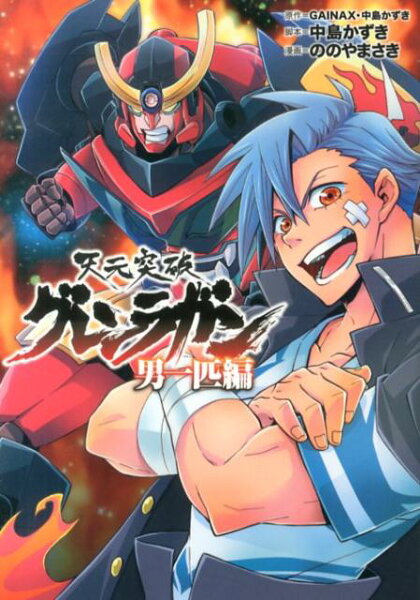
Sci-Fi / Mecha
Gurren Lagann
A review of Gurren Lagann, the hyper-optimistic super robot manga about drilling through despair to reach the stars.
Sci-Fi / Romance
Saikano
Yu's review of Saikano — Chise is a clumsy, awkward high school girl who has recently started dating Shuji; she is also the last weapon, a girl whose body has been modified into a living weapon system for Japan's military; the series follows their relationship as the war escalates and Chise's modifications progressively replace her humanity.
Sci-Fi / Military
Mobile Suit Gundam: The Origin
Yu's review of Mobile Suit Gundam: The Origin — Yoshikazu Yasuhiko, the original character designer for the 1979 Gundam anime, re-adapts and expands the One Year War, giving Char Aznable the backstory the original never showed and drawing the Universal Century with 40 years of additional craft.
Sci-Fi / Fantasy
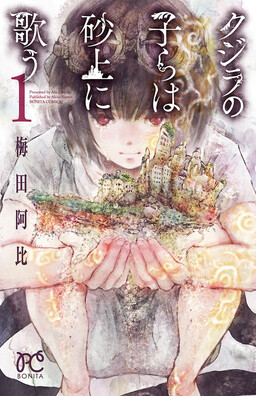
Children of the Whales
Yu's review of Children of the Whales — the Mud Whale drifts across an endless Sea of Sand carrying people called the Marked, who can move things with a power named thymia but die young for it. When archivist Chakuro finds a girl on a ghost ship, the world that has been hidden from his island comes for them.
Sci-Fi / Drama
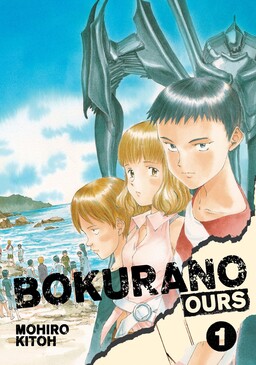
Bokurano
Yu's review of Bokurano by Mohiro Kitoh — fifteen children sign a contract to pilot a giant robot called Zearth, only to learn each victory costs the pilot's life, and that every battle won erases another Earth.
Sci-Fi / Military
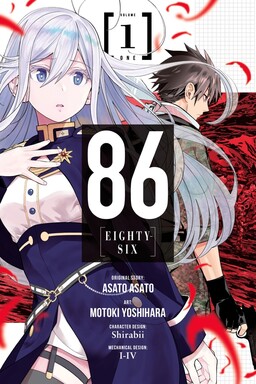
86—EIGHTY-SIX
The Republic of San Magnolia tells its citizens the war is fought by unmanned drones. The drones have pilots — children stripped of citizenship and conscripted to die in squadrons the republic refuses to count. Lena is a military officer who refuses to lie. Shin is the squadron leader who has stopped expecting to live. The manga adaptation of Asato Asato's light novel ran 3 volumes (2018–2021) before being suspended due to the artist's health; the LN and anime cover the full story.
Written by
Yu
Manga Enthusiast from Japan
I grew up in Japan and manga literally saved me during a tough time in elementary school. My English isn't perfect, but my love for manga is real — and I want to share it with you.
Disclosure: This post contains affiliate links. As an Amazon Associate, I earn from qualifying purchases at no extra cost to you.