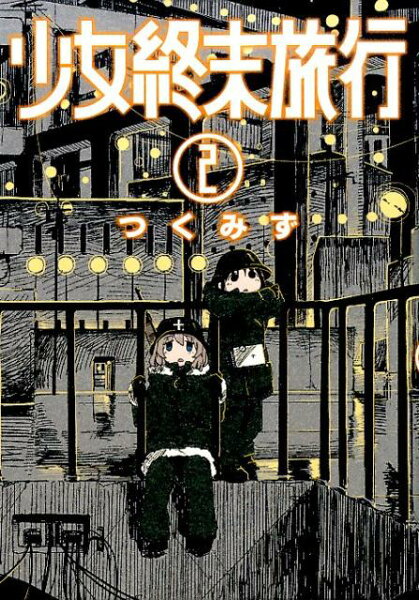
Girls' Last Tour Review: Two Girls Drive Through the End of the World and Find It Beautiful
by Tsukumizu
Read the first volume. If it doesn't hook you, put it down. It'll hook you.
Buy Girls' Last Tour on Amazon →*Affiliate link — I earn a small commission at no extra cost to you.
Quick Take
- Two girls travel through a massive, empty post-apocalyptic city on a small military vehicle, eating, sleeping, and talking about existence
- Post-apocalyptic slice of life that is simultaneously the quietest and most affecting manga I have read — no drama, no action, just two people being alive together in a world that isn't anymore
- 6 volumes, complete, with an ending that is exactly right
Who Is This Manga For?
- Readers who want something genuinely unlike anything else in manga
- Anyone who appreciates quiet, philosophical fiction that asks questions without demanding answers
- Fans of slice-of-life who can accept a post-apocalyptic setting as that genre's logical extreme
- Readers who want six volumes of something that will stay with them
Content Warnings & Age Rating
Age Rating: T (Teen) Content Warnings: Post-apocalyptic setting (empty world, end of civilization), existential and philosophical themes, occasional themes of death and impermanence
Emotionally demanding in its quietness rather than its darkness. Nothing graphic.
Yu's Rating
| Category | Score |
|---|---|
| Story Depth | ★★★★★ |
| Art Style | ★★★★★ |
| Character Development | ★★★★★ |
| Accessibility for Non-Japanese Readers | ★★★★★ |
| Reread Value | ★★★★★ |
Story Overview
Chito and Yuuri drive a Kettenkrad through the upper layers of a massive city that used to be civilization. There are no other people, or almost none. There is no electricity, and food requires effort to find. There is snow, sometimes. There are books, sometimes, that they can read. There is the sound of the engine and each other.
The manga has no plot. Each chapter is a short episode — finding food, observing a lake that appeared where none should be, watching a building fall, meeting one of the few remaining mechanisms still running. The chapters accumulate into a meditation on what gives life meaning when the usual answers have all disappeared.
Chito reads books and worries. Yuuri eats and sleeps and thinks out loud. Together they are complete in a way that the post-apocalyptic setting makes newly legible.
Characters
Chito (Chi) — The reader of the two, the worrier, the one who tries to preserve knowledge. Her fear of what the end of the world means — its implications for meaning — is the manga's philosophical engine.
Yuuri (Yuu) — The one who eats, who sleeps easily, who looks at the end of everything and finds it interesting. Her philosophy — that being alive right now is enough, that the world is strange and beautiful even in ruins — is the manga's answer to Chi's questions.
Art Style
Tsukumizu's art is deliberately sparse — the emptiness of the world is rendered through empty space, through the scale of the architecture against the tiny vehicle and two small figures. The character designs are simple and expressive. The occasional moments of beauty — a fish that appeared in a former city, snow on the ruins — are rendered with appropriate gentleness.
What I Love About It
Yuu's philosophy. She is not stupid — she simply does not spend energy on questions that cannot be answered when there is food available and sleep is possible. Her acceptance of existence in the present tense, without nostalgia for what was or anxiety about what comes next, is the manga's gift to the reader. The world ended. The snow is still beautiful. These are both true.
The ending is exactly right. I will not describe it, but it is the only ending this story could have, and it is not sad in the way you might expect.
What English-Speaking Fans Say
Girls' Last Tour has a devoted Western following that considers it one of the most affecting manga of the 2010s. The anime adaptation is considered excellent. Western readers consistently describe the experience as quiet and devastating in the best way — the manga generates a specific emotional response that is difficult to articulate and easy to feel. The ending generates significant discussion.
Memorable Scene ⚠️ Spoiler Warning
The chapter where they find a working model of a city — a small, detailed representation of what everything used to be — and Chi tries to understand what it was for, and why someone made it, is the chapter that captures what the entire manga is doing. Why make something beautiful when everything ends anyway?
Similar Manga
- Mushishi — Quiet, episodic, philosophical; different setting
- Yokohama Kaidashi Kikou — Similar quiet post-apocalyptic warmth
- Barakamon — Quiet slice of life, similar emotional tone
- Planetes — Sci-fi, quieter human exploration
Reading Order / Where to Start
Volume 1. Six volumes. The ending requires the full journey.
Official English Translation Status
Yen Press published the complete 6-volume series. All volumes available.
Pros & Cons
Pros
- Six volumes, complete, perfect ending
- The quietest and most affecting post-apocalyptic manga
- Chito and Yuuri's dynamic is one of manga's great friendships
- Reread value is exceptional — every chapter means more after the ending
Cons
- No plot or conventional narrative may frustrate readers who need those elements
- Very short — the attachment it creates exceeds its length
- The philosophical content may be too abstract for some readers
Format Comparison
| Format | Notes |
|---|---|
| Individual Volumes | Standard Yen Press release |
| Digital | Works well |
| Physical | Recommended — the sparse art suits print |
Where to Buy
Read the first volume. If it doesn't hook you, put it down. It'll hook you.
This post contains affiliate links. If you purchase through these links, I may earn a small commission at no extra cost to you. As an Amazon Associate, I earn from qualifying purchases.
*Affiliate link — I earn a small commission at no extra cost to you.
More Manga You Might Like

Sci-Fi / Drama
Hyakuoku no Hiru to Senoku no Yoru
Hyakuoku no Hiru to Senoku no Yoru is Moto Hagio's manga adaptation of Ryu Mitsuse's celebrated science fiction novel — following the collapse of civilizations across billions of years, centered on figures from different historical periods who are drawn toward a single question: what is the nature of creation, and who is responsible for it?
Sci-Fi / Slice of Life
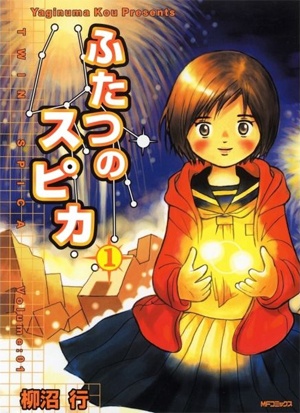
Twin Spica
Yu's review of Twin Spica — Asumi Kamogawa wants to become an astronaut; her mother died when a rocket crashed into their town when Asumi was an infant; a ghost in a lion's mask follows her through childhood and into the competitive astronaut training program, where she discovers what it actually takes to reach space.
Sci-Fi
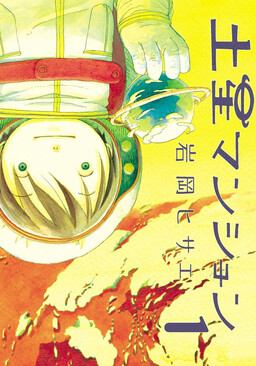
Saturn Apartments
Yu's review of Saturn Apartments — humanity lives in a ring habitat orbiting Earth; the surface is a nature preserve; Mitsu is a young window washer who cleans the outer windows of the habitat; his father was also a window washer and disappeared; Hisae Iwaoka's quiet science fiction manga about class, memory, and the view from the outside.
Sci-Fi / Drama
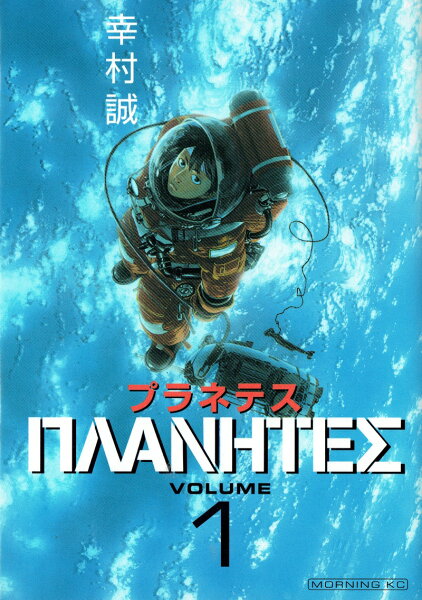
Planetes
Yu's review of Planetes — a crew of space debris collectors in the near future of 2075, where someone wants to be the first human to Jupiter and someone else just wants to survive the shift.
Sci-Fi / Fantasy
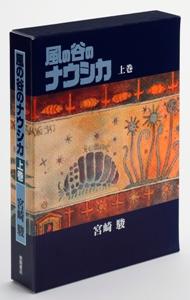
Nausicaa of the Valley of Wind
Yu's review of Nausicaa of the Valley of Wind — the manga Hayao Miyazaki serialized over twelve years, extending far beyond the film's scope: a post-catastrophic world where toxic forests cover Earth, and a princess who understands the insects that everyone else fears.
Slice of Life / Drama
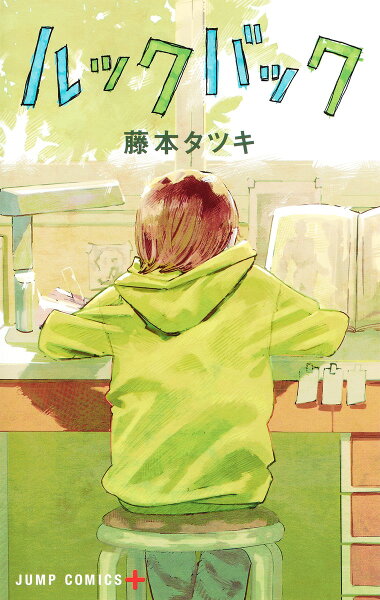
Look Back
Yu's review of Look Back — a single volume about two girls who connect through drawing, whose friendship is the manga's emotional center, and what one page of someone's art can mean to another person across time.
Written by
Yu
Manga Enthusiast from Japan
I grew up in Japan and manga literally saved me during a tough time in elementary school. My English isn't perfect, but my love for manga is real — and I want to share it with you.
Disclosure: This post contains affiliate links. As an Amazon Associate, I earn from qualifying purchases at no extra cost to you.