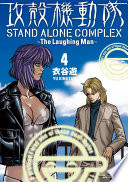
Ghost in the Shell: Stand Alone Complex Review: The Manga That Made the Anime's Ideas Even Cleaner
by Yu Kinutani
Read the first volume. If it doesn't hook you, put it down. It'll hook you.
Buy Ghost in the Shell: Stand Alone Complex on Amazon →*Affiliate link — I earn a small commission at no extra cost to you.
In 2030 Japan, the question isn't whether machines can think — it's whether thought needs a machine to be real.
Quick Take
- A clean, readable adaptation of the beloved Ghost in the Shell: Stand Alone Complex anime
- Five volumes that capture the major arcs and the series' philosophical core
- Best experienced alongside or after the anime, not as a replacement
Who Is This Manga For?
- Fans of the SAC anime who want the story in manga form
- Readers interested in serious cyberpunk fiction that takes its ideas seriously
- People curious about the Ghost in the Shell universe who want a compact entry point
- Adults who enjoy political thrillers with speculative fiction foundations
Content Warnings & Age Rating
Age Rating: M (Mature) Content Warnings: Violence, cyberpunk themes including body modification and mind-hacking, political content, some adult material
Adult content appropriate for the franchise's usual register.
Yu's Rating
| Category | Score |
|---|---|
| Story Depth | ★★★★★ |
| Art Style | ★★★★☆ |
| Character Development | ★★★★☆ |
| Accessibility for Non-Japanese Readers | ★★★★☆ |
| Reread Value | ★★★★☆ |
Story Overview
Section 9 is Japan's elite counter-cyberterrorism unit in 2030 — a world where most of the population has cyberized bodies and networked minds, where hackers can infiltrate not just computers but people. Major Motoko Kusanagi leads the unit: fully cyberized, exceptional at both physical and digital combat, and quietly obsessed with questions about identity and consciousness that her situation makes impossible to avoid.
The Stand Alone Complex storyline — adapted here — follows Section 9 as they pursue the Laughing Man case: a hacker who hijacked a CEO's public appearance and planted their logo across all media simultaneously, then vanished for years. When copycat crimes begin, the trail leads into the intersection of corporate corruption, government cover-ups, and something stranger about the nature of copied behavior and group consciousness.
The manga adaptation condenses this into five volumes with clean art that serves the procedural structure well. The philosophical dialogue — Kusanagi and the supporting cast debating what it means to have an identity when your body and memories can be copied — is preserved and given room to breathe.
Characters
Major Motoko Kusanagi — Physically unmatched, philosophically serious, professionally distant in ways that make her occasional warmth surprising. The manga's access to her interior monologue is what the anime's visual approach could only suggest.
Batou — Her partner and the emotional core of the team. His affection for the Major, his physical humor, and his straightforward ethics make him the reader's easiest entry point.
Togusa — The least cyberized member of Section 9 and, for that reason, the one whose human perspective grounds the philosophical debates.
Art Style
Kinutani's adaptation uses clean, precise linework that suits the cyberpunk aesthetic: geometric backgrounds, cybernetic characters rendered with mechanical detail, action sequences with strong compositional clarity. It's functional rather than expressive — which works for a franchise that prizes clarity over emotion.
Cultural Context
The Ghost in the Shell franchise (Masamune Shirow's original manga, the Mamoru Oshii films, the SAC anime) has been one of the most influential bodies of work in science fiction since the 1990s. Its specific preoccupations — the boundary between human consciousness and digital information, the nature of individual identity in a networked world — anticipated and shaped how the internet generation thinks about technology.
The Laughing Man concept — a viral phenomenon that spreads as an idea rather than as intentional transmission — is particularly prescient, written before social media but anticipating the mechanics of internet memes.
What I Love About It
What Ghost in the Shell always gets right is the question it doesn't answer. What is the ghost in the shell? What makes a consciousness "real" versus a sufficiently complex simulation? Kusanagi asks this about herself. The manga, like the anime, does not resolve it — because the point is that the question remains live regardless of what answers we manufacture.
The Laughing Man arc in particular: the way a single person's act becomes everyone's act becomes no one's act is a meditation on meme culture, group behavior, and individual agency that has only become more relevant since 2002.
What English-Speaking Fans Say
Appreciated by franchise fans as a well-made adaptation. The consensus: not a replacement for the anime (which has music, voice acting, and visual dynamism the manga can't replicate) but a solid companion that handles the ideas well. The compression is cited as appropriate given the anime's length.
Memorable Scene ⚠️ Spoiler Warning
The sequence where Kusanagi traces the Laughing Man's original act back to its actual origin — and the moral complexity of what she finds is more uncomfortable than a villain would be — is the moment the manga earns its philosophical ambitions. The mystery resolves, and the resolution makes the world harder to understand rather than cleaner.
Similar Manga
| Title | Its Approach | How SAC Differs |
|---|---|---|
| Ghost in the Shell (original) | Shirow's original manga, denser and more explicit | SAC is more accessible and procedural; the original is richer but harder |
| Appleseed | Same creator, similar themes | Appleseed focuses more on society building; SAC is more focused on identity |
| Biomega | Cyberpunk action with darker aesthetics | SAC is more politically focused; Biomega is more action-horror |
Reading Order / Where to Start
Volume 1, straight through. Watching the anime first is recommended but not required.
Official English Translation Status
Dark Horse Comics published all 5 volumes in English. Complete and available.
Pros & Cons
Pros
- Faithful to the anime's philosophical core
- Clean art that suits the franchise's aesthetic
- The Laughing Man case is compelling in any medium
- Kusanagi is one of manga/anime's great protagonists
Cons
- Cannot replicate the anime's music and visual dynamism
- Some compression — the anime's 26 episodes are denser than 5 manga volumes
- The best version of this franchise is still the anime
- Political procedural structure may be too slow for action-oriented readers
- Mature content limits the readership
Is Ghost in the Shell: Stand Alone Complex Worth Reading?
For franchise fans, absolutely. For newcomers, the anime is the better first encounter — but this is a respectable adaptation that stands on its own as a cyberpunk political thriller.
Format Comparison
| Format | Pros | Cons |
|---|---|---|
| Physical | The clean art reads well in print | — |
| Digital | Easy to access | — |
| Omnibus | No omnibus available | — |
Where to Buy
Read the first volume. If it doesn't hook you, put it down. It'll hook you.
This post contains affiliate links. If you purchase through these links, I may earn a small commission at no extra cost to you. As an Amazon Associate, I earn from qualifying purchases.
*Affiliate link — I earn a small commission at no extra cost to you.
More Manga You Might Like
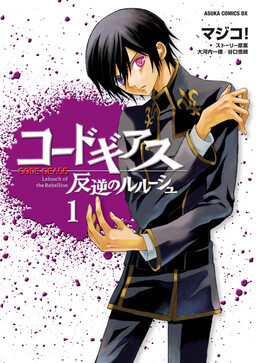
Sci-Fi / Action
Code Geass: Lelouch of the Rebellion
Yu's review of Code Geass: Lelouch of the Rebellion, the 8-volume manga by Majiko! that retells the Sunrise anime without its Knightmare Frame mecha. Exiled prince Lelouch gains Geass, the power of absolute obedience, from the mysterious C.C. and becomes the masked rebel Zero — but the manga is lighter, more comedic, and more romance-focused than the anime.
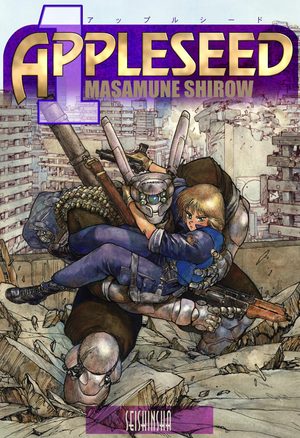
Sci-Fi / Action
Appleseed
Yu's review of Appleseed — Deunan Knute and her cyborg partner Briareos are pulled out of the post-war wasteland into Olympus, a half-human, half-bioroid utopia run by the supercomputer Gaia, only to discover the city's peace is built on a decision about whether humanity even deserves to inherit the future.
Sci-Fi / Political
Sanctuary
Yu's review of Sanctuary — two survivors of the Cambodian killing fields make a pact to change Japan from the inside: one through legitimate politics, one through the yakuza; a politically serious manga by the creators of Crying Freeman and Mai the Psychic Girl about power, ambition, and what it costs to change a corrupt system.
Sci-Fi / Thriller
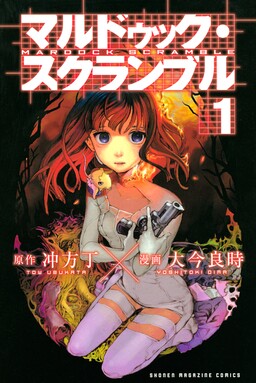
Mardock Scramble
Yu's review of Mardock Scramble — Rune Balot, a teenage prostitute, is murdered by casino mogul Shell Septinos; resurrected under Mardock Scramble 09, an emergency law that allows dead people to be brought back as cyborgs to testify, she must survive long enough to bring Shell to justice with the help of her partner Oeufcoque.
Sci-Fi / Action
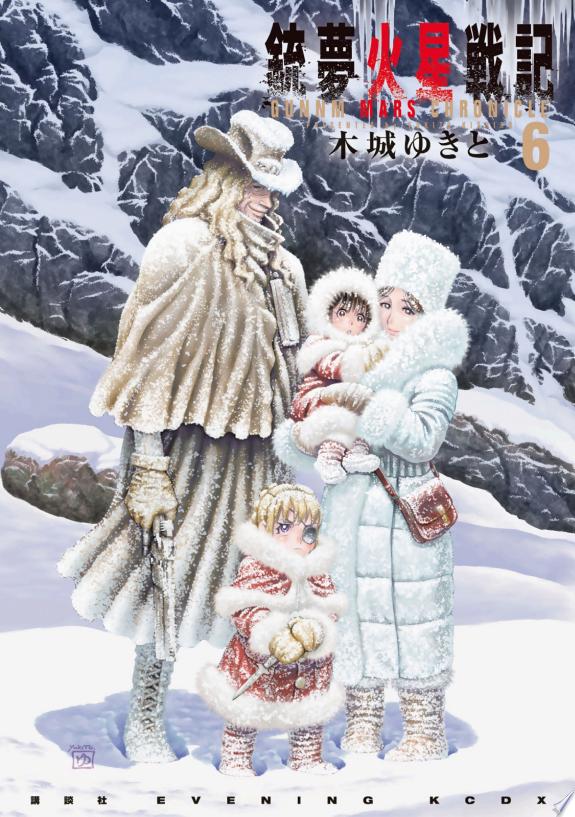
Battle Angel Alita
Yu's review of Battle Angel Alita (Gunnm) — a memoryless cyborg pulled from a junkyard fights through bounty hunting, Motorball, and a doomed first love in the brutal world beneath the sky city of Zalem.
Sci-Fi / Action
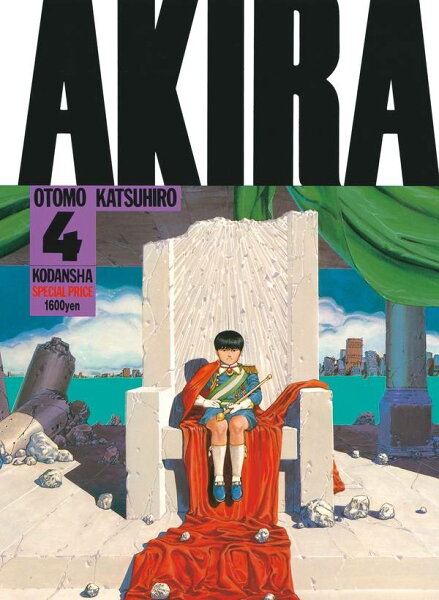
Akira
Yu's review of Akira — Katsuhiro Otomo's six-volume monster, serialized 1982–1990. Set in 2019 Neo-Tokyo, a teenage biker tries to save the best friend who suddenly has the power to end the world. The manga that dragged Japanese comics onto the world stage.
Written by
Yu
Manga Enthusiast from Japan
I grew up in Japan and manga literally saved me during a tough time in elementary school. My English isn't perfect, but my love for manga is real — and I want to share it with you.
Disclosure: This post contains affiliate links. As an Amazon Associate, I earn from qualifying purchases at no extra cost to you.