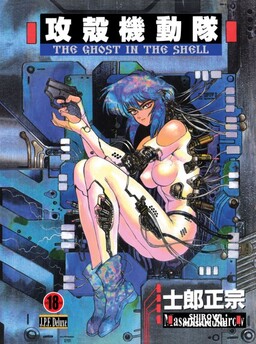
Ghost in the Shell 2: Man-Machine Interface Review: Shirow's Most Demanding Cyberpunk Manga Is Also His Strangest
by Masamune Shirow
Read the first volume. If it doesn't hook you, put it down. It'll hook you.
Buy Ghost in the Shell 2: Man-Machine Interface on Amazon →*Affiliate link — I earn a small commission at no extra cost to you.
I came to Man-Machine Interface the way most Shirow readers did: confused, frustrated, and eventually convinced. I tried twice before I finished it. The third time I read it as I would read a textbook, with the footnotes open and a notebook beside me, and it became the most interesting science fiction comic I had read that year.
I'm Yu. This is a book I would not recommend to anyone who hasn't already read the original Ghost in the Shell. If you have, it is one of the strangest, densest, most ambitious works in the cyberpunk canon.
Quick Take
- Masamune Shirow's Ghost in the Shell 2: Man-Machine Interface — 11 chapters in Young Magazine in 1997, collected first in Kodansha's Solid Box deluxe hardcover (2000), then the mainstream softcover (2001).
- Dark Horse Comics published the English edition in 2003, first as 11 comic-sized issues, then as a trade paperback in early 2005. Translation by Studio Proteus.
- Rated M (Mature) — graphic violence, explicit nudity in the uncensored Japanese release, footnotes that read like a graduate-level cybernetics seminar.
Story Overview
The first Ghost in the Shell ended with Motoko Kusanagi merging with the Puppet Master and disappearing into the net.
Man-Machine Interface opens years later. The protagonist is a woman named Motoko Aramaki who works in corporate security for Poseidon Industrial. She is one of several Motoko Aramakis. The Motoko-after-merge has propagated herself across multiple cyborg bodies and many more network "nodes." Each Aramaki body is a full-fledged consciousness with the original Motoko's memories. The distributed Motoko they collectively constitute is the actual protagonist; the manga follows one Aramaki body for most of its surface plot.
The surface plot is a corporate-espionage thriller. A series of strange cyber-attacks targets Poseidon Industrial. Aramaki investigates. Bodies are deployed, hacked, killed, replaced. Underneath the thriller is the book's actual project: a sustained philosophical inquiry into what consciousness is when it can exist in multiple places, share memories asymmetrically, and persist across changes of substrate.
The book ends not with resolution but with a kind of recognition — the distributed Motoko understanding her relationship to the larger consciousness she is part of. Plot beats are secondary. The book wants to be read for its ideas.
Characters
Motoko Aramaki — A Motoko body. One of several. Functions as the protagonist in the surface narrative. The book never fully clarifies how separate she is from her sister-bodies; that ambiguity is the point.
Tamaki Tamai — A young woman caught in the corporate cyber-attacks. Less a character than a vector for the book to think about how an ordinary human consciousness relates to the kind of consciousness Motoko has become.
The Puppet Master / Project 2501 (offscreen, structurally) — Never named directly but present in the architecture. The original merge is what Man-Machine Interface is the slow-motion working-out of. Readers without the original will not feel the absence; readers with the original will see it everywhere.
The Aramaki nodes / "Motokos" — The distributed instances of the protagonist. The book gradually reveals that several of them are visible across the chapters, doing different work, sometimes meeting.
What I Love About It
What I love about Man-Machine Interface is the footnotes.
Shirow does in this book what he had been doing in the original Ghost in the Shell but turned up several notches: he runs his own philosophical and technical apparatus along the margins of the manga. The footnotes engage seriously with cybernetics, network theory, neurology, and consciousness philosophy. Some of them gloss the action in the panels. Some of them dispute what the panels show. Some of them are jokes. They make the book feel like reading along with a brilliant, slightly impossible academic who is also drawing the comic.
This is, structurally, a thing manga does not usually do. Man-Machine Interface asks for the kind of attention a long-form essay does. If you give it that attention, the comic rewards it. If you read it like an action manga, it is impenetrable and aggravating.
The other thing I love is the art. Shirow's character designs here are at their most stylized — the Motoko-Aramaki bodies are drawn in a smoother, more rendered style than the original Motoko, intentionally. The network sequences — the visualizations of cyberspace, the data architectures — are some of the most ambitious abstract drawing he ever did. Read this book for the pages alone and you will still get something out of it.
Memorable Scene ⚠️ Spoiler Warning
The chapter near the end where the surface investigation collapses and the manga drops the corporate-thriller framing entirely, letting Motoko-Aramaki encounter the structure of the consciousness she is part of. The page composition shifts: panels stop being windows on a scene and start being diagrams of a network. Shirow's drawing pushes from representational to abstract over a single sequence.
This is the moment where the book stops being read as a thriller and starts being read as the inquiry it is. The reader who has been following the action plot suddenly finds themselves looking at something that wants to be a philosophy text instead. The shift is uncomfortable and, eventually, the part of the book most people who love Man-Machine Interface love.
Pros & Cons
Pros:
- The most philosophically ambitious work in the Ghost in the Shell canon, period.
- Shirow's most visually inventive sequences — the data-architecture pages are unique in the medium.
- The Dark Horse English trade paperback is well-produced and reliably available.
Cons:
- Inaccessible without the original Ghost in the Shell.
- Plot is genuinely secondary to inquiry; readers who want a story will be frustrated.
- The footnote-heavy reading mode is a different relationship to comics than most manga ask for.
Is Ghost in the Shell 2 Worth Reading?
Yes — if you have already read the original and want Shirow's most ambitious thinking on the same questions. Skip if you came to the franchise through the Oshii films or the Stand Alone Complex anime and expect their flavor of cyberpunk action.
Who Is This Manga For?
- Ghost in the Shell readers who finished the original and want the sequel.
- Cyberpunk theory readers (Hayles, Haraway, Wiener); the manga reads alongside them.
- Shirow completists who haven't reached the late period.
- Anyone interested in how comics can carry philosophical argumentation.
Official English Translation Status
Dark Horse Comics first released Ghost in the Shell 2: Man-Machine Interface in 2003 as eleven monthly comic-sized issues; the trade paperback collection followed in early 2005. The English edition is complete. The Studio Proteus translation is the only English version.
Where to Buy
The Dark Horse trade paperback is the practical way to read this; the monthly comic issues from 2003 also surface in collector channels.
Browse Ghost in the Shell 2 on Amazon →
This post contains affiliate links. If you purchase through these links, I may earn a small commission at no extra cost to you. As an Amazon Associate, I earn from qualifying purchases.
*Affiliate link — I earn a small commission at no extra cost to you.
More Manga You Might Like
Sci-Fi / Thriller
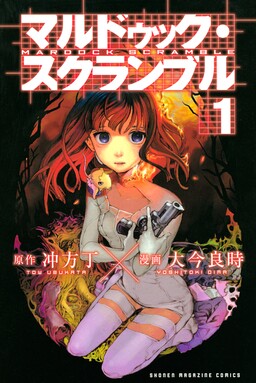
Mardock Scramble
Yu's review of Mardock Scramble — Rune Balot, a teenage prostitute, is murdered by casino mogul Shell Septinos; resurrected under Mardock Scramble 09, an emergency law that allows dead people to be brought back as cyborgs to testify, she must survive long enough to bring Shell to justice with the help of her partner Oeufcoque.

Sci-Fi / Drama
Emanon
Yu's review of Emanon — a young man on an overnight ferry meets a mysterious woman who claims to remember every life she has lived since the first single-celled organism; she carries within her the memories of three billion years of evolution; he doesn't know whether to believe her.
Sci-Fi / Action
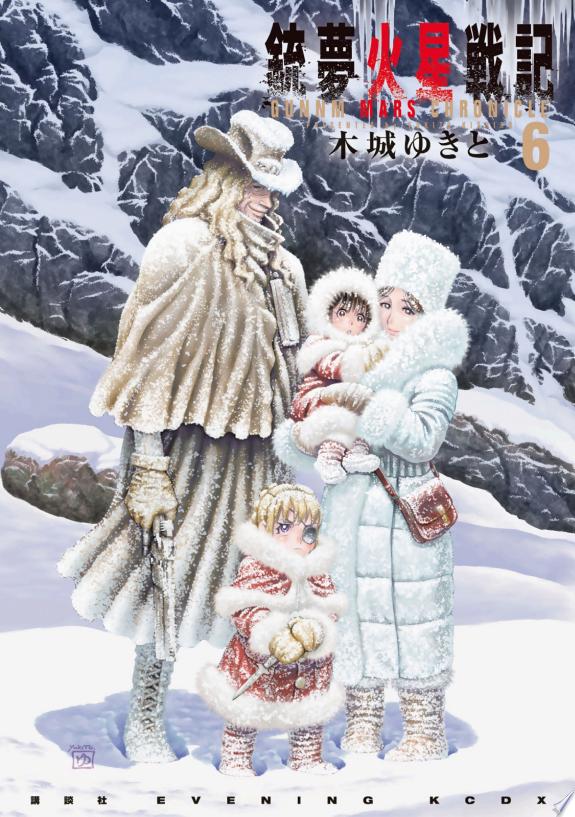
Battle Angel Alita
Yu's review of Battle Angel Alita (Gunnm) — a memoryless cyborg pulled from a junkyard fights through bounty hunting, Motorball, and a doomed first love in the brutal world beneath the sky city of Zalem.

Sci-Fi / Classic
Astro Boy
Yu's review of Astro Boy (鉄腕アトム) — Osamu Tezuka's foundational manga about a robot child built by Dr. Tenma to replace his dead son, abandoned, then raised by Professor Ochanomizu into a hero who defends both humans and robots. Includes 'The Greatest Robot on Earth.' Complete in 23 volumes from Dark Horse.
Sci-Fi / Action
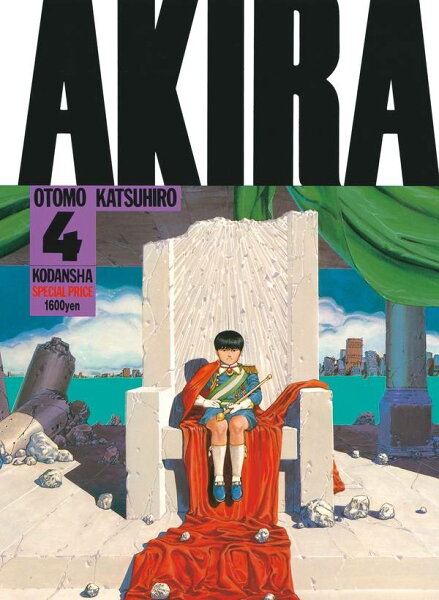
Akira
Yu's review of Akira — Katsuhiro Otomo's six-volume monster, serialized 1982–1990. Set in 2019 Neo-Tokyo, a teenage biker tries to save the best friend who suddenly has the power to end the world. The manga that dragged Japanese comics onto the world stage.
Sci-Fi / Noir
No Guns Life
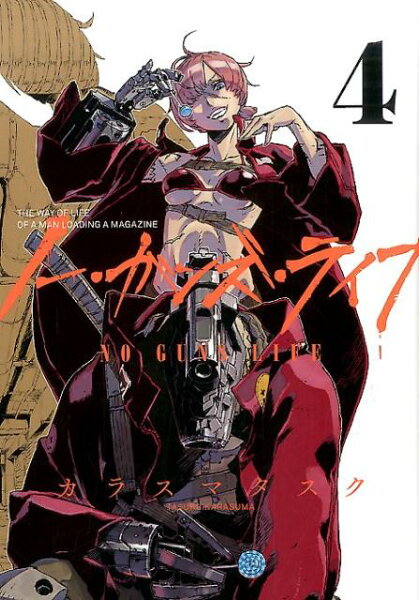
Yu's review of No Guns Life — Juzo Inui is an Extended — a cyborg modified for war — whose head is a giant revolver; he works as a problem fixer in a city that fears and restricts the Extended people who fought for it.
Written by
Yu
Manga Enthusiast from Japan
I grew up in Japan and manga literally saved me during a tough time in elementary school. My English isn't perfect, but my love for manga is real — and I want to share it with you.
Disclosure: This post contains affiliate links. As an Amazon Associate, I earn from qualifying purchases at no extra cost to you.