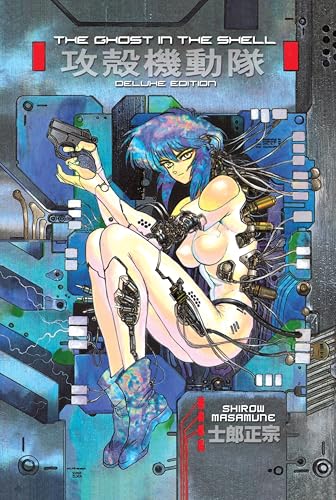
Ghost in the Shell Review: The Manga That Asked If Consciousness Can Survive Being Digital
by Masamune Shirow
Read the first volume. If it doesn't hook you, put it down. It'll hook you.
Buy Ghost in the Shell on Amazon →*Affiliate link — I earn a small commission at no extra cost to you.
Quick Take
- In a future where humans can upgrade their bodies and network their brains, a special ops commander who is mostly machine wonders whether she is still a person
- The manga that defined cyberpunk aesthetics for a generation and directly inspired The Matrix, Westworld, and countless other works
- Dense, adult, and worth reading slowly — this is one of the most intellectually demanding action manga ever made
Who Is This Manga For?
- Readers who want science fiction that genuinely engages with its philosophical implications
- Fans of cyberpunk who want to go to the source
- Anyone interested in questions of identity, consciousness, and what makes a person
- Adults comfortable with mature content alongside serious ideas
Content Warnings & Age Rating
Age Rating: M (Mature) Content Warnings: Graphic violence, nudity (Major Kusanagi's full-cyborg body is depicted without clothing in several scenes, presented as clinical), adult themes
This is a mature work intended for adult readers. The nudity is not gratuitous but it is present.
Yu's Rating
| Category | Score |
|---|---|
| Story Depth | ★★★★★ |
| Art Style | ★★★★★ |
| Character Development | ★★★★☆ |
| Accessibility for Non-Japanese Readers | ★★★☆☆ |
| Reread Value | ★★★★★ |
Story Overview
In the near future, cybernetic body modification is normal. People upgrade their eyes, their limbs, their brains. Neural networks connect human consciousness to the internet. The border between human and machine is a matter of degree, not kind.
Major Motoko Kusanagi works for Public Security Section 9, a government counter-cyberterrorism unit. Her body is almost entirely artificial — only her brain and some organic tissue remain. Whether the consciousness operating that brain is still human is the question she carries with her at all times.
The central case involves the Puppet Master, a hacker capable of hacking into people's cyberbrains and rewriting their memories, leaving them with false pasts they believe completely. The investigation into the Puppet Master leads to questions about the nature of identity, what a "ghost" (the manga's term for the soul or consciousness) actually is, and whether something artificial can develop one.
Shirow's manga is also dense with appendix material, footnotes, and technical specifications that fill out the world in extraordinary detail. It rewards rereading.
Characters
Major Motoko Kusanagi — One of the most influential characters in science fiction. Her body is a tool, her identity is a question, her competence is absolute. Her willingness to pursue philosophical questions about her own nature without panic or sentimentality is remarkable.
Batou — Kusanagi's second-in-command, heavily augmented, human in the ways that matter most. His protective affection for the Major is one of the manga's warmest relationships.
Chief Aramaki — The political mind of Section 9, operating in a world of government intrigue above and beyond the operations we see.
The Puppet Master — One of science fiction's most interesting antagonists; what it is and what it wants are genuinely surprising.
Art Style
Shirow's art is technically extraordinary — the world is depicted with engineering precision, the action sequences are dynamic, and the Major's body (artificial, capable of things human bodies cannot do) moves in ways that convey exactly that. The page design is dense and uses panels in unconventional ways. Some pages have more information in them than entire chapters of other manga.
Cultural Context
Ghost in the Shell emerged in the late 1980s, during the height of Japan's bubble economy, when questions about technology, corporate power, and human augmentation felt genuinely immediate. The manga's anxiety about what happens when human consciousness becomes just another system to be hacked reflects a specific cultural moment. It influenced not just manga but global science fiction.
What I Love About It
The Puppet Master resolution — what the Puppet Master actually is, what it wants from Kusanagi, what they decide together — is one of the most philosophically radical endings in sci-fi manga. It does not resolve the identity question. It proposes that the question might be the wrong one. I have thought about it for years.
What English-Speaking Fans Say
Ghost in the Shell occupies a special place in Western manga fandom as the work that, alongside Akira, established that manga could be serious science fiction rather than entertainment for children. Western fans often come to the manga after the 1995 anime film and discover a different experience — denser, funnier in places (Shirow's humor is present in the manga and largely absent from the film), and more technically detailed. The manga is considered essential reading for anyone interested in cyberpunk as a genre.
Memorable Scene ⚠️ Spoiler Warning
The sequence where Kusanagi dives into the sea — alone, without backup, a body that could be mistaken for a diving suit — and wonders what it means to be her, in water that has no information in it, is the most purely meditative moment in the manga. Everything around it is action and politics. This moment is philosophy.
Similar Manga
- Akira — Different aesthetics, same generation of visionary sci-fi manga
- Blame! (Tsutomu Nihei) — Post-human sci-fi, less philosophical, more atmospheric horror
- Battle Angel Alita — Cyberpunk with more character focus
- Planetes — Harder sci-fi, no cyberpunk elements, similar seriousness
Reading Order / Where to Start
The original Ghost in the Shell is a single volume. Start there. Ghost in the Shell 2: Man-Machine Interface is the sequel — more experimental, more difficult, best read after the first. Ghost in the Shell 1.5: Human-Error Processor is additional stories from between the volumes.
Official English Translation Status
Kodansha USA publishes the English editions. The current deluxe edition (larger format, better production) is the recommended version. All volumes are available.
Pros & Cons
Pros
- Foundational work of cyberpunk fiction and science fiction manga
- Philosophical depth that rewards rereading
- Kusanagi is one of the great science fiction protagonists
- The Puppet Master storyline is one of the best in the genre
Cons
- Dense — the footnotes, technical specifications, and political subplots require attention
- Mature content (nudity, violence) limits audience
- The humor, which is very present in Shirow's style, does not land consistently
Format Comparison
| Format | Notes |
|---|---|
| Deluxe Edition | Highly recommended — larger format shows the detail in Shirow's art |
| Standard Edition | Available; the deluxe is worth the upgrade |
| Digital | Available; the art complexity benefits from larger screens |
Where to Buy
Read the first volume. If it doesn't hook you, put it down. It'll hook you.
This post contains affiliate links. If you purchase through these links, I may earn a small commission at no extra cost to you. As an Amazon Associate, I earn from qualifying purchases.
*Affiliate link — I earn a small commission at no extra cost to you.
More Manga You Might Like
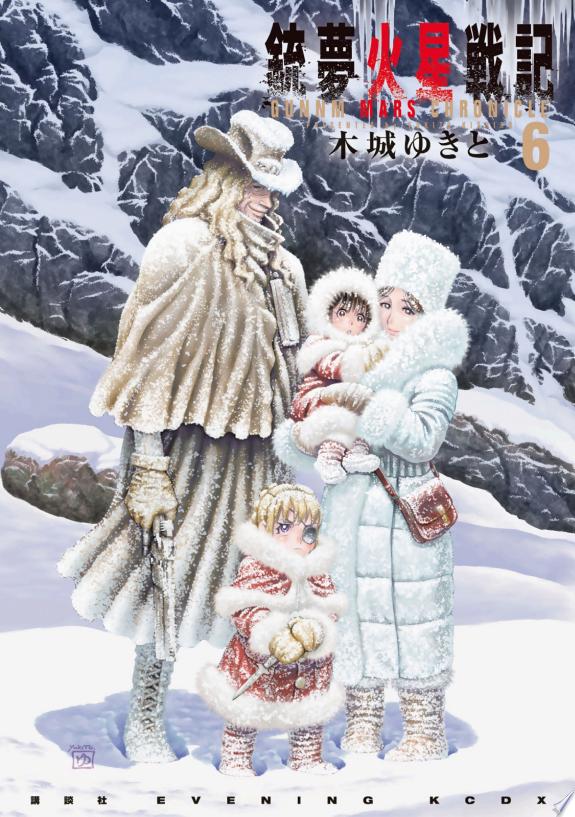
Sci-Fi / Action
Battle Angel Alita
Yu's review of Battle Angel Alita (Gunnm) — a memoryless cyborg pulled from a junkyard fights through bounty hunting, Motorball, and a doomed first love in the brutal world beneath the sky city of Zalem.
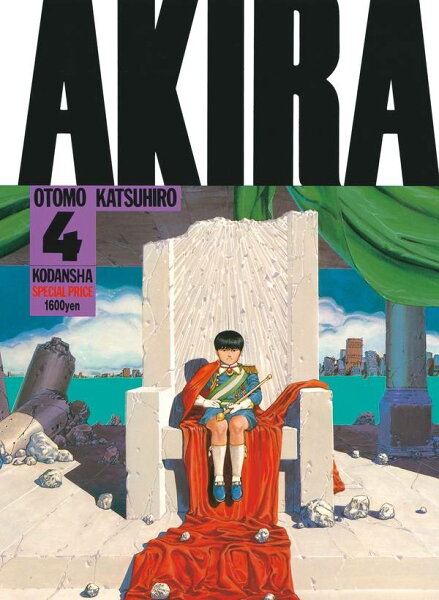
Sci-Fi / Action
Akira
Yu's review of Akira — Katsuhiro Otomo's six-volume monster, serialized 1982–1990. Set in 2019 Neo-Tokyo, a teenage biker tries to save the best friend who suddenly has the power to end the world. The manga that dragged Japanese comics onto the world stage.

Sci-Fi / Drama
Hyakuoku no Hiru to Senoku no Yoru
Hyakuoku no Hiru to Senoku no Yoru is Moto Hagio's manga adaptation of Ryu Mitsuse's celebrated science fiction novel — following the collapse of civilizations across billions of years, centered on figures from different historical periods who are drawn toward a single question: what is the nature of creation, and who is responsible for it?
Sci-Fi / Action
Babel II
A schoolboy named Koichi inherits the legacy of an alien stranded on Earth 5,000 years ago — three superhuman servants and the Tower of Babel — and learns that the same servants will obey his enemy Yomi, a distant relative who wants the world.
Sci-Fi / Action
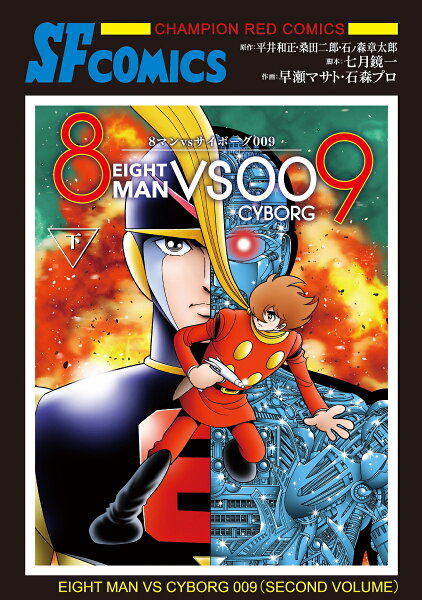
8 Man
8 Man follows detective Hachiro Azuma, gunned down in the line of duty and reborn when his mind is poured into a super-robot body by Dr. Tani. Now the eighth detective of the police force, he fights crime at 3,000 km/h — and has to smoke special cooling cigarettes to keep his electronic brain from overheating.
Sci-Fi / Action
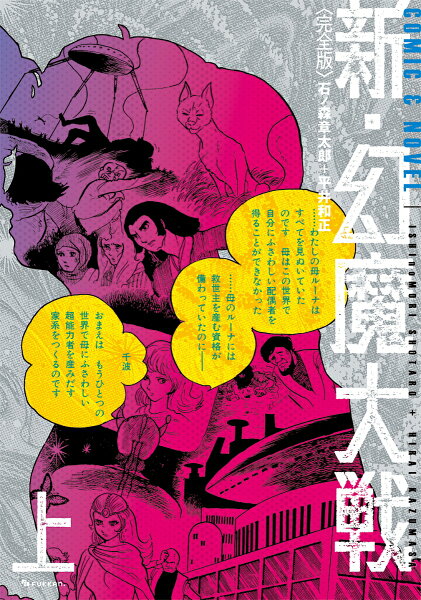
Genma Taisen
Genma Taisen is Shotaro Ishinomori's manga adaptation of Kazumasa Hirai's science fiction series — following a group of psychically gifted young people who must unite to face Genma, a cosmic consciousness that destroys civilizations across the universe, in a battle that is as much spiritual as physical.
Written by
Yu
Manga Enthusiast from Japan
I grew up in Japan and manga literally saved me during a tough time in elementary school. My English isn't perfect, but my love for manga is real — and I want to share it with you.
Disclosure: This post contains affiliate links. As an Amazon Associate, I earn from qualifying purchases at no extra cost to you.