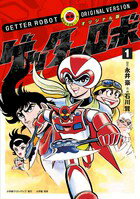
Getter Robo Review — The 1974 Mecha Manga Where the Pilots Discovered Their Robot Was a Cosmic Evolutionary Force
by Go Nagai (story) / Ken Ishikawa (art)
Read the first volume. If it doesn't hook you, put it down. It'll hook you.
Buy Getter Robo on Amazon →*Affiliate link — I earn a small commission at no extra cost to you.
I grew up watching Evangelion. I watched it in middle school like a lot of Japanese kids did, and the question I kept asking my dad afterward was: where did this come from? Where did the idea come from that the robot is something you don't fully understand, that exceeds the person inside it, that may have its own intentions?
He gave me Getter Robo. He told me to read the original — not the better-drawn later entries, the 1974 manga, where the ideas are first sketched out roughly. I did, and the rest of mecha started making sense.
Quick Take
- The 1974 mecha manga by Go Nagai (story) and Ken Ishikawa (art) that defined the combining-robot subgenre — three jets that merge into one giant machine in three different configurations
- The Getter Rays mythology — a cosmic evolutionary energy that may have its own will — is what makes this more than a "punch the alien" series
- Age rating: T (Teen) — 1970s mecha violence; one major character death; later volumes darker but not graphic by modern standards
Who Is This Manga For?
- Mecha fans who want to understand where the genre came from
- Evangelion / Gurren Lagann viewers curious about the works those series are responding to
- 1970s manga archaeologists willing to accept dated art for foundational ideas
- Readers interested in cosmic horror appearing in unexpected genres
- Go Nagai completists — this is the second pillar of his 1970s mecha catalog alongside Mazinger Z
Content Warnings & Age Rating
Age Rating: T (Teen) Content Warnings: Mecha combat violence; one named-character death (heavily foreshadowed); cosmic horror themes in later volumes; some 1970s gender/cultural conventions; the Dinosaur Empire content includes prehistoric-creature combat
The T rating is appropriate for the violence as drawn in the era. By modern standards the violence is restrained; by 1970s standards it was direct.
Story Overview
Dr. Saotome has spent years developing a defense system for Earth. His research has uncovered something disturbing: an ancient civilization, the Dinosaur Empire, survived the asteroid impact by retreating underground. They have built their own technology over the intervening millennia. They are aware of humanity. They want the surface world back.
Saotome's defense system is Getter Robo — a machine of his own design powered by an energy source called the Getter Rays. The Rays are not understood. Saotome believes they originated in space, that they have something to do with evolution itself, that life on Earth may have responded to them. The machine he has built is not just a weapon; it is an interface between humanity and whatever the Getter Rays actually are.
The machine requires three pilots in three connected jets that combine into three different robot configurations:
- Getter-1 (aerial, balanced) — piloted by Ryoma Nagare
- Getter-2 (ground, speed/drill) — piloted by Hayato Jin
- Getter-3 (underwater/heavy) — piloted by Musashi Tomoe
The three pilots are deliberately mismatched:
- Ryoma Nagare is a karate champion. Direct, physical, the natural leader. Volunteers for the Getter program for the fight.
- Hayato Jin is a former student radical. Calculating, cold, distrustful of the Saotome operation. The series' moral skeptic.
- Musashi Tomoe is the third recruit, a judo champion. Physically large, warm-hearted, the team's emotional center.
The six-volume run follows these three through escalating engagements with the Dinosaur Empire, increasingly strange revelations about the Getter Rays themselves, and the cost of being the human face of an energy that may not be entirely on humanity's side.
Characters
Ryoma Nagare — The series' central pilot. Aggressive, physically powerful, completely committed once he agrees to be in the machine. What Ishikawa does with Ryoma across the run is gradually reveal that the Getter Rays may have selected him before he selected them — that the kind of person who can pilot Getter-1 without breaking is a specific kind of person, and the Rays know it.
Hayato Jin — The pilot who understands the Getter Rays most clearly and is most frightened by what he understands. His radical-student backstory is the manga's clearest "this is a 1970s manga about specific 1970s anxieties" thread; his arc is the slow process of choosing to keep piloting despite suspecting what he is part of.
Musashi Tomoe — The warmest character. Loud, affectionate, the pilot who maintains the team's morale through long deployments. His fate in the original series is the manga's most-discussed sequence among Japanese mecha fans and a defining moment in 1970s manga.
Dr. Saotome — The Getter Robo program's director. Has lost both his sons to the project's predecessor work. His relationship to the Rays themselves becomes increasingly central as the series progresses; his understanding of what he has unleashed exceeds what he tells the pilots.
Michiru Saotome — Dr. Saotome's daughter. The team's support staff. The character who watches the pilots become the people the Rays are making them.
Art Style
Ken Ishikawa's art is 1970s manga energy at full volume. The linework is rough by modern standards, the panel composition direct, the action sequences kinetic. What Ishikawa does excellently is convey scale — the Dinosaur Empire's mechanized monsters, the Getter Robo's transformations between configurations, the geographic scope of combat that ranges from Tokyo to the deep sea to the planet's core. The visual ambition exceeds the technical polish.
Where Ishikawa's art rises into something unique is the cosmic horror sequences. The depictions of what the Getter Rays actually are — the late-volume sequences where the machine is shown doing things that have nothing to do with the Dinosaur Empire — are unforgettable. Ishikawa drew evolution as a force. He drew the universe as something with appetites. These pages are why the Getter Robo manga continues to influence mecha decades later.
Cultural Context
Getter Robo premiered in Weekly Shonen Sunday in 1974, the same era as Mazinger Z (Nagai's other major mecha series) and Mobile Suit Gundam (which arrived later in 1979). The three works define the early shape of modern mecha — the super robot, the combining robot, and the realist mecha.
What makes Getter Robo distinctive is Ishikawa's mythology. The Getter Rays as an evolutionary force with its own intentions is a science-fiction idea that turns the mecha from a tool into a participant. This concept's influence is everywhere in later mecha:
- Evangelion's Evas as living organisms with their own consciousness
- Gurren Lagann's Spiral Energy and the ascent into cosmic scale
- Rahxephon's machine-as-instrument-of-cosmic-purpose
Ken Ishikawa continued working on Getter Robo for decades after the original — Getter Robo G (1975), Shin Getter Robo (1996), and others — each darker and stranger than the last. His final unfinished work, Getter Robo Saga, was a multi-decade evolution of the original premise's cosmic implications.
The franchise's American footprint is unusual: the original manga was never officially translated, but the toys appeared as part of Mattel's Shogun Warriors line and the anime appeared in the Force Five package as "Starvengers." Western mecha-aware audiences encountered Getter Robo as a brand without ever reading the source material.
What I Love About It
The pilots' growing realization that they are not piloting the Getter Robo so much as they are being used by it.
Across the original six volumes, Ishikawa drops small signals. The Getter Rays seem to respond to the pilots' emotional states. The combinations work in ways the technical specifications shouldn't allow. The machine sometimes does things in combat the pilots did not deliberately do. By the late volumes, the question is whether Ryoma, Hayato, and Musashi are operators of a weapon, or organs of something larger that needed three specific humans to grow into.
What I love is what Ishikawa does with this idea morally. The pilots do not refuse the machine when they realize. They keep piloting. Hayato — the philosophical skeptic — is the most explicit about his choice. He understands that he is participating in something he does not fully control and that may be using him. He keeps strapping in. He keeps fighting. The manga argues, in 1974, that being instrumentalized by a cosmic force can be a legitimate choice if the alternative is letting the world end.
That argument is what every cosmic-scale mecha manga since has been wrestling with. Evangelion says no, the cost is too high. Gurren Lagann says yes, the cost is worth it. Getter Robo says, in its rough 1970s way: this is the choice, and the three pilots in front of you are choosing it. The manga is not afraid of the choice. The mecha genre is still working through what it gave us.
What English-Speaking Fans Say
Western mecha fans encounter Getter Robo primarily as genre archaeology — as the series Gurren Lagann was specifically responding to, as the series Evangelion was rejecting. The consensus among readers who do engage with the original manga is that the art is dated but the ideas are not. The Getter Rays mythology continues to influence Japanese science fiction; the original manga is where it began.
Among the later franchise entries, Shin Getter Robo (1996, also by Ishikawa) and Getter Robo Arc (2001, Ishikawa's incomplete final work) are the most frequently recommended modern Getter Robo entries. These are darker, more visually accomplished, and engage more directly with the cosmic horror implications the original sketched out.
Memorable Scene ⚠️ Spoiler Warning
Musashi's final battle.
Toward the end of the original Getter Robo series, the team faces a Dinosaur Empire assault that requires the destruction of an enemy command structure that the Getter Robo cannot reach without one of its pilots paying a specific cost. Musashi — the team's warm-hearted physical anchor, the pilot the manga has spent volumes making us love — volunteers.
The sequence Ishikawa draws is among the most famous in 1970s mecha. Musashi separates Getter-3 from the rest of the machine and rides it as a kamikaze weapon into the heart of the enemy operation. He does this with his face visible — Ishikawa does not let the moment hide behind silhouette. The panel of Musashi laughing, just before impact, is what the rest of the manga is for. He has decided what he is. He has decided what to do with it.
The final panels of his death sequence are drawn small. Ishikawa does not milk the moment. The remaining pilots — Ryoma and Hayato — see what Musashi has done. They will continue to pilot the Getter Robo. They will continue to be the people the Rays selected. But Musashi will not be with them. The third seat in the machine will be filled by another pilot in the sequel (Benkei Kuruma in Getter Robo G), and the loss will be permanent.
That scene is the manga's emotional center. The mecha genre's tradition of pilot sacrifice — the moment when a pilot chooses to die in the machine for the people on the ground — starts here. Every "ace dies in the cockpit" sequence in every mecha series since owes something to Musashi.
Similar Manga
| Title | Its Approach | How Getter Robo Differs |
|---|---|---|
| Mazinger Z (Nagai) | Nagai's other foundational 1970s mecha | Mazinger is super-robot heroic; Getter is cosmic horror in mecha clothing |
| Shin Getter Robo (Ishikawa) | Ishikawa's 1990s darker continuation | Shin Getter is the cosmic horror made explicit; the original is where it was first hinted |
| Neon Genesis Evangelion | The 1990s mecha that took the genre psychological | Evangelion responds to Getter Robo; the relationship between pilot and machine is the shared concern |
| Gurren Lagann | 2000s mecha celebrating Getter Robo's evolutionary ideas | Gurren Lagann is the heir; the Spiral Energy is the Getter Rays' great-grandchild |
Reading Order / Where to Start
Volume 1 of the original. The 1974–1975 run is the foundation; everything else (Getter Robo G, Shin Getter Robo, Getter Robo Arc) builds on it.
For English readers, the practical reading path is:
- Try fan scanlations of the original 6-volume run for the foundational material
- Read Getter Robo Devolution or Getter Robo Arc (both released in English via Seven Seas Entertainment) for accessible Ishikawa material
Official English Translation Status
The original 1974 Getter Robo manga is unlicensed in English. There is no announced plan to translate the original Nagai/Ishikawa run.
Later franchise entries have had English releases. Getter Robo Devolution: The Last 3 Minutes of the Universe (2015) and Getter Robo Arc were licensed by Seven Seas Entertainment. These are the most accessible Getter Robo manga in English.
Pros & Cons
Pros
- Foundational mecha manga; everything in the genre since references it
- The Getter Rays mythology is one of the most influential ideas in Japanese science fiction
- Musashi's sacrifice is a defining moment in 1970s manga
- Ishikawa's late-series cosmic horror imagery still works decades later
Cons
- 1970s art style requires adjustment
- The original manga is unlicensed in English
- Early volumes are more "monster of the week" before the mythology develops
- Some 1970s manga conventions (gender roles, character archetypes) are dated. The ideas are not, but the surface is. Won't land for every reader.
Is Getter Robo Worth Reading?
For mecha-curious readers: yes, especially if you can access fan scanlations or read Japanese. The original manga is the genre's foundation document.
For accessibility-first readers: start with the later franchise entries Seven Seas has translated (Getter Robo Devolution, Getter Robo Arc). They contain the cosmic horror payoffs the original sketched out.
Format Comparison
| Format | Notes |
|---|---|
| Japanese (original) | 6 Shogakukan volumes (1974–1975); later 3-volume Futabasha reprint |
| English (original manga) | Unlicensed; not officially available |
| English (later entries) | Getter Robo Devolution, Getter Robo Arc via Seven Seas |
| Anime | Multiple adaptations; New Getter Robo OVA (2004) and Getter Robo Arc anime (2021) cover related material |
Where to Buy
Read the first volume. If it doesn't hook you, put it down. It'll hook you.
This post contains affiliate links. If you purchase through these links, I may earn a small commission at no extra cost to you. As an Amazon Associate, I earn from qualifying purchases.
*Affiliate link — I earn a small commission at no extra cost to you.
More Manga You Might Like
Sci-Fi / Action
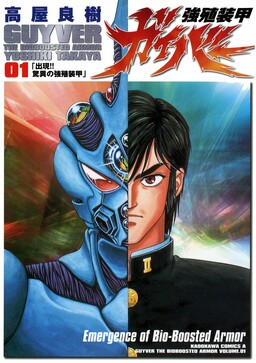
Bio-Boosted Armor Guyver
Yu's review of Bio-Boosted Armor Guyver — high school student Sho Fukamachi accidentally activates an alien bio-armor unit called Guyver, which bonds to him permanently; the shadowy organization Chronos, which created the armor, wants it back — along with the knowledge of what the armor actually is and what it was designed for; a foundational mecha/bio-armor sci-fi manga.

Sci-Fi / Mecha
Mobile Suit Gundam Wing
A review of Gundam Wing, the classic mecha manga adaptation about five teenage Gundam pilots fighting for peace in space colonies.
Sci-Fi / Mecha
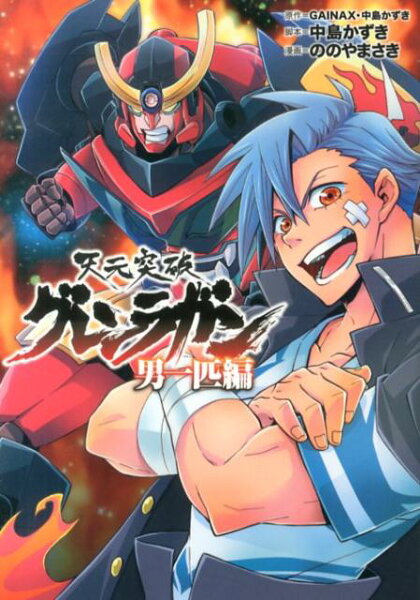
Gurren Lagann
A review of Gurren Lagann, the hyper-optimistic super robot manga about drilling through despair to reach the stars.
Sci-Fi / Military
Mobile Suit Gundam: The Origin
Yu's review of Mobile Suit Gundam: The Origin — Yoshikazu Yasuhiko, the original character designer for the 1979 Gundam anime, re-adapts and expands the One Year War, giving Char Aznable the backstory the original never showed and drawing the Universal Century with 40 years of additional craft.
Sci-Fi / Action
Battle Angel Alita
Yu's review of Battle Angel Alita (Gunnm) — a memoryless cyborg pulled from a junkyard fights through bounty hunting, Motorball, and a doomed first love in the brutal world beneath the sky city of Zalem.
Sci-Fi / Action
Akira
Yu's review of Akira — Katsuhiro Otomo's six-volume monster, serialized 1982–1990. Set in 2019 Neo-Tokyo, a teenage biker tries to save the best friend who suddenly has the power to end the world. The manga that dragged Japanese comics onto the world stage.
Written by
Yu
Manga Enthusiast from Japan
I grew up in Japan and manga literally saved me during a tough time in elementary school. My English isn't perfect, but my love for manga is real — and I want to share it with you.
Disclosure: This post contains affiliate links. As an Amazon Associate, I earn from qualifying purchases at no extra cost to you.