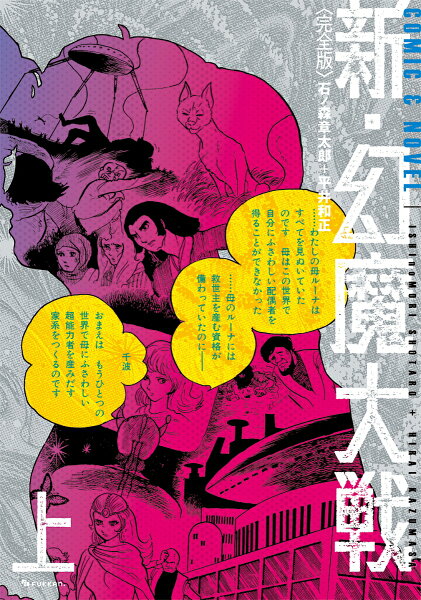
Genma Taisen Review: The War at the End of the Universe, Told Through One Boy's Journey
by Kazumasa Hirai (original) / Shotaro Ishinomori (manga)
Read the first volume. If it doesn't hook you, put it down. It'll hook you.
Buy Genma Taisen on Amazon →*Affiliate link — I earn a small commission at no extra cost to you.
What if the threat to humanity wasn't an army or a nation but the universe itself, looking for a place to end?
Quick Take
- Shotaro Ishinomori adapting Kazumasa Hirai's SF series — two giants of Japanese pop culture on one project
- Genma is one of the great antagonists of science fiction manga: not evil but indifferent, which is worse
- 12 volumes of cosmic-scale action with genuine philosophical weight beneath the spectacle
Who Is This Manga For?
- Science fiction fans who want cosmic horror given manga form
- Readers of Shotaro Ishinomori — creator of Cyborg 009 and Kamen Rider — who want his range at full scale
- Anyone who finds the "humanity vs. the universe" premise genuinely compelling
- Fans of psychic powers manga who want the powers used for something genuinely important
Content Warnings & Age Rating
Age Rating: T (Teen) Content Warnings: Cosmic horror themes. Action violence. Psychic powers used in combat. Dark themes regarding the nature of consciousness and destruction. Nothing graphic.
Suitable for teen readers.
Yu's Rating
| Category | Score |
|---|---|
| Story Depth | ★★★★☆ |
| Art Style | ★★★★☆ |
| Character Development | ★★★★☆ |
| Accessibility for Non-Japanese Readers | ★★★★☆ |
| Reread Value | ★★★☆☆ |
Story Overview
Genma is a consciousness that exists at the cosmic scale — not a person, not an army, but something that moves through the universe destroying civilizations as it goes. Its approach to Earth brings together a group of young people with psychic abilities: different powers, different backgrounds, different levels of understanding of what they are facing.
The series follows their gathering, their conflicts with each other, their individual encounters with Genma's advance forces, and ultimately their confrontation with something that cannot be fought in conventional terms.
Ishinomori's adaptation of Hirai's original material retains the cosmic scope while adding the character-level drama that manga requires — the young psychics are distinct individuals whose histories matter, not just vehicles for power displays.
Characters
The psychic group: Each character represents a different dimension of human psychic potential and a different relationship to the responsibility that potential implies. The ensemble dynamic creates conflict and cooperation that the cosmic threat requires human-scale grounding.
Genma: Not a character in any conventional sense — a force that the protagonists must understand before they can oppose it, and which cannot be opposed until it is understood.
Art Style
Shotaro Ishinomori's art has the dynamic power that defined his best action work — clear, expressive, capable of rendering both the intimate human scenes and the cosmic-scale action sequences with equal effectiveness. The Genma sequences in particular have a visual quality that captures the specific horror of confronting something genuinely inhuman.
Cultural Context
The manga ran in Weekly Shonen Magazine in the 1970s. Kazumasa Hirai's original Genma Taisen novel series predated the manga and explored similar themes in prose. The manga form — with Ishinomori's visual language applied to Hirai's ideas — created something that the novel and the later anime film (directed by Rintaro, 1983) approached differently.
What I Love About It
I love the antagonist's indifference.
Most science fiction antagonists want something from humanity — domination, resources, destruction for its own sake. Genma doesn't want anything from humanity. It is simply something that moves, and humanity is in its path. This distinction — between an enemy with an agenda and a force without one — changes what the protagonists can do. You can't negotiate with indifference. You can only resist it.
What English-Speaking Fans Say
Known in English-speaking markets primarily through the 1983 anime film, which was distributed internationally. The manga is less accessible but recognized by readers who encounter it as the version with more character development and more room for the cosmic ideas to develop.
Memorable Scene ⚠️ Spoiler Warning
A moment when one of the psychic group, in direct contact with Genma's consciousness, experiences what it actually is — not the enemy they had imagined but something that cannot be hated in the way an enemy can be hated. Their response to this experience, and how it changes what they believe the confrontation is actually for, is the series' most intellectually honest moment.
Similar Manga
| Title | Its Approach | How Genma Taisen Differs |
|---|---|---|
| Cyborg 009 (Ishinomori) | Cyborg team fighting human and superhuman threats | Cosmic scale vs. human-scale — same creator, different scope |
| 8 Man | Single cyborg with identity questions | Ensemble psychic team with cosmic antagonist |
| Devilman | Demons threatening humanity with personal horror | Cosmic consciousness threatening humanity with impersonal indifference |
Reading Order / Where to Start
Volume 1. The ensemble is assembled progressively and the scale builds from the individual toward the cosmic.
Official English Translation Status
Genma Taisen (manga) has no official English translation.
Pros & Cons
Pros
- Ishinomori and Hirai — two significant creators working at full capacity
- The cosmic horror antagonist is genuinely unusual and effective
- The ensemble character work grounds the cosmic scale in human stakes
- Complete and self-contained
Cons
- No English translation of the manga
- The cosmic scale may feel abstract for readers wanting personal-scale drama
- Some of Hirai's ideas require engagement with unfamiliar SF concepts
- The 1970s presentation shows its age in pacing and visual conventions
Is Genma Taisen Worth Reading?
For science fiction fans and Ishinomori readers, yes — the cosmic antagonist is genuinely interesting, and Ishinomori's adaptation adds human warmth that makes the scale emotionally legible. For readers who want more personal drama, the cosmic scope may be an obstacle. But as SF manga at ambitious scale, this is worth the effort.
Format Comparison
| Format | Notes |
|---|---|
| Physical | Japanese editions available |
| Digital | Limited availability in Japanese |
| Omnibus | Collected editions available |
Where to Buy
No English release yet. That just means you find it before everyone else does.
*Affiliate link — I earn a small commission at no extra cost to you.
More Manga You Might Like
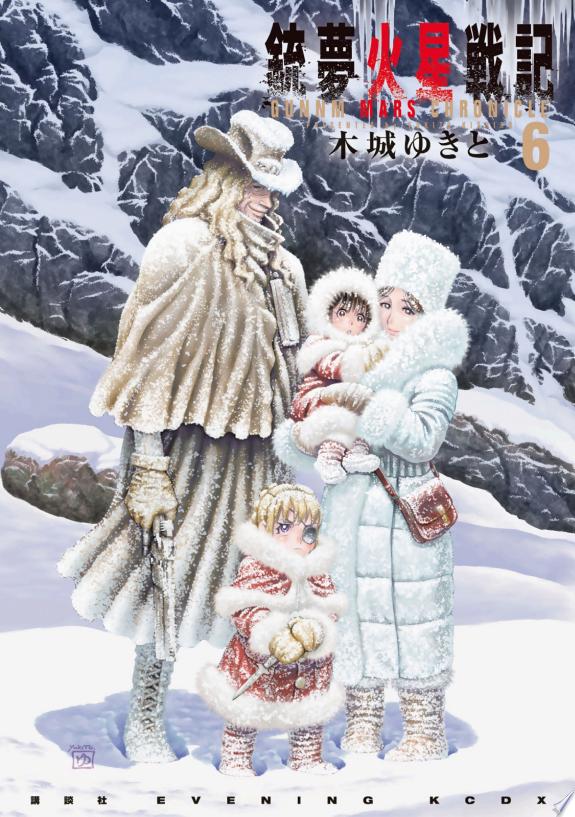
Sci-Fi / Action
Battle Angel Alita
Yu's review of Battle Angel Alita (Gunnm) — a memoryless cyborg pulled from a junkyard fights through bounty hunting, Motorball, and a doomed first love in the brutal world beneath the sky city of Zalem.
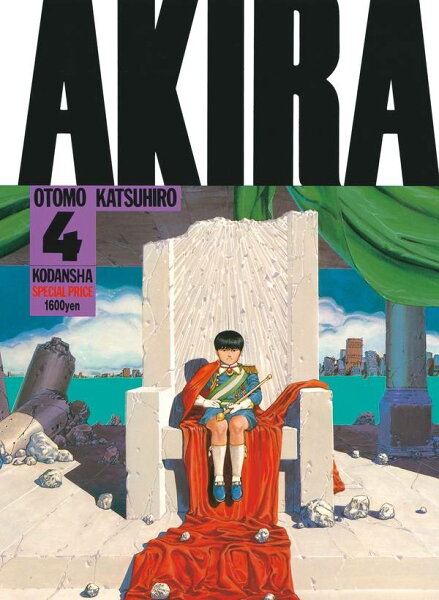
Sci-Fi / Action
Akira
Yu's review of Akira — Katsuhiro Otomo's six-volume monster, serialized 1982–1990. Set in 2019 Neo-Tokyo, a teenage biker tries to save the best friend who suddenly has the power to end the world. The manga that dragged Japanese comics onto the world stage.
Sci-Fi / Action
Babel II
A schoolboy named Koichi inherits the legacy of an alien stranded on Earth 5,000 years ago — three superhuman servants and the Tower of Babel — and learns that the same servants will obey his enemy Yomi, a distant relative who wants the world.
Sci-Fi / Action
8 Man
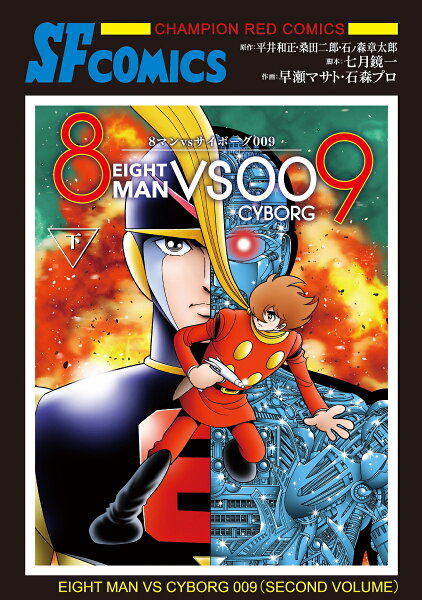
8 Man follows detective Hachiro Azuma, gunned down in the line of duty and reborn when his mind is poured into a super-robot body by Dr. Tani. Now the eighth detective of the police force, he fights crime at 3,000 km/h — and has to smoke special cooling cigarettes to keep his electronic brain from overheating.
Sci-Fi
Dominion Tank Police
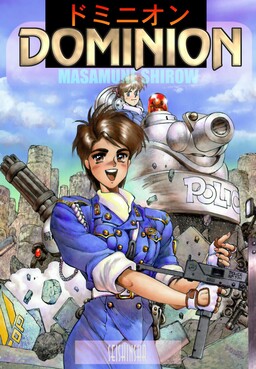
Yu's review of Dominion Tank Police — in a future city where crime requires a Tank Police division, officer Leona Ozaki is assigned to the unit and falls deeply in love with her miniature tank Bonaparte; Masamune Shirow's comedic sci-fi action, lighter than Ghost in the Shell but with the same worldbuilding attention.
Sci-Fi / Action
Area 88
Yu's review of Area 88 — Shin Kazama, a Japanese airline trainee, is drugged and tricked by his best friend into signing a three-year mercenary contract with the air force of a fictional desert kingdom. Trapped at Area 88, he can only buy his freedom by killing — earning $1.5 million in combat bonuses. Kaoru Shintani's 1979 aviation classic about a good man becoming an ace he never wanted to be.
Written by
Yu
Manga Enthusiast from Japan
I grew up in Japan and manga literally saved me during a tough time in elementary school. My English isn't perfect, but my love for manga is real — and I want to share it with you.