From the New World Review: Children in a Utopia That Has Forgotten What It Did to Build Itself
by Yusuke Kishi / Toru Oikawa
Read the first volume. If it doesn't hook you, put it down. It'll hook you.
Buy From the New World (Shinsekai Yori) on Amazon →*Affiliate link — I earn a small commission at no extra cost to you.
Quick Take
- A society of psychics a thousand years from now, built on a secret so terrible the entire civilization is structured around never having to face it
- The manga adaptation of Yusuke Kishi's award-winning novel; 5 volumes, complete, one of the most unsettling dystopia stories in manga
- The kind of science fiction that asks what kind of peace is worth what price
Who Is This Manga For?
- Readers who want dystopia science fiction with genuine intellectual content
- Fans of slow-burn mystery manga where the revelation rewrites everything preceding it
- Anyone who wants completed sci-fi manga that takes its world-building seriously
- Readers who appreciate the novel/anime and want the manga version
Content Warnings & Age Rating
Age Rating: T (Teen) Content Warnings: Death of children as part of the society's structure, deeply disturbing revelations about social control, themes of suppression and managed memory
The content that makes this disturbing is conceptual more than graphic — what the society does is more unsettling than how it is depicted.
Yu's Rating
| Category | Score |
|---|---|
| Story Depth | ★★★★★ |
| Art Style | ★★★★☆ |
| Character Development | ★★★★☆ |
| Accessibility for Non-Japanese Readers | ★★★★★ |
| Reread Value | ★★★★★ |
Story Overview
A thousand years from now, humanity has psychic powers. A small society — Kamisu 66 — lives in apparent peace: beautiful villages, traditional crafts, school, community. The psychic powers are called "cantus." Children are trained carefully. Some children disappear. The adults do not explain this.
Saki Watanabe is twelve when the series begins. She notices things. Saki and her friends — Satoru, Maria, Mamoru, Shun — begin to understand that what they are told and what is real are different things. The gaps between the official story and what they find in the gaps become the series' investigation.
What they discover is what the manga is about. I am not going to summarize the revelation — it must arrive at the pace Oikawa built it to arrive at.
Characters
Saki Watanabe — The protagonist and narrator; her narration is retrospective, which means she tells the story knowing how it ends, and what she chooses to emphasize and withhold is the series' first layer of storytelling.
Shun — The most gifted of the friend group; his specific situation is the series' first major revelation and the one that most clearly signals what the society actually does.
Maria and Mamoru — A couple within the group whose fate is the series' most emotionally devastating arc.
Squealer — A Monster Rat — one of the subhuman species that serves the psychic society — whose intelligence and eventual role in the series is its most morally complex element.
Art Style
Oikawa's art adapts the novel's dense world-building into visual form effectively — the bucolic village environments contrast with the horror of what lies beneath them in ways that the art handles with appropriate restraint. The monster rat designs are genuinely unsettling. Character expressions are clear and consistent across the time jumps the series uses.
Cultural Context
Shinsekai Yori draws on Japanese social conformity anxiety — the specific fear of what a society built around perfect order costs the individuals inside it — and extends it to a science-fictional extreme. The name comes from Dvořák's "New World" symphony, which runs through the novel and anime. The manga inherits the novel's concern with what memories a society is allowed to have.
What I Love About It
The structure of the revelation. Oikawa and Kishi built the mystery so that the answer, when it arrives, is both completely unexpected and completely logical — every element of the society that seemed like simple world-building detail turns out to be a load-bearing piece of the explanation. This is rare. Most mystery stories hide information. This one hid the meaning of information that was visible the entire time.
What English-Speaking Fans Say
Western readers who came through the anime consistently rate the source material as among the most unsettling dystopia science fiction they have encountered in any medium. The "Squealer reveal" — what his perspective on events means for the entire moral framework of the story — is the most discussed element. The series generates genuine ethical debate, which is exactly what it was built to generate.
Memorable Scene ⚠️ Spoiler Warning
Squealer's final statement — what he says about the history the psychic society wrote, and what it means about who the monsters in this story actually are — is the series' most complete moral inversion and among the finest single scenes in dystopia manga.
Similar Manga
- Nausicaa of the Valley of the Wind — Post-catastrophe world, hidden history, moral complexity
- Seven Seeds — Post-catastrophe survival, hidden knowledge, multiple perspectives
- The Promised Neverland — Children discovering the truth of their world, dystopia structure
Reading Order / Where to Start
Volume 1 — the childhood section is necessary for the adult revelations to land.
Official English Translation Status
Vertical published the complete 5-volume manga adaptation. All volumes available.
Pros & Cons
Pros
- 5 volumes, complete — manageable investment
- The dystopia revelation is among manga's finest
- Squealer as a character is a moral challenge that takes the series to a different level
- The retrospective narrator structure rewards rereading
Cons
- The first volume moves slowly by design — trust the pace
- The disturbing content is conceptual rather than graphic, which some readers find harder to process
- 5 volumes compress a long novel — some depth from the source is lost
Format Comparison
| Format | Notes |
|---|---|
| Individual Volumes | Vertical; standard |
| Digital | Available |
Where to Buy
Read the first volume. If it doesn't hook you, put it down. It'll hook you.
This post contains affiliate links. If you purchase through these links, I may earn a small commission at no extra cost to you. As an Amazon Associate, I earn from qualifying purchases.
*Affiliate link — I earn a small commission at no extra cost to you.
More Manga You Might Like
Sci-Fi / Thriller
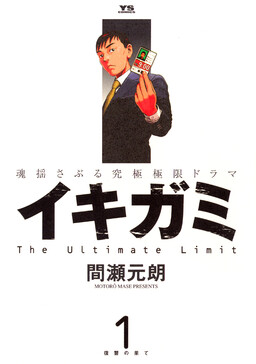
Ikigami: The Ultimate Limit
Yu's review of Ikigami — In a near-future Japan, citizens are injected with a nanomachine capsule at age six; one in a thousand capsules is activated at a random future date, killing its recipient; the purpose is to make citizens value life; Fujimoto delivers the ikigami — the 24-hour death notices — and must witness what people do with their remaining day.
Sci-Fi / Psychological
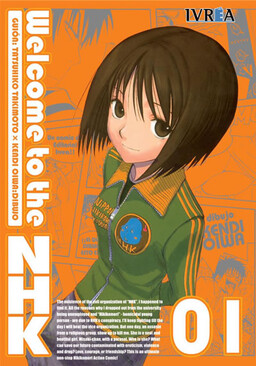
Welcome to the NHK
Yu's review of Welcome to the NHK — Tatsuhiro Sato has been a hikikomori (shut-in) for four years, convinced that Japan's public broadcaster NHK is running a conspiracy to create hikikomori; a mysterious girl named Misaki begins visiting him and offers to help him rejoin society, for reasons he cannot understand.
Sci-Fi
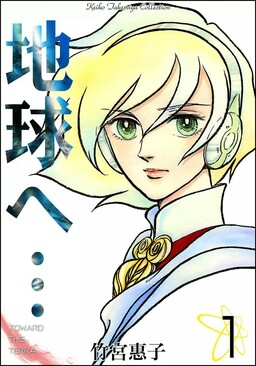
Toward the Terra
A review of Keiko Takemiya's Toward the Terra (地球へ…) — 3 volumes in Monthly Manga Shōnen from 1977. A landmark of 1970s science fiction manga about psychic humans (Mu) persecuted by an AI-controlled society on their long journey back to a forbidden Earth. Vertical's English edition is complete.
Sci-Fi / Thriller
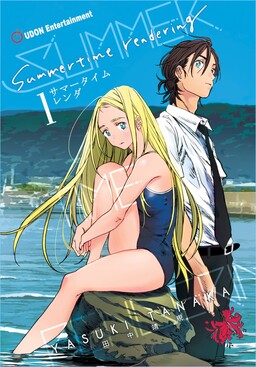
Summer Time Rendering
Yu's review of Summer Time Rendering — Shinpei Ajiro returns to Hitogashima island for the funeral of his childhood friend Ushio; something is wrong; the shadows of people on the island are not quite right; Shinpei discovers a supernatural threat that copies humans through their shadows and a time loop mechanic that allows him to restart from the same point when he dies.
Sci-Fi / Mystery
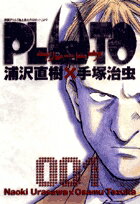
Pluto
Yu's review of Pluto — Naoki Urasawa reimagines a single Astro Boy story arc through the lens of adult science fiction: a robot detective investigates who is systematically destroying the world's seven most powerful robots.
Sci-Fi / Thriller
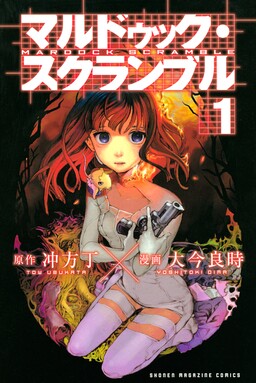
Mardock Scramble
Yu's review of Mardock Scramble — Rune Balot, a teenage prostitute, is murdered by casino mogul Shell Septinos; resurrected under Mardock Scramble 09, an emergency law that allows dead people to be brought back as cyborgs to testify, she must survive long enough to bring Shell to justice with the help of her partner Oeufcoque.
Written by
Yu
Manga Enthusiast from Japan
I grew up in Japan and manga literally saved me during a tough time in elementary school. My English isn't perfect, but my love for manga is real — and I want to share it with you.
Disclosure: This post contains affiliate links. As an Amazon Associate, I earn from qualifying purchases at no extra cost to you.