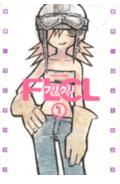
FLCL Review: The Manga That's About Puberty, Even Though It Appears to Be About Robots
by Hajime Ueda (art), Gainax (story)
Read the first volume. If it doesn't hook you, put it down. It'll hook you.
Buy FLCL on Amazon →*Affiliate link — I earn a small commission at no extra cost to you.
Nothing matters. Everything matters. The robots coming out of your head are metaphors for puberty. The woman on the Vespa is also a metaphor. So is the baseball.
Quick Take
- The manga adaptation of Gainax's beloved surreal OVA — looser and stranger than the anime, in the best way
- Hajime Ueda's art style makes the manga feel like a different creature from the OVA: rougher, more personal
- Two volumes that pack in more emotional content than most longer series
Who Is This Manga For?
- Fans of the FLCL anime who want to see the story interpreted differently
- Readers comfortable with deliberate surrealism and unresolved symbolism
- People who want coming-of-age manga that doesn't explain itself
- Anyone who likes their manga to feel slightly punk-adjacent
Content Warnings & Age Rating
Age Rating: T (Teen) Content Warnings: Surreal violence, coming-of-age themes handled obliquely, emotional intensity
Weird rather than disturbing. The violence is abstract.
Yu's Rating
| Category | Score |
|---|---|
| Story Depth | ★★★★☆ |
| Art Style | ★★★★★ |
| Character Development | ★★★★☆ |
| Accessibility for Non-Japanese Readers | ★★★☆☆ |
| Reread Value | ★★★★★ |
Story Overview
Naota Nandaba is 12 years old. His older brother left Japan to play baseball in America, leaving behind Mamimi — his girlfriend — who has nowhere obvious to direct her feelings and directs them at Naota instead.
Then Haruhara Haruko arrives on a yellow Vespa, running him over, then hitting him with her bass guitar. A horn grows from his head. Robots come out of the horn. The robots are controlled by a corporation called Medical Mechanica that is doing something to the town that involves an iron, and this is less absurd than it sounds.
The manga adaptation by Hajime Ueda takes the OVA's already surreal premise and makes it stranger: the art style is deliberately sketchy and angular, the visual metaphors are pushed further, and the emotional core — a 12-year-old boy who is not ready to grow up but has no choice — is made more explicit than the OVA's deliberate ambiguity.
The story is about the specific discomfort of being between childhood and adulthood. Naota doesn't want to take on adult responsibilities. He pretends to be more cynical and adult than he is. The robots, the woman on the Vespa, the iron — they're the intrusion of grown-up reality into the space he's trying to maintain.
Characters
Naota — The unwilling protagonist of his own adolescence. His pretense of maturity is transparently a child's approximation of what adults are supposed to be, and Ueda draws it with affectionate accuracy.
Haruhara Haruko — Chaos in human form, or possibly not human. She treats Naota's development as both her goal and her entertainment, and her affection for him — if that's what it is — runs under everything.
Mamimi — The most sympathetic character: stuck, dislocated, using Naota to keep from thinking about what she actually wants her life to be.
Art Style
Ueda's art is one of the best things about the manga version. It's angular, expressive, and deliberately rough in a way that suits the story's DIY energy. Character expressions are exaggerated to the edge of caricature. The robot fight sequences have a wild kinetic energy. It looks like the manga was drawn by someone who wanted to capture feeling rather than precision — which is exactly right for this story.
The contrast with the OVA's fluid Gainax animation is striking. The manga feels like punk music; the OVA feels like a virtuoso guitar solo.
Cultural Context
FLCL (pronounced "Fooly Cooly") was a 2000 OVA from Gainax, animated by the same studio behind Neon Genesis Evangelion and Nadia: The Secret of Blue Water. It was explicitly designed to be unlike what audiences expected: short, chaotic, dense with symbol and speed.
The manga ran alongside the OVA and takes greater creative liberties. Ueda's interpretation is his own, and comparing the two versions is itself an interesting exercise in how the same material can produce different emotional experiences through different mediums.
What I Love About It
The panel where Naota is trying to explain something to Haruko about what he wants, and he can't say it because he doesn't actually know what it is yet — and the art just shows his face with nothing in particular on it, which is more accurate than any expression would be — is my favorite single image in the manga.
He doesn't know what he wants. He's 12. The story is about the period between knowing what you were and knowing what you are. Ueda draws that liminal space with real precision.
What English-Speaking Fans Say
Split between "the anime is better" and "the manga is its own thing and good on its own terms." Both are correct assessments of different things. Readers who encounter the manga first tend to find it a complete experience. Anime fans who come to the manga expecting a visual copy are surprised by how different Ueda's approach is.
Consensus: two volumes, complete, strange, good.
Memorable Scene ⚠️ Spoiler Warning
The final pages — Naota standing after everything has resolved, in his town that is still standing but changed — and the single line about "things coming out of you" that aren't robots but still need to be dealt with, is the moment the whole absurdist structure reveals its actual subject. It's concise and it's true.
Similar Manga
| Title | Its Approach | How FLCL Differs |
|---|---|---|
| Neon Genesis Evangelion | Psychological mecha with coming-of-age themes | FLCL is faster, lighter, less traumatic, more absurdist |
| Narutaru | Dark coming-of-age with surreal elements | FLCL is more hopeful and much shorter |
| Dead Leaves | Chaotic surreal action | FLCL has more emotional content; Dead Leaves is pure energy |
Reading Order / Where to Start
Two volumes. You can read the manga before or after the OVA — they're parallel experiences, not sequential.
Official English Translation Status
Tokyopop published both volumes in English. Complete. May be out of print; digital versions may be available.
Pros & Cons
Pros
- Two volumes that feel complete and emotionally resonant
- Ueda's art style is unlike anything else
- The surrealism serves the emotional content rather than obscuring it
- High reread value — you catch different things each time
Cons
- Not accessible to readers who need clear plot progression
- Cultural context of the OVA helps but isn't required
- Some readers find the deliberate vagueness frustrating
- Very compressed — 2 volumes
- Ueda's style is either exactly right or too rough depending on your taste
Is FLCL Worth Reading?
Yes — as either companion to the OVA or standalone. Two volumes, one sitting, something to think about afterward. That's a good ratio.
Format Comparison
| Format | Pros | Cons |
|---|---|---|
| Physical | Ueda's art benefits from physical scale | May be out of print |
| Digital | More accessible | — |
| Omnibus | The two-volume set is effectively complete | — |
Where to Buy
Read the first volume. If it doesn't hook you, put it down. It'll hook you.
This post contains affiliate links. If you purchase through these links, I may earn a small commission at no extra cost to you. As an Amazon Associate, I earn from qualifying purchases.
*Affiliate link — I earn a small commission at no extra cost to you.
More Manga You Might Like
Sci-Fi / Slice of Life
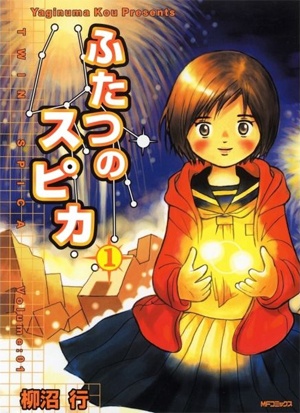
Twin Spica
Yu's review of Twin Spica — Asumi Kamogawa wants to become an astronaut; her mother died when a rocket crashed into their town when Asumi was an infant; a ghost in a lion's mask follows her through childhood and into the competitive astronaut training program, where she discovers what it actually takes to reach space.

Sci-Fi / Thriller
Ghost in the Shell: Stand Alone Complex
A review of the Ghost in the Shell: Stand Alone Complex manga — a condensed adaptation of the acclaimed anime series following Section 9's cases in a cyberpunk Japan.

Sci-Fi / Mecha
Eureka Seven
A review of Eureka Seven, the manga adaptation of the mecha anime about a boy who joins a band of rebels and falls in love with a mysterious girl who pilots a unique Limit of Questions.

Sci-Fi / Mecha
RahXephon
The 2002 RahXephon anime by Bones — a music-mythological mecha series often compared to Evangelion — was adapted into a 3-volume manga that director Yutaka Izubuchi himself described as 'another version' rather than a faithful retelling. Takeaki Momose's manga makes its own narrative choices, including different love interest and protagonist origin. Complete in English from TOKYOPOP.
Sci-Fi / Action
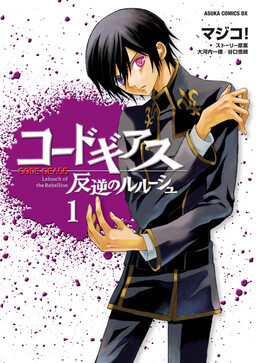
Code Geass: Lelouch of the Rebellion
Yu's review of Code Geass: Lelouch of the Rebellion, the 8-volume manga by Majiko! that retells the Sunrise anime without its Knightmare Frame mecha. Exiled prince Lelouch gains Geass, the power of absolute obedience, from the mysterious C.C. and becomes the masked rebel Zero — but the manga is lighter, more comedic, and more romance-focused than the anime.

Sci-Fi / Action
Cowboy Bebop: Shooting Star
A review of Cowboy Bebop: Shooting Star — the alternate manga adaptation of the beloved anime, telling its own story with Spike, Jet, Faye, and the Bebop crew in a looser, more comedic key.
Written by
Yu
Manga Enthusiast from Japan
I grew up in Japan and manga literally saved me during a tough time in elementary school. My English isn't perfect, but my love for manga is real — and I want to share it with you.
Disclosure: This post contains affiliate links. As an Amazon Associate, I earn from qualifying purchases at no extra cost to you.