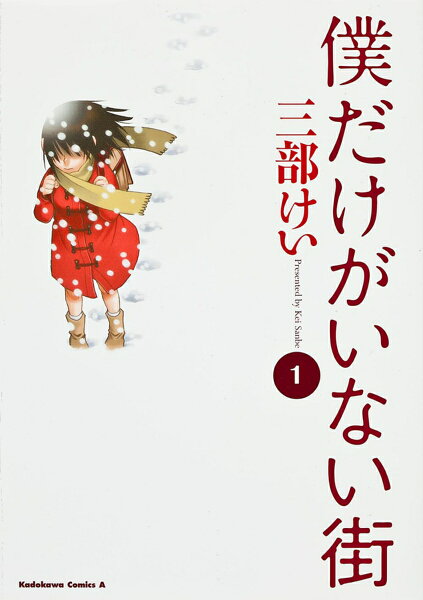
Erased Review — A 29-Year-Old With a Time-Rewind Power Wakes Up Back in His 1988 Elementary School Classroom
by Kei Sanbe
Read the first volume. If it doesn't hook you, put it down. It'll hook you.
Buy Erased on Amazon →*Affiliate link — I earn a small commission at no extra cost to you.
I read Erased the year my best friend's mother died. It was bad timing. The manga's specific darkness — children being murdered, the failure of adults to protect them — was the last thing I should have been reading then. I read it anyway. The manga gave me something I had not expected: a story about how going back to the past with the knowledge of the present is what we are all, in some sense, doing in our heads when someone we love has died.
This is one of the best thrillers in modern manga. It is also one of the heaviest.
Quick Take
- Kei Sanbe's 8-volume mystery-thriller manga (2012–2016, Young Ace) about a man whose involuntary time-rewind power sends him back to 1988 to prevent his classmate's murder
- 2016 anime adaptation (A-1 Pictures) and live-action film, plus 2017 Netflix drama
- Age rating: T+ (Older Teen) — child endangerment, child murder (off-page), child abuse, psychological intensity
What Is Erased About?
Satoru Fujinuma is twenty-nine years old. He works delivering pizza in Tokyo. He has an unfinished manga career that has not taken off. He also has a supernatural ability he calls "Revival" (再上映, saijouei — literally "re-screening") — without warning, time will rewind a few minutes, returning him to a moment shortly before something bad happened near him. He has used the ability instinctively his entire life to prevent small disasters.
One evening, Satoru returns to his apartment and finds his mother murdered. She has been investigating a series of long-cold child kidnapping-murder cases from 1988. She has discovered something the killer did not want known. The killer has framed Satoru for her death.
In the moment of his mother's death, Satoru's Revival activates more powerfully than ever before. He does not jump back a few minutes. He jumps back eighteen years — to himself, age ten, in his fifth-grade classroom in Hokkaido in February 1988.
The next 8 volumes follow Satoru as a child with adult memories:
- The 1988 timeline begins three months before the first of the original child murders. His classmate Kayo Hinazuki is the killer's first victim
- Satoru has approximately three months to identify and stop the killer
- He must operate as a fifth-grader — without adult resources, without the ability to explain his knowledge — while also being psychologically an adult
- His mother is alive in 1988 and is the only person who notices that something is different about him
- The relationship between Satoru and Kayo is the manga's emotional center
The manga's structural question: can the past be changed? Sanbe's answer is specific and earned.
Who Is This Manga For?
- Mystery thriller readers who like time-loop fiction
- Anime watchers of the 2016 adaptation who want the source manga
- Readers comfortable with heavy content including child endangerment
- Detective Conan / Death Note fans wanting a different kind of mystery
- Not for: sensitive readers triggered by child harm content
Content Warnings & Age Rating
Age Rating: T+ (Older Teen) — 16+ Content Warnings: Child kidnapping and murder (the killings are central; off-page but aftermath depicted); child physical abuse (Kayo's home situation is shown directly); domestic violence; psychological intensity
The T+ rating is the floor. This is significantly darker material than typical T+ suggests.
Characters
Satoru Fujinuma — The protagonist. In present-day chapters, a fully-formed adult; in 1988 chapters, the adult mind in a ten-year-old's body. Sanbe makes the dual-state work by emphasizing what changes and what doesn't.
Sachiko Fujinuma — Satoru's mother. Detective-novelist tendencies. Notices in 1988 that her son is "different" without understanding why. The mother-son relationship is the manga's most emotionally important.
Kayo Hinazuki — Satoru's classmate; the killer's first 1988 victim. Withdrawn, malnourished, being abused by her mother and her mother's boyfriend. Kayo's life-saving is the manga's central project.
Airi Katagiri — In the present-day timeline, sympathetic to Satoru after he is framed for his mother's murder. The present-day timeline's emotional anchor.
The killer — Revealed mid-series. Sanbe writes the antagonist with specific care.
Art Style
Kei Sanbe's art is clean, atmospheric, and built for thriller pacing. The 1988 Hokkaido setting (winter, snow, small-town Japan) is rendered with specific detail. The child characters are drawn distinctly from the adult characters; the adult-mind-in-child-body conceit works partly because Sanbe draws Satoru's child face with subtle adult expressions.
The thriller sequences are clear; the mystery construction is fair-play.
Cultural Context
Kei Sanbe is a Japanese mystery and supernatural-thriller manga creator. Erased is his masterpiece. Erased ran in Young Ace from 2012 to 2016.
The 2016 anime adaptation by A-1 Pictures (12 episodes) is widely regarded as one of the best anime of that year. The 2016 live-action film had a more compressed take. The 2017 Netflix drama is generally considered the most faithful live-action adaptation.
What I Love About It
The relationship between Satoru and Kayo.
Across the 1988 timeline, Satoru and Kayo develop a friendship that neither of them is fully equipped to have. Satoru is an adult mind that knows what is coming. Kayo is a withdrawn ten-year-old being abused at home, whose isolation has trained her not to trust anyone. Satoru's attempts to become a person Kayo can trust are some of the manga's most affecting sequences.
What I love is what Sanbe refuses to do. He does not make Satoru a heroic savior. He shows the actual work: small daily acts of attention, sharing food, being there at the bus stop, asking Kayo questions she has not been asked in a long time. The friendship builds through accumulation. By the time the killer's planned attack approaches, Kayo has begun to believe that there is at least one person in the world who would notice if she went missing.
The manga argues that what protects children from harm is not heroic intervention but accumulated care. Satoru saves Kayo (or fails to — I will not spoil) not through one decisive action but through hundreds of small ones.
I read this when my friend's mother had recently died and I was thinking, in a confused way, about all the small acts of attention I had not extended to her in the years she was alive. Erased did not absolve me. It did show me what the practice looks like when it works.
What English-Speaking Fans Say
Erased has one of the largest English-language fan bases of any mystery manga of the 2010s. The 2016 anime in particular brought wide attention. The most discussed element is the ending — Sanbe's specific resolution is divisive. Some readers find it perfect. Some readers find it rushed.
Memorable Scene ⚠️ Light Spoiler
The bus stop scene.
Somewhere in the 1988 timeline, Satoru is waiting at a bus stop in the cold. Kayo is also there. The two have not yet become friends. Satoru, with his adult knowledge, knows what is about to happen to her in three months.
He starts a conversation. Small things. The weather. School lunch. What books Kayo is reading. Kayo answers in monosyllables; she is not used to being talked to by classmates. Satoru continues. He shares a piece of food with her. He asks her opinion about something. He treats her, in a small specific way, as a person who has thoughts worth hearing.
The bus arrives. They get on. They sit apart. Satoru watches Kayo through the window.
The next chapter, Kayo is at the bus stop again. She has come earlier than usual. Sanbe draws her face in a single panel as she sees Satoru arrive — not joy, but the small specific not-quite-hope of a child who has decided to test whether the kindness of yesterday will be there today.
That sequence is the manga in compressed form. Saving Kayo is showing up at the bus stop the second day. And the third. And the fourth. The manga is the accumulation.
Similar Manga
| Title | Its Approach | How Erased Differs |
|---|---|---|
| Re:Zero | Time-loop fiction | Re:Zero is fantasy/isekai; Erased is grounded mystery |
| Death Note | Genius-protagonist mystery | Death Note is more game-of-wits; Erased is more emotional |
| Monster (Urasawa) | Patient psychological mystery | Same emotional depth; Monster is longer and adult-focused |
Reading Order / Where to Start
Volume 1. 8 volumes; can be read in a weekend.
Official English Translation Status
Yen Press published all 8 volumes in English. The series is complete. The 2016 anime is on Crunchyroll; the live-action film and Netflix series are on various streaming platforms with English subtitles.
Pros & Cons
Pros
- One of the best modern mystery manga
- Time-loop premise executed with specific craft
- Satoru-Kayo relationship is emotionally exceptional
- 8 volumes complete with a real ending
- Multiple strong adaptations expand access
Cons
- Heavy content (child endangerment, abuse)
- The ending is divisive
- Some readers find the time-loop mechanics underexplained
- The melancholy thriller register is an acquired taste. It won't land for everyone, especially readers preferring lighter mystery.
Is Erased Worth Reading?
Yes. Among the most important mystery manga of the 2010s.
Format Comparison
| Format | Notes |
|---|---|
| Physical (Yen Press) | All 8 volumes available in English |
| Digital | Available via Yen Press digital, Kindle |
| Anime (A-1 Pictures, 2016) | 12 episodes on Crunchyroll |
| Live-action film (2016) | With English subtitles on some platforms |
| Netflix drama (2017) | Available worldwide |
Where to Buy
Read the first volume. If it doesn't hook you, put it down. It'll hook you.
This post contains affiliate links. If you purchase through these links, I may earn a small commission at no extra cost to you. As an Amazon Associate, I earn from qualifying purchases.
*Affiliate link — I earn a small commission at no extra cost to you.
More Manga You Might Like
Sci-Fi / Thriller
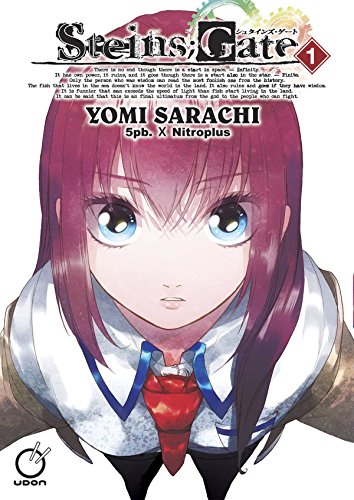
Steins;Gate
Yu's review of the Steins;Gate manga — a self-proclaimed mad scientist accidentally invents a way to send text messages to the past, and discovers that every change to the timeline costs someone something.

Sci-Fi / Thriller
Summer Time Rendering
Yu's review of Summer Time Rendering — Shinpei Ajiro returns to Hitogashima island for the funeral of his childhood friend Ushio; something is wrong; the shadows of people on the island are not quite right; Shinpei discovers a supernatural threat that copies humans through their shadows and a time loop mechanic that allows him to restart from the same point when he dies.

Sci-Fi / Mystery
Heavenly Delusion
Yu's review of Heavenly Delusion (Tengoku Daimakyou) — two teenagers travel through a destroyed Japan searching for 'heaven,' while inside a mysterious sealed facility, children are raised with no knowledge of the outside world; the two storylines converge toward answers neither group fully understands yet.
Sci-Fi / Mystery / Thriller
20th Century Boys
Yu's review of 20th Century Boys — childhood friends once wrote a 'Book of Prophecy' about saving the world. Decades later a cult leader called 'Friend' is using it as a blueprint for real mass murder, and convenience store manager Kenji realizes he helped write the script.
Sci-Fi / Mystery
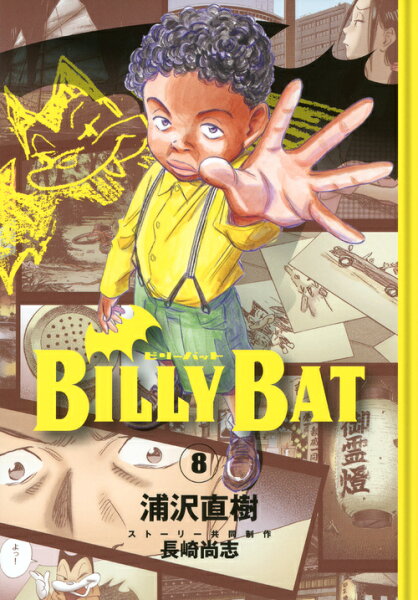
Billy Bat
A review of Naoki Urasawa and Takashi Nagasaki's Billy Bat — 20 volumes in Morning from October 2008 to August 2016. A century-spanning conspiracy centered on a cartoon bat symbol that may have shaped human history.
Sci-Fi / Thriller
Future Diary
Yu's review of Future Diary (Mirai Nikki) — Yukiteru Amano is chosen as one of twelve participants in a death game where each person receives a diary that predicts their own future; the last survivor becomes God; the series is a thriller structured around information asymmetry and the uniquely disturbing character of Yuno Gasai.
Written by
Yu
Manga Enthusiast from Japan
I grew up in Japan and manga literally saved me during a tough time in elementary school. My English isn't perfect, but my love for manga is real — and I want to share it with you.
Disclosure: This post contains affiliate links. As an Amazon Associate, I earn from qualifying purchases at no extra cost to you.