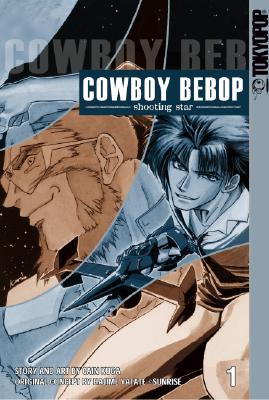
Cowboy Bebop: Shooting Star Review: The Alt-Universe Bebop That Goes Its Own Way
by Cain Kuga (art), Hajime Yatate (story)
Read the first volume. If it doesn't hook you, put it down. It'll hook you.
Buy Cowboy Bebop: Shooting Star on Amazon →*Affiliate link — I earn a small commission at no extra cost to you.
The Bebop anime is one of the rare things that got everything right. This manga was made at the same time and goes somewhere else entirely.
Quick Take
- An alternate-continuity manga adaptation of Cowboy Bebop, not a faithful retelling
- Lighter and more comedic than the anime; Ein gets much more screen time
- Two volumes, complete — a quick read for fans of the series
Who Is This Manga For?
- Cowboy Bebop anime fans who want more time with the characters
- Readers curious about how the same IP reads in manga form
- People who enjoy lighter, comedic takes on otherwise serious source material
- Anyone who wants a fast, complete sci-fi manga read
Content Warnings & Age Rating
Age Rating: T (Teen) Content Warnings: Bounty hunting violence, mild language, comedic action sequences
The violence is much lighter than the anime. The tone throughout is considerably more playful.
Yu's Rating
| Category | Score |
|---|---|
| Story Depth | ★★★☆☆ |
| Art Style | ★★★☆☆ |
| Character Development | ★★★☆☆ |
| Accessibility for Non-Japanese Readers | ★★★★☆ |
| Reread Value | ★★★☆☆ |
Story Overview
Spike Spiegel and Jet Black are bounty hunters working the solar system aboard the spaceship Bebop. Faye Valentine is a bounty hunter with no memory of her past. Ein is a genetically engineered Welsh Corgi who is smarter than anyone admits. Ed is a genius hacker who is, most of the time, completely unmanageable.
Shooting Star was developed in parallel with the anime — not as an adaptation of it, but as a separate take on the same concept. Where the anime is melancholy, jazz-inflected, and deeply concerned with loss, this manga is lighter: comedy-forward, with a different tone and pacing.
The plot follows the crew taking bounties, getting into trouble, and stumbling through situations that end in mixed results — which is faithful to the premise even if not to the anime's emotional register. Ein, the dog, is given substantially more plot involvement here, which fans of Ein will appreciate.
Characters
Spike Spiegel — The anime's existential cool is reduced here to action-hero cool. He's still Spike, but without the weight of his backstory hanging over every scene.
Jet Black — The responsible one, trying to keep operations from falling apart. His dynamic with Spike is intact even in the lighter tone.
Faye Valentine — More comedic here than mysterious. Her cons and schemes get more space than her buried past.
Ein — The MVP of this adaptation. His intelligence actually factors into the plot in ways the anime mostly left implied.
Ed — As chaotic as ever, but the chaos is played for laughs more consistently.
Art Style
Cain Kuga's art is clean and competent. The character designs track the anime's familiar looks well — Spike's angular face, Faye's signature outfit, Ed's wild hair. The action sequences are dynamic. The art doesn't reach the visual sophistication of the anime but does solid work in a more energetic, slightly cartoony register.
Cultural Context
Cowboy Bebop (1998 anime) was a landmark production that fused jazz music, noir sensibility, and 1970s American aesthetics into something that didn't look like any other anime of its era. The manga adaptation, developed at Kadokawa's Asuka Fantasy DX for a different demographic, was specifically aimed at readers who wanted an easier entry point — the darkness dialed down, the comedy dialed up.
The bounty hunting premise draws on American Western traditions (specifically the lone gunslinger archetype) that the anime elevated into high art. The manga content with the surface of that aesthetic without the depth underneath.
What I Love About It
I watched Cowboy Bebop long before I read this, so I came in with expectations shaped by the anime. Those expectations aren't the right frame.
What I found instead was a genuinely pleasant two-volume companion that gave me more time with characters I already liked, in a version of their world that was just... lighter. Ein getting to be a hero. Ed causing chaos and somehow solving things. Faye running a con that almost works. These aren't the scenes that made the anime famous, but they're warm and they move quickly.
If you love the anime for its sadness, this won't satisfy. If you love the anime for its characters, there's something here.
What English-Speaking Fans Say
Treated by most fans as a curiosity rather than essential reading — interesting to see an alternate take, but not a substitute for the anime. Reddit discussions usually frame it as "for completionists." The consensus: light fun, not canon, don't expect the anime's emotional depth.
Memorable Scene ⚠️ Spoiler Warning
Ein solving a problem through what seems like dog instinct but is clearly deliberate intelligence — and nobody on the crew acknowledging it — is the manga's best recurring bit. The joke never quite gets old across two volumes.
Similar Manga
| Title | Its Approach | How Cowboy Bebop: Shooting Star Differs |
|---|---|---|
| Trigun | Space Western with a lonely gunslinger | Trigun is longer and more emotionally invested; Shooting Star is lighter and faster |
| Outlaw Star | Space bounty hunter crew comedy-action | Very similar tone; both are more comedic than their serious-adjacent source material |
| Space Dandy | Space comedy with a bounty hunter protagonist | Space Dandy commits fully to absurdism; Shooting Star stays closer to character comedy |
Reading Order / Where to Start
Watch the anime first if you haven't — it's one of the best anime ever made. Then come to this as a supplement, not a replacement.
Official English Translation Status
Tokyopop published both volumes in English. Complete. Out of print but available used.
Pros & Cons
Pros
- Fast two-volume read — minimal commitment
- Core cast chemistry is intact
- Ein gets more spotlight than anywhere else
- Good entry point for readers who find the anime's darkness too heavy
Cons
- Loses the jazz-noir atmosphere that makes the anime special
- Only two volumes — limited character depth
- Alternate continuity means no payoff for the anime's major plot threads
- Art doesn't match the visual sophistication of the source
- If the anime's melancholy was what you loved, this is a different thing
Is Cowboy Bebop: Shooting Star Worth Reading?
For Cowboy Bebop fans who want more of the crew in a lighter key — yes. For newcomers, watch the anime first. This is a companion, not a gateway.
Format Comparison
| Format | Pros | Cons |
|---|---|---|
| Physical | Character art reads well in print | Out of print; two-volume series easy to collect used |
| Digital | More accessible | — |
| Omnibus | No omnibus available | — |
Where to Buy
Read the first volume. If it doesn't hook you, put it down. It'll hook you.
This post contains affiliate links. If you purchase through these links, I may earn a small commission at no extra cost to you. As an Amazon Associate, I earn from qualifying purchases.
*Affiliate link — I earn a small commission at no extra cost to you.
More Manga You Might Like

Sci-Fi / Drama
Galaxy Express 999
Galaxy Express 999 follows Tetsuro Hoshino, a young boy who boards the legendary space train 999 toward a planet where he can receive a free mechanical body — accompanied by the mysterious Maetel — and encounters, on each planet the train stops at, a different meditation on what it means to be human and whether eternity is worth what it costs.
Sci-Fi / Slice of Life
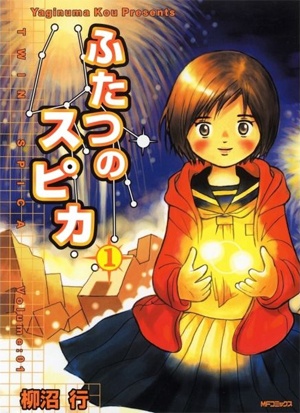
Twin Spica
Yu's review of Twin Spica — Asumi Kamogawa wants to become an astronaut; her mother died when a rocket crashed into their town when Asumi was an infant; a ghost in a lion's mask follows her through childhood and into the competitive astronaut training program, where she discovers what it actually takes to reach space.
Sci-Fi / Drama
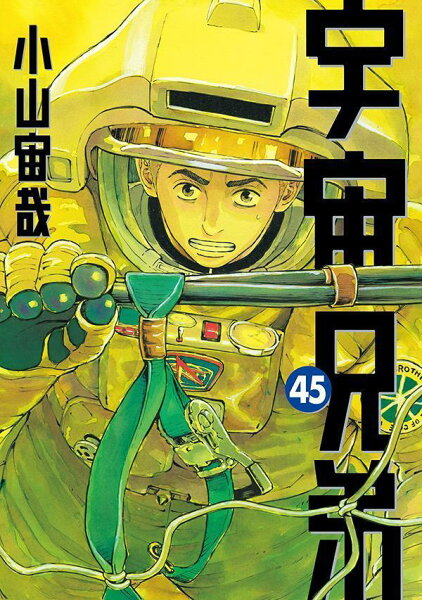
Space Brothers
Yu's review of Space Brothers — a 32-year-old man who was fired from his job reapplies to become a JAXA astronaut, following the dream he abandoned when his younger brother moved forward without him.
Sci-Fi
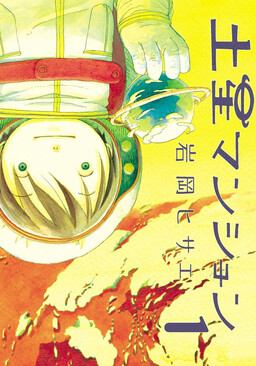
Saturn Apartments
Yu's review of Saturn Apartments — humanity lives in a ring habitat orbiting Earth; the surface is a nature preserve; Mitsu is a young window washer who cleans the outer windows of the habitat; his father was also a window washer and disappeared; Hisae Iwaoka's quiet science fiction manga about class, memory, and the view from the outside.
Sci-Fi / Drama
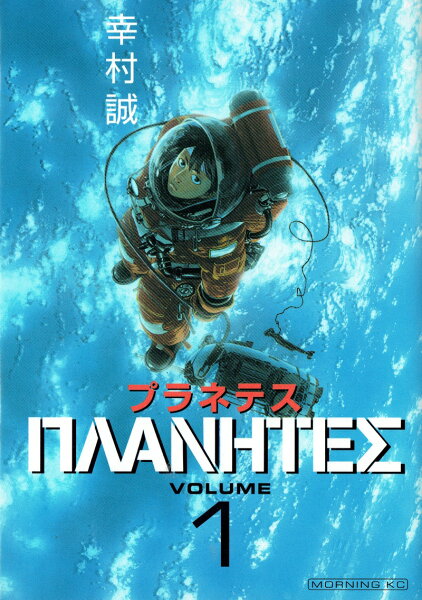
Planetes
Yu's review of Planetes — a crew of space debris collectors in the near future of 2075, where someone wants to be the first human to Jupiter and someone else just wants to survive the shift.
Sci-Fi / Adventure
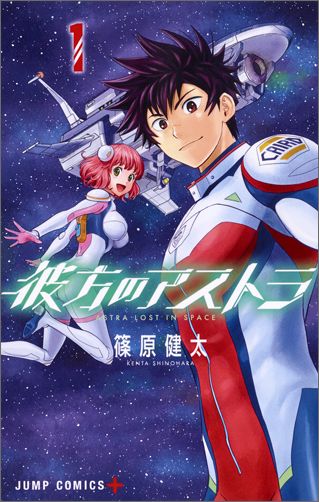
Astra: Lost in Space
Yu's review of Astra: Lost in Space — nine kids on a school camp trip get hurled 5,012 light-years from home, find an abandoned ship called the Astra, and hop planet to planet to get back. But the survival story hides a murder mystery: someone sent them out there to die, and that someone is on the ship. Complete in 5 volumes from VIZ.
Written by
Yu
Manga Enthusiast from Japan
I grew up in Japan and manga literally saved me during a tough time in elementary school. My English isn't perfect, but my love for manga is real — and I want to share it with you.
Disclosure: This post contains affiliate links. As an Amazon Associate, I earn from qualifying purchases at no extra cost to you.