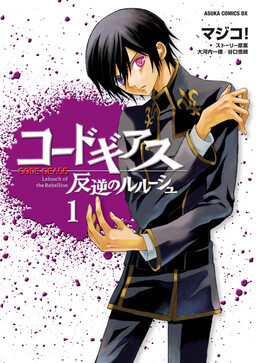
Code Geass Review: The Manga Where a Cornered Prince Steals a God's Power — and the Mecha Are Gone
by Majiko! (art), Ichirō Ōkouchi (story), based on the Sunrise anime by Goro Taniguchi
Read the first volume. If it doesn't hook you, put it down. It'll hook you.
Buy Code Geass: Lelouch of the Rebellion on Amazon →*Affiliate link — I earn a small commission at no extra cost to you.
I came to the Code Geass manga the wrong way around. I had already watched the anime — twice, actually, the second time mostly so I could argue with a friend about the ending — and I went into Majiko!'s manga expecting the same thing in print. It is not the same thing. The first thing I noticed, flipping through volume one, was that the giant robots I had spent fifty episodes watching were simply not there. No Knightmare Frames. None. And once I got over the shock, I realized that was kind of the point: stripped of its mecha spectacle, this version of Code Geass is forced to live or die on Lelouch himself, on the look in his eyes the moment he gives an order nobody can refuse. That is the part of the story I always loved most anyway.
So this review is for the manga specifically — the 8-volume run drawn by Majiko! — not the anime. They tell the same broad story, but they are surprisingly different animals, and I think it's worth knowing what you're getting.
Quick Take
- This is Majiko!'s manga adaptation of the famous Sunrise anime, retelling the same revolution-from-the-shadows plot across 8 complete volumes — but with no Knightmare Frame mecha and a lighter, more comedic tone than the show.
- Geass — the power to force absolute obedience with a single look — is still the dark heart of the story, and watching Lelouch decide who to use it on is just as uncomfortable on the page as on screen.
- Rated T+ (Older Teen) for war, political violence, mind control, and character deaths; it's intense in theme more than in gore.
Story Overview
The Holy Britannian Empire has conquered Japan and renamed it Area 11. Lelouch is secretly an exiled Britannian prince, living quietly as a student, who blames the empire for what happened to his mother and his blind little sister, Nunnally.
The manga's opening is where it first quietly breaks from the anime. Lelouch stumbles onto Japanese resistance fighters who have stolen a military secret, and gets caught by a soldier from the Britannian task force — who turns out to be his childhood friend Suzaku. Suzaku is shot for refusing to follow a kill order, and the "military secret" turns out to be a green-haired girl, C.C., who gives Lelouch the power of Geass: the ability to make anyone obey a single command absolutely. (In the anime C.C. is hidden in a capsule on a truck; here she's smuggled in a plane — one of many small alterations.)
From there Lelouch takes command of the terrorists on the spot, turns a doomed situation into a Britannian defeat, and builds the masked persona Zero to lead an open rebellion. The turning point of the whole saga — in manga and anime both — is the moment his Geass slips out of his control and triggers a massacre he never intended, which poisons everything he's built and turns his best friend into his enemy. The manga compresses the anime's roughly fifty episodes into 38 chapters, so events that were separate arcs on screen get rolled together, and it carries the story through to its conclusion across all 8 volumes.
Characters
Lelouch vi Britannia / Zero — A brilliant, theatrical strategist who weaponizes a power that erases other people's free will, and tells himself it's justified because the world he's fighting is worse. The manga keeps his core arc but plays him a touch lighter and more flippant than the anime's version; the comedy sidebars soften him, though the central tragedy of a boy who can't stop escalating still lands.
Suzaku Kururugi — Lelouch's childhood friend, who believes Britannia can only be changed honestly, from inside the system. He's the ideological opposite of Zero, and the manga sets the two friends against each other early. His arc is the slow, painful realization of how far apart their methods have pushed them.
C.C. — The immortal girl who grants Lelouch his Geass and then refuses to leave his side. She's the keeper of the series' biggest mystery — what Geass is, where it comes from, and what she wants in return. In the manga her bond with Lelouch reads as warmer and more central than in the show.
Euphemia li Britannia — The kind-hearted princess gets noticeably more room here. She shows up earlier, even crossing paths with Lelouch at Ashford Academy, and her romance with Suzaku is more developed and tender than in the anime, which makes the direction her arc eventually takes hit even harder.
What I Love About It
What I love is the very thing that disappointed me at first: the absence of the Knightmare Frames. When I started, I thought the mecha were essential — that's what Code Geass was to me. But reading Majiko!'s version, I slowly understood that the robots had been a kind of crutch I didn't know I was leaning on. Without them, every confrontation comes down to people in a room, and the only weapon that matters is Lelouch's eyes. The Geass command panel — that crimson sigil flaring across his iris as he speaks — becomes the single most dangerous object in the entire story. There's nothing to point a camera at except a face deciding to take away someone's freedom.
That reframing made me notice how unsettling the power actually is. In the anime, a Geass order is followed by an explosion of mecha combat that distracts from what just happened. In the manga, the order is the climax. Lelouch looks at someone, says a sentence, and that person is no longer a person — they're a tool, permanently. The quiet of the page forces you to sit with that. I've read a lot of manga about smart protagonists, but few of them made me feel the moral weight of a single sentence the way this one did, precisely because it had stripped away everything flashier.
Memorable Scene ⚠️ Spoiler Warning
The scene I keep coming back to is the one the whole saga pivots on: Lelouch, in a moment of carelessness, lets a Geass command escape that he cannot take back. The power he treated like a clever tool finally turns on him — an order given casually becomes an order that cannot be undone, and the result is a catastrophe of his own making aimed at the very people he claimed to be saving.
What makes it sit so heavy in the manga is the silence around it. There's no mecha battle to cut away to, no spectacle to absorb the shock. Just the dawning horror on Lelouch's face as he understands that the genie won't go back in the bottle, and that his friend Suzaku will never forgive what Zero has become. It's the moment the story stops being about a clever boy outsmarting an empire and becomes about a boy who has built a machine of consequences he can no longer steer. I closed the volume and just sat there.
Pros & Cons
Pros
- A genuinely different read from the anime — worth it for fans who already know the show and want a new angle.
- Geass is one of the most morally disturbing power systems in manga, and the page makes you feel it.
- A complete, self-contained 8-volume story with a real ending.
- Majiko!'s warmer take on C.C. and the expanded Euphemia romance add things the anime didn't have.
Cons
- No Knightmare Frames — if the mecha battles are why you love Code Geass, that's a real loss.
- Fifty episodes squeezed into 38 chapters means some arcs feel rushed and some character beats are thinner.
- The comedic sidebars and chibi gags constantly undercut the dark tone, which won't work for everyone.
Is Code Geass: Lelouch of the Rebellion Worth Reading?
If you already love the anime, yes — read it as a companion, an alternate cut that trades spectacle for intimacy and shows you what's left when the robots are gone. If you've never touched Code Geass before, I'd honestly start with the anime, then come here. As a standalone it's compressed and a bit tonally messy, but as a different lens on a story I already loved, it gave me something the show couldn't.
Where to Buy
Read the first volume. If it doesn't hook you, put it down. It'll hook you.
The English edition was published in full by Bandai Entertainment but is now out of print, so you'll mostly find it secondhand — track down volume one and see if Majiko!'s version pulls you in.
This post contains affiliate links. If you purchase through these links, I may earn a small commission at no extra cost to you. As an Amazon Associate, I earn from qualifying purchases.
*Affiliate link — I earn a small commission at no extra cost to you.
More Manga You Might Like
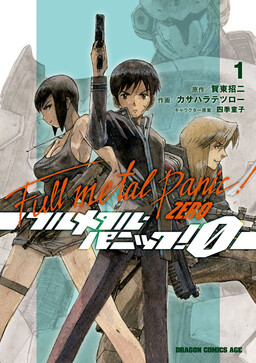
Sci-Fi / Comedy
Full Metal Panic!
Yu's review of Full Metal Panic! — Sōsuke Sagara, a teenage military specialist from a private military organization, is assigned to protect high school girl Kaname Chidori who doesn't know why she needs protection; he attends her school undercover, treats every situation as a military operation, and creates chaos wherever he goes; military action comedy with genuine mecha sequences.
Sci-Fi / Action
Spriggan
Yu's review of Spriggan — Yu Ominae is a Spriggan agent for ARCAM, a secret organization that locates ancient artifacts of catastrophic power and prevents governments and criminal organizations from weaponizing them; a 90s action sci-fi manga with excellent set-piece design and geopolitical scope.
Sci-Fi / Action
Origin
Yu's review of Origin by Boichi — a robot built as a killing machine has been living as a human boy for years, hiding his true nature while protecting the family he has come to care for; when other robots of his kind begin appearing and killing, he must fight while continuing to conceal what he is; a sci-fi action manga about identity, purpose, and what makes life meaningful.
Sci-Fi / Mecha
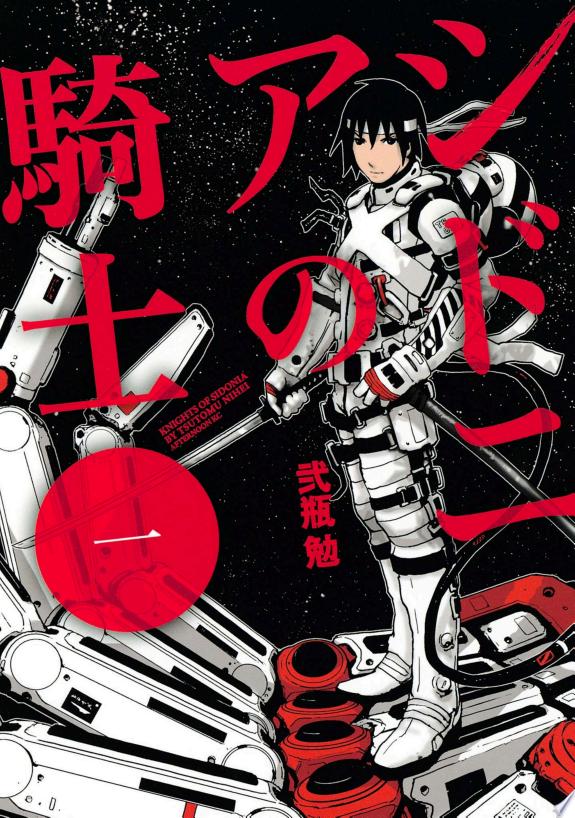
Knights of Sidonia
Yu's review of Knights of Sidonia — a thousand years after Earth is destroyed, the last humans travel space in a massive seed ship, fighting shapeshifting beings called Gauna with mecha called Gardes.
Sci-Fi
Kokkoku
Yu's review of Kokkoku — the Yukawa family inherits a stone that can stop time, placing them in 'Stasis' — a frozen moment where they can move while everything else is still; when criminals kidnap family members, they use Stasis to rescue them, only to discover that a cult has been living in Stasis for years, and that Stasis is not as empty as they thought.
Sci-Fi / Action
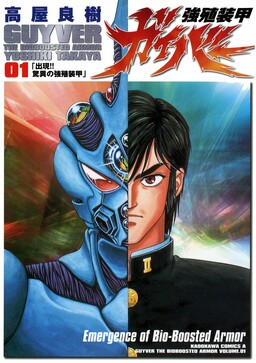
Bio-Boosted Armor Guyver
Yu's review of Bio-Boosted Armor Guyver — high school student Sho Fukamachi accidentally activates an alien bio-armor unit called Guyver, which bonds to him permanently; the shadowy organization Chronos, which created the armor, wants it back — along with the knowledge of what the armor actually is and what it was designed for; a foundational mecha/bio-armor sci-fi manga.
Written by
Yu
Manga Enthusiast from Japan
I grew up in Japan and manga literally saved me during a tough time in elementary school. My English isn't perfect, but my love for manga is real — and I want to share it with you.
Disclosure: This post contains affiliate links. As an Amazon Associate, I earn from qualifying purchases at no extra cost to you.