Clover Review: CLAMP's Unfinished Song About the Loneliest Girl in the World
by CLAMP
Read the first volume. If it doesn't hook you, put it down. It'll hook you.
Buy Clover on Amazon →*Affiliate link — I earn a small commission at no extra cost to you.
I read Clover for the first time on a slow train going home, and I remember closing the book before my stop because I was not ready to be around people yet. I grew up lonely. School was not kind to me, and for a long time the only company I trusted was a stack of manga in my room. So when I opened Clover and saw a single small girl floating in a sea of empty white page, I felt something tighten in my chest before I had even read a word. CLAMP drew loneliness in a way I had felt it but never seen drawn. This is not their most famous work, and it is not even a finished one. But it is one of the few manga that made me feel less alone by showing me a girl who was completely alone.
Quick Take
- CLAMP's most experimental work — the pages are built like poetry, with huge white space and floating figures instead of normal panels
- A short, concentrated, deeply sad sci-fi about a girl who is the only one of her kind and wants only one small thing
- Rated T (Teen) — emotionally heavy and ends in death, but nothing graphic
Story Overview
The world of Clover is a dystopia where the government tracks children born with strange power over technology — they can move machines, teleport, summon weapons. These children are called "Clovers," and they are ranked by clover leaves. One leaf is common. Four leaves is the rarest and most dangerous, and only one four-leaf Clover has ever been found: a girl named Suu.
Because her power is too great, Suu has been kept locked away her whole life, sealed off from human contact so she never forms an attachment that could be turned into a weapon. Her only companions are an AI and the wizards Gingetsu and Lan who watch over her. She has one wish, and it is tiny: she wants to go to a place called Fairy Park. The ex-military man Kazuhiko, broken by his own past, is forced to escort her there.
The structure is unusual. The first two volumes follow Suu and Kazuhiko's journey in the present. The last two volumes go backward — flashbacks that slowly explain how everyone is connected, especially through Kazuhiko's dead lover, the singer Oruha. The story was planned to run six volumes, but the magazine it ran in (Amie) was shut down, and CLAMP never finished it. What exists is four volumes — emotionally whole, narratively unfinished. The published part ends at Fairy Park, with Suu finally reaching the place she dreamed of, and what she finds there is not an escape but a goodbye.
Characters
Suu — The only four-leaf Clover, the most powerful person alive and the most caged. She has spent her whole life behind walls so no one can love her or use her. Her entire arc is the smallness of her want: not freedom, not revenge, just to see one specific place once. She is connected to Oruha through the song "Clover," and she never planned to come back from her journey.
Kazuhiko — A worn-out ex-soldier pulled out of his grief to escort Suu. He thinks of the mission as a job until he slowly realizes who Suu is and why she was waiting for him specifically. His dead lover Oruha is the thread that ties him to this girl he was sent to protect.
Oruha — A nightclub singer and Kazuhiko's lover, who appears mainly in the flashback volumes. She is a one-leaf Clover whose single power is knowing the exact date of her own death. The song "Clover" that runs through the whole series belongs to her and to Suu together — two lonely girls singing the same melody across time.
Gingetsu and Lan — The wizards who guard Suu. Gingetsu is a stoic military man; Lan is a young two-leaf Clover bonded to him. Their quiet relationship is the warmest thing in a very cold world, and the back volumes are partly their story.
What I Love About It
The white space. I keep coming back to it because it is the whole book in one technique. CLAMP did not draw Suu's loneliness by writing "Suu is lonely." They drew one small figure and then left the rest of the page empty — acres of white around her, text scattered like it is drifting through air, no panel borders to hold anything together. When you read it, your eye has nowhere to land except this single child surrounded by nothing. The form does the feeling. I have never seen a manga commit so hard to making the reader sit inside the emotion instead of just being told about it.
What got me, specifically, is how this turns reading into company. Suu has never had anyone. And for the time you spend with the book, you are the one keeping her company on those empty pages. As someone who spent years feeling like the only person in an empty room, that hit me somewhere very old. The bird and cage imagery all over the book — mechanical birds, robotic wings, vines growing around cages — says the same thing in pictures: everyone here wants to fly and no one is allowed to. By the time I understood that the most powerful person in this world is also the most trapped, I was not reading a sci-fi anymore. I was reading about every kid who was ever told they were special right before they were locked away from everyone.
Memorable Scene ⚠️ Spoiler Warning
Fairy Park. Suu finally leads Kazuhiko to the place she has wanted to see her entire life — and it is an abandoned amusement park, with a statue of a fairy at the top. She tells him the statue is how she imagined Oruha, and that the voice singing the song "Clover" is hers and Oruha's together. The whole journey, it turns out, was never about escaping. The wizards destroy the park, and Suu dies there. Kazuhiko realizes, too late, that Suu only ever said she wanted to go to Fairy Park. She never once said anything about coming back.
That line broke me. The smallest wish in the world — to visit one place — was actually a wish to die somewhere she chose, on her own terms, in the one spot that connected her to the only kind of love she had ever known about. She accepts it so quietly. There is no dramatic last stand. Just a girl who finally got the one thing she asked for, and it was a goodbye she had planned all along. I sat with the book closed for a while after that.
Pros & Cons
Pros
- Page design unlike anything else in manga — genuinely a new visual language
- Suu is one of the most affecting characters CLAMP ever made, with very little page time
- Short and concentrated; the four volumes work as a complete emotional experience
- Available again in a beautiful Kodansha Comics hardcover
Cons
- The story is literally unfinished — CLAMP never resolved it, so plot questions stay open
- The non-linear, poetry-style structure asks for patience and rereading
- It is a sad, quiet book about isolation that ends in death — that mood won't work for everyone.
Is Clover Worth Reading?
Yes — if you go in knowing it is a beautiful fragment, not a finished saga. It is short, it is gorgeous, and it carries more feeling per page than almost anything I own. If you want plot resolution and answers, the unfinished ending will frustrate you. If you want one of manga's purest expressions of loneliness, drawn by CLAMP at their most experimental, there is nothing else quite like it.
Where to Buy
Read the first volume. If it doesn't hook you, put it down. It'll hook you.
This post contains affiliate links. If you purchase through these links, I may earn a small commission at no extra cost to you. As an Amazon Associate, I earn from qualifying purchases.
*Affiliate link — I earn a small commission at no extra cost to you.
More Manga You Might Like
Sci-Fi / Fantasy
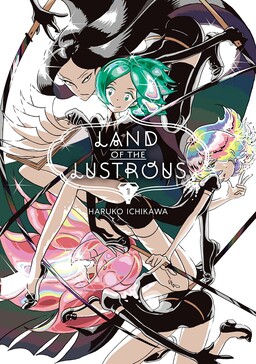
Land of the Lustrous
Yu's review of Land of the Lustrous — in a far future where humanity no longer exists, gem beings called Lustrous fight against Lunarians who wish to capture them for decoration; Phosphophyllite, the youngest and most fragile gem, wants to fight but is unfit for combat; the series follows Phos's transformation into something unrecognizable as their body is replaced piece by piece and their original self becomes inaccessible.
Sci-Fi / Slice of Life
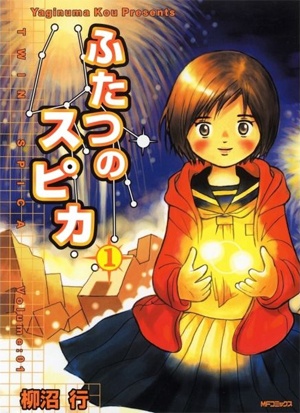
Twin Spica
Yu's review of Twin Spica — Asumi Kamogawa wants to become an astronaut; her mother died when a rocket crashed into their town when Asumi was an infant; a ghost in a lion's mask follows her through childhood and into the competitive astronaut training program, where she discovers what it actually takes to reach space.
Sci-Fi
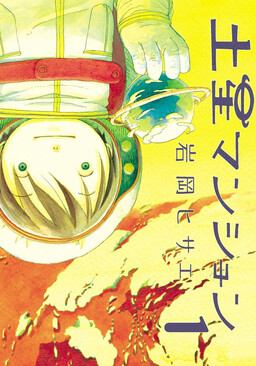
Saturn Apartments
Yu's review of Saturn Apartments — humanity lives in a ring habitat orbiting Earth; the surface is a nature preserve; Mitsu is a young window washer who cleans the outer windows of the habitat; his father was also a window washer and disappeared; Hisae Iwaoka's quiet science fiction manga about class, memory, and the view from the outside.
Sci-Fi / Romance
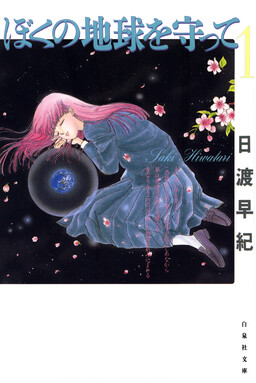
Please Save My Earth
Yu's review of Please Save My Earth — Alice Sakaguchi and six other teenagers in contemporary Tokyo discover they are the reincarnations of seven alien scientists who lived on the Moon observing Earth; their past life memories surface through shared dreams; past life emotions and relationships carry into present lives in ways that are not always welcome.
Sci-Fi / Drama
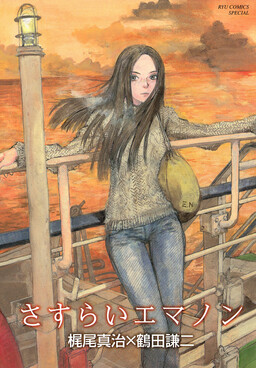
Emanon
Yu's review of Emanon — a young man on an overnight ferry meets a mysterious woman who claims to remember every life she has lived since the first single-celled organism; she carries within her the memories of three billion years of evolution; he doesn't know whether to believe her.
Sci-Fi
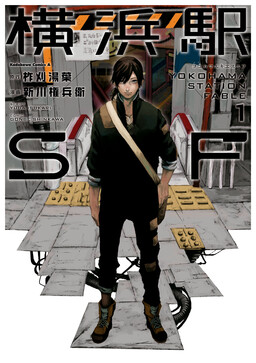
Yokohama Station SF
Yu's review of Yokohama Station SF — Yokohama Station has been self-expanding for centuries and now covers all of Honshu; the world outside is called the Outside; Hiroto, who has never been inside the Station, gets in; manga adaptation of Yuba Isukari's web novel about an infrastructure apocalypse.
Written by
Yu
Manga Enthusiast from Japan
I grew up in Japan and manga literally saved me during a tough time in elementary school. My English isn't perfect, but my love for manga is real — and I want to share it with you.
Disclosure: This post contains affiliate links. As an Amazon Associate, I earn from qualifying purchases at no extra cost to you.