
Clockwork Planet Review: A Boy Who Hears Broken Gears and the Automaton Nobody Else Could Wake
by Yuu Kamiya / Tsubaki Himana (story), Kuro (art)
Read the first volume. If it doesn't hook you, put it down. It'll hook you.
Buy Clockwork Planet on Amazon →*Affiliate link — I earn a small commission at no extra cost to you.
I have always been a sucker for stories about people who can do one tiny, specific thing better than anyone alive. Maybe it's because as a kid I was good at nothing that anyone wanted — I just read manga in the corner while the world moved on without me. So when I picked up Clockwork Planet and met Naoto, a boy whose only real gift is that he can hear a broken gear three floors away, I felt that pull immediately. Not a chosen one. Not the strongest. Just a kid with ears that work in a way nobody else's do, in a world that happens to be made entirely of gears.
This is Yuu Kamiya's series — the No Game No Life author — drawn for manga by an artist who goes by Kuro. I went in expecting Kamiya's usual world-concept fireworks, and that part absolutely delivered. The story around it is messier. Let me be honest with you about both.
Quick Take
- Yuu Kamiya and Tsubaki Himana's clockwork-Earth premise is one of the most distinctive sci-fi hooks I've read — a planet rebuilt entirely from gears, where keeping cities running is literal maintenance work
- Kuro's art sells the mechanical world beautifully, and RyuZU's deadpan devotion is the best character note in the book
- 10 volumes, complete in English from Kodansha Comics — rated M (Mature), with steady fan service and a plot built on mass-casualty stakes
Story Overview
A long time ago, the real Earth broke. A genius clockmaker known only as "Y" rebuilt the entire planet out of gears — the ground itself, the cities, the machinery that keeps everyone breathing. People call it Clockwork Planet now, and the engineers who keep the gears turning are the ones holding civilization together.
The story starts when a heavy case literally crashes into Naoto Miura's apartment in Grid Kyoto. Inside is RyuZU, an automaton built by Y himself who has been broken and silent for 206 years — nobody had ever managed to fix her. Naoto, using nothing but his freakish hearing, repairs her in about three hours. Grateful and impressed, she registers him as her master. That repair drags him out of his quiet life and straight into the orbit of Marie Bell Breguet, the youngest master engineer in the Meister Guild, and her cyborg bodyguard Vainney Halter.
The turning point is the Kyoto crisis. The city's Core Tower is failing, and rather than admit the fault, the government decides to "purge" Grid Kyoto — twenty million people — to bury the problem. Naoto pinpoints the malfunction by ear, down to Floor 24, and the engineers repair it. But the purge fires anyway, and RyuZU uses her ability to stop the destruction at a cost that nearly ends her. After that, Marie fakes her own death so she can keep working to protect the planet's clockwork off the grid. By the ending, RyuZU tells Naoto and Marie that they've actually surpassed Y, and entrusts them with the last unfinished unit, QuartZ — the work Y himself never managed to complete.
Characters
Naoto Miura — A high-schooler whose superhuman hearing is the whole point. He isn't strong, he isn't a tactician — he just hears what machines are doing and can't not fix them. What I like is that the world is built so his one weird gift is exactly the right one. Repairing RyuZU when 206 years of experts couldn't is his thesis statement.
RyuZU — Initial-Y Series Unit 1, the automaton Naoto wakes. She's all icy elegance, calls Naoto master while heaping contempt on basically everyone else, and her combat ability — "Dual Time," dropping into a faster timeline to tear through enemies — is genuinely scary. Her devotion is the emotional spine of the book.
Marie Bell Breguet — A noble-born prodigy engineer, the youngest master in the Meister Guild. She's prickly, brilliant, and after Kyoto she throws away her name and her status to keep fighting for the planet from the shadows. Her partnership with Naoto's ears and RyuZU's knowledge is what makes the team work.
AnchoR — RyuZU's "younger sister," Unit 4, built as an ultimate weapon and originally chained to guarding something monstrous. Once Naoto frees her from her restrictions, she becomes the group's most heartbreaking member — a doomsday machine who just wants to be a kid.
What I Love About It
The thing that stuck with me is the repair of RyuZU at the very start. Two hundred and six years. Every qualified engineer who ever looked at her gave up. And then a teenager with no training sits down, listens, and brings her back in an afternoon — not because he's secretly a prodigy clocksmith, but because he can hear where she's hurting and the rest of the world can't. Kamiya frames Naoto's gift not as raw power but as a kind of attention. He notices what everyone else stopped listening for.
That hit me harder than I expected. I spent a lot of my childhood feeling like the broken thing in the room that everyone had quietly written off. The fantasy of someone walking in, actually listening, and saying "no, this still works, I just have to hear it properly" — that's the emotional engine of this whole series for me. RyuZU pledging herself to Naoto right after isn't really about a maid-and-master gimmick. It's about being seen by the one person who bothered to listen. The book never quite tops that opening note, but it earned my goodwill in those first pages and held onto it.
Memorable Scene ⚠️ Spoiler Warning
The Kyoto purge is the scene I won't forget. The Core Tower is dying, Naoto has already located the fault on Floor 24 by ear and the engineers have fixed it — and then the government pulls the trigger on the purge regardless, condemning twenty million people just to cover their own incompetence. RyuZU steps in. She uses Dual Time, dropping into her accelerated timeline to do what no one else physically can, and it very nearly destroys her in the process.
What makes it land isn't the spectacle — it's the gut-punch logic of it. The competent people did everything right. They diagnosed it, they fixed it, the city should have been safe. And it almost dies anyway, not because the machine failed but because the people in charge would rather kill millions than be embarrassed. That cynicism about authority runs through the whole series, but this is where it's sharpest, and watching RyuZU spend herself against it is the moment the stakes stopped feeling like worldbuilding and started feeling personal.
Pros & Cons
Pros
- The clockwork-Earth premise is genuinely one of a kind, and Kamiya commits to its logic
- RyuZU is a fantastic character — design, voice, and combat all distinct
- Naoto's "hearing as superpower" is a smart, specific hook
- Complete in 10 volumes with a real ending, fully in English
Cons
- The plot gets muddled — the government conspiracy stays one-note for a long stretch with no clear mastermind
- Mid-series detours (a shopping trip, a body-swap subplot) sap momentum after strong action
- The fan service is steady and the M-rated content is real — that's either fine or a dealbreaker depending on you, and it won't work for everyone
Is Clockwork Planet Worth Reading?
If you come for the world concept and RyuZU, yes — the premise is unlike anything else and the high points are genuinely thrilling. Just go in knowing the plot is uneven and the fan service is constant. It's a brilliant idea wrapped around an okay story, and whether that trade is worth it depends entirely on how much that opening hook grabs you the way it grabbed me.
Where to Buy
Read the first volume. If it doesn't hook you, put it down. It'll hook you.
This post contains affiliate links. If you purchase through these links, I may earn a small commission at no extra cost to you. As an Amazon Associate, I earn from qualifying purchases.
*Affiliate link — I earn a small commission at no extra cost to you.
More Manga You Might Like
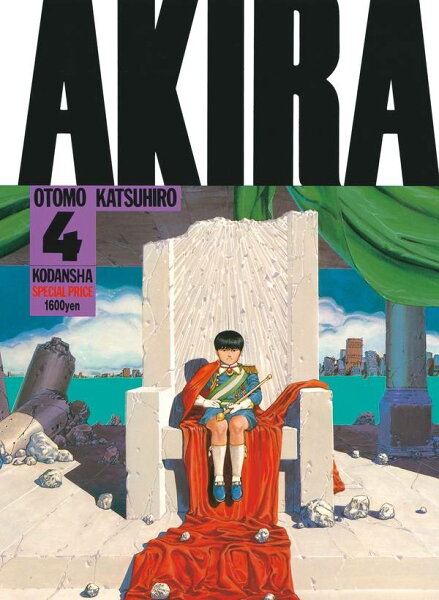
Sci-Fi / Action
Akira
Yu's review of Akira — Katsuhiro Otomo's six-volume monster, serialized 1982–1990. Set in 2019 Neo-Tokyo, a teenage biker tries to save the best friend who suddenly has the power to end the world. The manga that dragged Japanese comics onto the world stage.

Sci-Fi / Action
Magical Girl Spec-Ops Asuka
Yu's review of Magical Girl Spec-Ops Asuka — three years after magical girls saved the world from an invasion of magical creatures, Asuka Otori is trying to live a normal high school life; she has PTSD; her allies need her back; she doesn't want to go back.
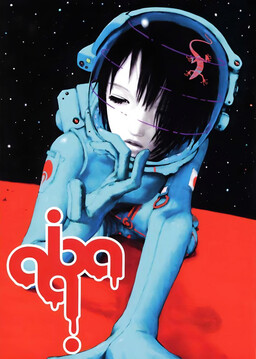
Sci-Fi / Action
Abara
Yu's review of Abara — Tsutomu Nihei's two-volume body-horror nightmare about Kudou Denji, a man who turns into a bone-armored Black Gauna to fight the human-eating White Gauna. The dense Nihei work that Tatsuki Fujimoto later called the blueprint for Chainsaw Man.
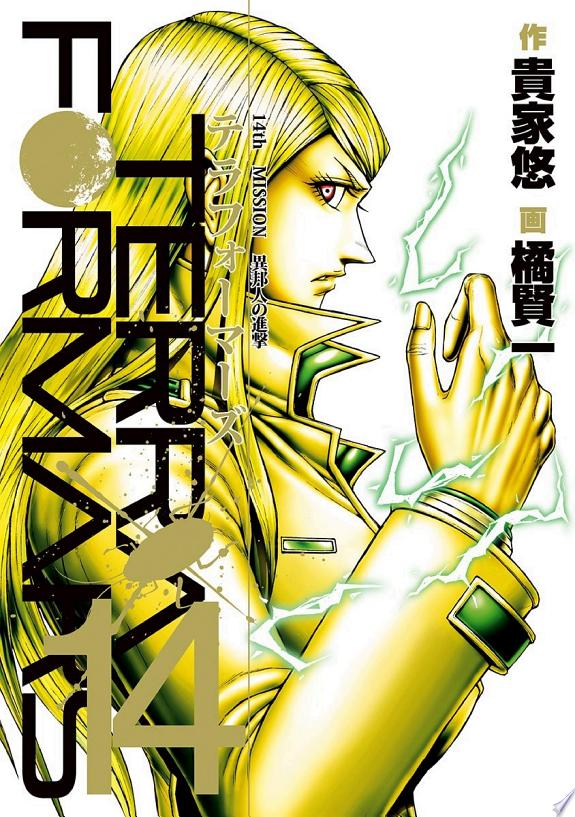
Sci-Fi / Action
Terra Formars
Yu's review of Terra Formars — humanity seeded Mars with cockroaches to begin terraforming; centuries later, the cockroaches have evolved into humanoid giants with extreme strength, and human soldiers with insect-based genetic modifications are sent to exterminate them.
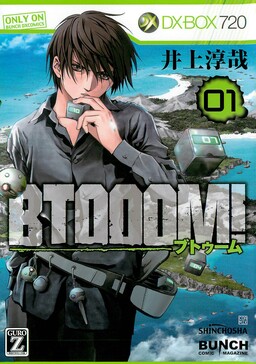
Sci-Fi / Survival Action
Btooom!
Yu's review of Btooom! — Ryota Sakamoto, Japan's top player of an online bomb-combat game, wakes up abducted on a deserted island forced to play it for real, fighting other players with live BIM explosives to collect the chips that let one person leave.
Sci-Fi / Political
Sanctuary
Yu's review of Sanctuary — two survivors of the Cambodian killing fields make a pact to change Japan from the inside: one through legitimate politics, one through the yakuza; a politically serious manga by the creators of Crying Freeman and Mai the Psychic Girl about power, ambition, and what it costs to change a corrupt system.
Written by
Yu
Manga Enthusiast from Japan
I grew up in Japan and manga literally saved me during a tough time in elementary school. My English isn't perfect, but my love for manga is real — and I want to share it with you.
Disclosure: This post contains affiliate links. As an Amazon Associate, I earn from qualifying purchases at no extra cost to you.