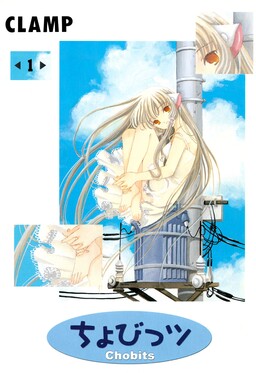
Chobits Review: A Robot Who Only Says Her Own Name, and the Boy Who Loves Her Anyway
by CLAMP
Read the first volume. If it doesn't hook you, put it down. It'll hook you.
Buy Chobits on Amazon →*Affiliate link — I earn a small commission at no extra cost to you.
I read Chobits the summer I bought my first laptop. I remember sitting on the floor of my apartment with the new machine warm on my knees and volume one open beside it, and feeling weirdly self-conscious — like the book had caught me in the act. I grew up lonely. For a long time the screen in front of me was where most of my real conversations happened. So a story about a boy who pulls a human-shaped computer out of a pile of trash and starts talking to her because he has no one else — that hit a nerve I didn't know was still raw.
What surprised me is that Chobits never made me feel stupid for it. CLAMP wrote a story that takes the loneliness seriously. It's funny and a little embarrassing and, by the end, quietly devastating. I've reread it three times now and I still don't have a clean answer to the question it keeps asking.
Quick Take
- CLAMP's most direct story about whether a relationship with something that isn't human can still be real — wrapped in comedy, romance, and a slow-build mystery
- Chi is one of the most affecting characters CLAMP ever drew: she starts able to say nothing but her own name and ends up understanding love better than the people around her
- 8 volumes, complete, rated M (Mature) for sexual content and one disturbing assault sequence — not a kids' book despite the cute art
Story Overview
Chobits is set in a near-future Tokyo where "persocoms" — personal computers built into life-sized human bodies — are completely normal. People use them as assistants, study partners, and, for some, romantic companions. The whole social fabric has quietly rearranged itself around the fact that you can now buy something that looks like a person and never lets you down.
Hideki Motosuwa is a nineteen-year-old from the countryside who flunked his college entrance exams and has come to Tokyo to study at a cram school while working at an izakaya. He's broke and can't afford a persocom of his own. Then one night he finds one literally thrown out with the garbage — a high-end model, white hair, no clothes. He carries her home, hunts everywhere for her power switch (it's in an extremely embarrassing place), turns her on, and she opens her eyes and says one word: "Chi." It's all she can say, so that becomes her name.
The turning point is the slow realization that Chi is not a normal persocom. She has no installed operating system and can't connect to the network, yet she learns — by watching, imitating, working a part-time job at a bakery, reading. Hideki's friend Minoru, a child genius who builds custom persocoms, helps investigate and concludes Chi might be one of the legendary "Chobits": persocoms rumored to have real free will and real feeling. Meanwhile Chi becomes fixated on a series of children's picture books called A City with No People, which seem to be speaking directly to her about who she is and what she's looking for.
The ending answers everything: who built Chi, who she used to be, and what "the person just for me" means in her specific case. Hideki finally says out loud that he loves her, and the story closes on Chi taking his hand, both of them wearing rings she chose. It's not a tidy sci-fi resolution. It's a romantic one, and an honest one.
Characters
Hideki Motosuwa — A country boy with no money and no idea what he's doing, who thinks out loud (which causes most of the comedy). He starts off wanting Chi mostly so he can get online, but he can't stop treating her like a person — feeding her, worrying about her, getting flustered. His arc is learning to take his own feelings seriously and to ask whether loving a persocom is allowed, instead of just assuming it isn't.
Chi — Begins able to say only "Chi" and ends up the emotional center of the whole series. Her learning isn't innocence-as-ignorance; it's a kind of clear sight. She's also carrying something she doesn't remember: she was originally named Elda, and she holds the consciousness of her "sister" Freya inside her. Freya appears to Chi in moments of danger or deep thought, guiding her search.
Chitose Hibiya — Hideki's gentle landlady, and the story's quiet heart. She used to develop persocoms, and she's the one who wrote the A City with No People picture books — not as entertainment but as a way to lead Chi back toward herself and toward love. Her connection to Chi's origin is one of the series' best-kept secrets.
Minoru Kokubunji and Yuzuki — Minoru is a twelve-year-old prodigy who built Yuzuki to resemble his dead older sister. Their subplot mirrors the main one: Minoru has to stop loving Yuzuki as a replacement and learn to love her for who she actually is. CLAMP surrounds Hideki and Chi with couples like this — each one a different angle on the same question of whether a built thing can be loved, and whether the love counts.
What I Love About It
There's a scene early on that I think about every time someone dismisses Chobits as fanservice. Hideki has found Chi switched off, and he can't find her power button anywhere. He searches and searches, getting more and more panicked, until he realizes where it is — and it's the most humiliating possible place to have to touch a stranger. The whole sequence is played for comedy, and it works. But what stuck with me is what CLAMP draws right before he reaches for it: Hideki hugs her. He pulls this naked, switched-off machine close and holds her, almost like an apology, because he can't make himself treat her as an object even though that's exactly what she technically is.
That's the entire book in one panel. Everyone else in the story handles persocoms practically — they're appliances, you turn them on, you don't agonize over it. Hideki can't. His instinct is to be gentle with her before she's even awake, before there's anyone in there to be gentle to. The first time I read it I laughed, and then a second later I felt something catch, because that reflex — to treat the thing in front of you as a person just in case — is the most decent and the most lonely thing about him. CLAMP sets up the joke and then quietly tells you who this boy is. I've never forgotten it.
Memorable Scene ⚠️ Spoiler Warning
The scene that defines the series for me is the kidnapping. Chi is taken by men who treat her as exactly what the law says she is — property, a thing — and the sequence is drawn with unmistakable assault overtones. And then Chi changes. The soft, learning, wordless girl shuts down and "dark Chi," the Freya side, takes over. She looks her attacker dead in the eye and tells him flatly: you are not the person just for me, so do not come inside me.
It's chilling, and it reframes the whole story. Up to that point "the person just for me" sounds like sweet romance-novel language. In that moment you understand it's literal and it's a defense — Chi was built so that the deepest part of her can only ever open for one specific person, the one who loves her for herself and not for what she is. CLAMP took the creepiest possible version of the persocom premise (a custom-built woman who can't say no) and flipped it: Chi is the one who decides, and the whole point of her existence is that she gets to choose. That single page is why I take this book seriously.
Pros & Cons
Pros
- Asks a genuine question — can you love a machine, and does it matter — and refuses to give a cheap answer
- Chi's arc from one-word vocabulary to emotional clarity is beautifully tracked across all 8 volumes
- CLAMP's art is at its most polished and warm here
- The supporting couples turn it into an ensemble meditation, not just one romance
- Complete, with an ending that actually pays off the mystery
Cons
- The fanservice and the "switch in an intimate place" premise will turn some readers off immediately
- One sequence has heavy sexual-assault overtones — handled with purpose, but still hard
- The philosophy is raised more sharply than it's finally resolved; the ending leans romantic over rigorous
- It's earnest and a little chaste in a way that can read as naive — that's either part of its charm or a dealbreaker, and it won't work for everyone
Is Chobits Worth Reading?
Yes — if you can get past the surface. Underneath the cute robot girl and the embarrassing jokes is one of the most sincere stories CLAMP ever told about loneliness and what it means to love something that maybe can't love you back. The premise aged eerily well in an age of AI companions. Just go in knowing it earns its M rating.
Where to Buy
Read the first volume. If it doesn't hook you, put it down. It'll hook you.
This post contains affiliate links. If you purchase through these links, I may earn a small commission at no extra cost to you. As an Amazon Associate, I earn from qualifying purchases.
*Affiliate link — I earn a small commission at no extra cost to you.
More Manga You Might Like
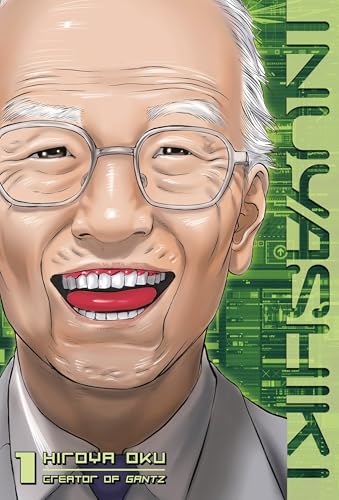
Sci-Fi / Drama
Inuyashiki
Yu's review of Inuyashiki — two people are accidentally destroyed and rebuilt as machines by aliens; a 58-year-old man no one noticed becomes a hero; a teenage boy whom everyone admired becomes a mass murderer; the series asks what the inside of a person determines when they are given absolute power.
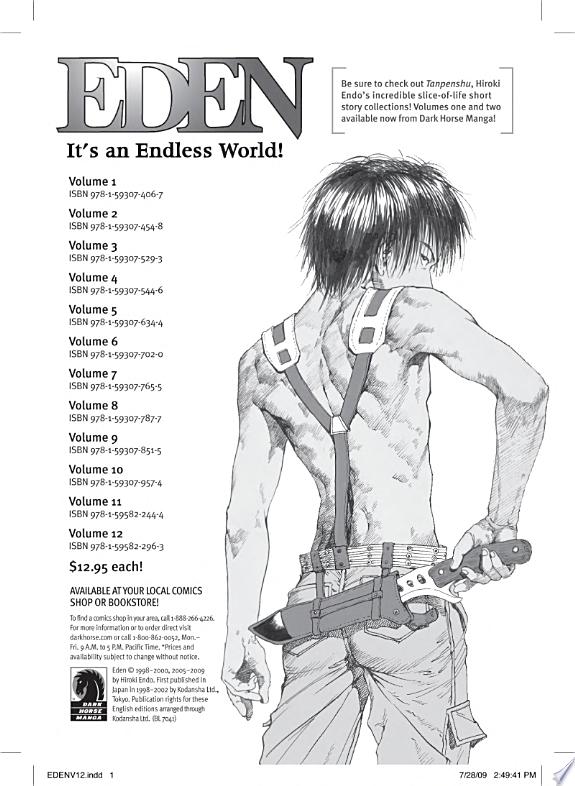
Sci-Fi / Action
Eden: It's an Endless World!
Yu's review of Eden: It's an Endless World! — a plague destroyed most of humanity; a boy named Elijah grows up in the aftermath, in a world run by the Propater organization and his father's network of resistance, becoming something neither of them intended.
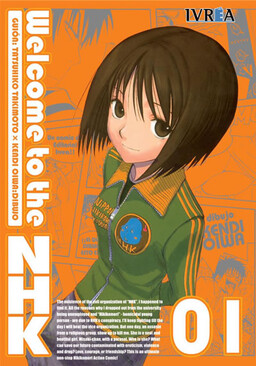
Sci-Fi / Psychological
Welcome to the NHK
Yu's review of Welcome to the NHK — Tatsuhiro Sato has been a hikikomori (shut-in) for four years, convinced that Japan's public broadcaster NHK is running a conspiracy to create hikikomori; a mysterious girl named Misaki begins visiting him and offers to help him rejoin society, for reasons he cannot understand.

Sci-Fi / Romance
Saikano
Yu's review of Saikano — Chise is a clumsy, awkward high school girl who has recently started dating Shuji; she is also the last weapon, a girl whose body has been modified into a living weapon system for Japan's military; the series follows their relationship as the war escalates and Chise's modifications progressively replace her humanity.
Sci-Fi / Political
Sanctuary
Yu's review of Sanctuary — two survivors of the Cambodian killing fields make a pact to change Japan from the inside: one through legitimate politics, one through the yakuza; a politically serious manga by the creators of Crying Freeman and Mai the Psychic Girl about power, ambition, and what it costs to change a corrupt system.
Sci-Fi / Romance
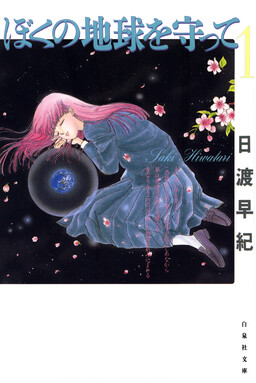
Please Save My Earth
Yu's review of Please Save My Earth — Alice Sakaguchi and six other teenagers in contemporary Tokyo discover they are the reincarnations of seven alien scientists who lived on the Moon observing Earth; their past life memories surface through shared dreams; past life emotions and relationships carry into present lives in ways that are not always welcome.
Written by
Yu
Manga Enthusiast from Japan
I grew up in Japan and manga literally saved me during a tough time in elementary school. My English isn't perfect, but my love for manga is real — and I want to share it with you.
Disclosure: This post contains affiliate links. As an Amazon Associate, I earn from qualifying purchases at no extra cost to you.