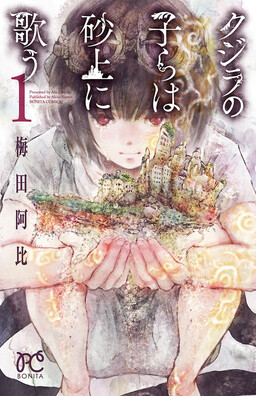
Children of the Whales Review: An Island That Drifts on Sand, and the People Who Pay for Their Feelings
by Abi Umeda
Read the first volume. If it doesn't hook you, put it down. It'll hook you.
Buy Children of the Whales on Amazon →*Affiliate link — I earn a small commission at no extra cost to you.
I bought the first volume of this one mostly for the cover. The art of the Mud Whale sitting alone on a white ocean of sand looked like nothing else on the shelf, and I thought it would be a quiet, pretty fantasy. It was pretty. It was not quiet. By the end of the second volume I had to put the book face-down on my desk and just breathe for a minute, because Abi Umeda had spent a hundred pages teaching me to love a small community and then let the world find them. I have read a lot of dark manga. This is one of the few that made the darkness hurt because it earned it first.
Quick Take
- A fantasy world built carefully from the ground up — a floating island on a sea of sand, a psychic power called thymia that shortens the lives of everyone who uses it
- Umeda spends real time making you care about the people of the Mud Whale before anything bad happens, which is exactly why it lands so hard when it does
- 23 volumes, complete in English from VIZ, rated T (Teen) — though the emotional weight runs heavier than the rating suggests
Story Overview
The Mud Whale is an island-ship the size of a small town, drifting across the Sea of Sand — an endless white ocean with no shores, no other land, nothing. A few hundred people live on it, cut off from any history of where they came from. Most of them are "the Marked": they can move objects with their minds using a power called thymia, drawn out of emotion. The price is brutal — the Marked rarely live past thirty. The "Unmarked," a small minority, have no power but live full ordinary lifespans, and they govern.
Chakuro is the island's young archivist. He records everything that happens on the Mud Whale, because the Marked die so quickly that memory is the only thing the community can keep. Early on, the island drifts up against a derelict ship — a ghost island floating in the sand — and a scouting party goes aboard. Chakuro finds it full of corpses, and one living girl, expressionless and silent. He starts calling her Lykos.
The turning point is the attack. Lykos was not lost; she came from the Empire, a nation that surgically strips emotion out of its soldiers so they can kill without feeling, and that Empire has now found the Mud Whale. Masked soldiers board the island and begin slaughtering people who have never held a weapon. From there the story opens outward over its 23 volumes — the truth about why the Marked die young, what the Mud Whale really is, and what the world outside has decided people like Chakuro are for. It builds toward a final confrontation over whether this small drifting community gets to keep existing at all, and it gives that question a real ending rather than fading out.
Characters
Chakuro — the narrator and the heart of the book. He records everything because he believes his archives might make life better for people who come after him, and that quiet faith in memory is the whole spine of the series. His arc is the slow, painful shift from a boy who watches and writes down what he sees to someone who has to act, because writing it down stops being enough once people start dying.
Lykos — the girl from the ghost ship. She has had her emotions taken from her, so she arrives blank, mechanical, reciting things she has no feeling about. Watching her relearn what feelings even are — among a people who feel everything openly — is the most original thing in the manga. Her name isn't really her name; it belongs to something else entirely, which the story slowly unfolds.
Ouni — a Marked boy said to have the greatest thymia potential on the whole island, and the leader of a group of young rule-breakers called the Moles, named because they get thrown into the ship's lower levels so often. He's obsessed with one thing: getting off the Mud Whale and seeing what's out there. He reads as the angry counterweight to Chakuro's gentleness.
Sami — a bright, energetic girl in the island's Vigilante Corps who works the fields alongside Chakuro and teases him by calling him "Chakky." She is the kind of warm, ordinary presence Umeda plants early so the reader settles in — which is precisely the setup for what happens to her.
What I Love About It
What I love is how patiently Umeda builds the Mud Whale before she ever puts it in danger. The first volume is almost slow. We meet the field workers, the funeral customs, the Elders, the children who run on the deck, Chakuro scribbling in his archive, Sami calling him Chakky. There's no big villain yet, no looming threat you can point at. A lot of fantasy manga would treat all of this as throat-clearing before the real plot starts. Umeda treats it as the real plot. She is teaching you the texture of an entire way of life — how these people grieve, how they restrain their emotions because feeling too much literally kills the Marked faster — so that you understand it from the inside.
And then she uses every bit of it. When the Empire's soldiers come, the loss isn't abstract, because she made sure you already knew the names and faces. I think the reason this manga sat with me for days is that it refuses the cheap version of darkness. It never kills a stranger to shock you. It spends its grief on people you watched eat breakfast. That's a harder, more honest kind of sad, and it's the thing I most respect in Umeda's writing — she builds the joy first, fully, knowing she's going to take it, so that when the world arrives, it costs the reader something too.
Memorable Scene ⚠️ Spoiler Warning
The scene I can't shake is Sami's death in the second volume. The Empire's soldiers — masked, emotionless, called Apatheia — board the Mud Whale and start cutting through people with their own thymia, and Sami is out in the fields with Chakuro when it happens. She senses the danger an instant before he does, and she throws herself in front of him, using her power on instinct to shield him from the soldiers' attack. She dies for it, in front of him, the energetic girl who called him Chakky now gone in a moment of pure reflex.
What makes it land is what comes after. The Mud Whale's people have always kept their feelings in check — it's a survival rule for them. But the grief from the attack is too big to hold, and at the funeral the whole community breaks. The teenagers and children weep openly, all the careful restraint gone. Umeda draws it as a kind of dam giving way. And for Chakuro the loss does something more — the shock of it cracks open a power in him that had been dormant. The page where his grief turns into something he can't control is the moment the manga stops being a gentle fantasy and becomes the thing it's actually about: a people who have been told their feelings are dangerous, suddenly feeling all of it at once. I have rarely seen a manga use a single character's death to pivot its entire tone so completely.
Pros & Cons
Pros
- Some of the most striking art and world design I've seen in a fantasy manga — the Mud Whale and the Sea of Sand feel fully imagined
- The world's rules (thymia, the Marked, the Unmarked) are coherent and matter to the plot, not just flavor
- Character deaths are earned because Umeda invests in people before she takes them
- 23 volumes, complete in English, with a real ending to its central conflict
Cons
- The emotional cost is high on purpose — this is not comfort reading, and several arcs are genuinely bleak
- The large cast and slow-building mystery ask you to pay attention and remember names across volumes
- The T rating undersells how heavy the material gets — the political and grief-driven darkness won't work for everyone
Is Children of the Whales Worth Reading?
Yes — if you want fantasy that takes its own world seriously and is willing to make you feel the cost of its story. It's beautiful, ambitious, and emotionally honest, with a complete English release. Just go in knowing it's not escapism: it builds warmth specifically so it can break your heart, and that's the whole point.
Where to Buy
Read the first volume. If it doesn't hook you, put it down. It'll hook you.
This post contains affiliate links. If you purchase through these links, I may earn a small commission at no extra cost to you. As an Amazon Associate, I earn from qualifying purchases.
*Affiliate link — I earn a small commission at no extra cost to you.
More Manga You Might Like
Sci-Fi / Drama
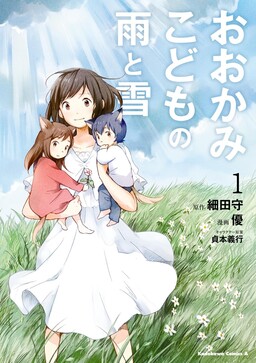
Wolf Children
Yu's review of Wolf Children — Hana falls in love with a man who is the last wolf-human; they have two children, Ame and Yuki, who can transform between human and wolf form; when their father dies suddenly, Hana must raise two wolf-children alone in a society that cannot know what they are.

Sci-Fi / Romance
Saikano
Yu's review of Saikano — Chise is a clumsy, awkward high school girl who has recently started dating Shuji; she is also the last weapon, a girl whose body has been modified into a living weapon system for Japan's military; the series follows their relationship as the war escalates and Chise's modifications progressively replace her humanity.
Sci-Fi / Fantasy
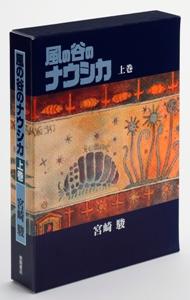
Nausicaa of the Valley of Wind
Yu's review of Nausicaa of the Valley of Wind — the manga Hayao Miyazaki serialized over twelve years, extending far beyond the film's scope: a post-catastrophic world where toxic forests cover Earth, and a princess who understands the insects that everyone else fears.
Sci-Fi / Fantasy
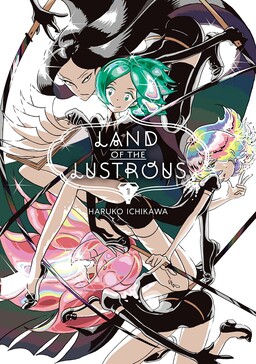
Land of the Lustrous
Yu's review of Land of the Lustrous — in a far future where humanity no longer exists, gem beings called Lustrous fight against Lunarians who wish to capture them for decoration; Phosphophyllite, the youngest and most fragile gem, wants to fight but is unfit for combat; the series follows Phos's transformation into something unrecognizable as their body is replaced piece by piece and their original self becomes inaccessible.
Sci-Fi / Drama
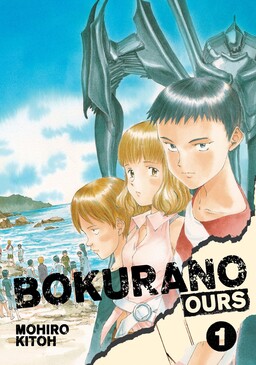
Bokurano
Yu's review of Bokurano by Mohiro Kitoh — fifteen children sign a contract to pilot a giant robot called Zearth, only to learn each victory costs the pilot's life, and that every battle won erases another Earth.
Sci-Fi / Fantasy
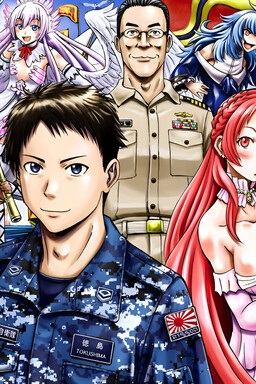
Gate: Jieitai Kanochi nite, Kaku Tatakaeri
Yu's review of Gate — a gate appears in Ginza, Tokyo; a fantasy world army pours through and attacks civilians; the Japan Self-Defense Force pushes back and enters the Special Region, a fantasy world where Rome-like legions, dragons, and magic users coexist; the manga follows JSDF officer Itami Youji's interaction with the Special Region and its inhabitants.
Written by
Yu
Manga Enthusiast from Japan
I grew up in Japan and manga literally saved me during a tough time in elementary school. My English isn't perfect, but my love for manga is real — and I want to share it with you.
Disclosure: This post contains affiliate links. As an Amazon Associate, I earn from qualifying purchases at no extra cost to you.