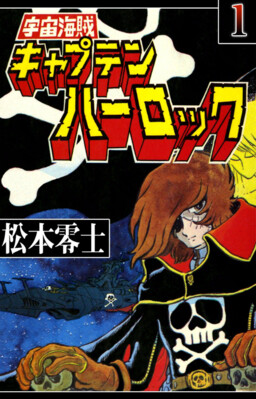
Captain Harlock Review: The Space Pirate Who Fights for an Earth That Stopped Fighting for Itself
by Leiji Matsumoto
Read the first volume. If it doesn't hook you, put it down. It'll hook you.
Buy Captain Harlock on Amazon →*Affiliate link — I earn a small commission at no extra cost to you.
The first time I saw Harlock's silhouette — the long coat, the scar, the eyepatch, the skull on the flag — I was a kid who had no friends and no idea why standing up for yourself was supposed to be a good thing. Standing up only got me noticed. So I sat down a lot. When I finally read Matsumoto's manga years later, I understood why that silhouette had always stayed in my head. Harlock is not a hero because he wins. He is a hero because he keeps standing up in a world that has decided sitting down is more comfortable. That hit me harder as an adult than it ever could have as a child.
Quick Take
- The original space pirate manga, drawn by Leiji Matsumoto from 1977 to 1979 — Harlock's appeal isn't the battles, it's what he refuses to give up
- 5 volumes, complete; Seven Seas collected the whole run in English as Captain Harlock: The Classic Collection
- Rated T (Teen) — space combat, character deaths, and a heavy mood, but nothing graphic
Story Overview
It is 2977. Humanity has spread across the stars and built a comfortable, well-managed civilization — and in doing so it has lost the will to do anything at all. People are content to be entertained. The government governs by doing nothing. Nobody fights, because there is nothing they care enough to fight for.
The story opens with a warning nobody wants to hear. Professor Tsuyoshi Daiba tries to tell Earth's leaders that an alien sphere has crashed and an invasion is coming. They ignore him. A woman in black walks in, kills him, and then bursts into flames before she can be questioned — leaving his son Tadashi with nothing but a name and a place to go. At a deserted spaceport, Tadashi meets the man the government has branded an outlaw: Captain Harlock.
The enemy is the Mazone — a race of plant-based alien women who explored Earth in the ancient past and have come back to take it. They have been quietly infiltrating human society for years. Earth won't defend itself, so Harlock does, aboard the battleship Arcadia, with a crew of people who also refused to accept the world as it is. The turning point comes when the conflict stops being a simple invasion story: the Mazone queen, Rafflesia, recognizes Harlock as Earth's only real defender, and the final duel reveals she is not Mazone at all, but human. After defeating her, Harlock lets her people leave to settle elsewhere — and then, the war over, he does the strangest thing a victorious hero can do. He leaves.
Characters
Captain Harlock — A tall, scarred pirate with an eyepatch and a personal creed: he lives as a free man under his own banner, fighting until his last breath because it is the only honest way left to live. He is defined by what he stands for, not who he stands against. The government calls him a criminal; he keeps protecting the planet that rejected him anyway.
Tadashi Daiba — The 14-year-old whose father is murdered by the Mazone for trying to warn a world that didn't want warning. Disgusted by Earth's apathy, he joins the Arcadia and becomes the reader's eyes aboard the ship — the ordinary boy learning what it costs to actually care about something.
Tochiro Ōyama — Harlock's closest friend and the genius engineer who built the Arcadia. He died before the story begins, but his consciousness lives on inside the ship's computer. The Arcadia isn't just a vessel; it carries the soul of the man Harlock loved most.
Miime — A blue-skinned alien with body-length blue hair, the last survivor of the planet Jura, whom Harlock rescued. She lives on alcohol, says little, and stays at Harlock's side to the end. Her quiet devotion is the most human thing on a ship full of outcasts.
What I Love About It
There is a scene that tells you everything about who Harlock is. The Mazone try to break him not with weapons but with a trick — they create a fake of Emeraldas, the woman tied to his past and to Tochiro, and dangle her in front of him as bait, hidden in an asteroid stronghold. It would be so easy for him to fall for it, to want the illusion to be real. Instead Harlock sees through it immediately and destroys the entire asteroid hideout. When asked how he could be so sure, he answers that important memories are kept in the safest place there is — one's own heart. The fake meant nothing because the real thing was never out there to be stolen.
That line stayed with me for days. I grew up clinging to things — a borrowed manga volume, a kind word from one classmate, anything that proved I mattered — terrified of losing them because they felt like the only evidence I had. Harlock's answer flips that fear on its head. The things that matter most can't be taken, because you don't keep them in your hands. You keep them in your heart, where no enemy and no loss can reach. For a man who has lost almost everyone, that isn't cold detachment. It's the only way he's found to carry his dead with him and keep moving. I have reread that scene more times than I can count, and it still lands.
Memorable Scene ⚠️ Spoiler Warning
The ending is what makes Harlock immortal to me. He wins. The Mazone are defeated, Rafflesia is spared and sent away, Earth is saved — and Earth has done nothing to deserve it. So Harlock does not return as a celebrated hero. He puts most of his crew back down on Earth, takes only Miime, and sails the Arcadia back out into the dark. He says he is going to look for a place to die.
It should be triumphant and instead it is unbearably lonely, and that contradiction is the whole point. Harlock fought for a world that will forget him by next year. He expected nothing in return and got exactly that. But he doesn't turn bitter and he doesn't stop — he just goes back out, alone except for the one companion who chose to stay, into a sea with no tomorrow. The final image of the Arcadia disappearing into space is the saddest victory I've ever read, and somehow also the most free. He answered to no one. He never sat down. That is the man I wished I could have been when I was small.
Pros & Cons
Pros
- Harlock is one of the most influential and genuinely meaningful hero archetypes in all of manga
- The philosophy — freedom, dignity, fighting for what you love whether or not anyone thanks you — has aged remarkably well
- The original 5-volume run is short and fully collected in English as 3 omnibus hardcovers
- Matsumoto's ship and character designs are unmistakable and beautiful
Cons
- The 1970s art and episodic structure take some adjustment if you're used to modern manga pacing
- The action is deliberately secondary to the mood and the message
- It is melancholy from start to finish — this is a quiet, sad space opera, and that tone won't work for everyone
Is Captain Harlock Worth Reading?
Yes — if you want a space opera that's really about how to live, not how to win. It's a short, complete classic built on a hero who fights for a world that won't fight for itself and asks nothing back. If you only read for fast action, the slow, mournful tone may lose you. But if a character who keeps standing up means something to you, Harlock is one of the originals, and one of the best.
Where to Buy
Read the first volume. If it doesn't hook you, put it down. It'll hook you.
This post contains affiliate links. If you purchase through these links, I may earn a small commission at no extra cost to you. As an Amazon Associate, I earn from qualifying purchases.
*Affiliate link — I earn a small commission at no extra cost to you.
More Manga You Might Like
Sci-Fi / Drama
Galaxy Express 999
Galaxy Express 999 follows Tetsuro Hoshino, a young boy who boards the legendary space train 999 toward a planet where he can receive a free mechanical body — accompanied by the mysterious Maetel — and encounters, on each planet the train stops at, a different meditation on what it means to be human and whether eternity is worth what it costs.
Sci-Fi / Military
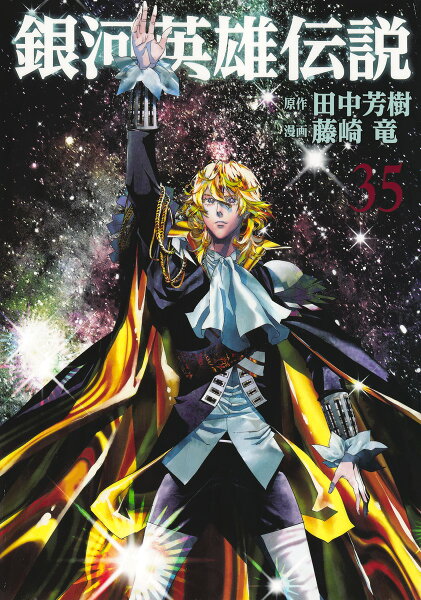
Legend of the Galactic Heroes
Yu's review of Legend of the Galactic Heroes — the manga adaptation of the classic novel series following Yang Wen-li of the Free Planets Alliance and Reinhard von Lohengramm of the Galactic Empire across a war that neither believes in the same terms as the people who sent them to fight it.

Sci-Fi / Action
Outlaw Star
A review of Outlaw Star, the manga about a freelance outlaw and his crew aboard a unique sentient ship searching for the legendary Galactic Leyline.
Sci-Fi / Adventure
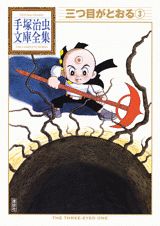
The Three-Eyed One
The Three-Eyed One follows Sharaku Hosuke, a seemingly simple-minded boy who conceals a third eye beneath a bandage — when uncovered, the third eye reveals his true identity as a descendant of a lost civilization with extraordinary mental powers and a ruthless intelligence.
Sci-Fi / Adventure
Ginga no Sannin
Ginga no Sannin is one of Osamu Tezuka's compact science fiction works — a single-volume story about three people across the galaxy whose lives intersect at a critical historical moment, demonstrating Tezuka's ability to compress epic into modest space.

Sci-Fi / Drama
Hyakuoku no Hiru to Senoku no Yoru
Hyakuoku no Hiru to Senoku no Yoru is Moto Hagio's manga adaptation of Ryu Mitsuse's celebrated science fiction novel — following the collapse of civilizations across billions of years, centered on figures from different historical periods who are drawn toward a single question: what is the nature of creation, and who is responsible for it?
Written by
Yu
Manga Enthusiast from Japan
I grew up in Japan and manga literally saved me during a tough time in elementary school. My English isn't perfect, but my love for manga is real — and I want to share it with you.
Disclosure: This post contains affiliate links. As an Amazon Associate, I earn from qualifying purchases at no extra cost to you.