
Brynhildr in the Darkness Review: The Sci-Fi Horror Where Saving the Girl Might Kill Her
by Lynn Okamoto
Read the first volume. If it doesn't hook you, put it down. It'll hook you.
Buy Brynhildr in the Darkness on Amazon →*Affiliate link — I earn a small commission at no extra cost to you.
I read Elfen Lied when I was a teenager and it left a bruise on me — the kind of manga where the violence is so sudden it changes how you turn the page. So when I learned the same author, Lynn Okamoto, had made another series about engineered girls running from the lab that built them, I went in bracing myself. What I didn't expect was how much of Brynhildr in the Darkness is about a single, simple, cruel rule: the thing keeping these girls alive is also the thing that can kill them in an instant. I finished it in a few long nights, and the ending made me argue with myself for a week.
Quick Take
- From the creator of Elfen Lied — lab-made "witches" with supernatural powers who survive only by swallowing daily death-suppressant pills, and the ordinary boy who decides to keep them alive
- The horror engine is the harness implant: pull it out and the witch dissolves into slime on the spot, so "rescue" and "execution" use the exact same mechanism
- Rated M (Mature) — graphic body horror, real character deaths, sexual content, and human-experimentation themes; not a gentle read
Story Overview
Ryouta Murakami is a high schooler who never stopped grieving. When he was a kid, a girl he called Kuroneko fell to her death in front of him, and he's spent years studying the stars because she once insisted aliens were real. Then a new transfer student appears with Kuroneko's exact face — calm, blunt, calling herself Neko Kuroha — and she has no memory of him at all. She also has powers no human should have, and she knows things before they happen, including that Ryouta is about to die.
The turning point is when Ryouta learns what Neko actually is. She's a "witch," one of many girls created and held by a secret organization, fitted with a device called a harness that grants supernatural abilities. The catch is brutal: the harness keeps them alive only as long as they take "death suppressant" pills every day, and if the harness is removed or remotely ejected, the witch's body liquefies in seconds. Neko escaped. So did a few others. Ryouta, an ordinary boy with a perfect memory and nothing to fight with, decides he is going to keep these dying girls alive — finding pills, hiding them, and eventually hunting for a way to free them from the harness without killing them.
The back half escalates from survival thriller into full sci-fi as the organization Vingulf, an alien-touched entity, and a being called Loki enter the picture. The ending is famously divisive: after a final confrontation, Ryouta is consumed and his soul ends up sealed in an artifact at the north pole, with Neko choosing to enter it so they can be together in a white nothingness where echoes of the friends they lost appear. Some readers found it beautiful; many found it a confusing rush. I land somewhere in the middle.
Characters
Ryouta Murakami — The anchor of the whole thing. He has no powers, just an eidetic memory and a refusal to let anyone die in front of him again. His arc is watching a guilt-ridden boy turn that guilt into stubborn, almost reckless protectiveness — the one human who treats the witches as people instead of weapons or experiments.
Neko Kuroha — A B-rank witch with telekinesis who wears the face of Ryouta's dead childhood friend. She insists she isn't Kuroneko, and the slow question of who she really is — and what was done to her memory in that lab — is the emotional spine of the series. She's spent ten years as a captive and chooses to use her stolen freedom to save strangers.
Kana Tachibana — For me the most devastating character. A C-rank witch whose entire body is paralyzed from a botched harness operation, except her left hand, which she uses to type out a synthetic voice. Her power is foresight: she sees people's deaths before they happen. Imagine being able to predict exactly how and when the people you love will die, and being unable to move to stop it.
Kazumi Schlierenzauer — A hacker witch, loud and crude and very funny early on, which is exactly what makes the manga able to gut you later. Her fate in the final arc (chapter 179) is one of the most talked-about moments in the whole series among fans.
What I Love About It
What I love is how Okamoto refuses to let "saving someone" be simple. In most survival manga, rescue is the goal — get the person out, get them safe, exhale. Here, the harness welds safety and death into one object. The pills that keep a witch alive can run out. The harness that grants her power can be ejected by remote, by an enemy, even by accident — and the instant it's gone, she's not wounded, she's gone, melted into liquid. The early scene where a witch named Kanade is reduced to a puddle of hot slime when her captors trigger her harness is the moment the manga tells you exactly what kind of story this is. There's no recovering from that. There's no hospital arc. The rules are absolute.
That single mechanic reframes Ryouta's whole mission. He's not trying to win a war; he's trying to keep girls breathing for one more day, one more pill, one more night without being found. As someone who grew up clinging to manga as my escape from a lonely childhood, I found something painfully resonant in a story about an ordinary person whose only superpower is that he refuses to give up on people the world has already decided are disposable. He can't punch the bad guys. He just keeps trying to make sure tomorrow exists for them. That tension — total powerlessness paired with total commitment — is what kept me reading past midnight.
Memorable Scene ⚠️ Spoiler Warning
The scene I can't shake is when Kana uses her foresight as the group runs low on death suppressants. She tells them, flatly, through her typed synthetic voice, that Neko is going to die. Then Ryouta makes up his mind to go get the pills himself, no matter the danger — and Kana foresees that he will die too. A girl who cannot move, who can only watch the future arrive, sitting there announcing the deaths of the two people trying hardest to keep everyone alive.
What wrecks me about it is how quiet it is. There's no dramatic villain in the room, no fight. Just a paralyzed girl, a keyboard, and a sentence about who dies next. It crystallizes the entire premise of Brynhildr in the Darkness — these characters are always living on borrowed time, and the cruelest thing the story can do isn't violence, it's certainty. Knowing exactly how and when. After everything graphic the manga shows you, that small, still scene of foreknowledge is the one that stayed lodged in my chest.
Pros & Cons
Pros
- The harness mechanic gives every single page genuine, permanent stakes
- Character deaths actually cost something — the early humor makes the later losses land
- Ryouta is a refreshingly powerless, deeply human protagonist
- Complete in 18 volumes, so the story is fully told
Cons
- The body horror and sexual content are frequent and graphic
- The final arc rushes into alien sci-fi territory and the ending splits readers hard
- Some witches are introduced mainly to raise the body count
- It's tense, bleak, and built to make you uncomfortable — that won't work for everyone
Is Brynhildr in the Darkness Worth Reading?
If you loved Elfen Lied, or you want a sci-fi horror where survival is fragile and rescue can become execution with one wrong move, yes — it's gripping and it commits to its own brutal rules. Just go in knowing the content is graphic and the ending is the most argued-about part of the series. If you want something hopeful or gentle, look elsewhere.
Where to Buy
No English release yet. That just means you find it before everyone else does.
The Japanese print and digital editions are the only legitimate way to read the manga right now — you can find the original volumes on Amazon Japan.
This post contains affiliate links. If you purchase through these links, I may earn a small commission at no extra cost to you. As an Amazon Associate, I earn from qualifying purchases.
*Affiliate link — I earn a small commission at no extra cost to you.
More Manga You Might Like
Sci-Fi
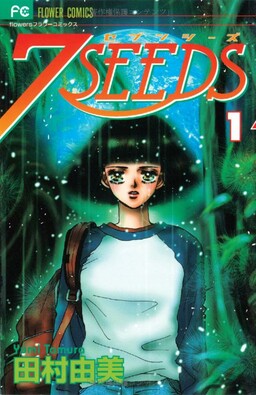
7SEEDS
Yu's review of 7SEEDS — after a meteor wipes out civilization, young people cryogenically frozen by a secret government project wake up in a transformed Japan with no instructions. Yumi Tamura's 35-volume survival epic about ordinary, frightened people who were never asked if they wanted to save the human race.
Sci-Fi / Horror
DOMU: A Child's Dream
Yu's review of DOMU — Over several years, residents of the Tsutsumi housing complex have been dying or going mad at an inexplicable rate; a detective investigating the deaths suspects something supernatural; an old man with psychic abilities has been killing residents for entertainment; when a young girl moves into the complex with her own abilities, a confrontation becomes inevitable.
Sci-Fi / Horror
Alien Nine
Yu's review of Alien Nine — Yuri Otani, a frightened sixth-grader, is elected to her school's Alien Party and forced to fight the aliens that fall on the school grounds while wearing a symbiotic creature called a Borg on her head. Drawn in a soft, cute style that makes the body horror underneath it so much worse.

Sci-Fi / Survival Action
Btooom!
Yu's review of Btooom! — Ryota Sakamoto, Japan's top player of an online bomb-combat game, wakes up abducted on a deserted island forced to play it for real, fighting other players with live BIM explosives to collect the chips that let one person leave.

Sci-Fi / Thriller
Summer Time Rendering
Yu's review of Summer Time Rendering — Shinpei Ajiro returns to Hitogashima island for the funeral of his childhood friend Ushio; something is wrong; the shadows of people on the island are not quite right; Shinpei discovers a supernatural threat that copies humans through their shadows and a time loop mechanic that allows him to restart from the same point when he dies.
Sci-Fi / Political
Sanctuary
Yu's review of Sanctuary — two survivors of the Cambodian killing fields make a pact to change Japan from the inside: one through legitimate politics, one through the yakuza; a politically serious manga by the creators of Crying Freeman and Mai the Psychic Girl about power, ambition, and what it costs to change a corrupt system.
Written by
Yu
Manga Enthusiast from Japan
I grew up in Japan and manga literally saved me during a tough time in elementary school. My English isn't perfect, but my love for manga is real — and I want to share it with you.
Disclosure: This post contains affiliate links. As an Amazon Associate, I earn from qualifying purchases at no extra cost to you.