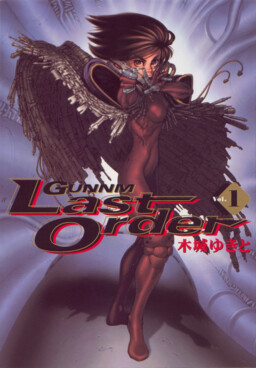
Battle Angel Alita: Last Order Review: When the Cyborg Girl Stops Asking Who She Is and Starts Fighting the Whole Solar System
by Yukito Kishiro
Read the first volume. If it doesn't hook you, put it down. It'll hook you.
Buy Battle Angel Alita: Last Order on Amazon →*Affiliate link — I earn a small commission at no extra cost to you.
When I finished the original Battle Angel Alita, I sat with the ending for a long time. It felt complete — sad, quiet, earned. So when I learned Yukito Kishiro had basically rewound that ending and started over with Last Order (銃夢 Last Order), my first reaction was suspicion. You don't undo a perfect ending. That's cheating.
I read it anyway. And what I found wasn't the intimate, dystopian Iron City story I loved — it was something much louder, much stranger, and honestly kind of unhinged. Last Order takes the small, broken girl from the Scrapyard and throws her into a martial-arts tournament that spans the entire solar system, with cyborg karate masters, evil clones of herself, and at one point Alita literally becoming a winged catgirl. I'm not going to pretend it's the equal of the original. But I couldn't stop reading it, and I want to tell you honestly why.
Quick Take
- A direct sequel that reboots the original's final volume: Desty Nova revives Alita, she's taken up to the floating city Tiphares and then out into space, and the series turns into a massive tournament epic
- The ZOTT (Zenith of Things Tournament), held aboard the space station Ketheres, eats up most of the run — thousands of pages of one-on-one cyborg duels, with some of the most creative fighter designs in sci-fi manga
- 19 volumes, completed. Rated T+ (Older Teen) for sustained combat violence and body-horror cyborg designs
Story Overview
Last Order picks up at the exact moment the original series ended — but instead of the bittersweet conclusion the first manga gave us, Kishiro reopens it: Desty Nova rebuilds Alita's destroyed body with nanotechnology inside the floating city of Tiphares (Zalem). Alita wakes up in the place that has loomed above the Scrapyard the whole series, and she learns the truth about Tiphares' citizens — and she sets out to rescue the brain of her friend Lou Collins, which sends her up the space elevator and off Earth entirely.
From there the scope detonates. We leave the dusty cyberpunk ground level behind for orbital cities (Tiphares/Ketheres), the colony ship Leviathan I, and eventually a colonized solar system reaching Mars, Venus, and a half-finished Dyson sphere around Jupiter. The political spine of the story is LADDER, the body that governs space, and its assistant chairman Aga Mbadi — a hacker and martial artist carrying the brain-chips of three Tipharean geniuses, who turns out to be the real power Alita is moving against.
But the engine of the middle of the series is the ZOTT — the Zenith of Things Tournament — a once-a-decade fighting competition run from the station Ketheres, where teams from across human civilization compete and the winner gets a single wish granted by the system that secretly runs everything. Alita fights to win it for her own reasons. The fighting is the surface. The question of who controls human civilization from above — and what the people below are allowed to know — is the depth, carried straight over from the original.
Characters
Alita (Gally) — This is not the Alita you remember. The original's wide-eyed identity-searching girl is gone; Last Order's Alita is colder, harder, defined now by combat rather than by the question "what am I?" She's resurrected repeatedly into new bodies over the course of the series (yes, including the infamous catgirl Imaginos body). Where the original asked what she is, Last Order is more interested in showing what she can do.
Sechs — The standout new antagonist-turned-ally. Sechs is the sixth of the "TUNED" combat replicas built from Alita's own data — a male cyborg who went on a killing spree against the other replicas to prove himself the one true warrior, intending ultimately to destroy Alita in single combat. He fights in a Fizziroy body and becomes one of the tournament's most dangerous figures. He's Alita's identity question made literal: another version of her, weaponized.
Elf and Zwölf — Replicas 11 and 12, the only two TUNED units to survive Sechs' killing spree. They're "cuter twin versions of Alita" who fight under the names White Alita and Dark Alita, and they bring a lot of the series' comic-relief energy. They reflect Alita back at herself from a lighter angle the way Sechs does from a darker one.
Zekka — A roughly century-old cyborg martial-arts master, founder and strongest member of the Space Karate school, absurdly powerful and prone to slacking off mid-fight out of sheer boredom because almost nothing can challenge him. His presence raises the ceiling of the entire tournament.
Aga Mbadi — The cold, calculating LADDER official who is the true endgame antagonist: a master hacker and fighter, the human face of the system Alita is trying to break open.
What I Love About It
I want to be honest: what I love about Last Order is not what I loved about the original. The original was emotional intimacy. Last Order is fighter design, and it might be the best in the genre.
The ZOTT format — a wall of one-on-one duels — is a structure that kills most manga. Here Kishiro uses it as a delivery system for ideas. Each opponent isn't just a stronger guy; each is a complete science-fiction concept rendered into a body and a fighting style. Space Karate practitioners who weaponize the physics of vacuum. The Panzer Kunst martial art Alita carries, with its named techniques like the Hertza Haeon shockwave. Bodies that expand, implode, and reconfigure mid-strike. Kishiro's art here is more controlled and more detailed than in the original — years of mechanical-design obsession poured into the page — and watching Alita read each opponent's gimmick and solve it like a puzzle is genuinely thrilling. When the story is firing, it's a 2,000-page demonstration of how much you can build out of "two cyborgs hit each other."
The other thing I quietly love is the nerve of it. Kishiro looked at his own beloved ending and said, no, I have more to say. It doesn't fully work. But the ambition — taking a gutter-level cyberpunk story and pushing it all the way to a Dyson sphere — is the kind of swing I'll always respect even when it misses.
Memorable Scene ⚠️ Spoiler Warning
The fight that stuck with me is Sechs versus Zekka in the ZOTT finals — and notably, it's not even Alita's fight.
Sechs, the rogue replica built from Alita's own combat data, comes at Zekka with everything: the latest Super Titan Blade, plasma layered on to create his Sechster Angriff Boost, and finally — positioning himself directly above Zekka — he expands his Fizziroy body to unleash the Implosion Expanded Punch, an attack meant to crush Zekka from the apex of a spinning blade-storm. It's the moment Sechs has been building toward the entire series, the proof that a copy of Alita can stand at the top.
And Zekka just counterpunches it. The hundred-year-old slacker meets the implosion punch head-on, breaks it, and throws Sechs off entirely. What made it land for me wasn't the spectacle — it was watching the most dangerous version of Alita give his absolute best shot and discover there's still a whole tier above him. In a series that's all about strength as identity, that single exchange says everything about where the ceiling really is.
Pros & Cons
Pros
- Some of the most creative sci-fi fighter designs and fighting styles in any tournament manga
- Kishiro's art is at its technical peak — mechanical detail and combat choreography
- Genuinely epic worldbuilding: from the Scrapyard to a colonized solar system
- A complete 19-volume run that actually reaches an ending
Cons
- Reboots the original's beloved finale, which some readers will never forgive
- The shift from intimate cyberpunk to silly cosmic spectacle loses the original's emotional core (the catgirl body is a real "your mileage may vary" moment)
- The ZOTT runs for thousands of pages and the middle can feel like endless padding between standout fights
- The pacing and tonal whiplash are either a flaw or part of the ride depending entirely on you — this one won't work for everyone
Is Battle Angel Alita: Last Order Worth Reading?
If you finished the original and want more of Alita, yes — with eyes open. Last Order trades the first series' tight, melancholic cyberpunk for a sprawling, wildly inventive, occasionally goofy tournament epic. The fighter designs and art are a high point of the genre; the emotional intimacy and pacing discipline of the original are gone. Read it for the spectacle and the worldbuilding, not for a repeat of what made the first series feel so personal.
Reading Order / Where to Start
Read the original Battle Angel Alita (9 volumes) first. Last Order begins at the exact point the original ends and reboots its final chapter — it will not make sense without that foundation. After Last Order, the story continues again in Battle Angel Alita: Mars Chronicle.
Official English Translation Status
The English edition began under VIZ Media, who released the early volumes. The run was later taken over and completed by Kodansha Comics (Kodansha USA), who publish it today both as numbered volumes and as a 5-volume omnibus line. All 19 volumes are available in English — the series is complete.
Similar Manga
| Title | Its Approach | How Last Order Differs |
|---|---|---|
| Battle Angel Alita | The original — intimate, melancholic ground-level cyberpunk | Last Order reboots its ending and explodes the scope to the whole solar system |
| Baki the Grappler | A pure fighting tournament built on escalating one-on-one duels | Last Order wraps its tournament in dense sci-fi worldbuilding and cyborg tech |
| Dorohedoro | Weird, body-warping, genre-bending action with cult visual design | Last Order is hard sci-fi cyberpunk rather than dark fantasy surrealism |
Where to Buy
Read the first volume. If it doesn't hook you, put it down. It'll hook you.
This post contains affiliate links. If you purchase through these links, I may earn a small commission at no extra cost to you. As an Amazon Associate, I earn from qualifying purchases.
*Affiliate link — I earn a small commission at no extra cost to you.
More Manga You Might Like
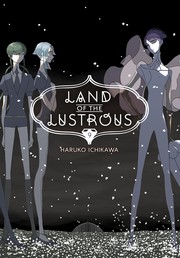
Sci-Fi / Action
Origin
Yu's review of Origin by Boichi — a robot built as a killing machine has been living as a human boy for years, hiding his true nature while protecting the family he has come to care for; when other robots of his kind begin appearing and killing, he must fight while continuing to conceal what he is; a sci-fi action manga about identity, purpose, and what makes life meaningful.

Sci-Fi
Kokkoku
Yu's review of Kokkoku — the Yukawa family inherits a stone that can stop time, placing them in 'Stasis' — a frozen moment where they can move while everything else is still; when criminals kidnap family members, they use Stasis to rescue them, only to discover that a cult has been living in Stasis for years, and that Stasis is not as empty as they thought.

Sci-Fi / Action
Battle Angel Alita
Yu's review of Battle Angel Alita (Gunnm) — a memoryless cyborg pulled from a junkyard fights through bounty hunting, Motorball, and a doomed first love in the brutal world beneath the sky city of Zalem.
Sci-Fi / Action
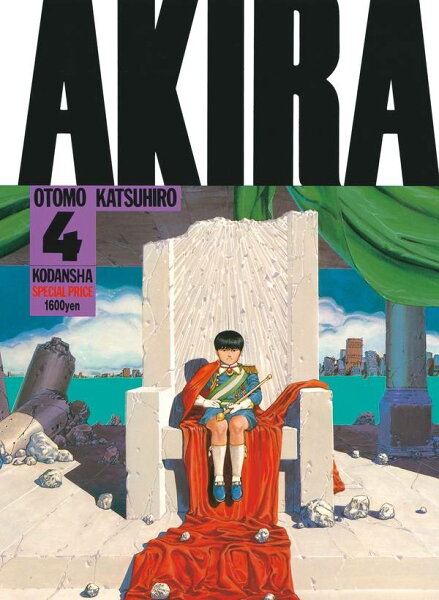
Akira
Yu's review of Akira — Katsuhiro Otomo's six-volume monster, serialized 1982–1990. Set in 2019 Neo-Tokyo, a teenage biker tries to save the best friend who suddenly has the power to end the world. The manga that dragged Japanese comics onto the world stage.
Sci-Fi / Action
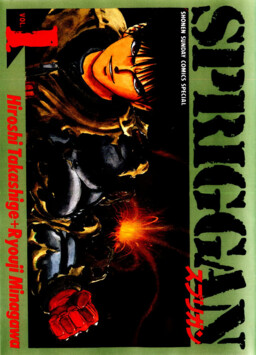
Spriggan
Yu's review of Spriggan — Yu Ominae is a Spriggan agent for ARCAM, a secret organization that locates ancient artifacts of catastrophic power and prevents governments and criminal organizations from weaponizing them; a 90s action sci-fi manga with excellent set-piece design and geopolitical scope.

Sci-Fi / Comedy
Full Metal Panic!
Yu's review of Full Metal Panic! — Sōsuke Sagara, a teenage military specialist from a private military organization, is assigned to protect high school girl Kaname Chidori who doesn't know why she needs protection; he attends her school undercover, treats every situation as a military operation, and creates chaos wherever he goes; military action comedy with genuine mecha sequences.
Written by
Yu
Manga Enthusiast from Japan
I grew up in Japan and manga literally saved me during a tough time in elementary school. My English isn't perfect, but my love for manga is real — and I want to share it with you.
Disclosure: This post contains affiliate links. As an Amazon Associate, I earn from qualifying purchases at no extra cost to you.