
Battle Angel Alita Review: A Cyborg Who Has to Fight Just to Find Out Who She Is
by Yukito Kishiro
Read the first volume. If it doesn't hook you, put it down. It'll hook you.
Buy Battle Angel Alita on Amazon →*Affiliate link — I earn a small commission at no extra cost to you.
I found Battle Angel Alita the way I found most things that mattered to me back then — alone, in a corner, hiding from a world that did not want me in it. I was the kid with no friends, and I read whatever I could get my hands on. Most of what I read at that age was loud, bright shonen, heroes who win because they believe hard enough. Alita was not that. Alita was a girl with no past, pulled out of a garbage heap, and her body remembered how to kill before her heart remembered anything at all.
What hit me was that she never gets to coast. Every single thing Alita learns about herself, she has to fight for — literally, physically, against people trying to take her apart. As a kid who felt invisible, the idea that you could be a nobody from the trash and still carve out a self by sheer will got into me and never left. This is the manga that taught me sci-fi could break your heart.
Quick Take
- A memoryless cyborg girl is rebuilt from scrap beneath the floating city of Zalem, and her body turns out to carry a lost combat art that her mind can't explain
- One of the foundational cyberpunk manga — Yukito Kishiro's action art and panel work still feel decades ahead of their time
- Nine volumes, complete, and rated M (Mature) for graphic cybernetic violence and body horror
Story Overview
The Scrapyard sits at the bottom of the world, under the floating city of Zalem. Everything Zalem doesn't want falls down to the Scrapyard as garbage, and everyone living in the dirt below spends their lives staring up at a city they will never be allowed to enter.
Daisuke Ido — a cybernetics doctor who also works as a bounty hunter — finds a cyborg head in the junk, still alive, still conscious. He rebuilds her a body, names her Alita (Gally in the original Japanese), and tries to give her something like a normal life. She remembers nothing. Then she watches a fight, and her body moves on its own: Panzer Kunst, a legendary cyborg martial art no one alive has seen. Her body knows what she doesn't.
From there the manga moves Alita through the Scrapyard's brutal economies. She becomes a Hunter-Warrior to chase bounties alongside Ido. She falls in love. She leaves bounty hunting for the lethal sport of Motorball, where cyborg racers tear each other apart on the track. Eventually she gets pulled into the politics between the surface and Zalem itself, and crosses paths with Desty Nova, a nanotech scientist whose curiosity is more dangerous than any weapon. The thread running under all of it is the same question: she keeps finding out who she was, and keeps having to decide who she is.
Characters
Alita (Gally) — The protagonist defined entirely by what she does, not what she remembers. From the first volume she's ferocious in combat and startlingly tender outside it, and the tension between those two things drives her whole journey. Across nine volumes she goes from a rebuilt scrap-girl to a Hunter-Warrior to a Motorball champion to an agent caught in Zalem's schemes — and at every stage she chooses the version of herself she wants to be over the one her past hands her.
Daisuke Ido — The doctor who rebuilds her and becomes a complicated father figure. He wants to protect Alita and keep her out of violence, which is exactly the thing she can't give him. The friction between his protectiveness and her need to fight is one of the manga's quietest, truest relationships.
Yugo — Alita's first love, and the source of the manga's most devastating early arc. He does odd maintenance jobs in the Scrapyard but secretly robs cyborgs of their spinal columns — the highest-priced part on the black market — because he's obsessed with buying his way up to Zalem. He's chasing a dream that's poisoning him, and he's too fixated on the sky to notice the girl right in front of him.
Desty Nova — The recurring antagonist who arrives later: a brilliant, smiling nanotechnology scientist who treats human life as an experiment. He's not a brute; he's worse, because he's curious. His reconstruction work even shapes the Motorball arc from behind the scenes.
Art Style
Kishiro's art is some of the finest action work manga has ever produced. He draws cybernetic bodies — whole, in motion, and torn into pieces — with real mechanical logic. You understand what every component is, how it connects, and what it means when it's gone. His fight sequences use unconventional, almost vertigo-inducing panel layouts that make speed feel physical on the page. And despite Alita's artificial body, her face carries an emotional range that's frankly astonishing.
What I Love About It
The Motorball arc is the thing I'd hand to anyone who thinks action manga can't have ideas. Motorball is a sport where cyborg athletes race a lethal track and try to carry the ball across the line while everyone else tries to dismantle them. Alita walks in and claws her way to the top — and the arc isn't just spectacle, it's about what it does to a person to be a body that exists to be watched and to win.
The center of it for me is Jashugan, the reigning champion. He's the one opponent Alita genuinely respects, because they're the same kind of creature — total devotion to the limit of the body. When they finally meet for the title, Jashugan flatlines mid-fight but reanimates through sheer will, defeats Alita outright, and only then does his reconstructed body give out and he dies. His last act is to tell her to aspire to the heights he couldn't reach. That's the move that floors me: the manga turns its biggest action climax into an elegy. Alita loses the title match — what she actually gets is grief and a charge to keep going. Effort doesn't simply equal victory here — sometimes it equals outliving the person who pushed you to be great.
Memorable Scene ⚠️ Spoiler Warning
The end of the Yugo arc is where this manga told me it would never protect me from consequences.
Yugo's whole life is the dream of Zalem. He believes Vector — a Scrapyard power broker — can get him up there if he brings him ten million chips, so he keeps stealing spinal columns to fund it. When it all collapses and he's hunted, Alita does everything she can to save him, to convince him there's a life worth living with her down in the dirt. And she almost gets through. They end up together on one of the cables that climb toward Zalem, and for a single moment it looks like he might choose her over the sky.
Then a security ring sweeps down the cable and cuts Yugo in two.
What wrecked me — then and now — is the bitter joke underneath it. Once the story actually shows what Zalem is, you realize Yugo died clawing toward a paradise that was never going to take him. His dream was a lie built into the architecture of the world, and it killed him on the doorstep of it. I was not ready for that as a kid, and it set the emotional stakes for everything that came after.
Pros & Cons
Pros
- Action sequences and art that still rank among manga's very best
- Alita is one of the great sci-fi protagonists, period
- World-building that rewards you for paying attention
- A complete nine-volume story with real emotional payoff
Cons
- The graphic cybernetic violence and body horror are significant
- A few mid-series arcs read like detours from the main thread
- The sequel Last Order takes the story in directions not every fan loves — but the original nine stands fully on its own
The dismemberment and gore are constant, not occasional. That's either the whole point of its world or a dealbreaker for you — depends on the reader.
Is Battle Angel Alita Worth Reading?
Yes — if you want cyberpunk with both ferocious action and a beating heart. It's nine volumes, it's complete, and it pays off. Just know going in that it's rated M (Mature): the violence is graphic and the body horror is real. If that's a wall for you, this isn't your book. If it isn't, this is one of the essential sci-fi manga.
What English-Speaking Fans Say
Battle Angel Alita has held a devoted Western following since its early-1990s English release, and the 2019 live-action film brought a fresh wave of readers to the manga. English-speaking fans consistently single out the action choreography, Alita's character, and the Scrapyard/Zalem world-building. The original nine volumes are widely treated as a complete, satisfying story, with Last Order and Mars Chronicle as continuations for readers who want more.
Similar Manga
| Title | Its Approach | How Battle Angel Alita Differs |
|---|---|---|
| Ghost in the Shell | Cerebral, dialogue-heavy cyberpunk built around questions of consciousness | Alita keeps the philosophy but channels it through visceral, body-on-the-line combat |
| Akira | Sprawling psychic-apocalypse spectacle with massive scale | Alita is tighter and more personal — one girl's identity against the world |
| Blame! (Tsutomu Nihei) | Silent, atmospheric post-human architecture and dread | Alita is far more character-driven and emotional, with a protagonist you bond with |
Reading Order / Where to Start
Start with the original nine volumes — that's the complete story. The sequel Last Order continues it afterward with a different narrative structure, and Mars Chronicle came later still. You don't need them to feel finished.
Kodansha USA's deluxe editions collect two volumes per book and are the format I'd recommend.
Official English Translation Status
Kodansha USA currently publishes the English editions; the older VIZ Media releases are out of print. The deluxe 2-in-1 editions are the best way to read it today, and the detailed art genuinely benefits from the larger trim size.
Where to Buy
Read the first volume. If it doesn't hook you, put it down. It'll hook you.
This post contains affiliate links. If you purchase through these links, I may earn a small commission at no extra cost to you. As an Amazon Associate, I earn from qualifying purchases.
*Affiliate link — I earn a small commission at no extra cost to you.
More Manga You Might Like
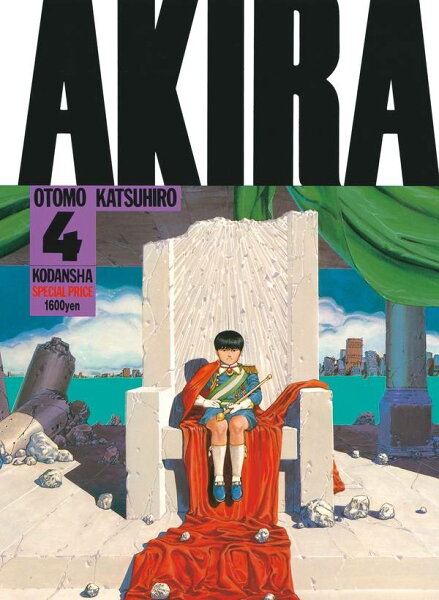
Sci-Fi / Action
Akira
Yu's review of Akira — Katsuhiro Otomo's six-volume monster, serialized 1982–1990. Set in 2019 Neo-Tokyo, a teenage biker tries to save the best friend who suddenly has the power to end the world. The manga that dragged Japanese comics onto the world stage.
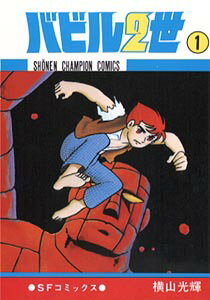
Sci-Fi / Action
Babel II
A schoolboy named Koichi inherits the legacy of an alien stranded on Earth 5,000 years ago — three superhuman servants and the Tower of Babel — and learns that the same servants will obey his enemy Yomi, a distant relative who wants the world.
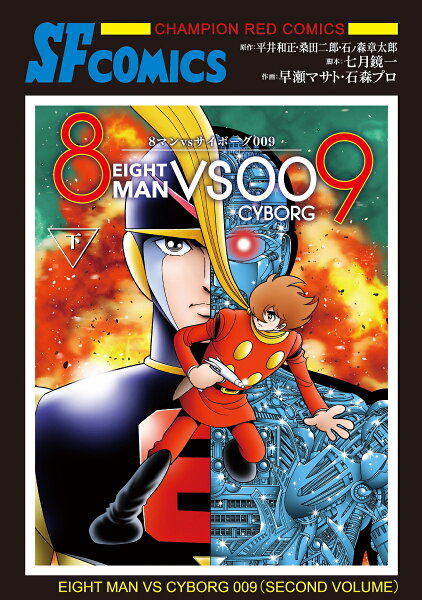
Sci-Fi / Action
8 Man
8 Man follows detective Hachiro Azuma, gunned down in the line of duty and reborn when his mind is poured into a super-robot body by Dr. Tani. Now the eighth detective of the police force, he fights crime at 3,000 km/h — and has to smoke special cooling cigarettes to keep his electronic brain from overheating.

Sci-Fi / Action
Genma Taisen
Genma Taisen is Shotaro Ishinomori's manga adaptation of Kazumasa Hirai's science fiction series — following a group of psychically gifted young people who must unite to face Genma, a cosmic consciousness that destroys civilizations across the universe, in a battle that is as much spiritual as physical.
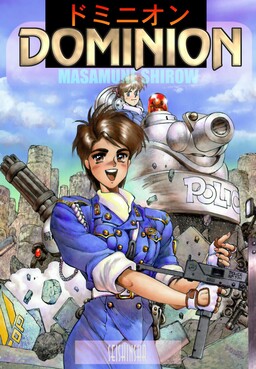
Sci-Fi
Dominion Tank Police
Yu's review of Dominion Tank Police — in a future city where crime requires a Tank Police division, officer Leona Ozaki is assigned to the unit and falls deeply in love with her miniature tank Bonaparte; Masamune Shirow's comedic sci-fi action, lighter than Ghost in the Shell but with the same worldbuilding attention.
Sci-Fi / Action
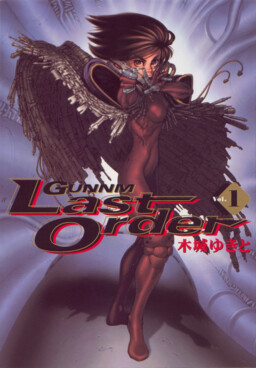
Battle Angel Alita: Last Order
Yu's review of Battle Angel Alita: Last Order — Yukito Kishiro's direct sequel to Battle Angel Alita. It reboots the original's ending, sends Alita into the Zenith of Things Tournament aboard the space station Ketheres, and explodes the cyberpunk world out to Mars, Venus, and Jupiter. A 19-volume tournament epic that is bigger, weirder, and more divisive than the original.
Written by
Yu
Manga Enthusiast from Japan
I grew up in Japan and manga literally saved me during a tough time in elementary school. My English isn't perfect, but my love for manga is real — and I want to share it with you.
Disclosure: This post contains affiliate links. As an Amazon Associate, I earn from qualifying purchases at no extra cost to you.