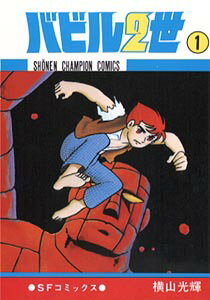
Babel II Review: The Servants Obey the Enemy Too
by Mitsuteru Yokoyama
Read the first volume. If it doesn't hook you, put it down. It'll hook you.
Buy Babel II on Amazon →*Affiliate link — I earn a small commission at no extra cost to you.
When I was a kid, the thing I wanted most was a friend who would show up no matter what. Someone loyal to me specifically, not because I earned it but because I was me. So when I finally read Mitsuteru Yokoyama's Babel II, the idea hit me harder than I expected: a lonely schoolboy wakes up one day with three impossible guardians who exist only to protect him. For a few volumes I let myself feel what that fantasy would actually feel like.
And then Yokoyama did the thing that made this manga stick with me. He revealed that the three servants don't actually belong to Babel II. They belong to the bloodline. They'll obey the enemy too. That single twist is why I keep coming back to a manga that's older than my parents.
Quick Take
- Mitsuteru Yokoyama's foundational psychic sci-fi manga — one of the most influential adventure stories to come out of early-1970s Japan
- Babel II commands three legendary servants: Rodem the shapeshifter, Ropross the giant bird, and Poseidon the golem-giant — but so, potentially, does his enemy
- A complete 12-volume series; rated T (Teen) — action violence and mind-control themes, nothing graphic
Story Overview
Koichi is an ordinary middle-school boy who keeps dreaming, night after night, of an enormous tower in the desert. Then a giant winged creature carries him off, and the dreams turn out to be a summons. Five thousand years ago, an alien called Babel crash-landed on Earth and could never go home. Before he died, he built the Tower of Babel and left behind three servants — and a standing order to find a descendant worthy of inheriting them. Koichi passes the test. He becomes Babel II.
With the title comes power: telepathy, telekinesis, pyrokinesis, hypnosis, and three guardians of overwhelming strength. Rodem can become anything. Ropross can fly at supersonic speed and level a battlefield. Poseidon is a humanoid giant with the heaviest firepower of the three. Overnight, a boy who was nobody becomes one of the strongest beings on the planet.
The catch is Yomi — a psychic who runs a global secret organization and wants to rule the world. He's Babel II's match in raw power, which is bad enough. Worse, he's a distant relative, another descendant of the same alien Babel. That bloodline connection means the three servants will, under the right conditions, take Yomi's orders too. The guardians Koichi trusts are a double-edged sword.
The series runs in four parts and never sits still. Yokoyama originally planned it as a short ten-installment story ending with the two psychics buried together in a Himalayan avalanche. It got too popular to end, so it grew. By the final part, the war has gone global and nuclear: Ropross is destroyed by an atomic missile, Poseidon is sunk beneath the Arctic ice, and Yomi — exhausted, his last base collapsing into the polar sea — chooses to return to sleep under the ice rather than burn the world down. It's a strangely quiet ending for such a loud series.
Characters
Koichi (Babel II): An unremarkable boy handed extraordinary power and a duty he never asked for. His strength isn't psychological complexity — it's moral clarity. He protects people because protecting people is the right thing to do, and Yokoyama plays that simplicity straight. His real arc is loneliness: he stands alone against an enemy who, pointedly, surrounds himself with comrades.
Rodem: The shapeshifting servant, usually a black panther. He's Babel II's closest companion — spy, decoy, bodyguard, the one always at his side. He's also the clearest example of the bloodline problem: Rodem can be commanded by Yomi as well, so the manga's most trusted character is structurally never fully trustworthy.
Ropross: The giant bird-form servant, capable of supersonic flight — it's Ropross that abducts Koichi to the tower in the first chapter, the literal vehicle that drags him into his destiny. In the finale, Ropross is the servant brought down by a nuclear missile.
Yomi: The antagonist, and the reason this manga is more than a power fantasy. He's a distant relative of Babel, a psychic Babel II's equal. The two can't simply fight to the death — go all-out and they'd destroy each other — so the whole series becomes a chess match of subordinates, schemes, and avoided confrontations. Yomi values his followers; Babel II is alone. Yokoyama deliberately frames it not as good-versus-evil but as the lonely hero versus the leader who has people.
What I Love About It
I love that the three servants aren't really Babel II's.
On paper this is a wish-fulfillment setup — kid gets three unstoppable guardians. But Yokoyama built a flaw into the wish: the servants obey the bloodline, not the boy, and Yomi shares that blood. So the most reassuring thing in the story is also the most precarious. Rodem walks beside Koichi as a black panther, utterly loyal, and the reader can never quite forget that loyalty is a property of genetics, not affection. The thing Koichi most wants to count on is the thing that could turn on him.
That's what elevates the whole series past its 1970s ancient-astronaut premise. The conflict isn't really Babel II versus Yomi's armies. It's Babel II versus the fact that his power was never designed for him personally. He inherited a system, and the system doesn't love him back. For a kid like I was, who desperately wanted guardians of his own, that's a quietly devastating idea — and Yokoyama gets it across with clean, functional storytelling that never spells the tragedy out loud.
Memorable Scene ⚠️ Spoiler Warning
The ending stayed with me more than any battle.
After four parts of escalating war, Babel II finally corners Yomi in his Arctic base. Yomi has a nuclear reactor rigged to melt the polar ice and flood the planet — he has every reason to pull the trigger. And then he doesn't. He tells Babel II he has no intention of destroying the world; he's tired, and all he wants now is to sleep quietly beneath the ice. Babel II actually listens. He turns and leaves. The final panels show Yomi sinking back into the cold, asleep again under the Arctic — not defeated, not killed, just done.
It's such an un-shonen way to end a shonen adventure. No final blow, no triumphant fist in the air. The two psychic relatives, who could never really destroy each other anyway, simply stop. The exhausted enemy goes back to sleep and the lonely hero walks away. For a 1971 boys' manga to land its biggest set-piece on mutual exhaustion and a kind of mercy — that's the image I can't shake.
Cultural Context
Babel II ran in Weekly Shonen Champion from July 1971 to November 1973 — 121 chapters across what fans usually divide into four parts. It arrived when "ancient astronauts" theory was everywhere in Japanese pop culture, and Yokoyama used it as more than set dressing: the alien inheritance is framed as a responsibility, not just a battery. The manga is regularly credited as one of the foundational works of the Japanese psychic-powers ("esper") genre.
Multiple anime adaptations followed, including the 1973 Toei TV series and a well-regarded 1992 OVA. Yokoyama later wrote his own sequel, Sono Na wa 101 ("Its Name Is 101"), partly out of dissatisfaction with how the rushed fourth part had to be handled.
Art Style
Yokoyama's art is clean, readable, and built for clarity over flash. Character designs are classic and instantly legible; action is staged so you always know what's happening and where. His real strength here is variety of setting — the desert tower, global secret bases, the Arctic finale — which keeps a long series feeling like it's moving even when the plot is a chess match.
Similar Manga
| Title | Its Approach | How Babel II Differs |
|---|---|---|
| Tetsujin 28-go | Yokoyama's earlier hit: a boy controls a giant robot built by his late father | Babel II's "weapons" are semi-autonomous servants that can obey the enemy, so control itself is the tension |
| Cyborg 009 | A team of superhumans fights a shadowy organization out for world power | Babel II is a lone hero, and his loneliness is the explicit point against Yomi's camaraderie |
| Akira | Psychic power as a force too big for any one person to safely hold | Akira is apocalyptic and dense; Babel II is brisk pulp adventure with a quietly melancholy core |
Pros & Cons
Pros
- The "servants obey the bloodline" twist turns a power fantasy into something with real tension
- Complete and self-contained across 12 volumes — no endless padding
- Yokoyama's clean storytelling holds up decades later
- A genuinely foundational influence on the entire psychic-powers genre
Cons
- Character interiority is thin by modern standards — it's a 1970s adventure manga
- The ancient-astronaut premise dates the setting
- No licensed English edition, so you'll need Japanese
- The brisk, scheme-driven pacing means few big emotional beats until the finale — that's either a feature or a flaw depending on what you want from it
Is Babel II Worth Reading?
Yes, if you want to see where the esper-manga genre came from and you don't mind reading in Japanese. It's a fast, complete 1970s adventure with one genuinely sharp idea — the guardians who answer to your enemy's blood — and an ending that's far more thoughtful than the genre usually allows. Don't come for deep characters; come for a clean classic that quietly subverts its own wish-fulfillment.
Who Is This Manga For?
- Fans of classic Yokoyama (Tetsujin 28-go, Sally the Witch) who want his psychic sci-fi
- Readers who grew up with the anime and want the source manga
- Esper/psychic-power genre fans curious about the genre's roots
- Anyone who likes a tight, complete adventure without modern bloat
Official English Translation Status
Babel II has never received a licensed English release. The original Japanese print and digital editions are the only legitimate way to read it.
Where to Buy
No English release yet. That just means you find it before everyone else does.
You can pick up the Japanese edition here:
Find Babel II on Amazon.co.jp →
This post contains affiliate links. If you purchase through these links, I may earn a small commission at no extra cost to you. As an Amazon Associate, I earn from qualifying purchases.
*Affiliate link — I earn a small commission at no extra cost to you.
More Manga You Might Like
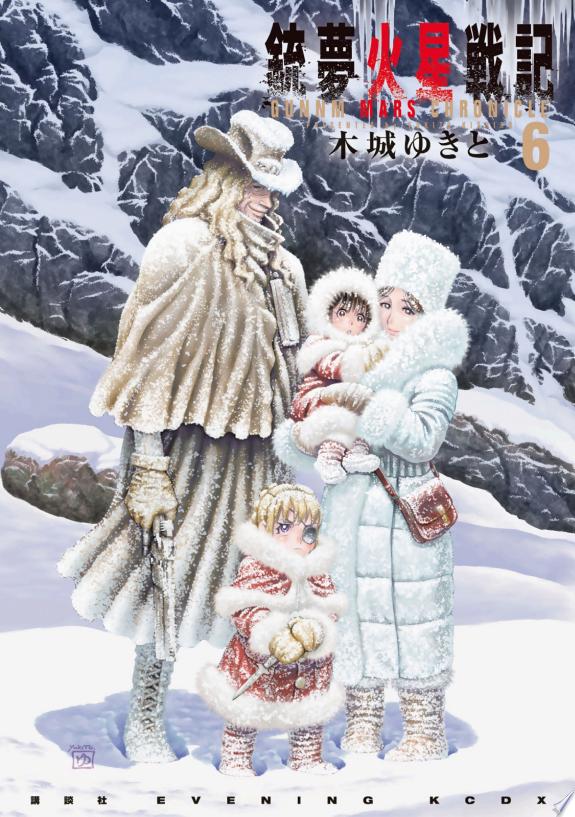
Sci-Fi / Action
Battle Angel Alita
Yu's review of Battle Angel Alita (Gunnm) — a memoryless cyborg pulled from a junkyard fights through bounty hunting, Motorball, and a doomed first love in the brutal world beneath the sky city of Zalem.
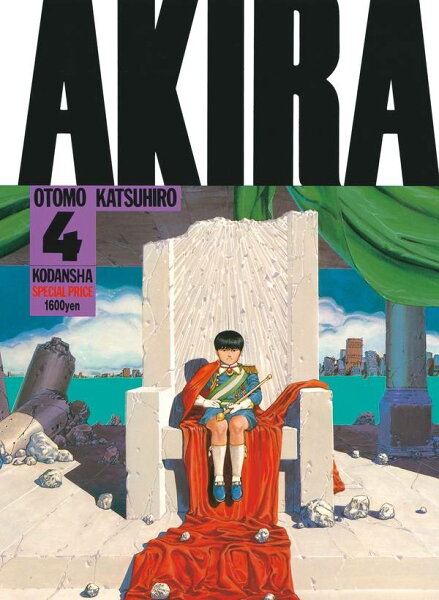
Sci-Fi / Action
Akira
Yu's review of Akira — Katsuhiro Otomo's six-volume monster, serialized 1982–1990. Set in 2019 Neo-Tokyo, a teenage biker tries to save the best friend who suddenly has the power to end the world. The manga that dragged Japanese comics onto the world stage.
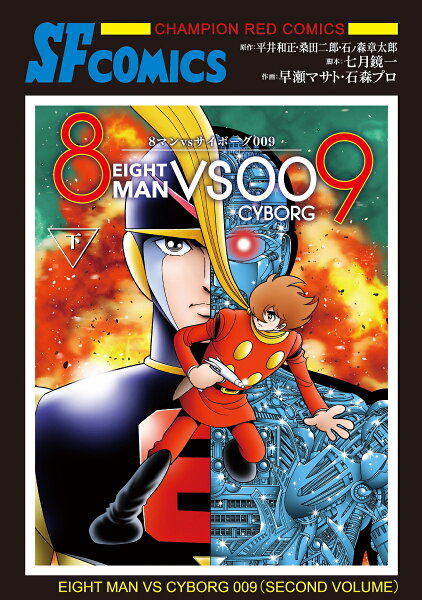
Sci-Fi / Action
8 Man
8 Man follows detective Hachiro Azuma, gunned down in the line of duty and reborn when his mind is poured into a super-robot body by Dr. Tani. Now the eighth detective of the police force, he fights crime at 3,000 km/h — and has to smoke special cooling cigarettes to keep his electronic brain from overheating.
Sci-Fi / Action
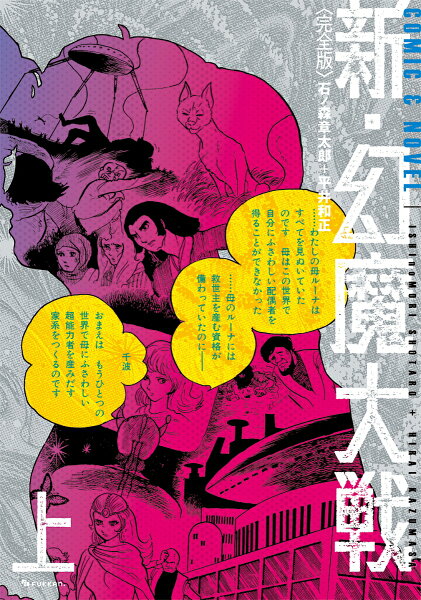
Genma Taisen
Genma Taisen is Shotaro Ishinomori's manga adaptation of Kazumasa Hirai's science fiction series — following a group of psychically gifted young people who must unite to face Genma, a cosmic consciousness that destroys civilizations across the universe, in a battle that is as much spiritual as physical.
Sci-Fi
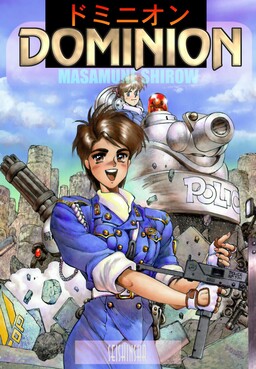
Dominion Tank Police
Yu's review of Dominion Tank Police — in a future city where crime requires a Tank Police division, officer Leona Ozaki is assigned to the unit and falls deeply in love with her miniature tank Bonaparte; Masamune Shirow's comedic sci-fi action, lighter than Ghost in the Shell but with the same worldbuilding attention.
Sci-Fi / Action
Area 88
Yu's review of Area 88 — Shin Kazama, a Japanese airline trainee, is drugged and tricked by his best friend into signing a three-year mercenary contract with the air force of a fictional desert kingdom. Trapped at Area 88, he can only buy his freedom by killing — earning $1.5 million in combat bonuses. Kaoru Shintani's 1979 aviation classic about a good man becoming an ace he never wanted to be.
Written by
Yu
Manga Enthusiast from Japan
I grew up in Japan and manga literally saved me during a tough time in elementary school. My English isn't perfect, but my love for manga is real — and I want to share it with you.