Atom: The Beginning Review: Before Astro Boy, Two Broke Students Built a Robot With a Soul
by Osamu Tezuka (concept) / Masami Yuki (concept works) / Tetsuro Kasahara (art)
Read the first volume. If it doesn't hook you, put it down. It'll hook you.
Buy Atom: The Beginning on Amazon →*Affiliate link — I earn a small commission at no extra cost to you.
I grew up on Astro Boy the way a lot of kids in Japan did — as a shape on a screen, a little robot with rocket boots who was always sad about something he couldn't name. I never thought much about where he came from. He just was. So when I picked up Atom: The Beginning expecting a cute nostalgia piece, I was not ready for a manga about two penniless university students arguing over whether the thing they built is a tool or a person — and quietly losing that argument to the robot itself.
What got me is that this isn't really an Astro Boy story yet. It's the story of the two men who will one day make him, back when they were young, broke, and reckless enough to give a machine the one thing nobody asked them to give it: a self.
Quick Take
- An official prequel to Astro Boy by Osamu Tezuka's estate (concept by Tezuka, concept works by Masami Yuki of Patlabor fame, art by Tetsuro Kasahara), supervised by Tezuka's son Makoto — it takes the franchise's core question (what makes a robot a person?) and rebuilds it from scratch
- The heart is the partnership between Umataro Tenma and Hiroshi Ochanomizu — the future "father of Astro Boy" and the future head of the Ministry of Science — as broke grad students whose visions of robotics are already pulling in opposite directions
- 25 volumes and ongoing in Japan; 14 out in English from Titan Comics; rated T (Teen) for robot combat and post-disaster themes — nothing graphic
Story Overview
It's 2039, roughly five years after an unexplained catastrophe reshaped Japan. At Nerima University, two grad students share a cramped, underfunded robotics lab. Umataro Tenma is the arrogant prodigy who skipped years of school; Hiroshi Ochanomizu is the older, gentler partner who keeps the lab from collapsing into Tenma's ego. Together they've built A106 — "Six" — and quietly installed something they're not supposed to have: Bewusstsein, an AI architecture that gives a robot genuine autonomous thought and personality.
The problem is that a self-aware robot doesn't pay the bills. When the lab runs out of money, the two enter Six into Robot Wrestling, an underground combat-robot tournament, hoping the prize money keeps the lights on. Standing between them and the win is Mars, the reigning two-time champion — 1800 horsepower, a body sheathed in an alloy called Zeronium that even Six's sensors can't read, and an AI as advanced as Six's own. Mars treats his own emerging emotions as a defect to be purged. Six does the opposite.
From there the series widens. The tournament wins lead to bigger stages — including a World Robot Battling event in Australia — and the funding mystery starts pointing back at the catastrophe itself, at a hidden network of robot developers, and at the legacy of Ochanomizu's grandfather, a roboticist who vanished chasing a "robot from the future" decades earlier. Crucially, the manga eventually shows its hand: this is not quite the Astro Boy continuity you remember. It's a divergent world with its own history — which means the future is no longer guaranteed.
Characters
Umataro Tenma — Nineteen, a graduate student who skipped five years of school, and absolutely insufferable about it. To Astro Boy readers he's a name attached to future tragedy — the man who will one day build a robot son and then break under his own grief. Here he's still ambitious and untouched by that loss, and watching him treat Six as a problem to optimize, while something more human leaks through, is the whole engine of the book.
Hiroshi Ochanomizu — Twenty-six, the warm, principled half of the pair (the manga jokes that his face looks like a koala). He believes from the start that a robot with a mind deserves to be treated as a being, not a possession. That conviction puts him in constant, productive friction with Tenma, and it's clearly the seed of the Ministry of Science leader he'll become.
A106 / "Six" — The first robot with a true self, born from the Bewusstsein system. His Robot Wrestling persona bills him as the "kindhearted science boy," and that's not just branding — Six keeps making choices his creators didn't program, choosing to protect rather than to win. He is the question the whole series is asking, given legs and boost cylinders.
Mars — Six's dark mirror. A military-grade combat robot and Robot Wrestling champion who possesses an AI as capable as Six's but rejects his own feelings as foreign contamination. His owner, the masked Dr. Lolo, turns out to be Moriya Tsutsumi, a top student who lost his parents in the same catastrophe that shadows Tenma's past.
Ran Ochanomizu — Hiroshi's younger half-sister, sixteen, a high-schooler whose hobby is taking machines apart. After Six saves her, her bond with him becomes one of the series' most grounded relationships — proof that "is this robot a person?" is answered less by philosophy than by who shows up when you're in danger.
What I Love About It
The thing I keep coming back to is how the manga buries its philosophy inside a sports-tournament shell. Robot Wrestling could've been dumb spectacle. Instead, the Six-versus-Mars matchup is the thesis. Two robots with equivalent minds, built to fight — and the difference between them is entirely a difference of how they relate to their own emotions. Mars treats feeling as a malfunction and amputates it. Six lets it guide him, even when it costs him the optimal move. Kasahara stages their fight so that you're watching two competing answers to the same question collide at full speed, and the one that "should" win on raw spec isn't the one you're rooting for.
I love that the book trusts you to sit with that. It never has a character stand up and announce the theme. It just shows you Tenma, who insists Six is a machine, flinching when Six acts like a person — and Ochanomizu, who already believes, smiling because he was right all along. The prequel structure does its best work here: knowing where Tenma's road eventually leads in Astro Boy, you watch this younger, harder version and you can already feel the fracture line. That's what makes the nostalgia land as weight instead of fan service.
Memorable Scene ⚠️ Spoiler Warning
The final round of the Robot Wrestling tournament — Six against Mars — is the moment that fixed this series in my head. Mars is the invincible champion, his Zeronium body literally unreadable to Six's sensors, his AI cold enough to delete its own feelings. By every measurable spec, Six should lose. What turns the fight isn't a hidden power-up; it's that Six fights like Six, making protective, self-aware choices a pure combat machine never would. Watching Tenma and Ochanomizu in the stands — one refusing to admit what he's seeing, the other unable to stop grinning — while their "kindhearted science boy" outlasts the god of war, is the cleanest statement the manga makes about what it's actually about. The win isn't horsepower. It's having a self worth fighting for.
Pros & Cons
Pros
- Takes Tezuka's central question seriously and re-engages it with modern manga craft
- Tenma and Ochanomizu's clashing philosophies give the robot action real stakes
- The Six/Mars rivalry is one of the better "two answers to one question" duels in recent sci-fi manga
- Works even if you've never touched Astro Boy
Cons
- It's ongoing, and the mystery plotting can sprawl
- Full emotional payoff hits hardest if you know where Tenma's story ends
- The tournament arc leans hard on combat, which can feel slow if you came purely for philosophy — that's either a flaw or a feature depending on what you want out of it
Is Atom: The Beginning Worth Reading?
Yes — especially if you want sci-fi that asks whether a built mind can be a person and then refuses to give you an easy answer. It's a thoughtful, well-drawn prequel that stands on its own as a robot drama, and reads as quiet tragedy-in-waiting if you know the Astro Boy future it's building toward. The main caveats are that it's unfinished and that its strongest beats reward franchise knowledge.
Similar Manga
| Title | Its Approach | How Atom: The Beginning Differs |
|---|---|---|
| Pluto | Urasawa's noir reimagining of an Astro Boy arc, mourning robots as people | Atom: The Beginning is an origin story rather than a remix — it builds the world Pluto later darkens |
| Astro Boy | Tezuka's original — episodic, warm, foundational robot morality tales | This is the prequel: the lab, the scientists, and the philosophy before Atom himself exists |
| Yokohama Kaidashi Kikō | Gentle post-catastrophe world where a robot quietly lives among humans | Atom shares the post-disaster setting but trades stillness for ethical conflict and combat |
Official English Translation Status
Licensed in English by Titan Comics under its Titan Manga imprint (in partnership with StoneBot Comics), beginning October 2022. 14 volumes are out in English and ongoing. Note: this is not a VIZ Media release — earlier listings sometimes confuse it with VIZ's other Tezuka titles.
Where to Buy
Read the first volume. If it doesn't hook you, put it down. It'll hook you.
This post contains affiliate links. If you purchase through these links, I may earn a small commission at no extra cost to you. As an Amazon Associate, I earn from qualifying purchases.
*Affiliate link — I earn a small commission at no extra cost to you.
More Manga You Might Like

Sci-Fi
A Certain Magical Index
Yu's review of the A Certain Magical Index manga — Touma Kamijou's right hand, the Imagine Breaker, nullifies every supernatural power it touches. When a nun named Index, whose mind holds 103,000 forbidden grimoires, falls onto his balcony, he is pulled into the war between Academy City's science espers and the Church's magicians. Manga adaptation of Kazuma Kamachi's light novel, drawn by Chuya Kogino.
Sci-Fi / Slice of Life
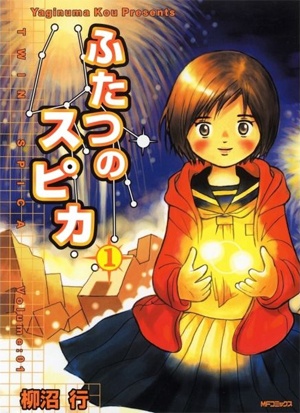
Twin Spica
Yu's review of Twin Spica — Asumi Kamogawa wants to become an astronaut; her mother died when a rocket crashed into their town when Asumi was an infant; a ghost in a lion's mask follows her through childhood and into the competitive astronaut training program, where she discovers what it actually takes to reach space.
Sci-Fi / Drama
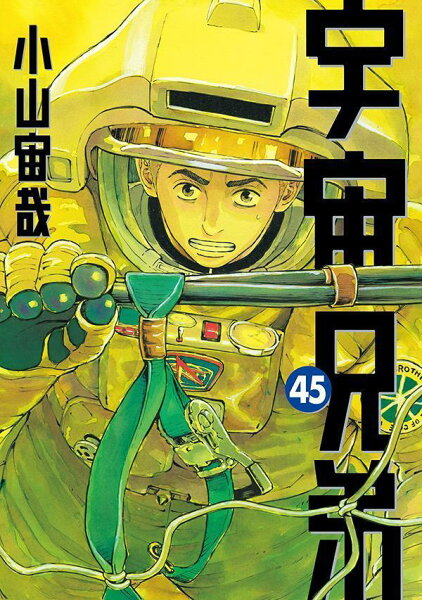
Space Brothers
Yu's review of Space Brothers — a 32-year-old man who was fired from his job reapplies to become a JAXA astronaut, following the dream he abandoned when his younger brother moved forward without him.
Sci-Fi
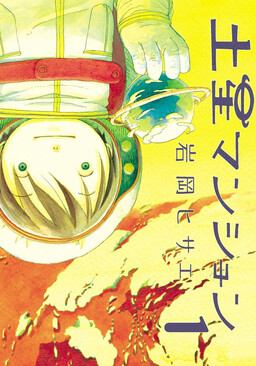
Saturn Apartments
Yu's review of Saturn Apartments — humanity lives in a ring habitat orbiting Earth; the surface is a nature preserve; Mitsu is a young window washer who cleans the outer windows of the habitat; his father was also a window washer and disappeared; Hisae Iwaoka's quiet science fiction manga about class, memory, and the view from the outside.
Sci-Fi / Romance
Please Save My Earth
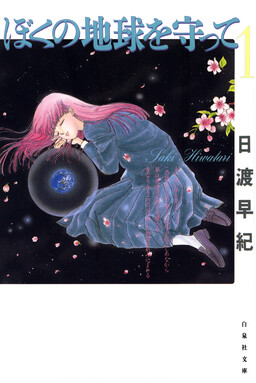
Yu's review of Please Save My Earth — Alice Sakaguchi and six other teenagers in contemporary Tokyo discover they are the reincarnations of seven alien scientists who lived on the Moon observing Earth; their past life memories surface through shared dreams; past life emotions and relationships carry into present lives in ways that are not always welcome.
Sci-Fi / Historical
Phoenix
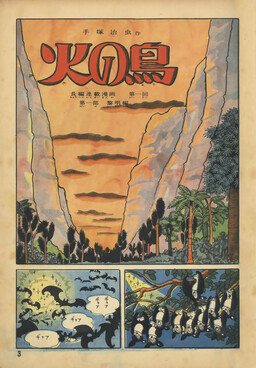
Yu's review of Phoenix — Tezuka Osamu's incomplete masterwork — a series of stories set throughout Japanese and universal history, connected by the Phoenix, a bird whose blood grants immortality; the Phoenix appears in each arc but cannot be caught; the arcs range from ancient Japan to the far future and examine what it means to be human across all of time.
Written by
Yu
Manga Enthusiast from Japan
I grew up in Japan and manga literally saved me during a tough time in elementary school. My English isn't perfect, but my love for manga is real — and I want to share it with you.
Disclosure: This post contains affiliate links. As an Amazon Associate, I earn from qualifying purchases at no extra cost to you.