
Astro Boy Review: The Robot Child Who Keeps Choosing the People Who Threw Him Away
by Osamu Tezuka
Read the first volume. If it doesn't hook you, put it down. It'll hook you.
Buy Astro Boy on Amazon →*Affiliate link — I earn a small commission at no extra cost to you.
When I was small and the other kids had decided I wasn't worth talking to, I used to think a lot about why people throw things away. Not objects — people. The way a group can just decide you're not part of it anymore, and there's nothing you did and nothing you can do. I didn't have the words for it then. I just felt it.
I came to Astro Boy late, honestly. I knew the face — everyone in Japan knows that face — but I'd filed it away as a kids' thing, a cartoon from before my parents were born. Then I actually read Tezuka's manga, the real one, and I found the saddest idea I've ever met in a children's comic: a robot built to replace a dead boy, and then thrown away a second time because he couldn't grow up. Astro is a child who was rejected by the one person who made him. And he spends the rest of the series protecting the same humans who treat his kind as garbage. I understood him immediately.
Quick Take
- Osamu Tezuka's foundational manga, serialized in Shōnen magazine from 1952 to 1968 — this is the origin of much of the visual and emotional language manga and anime use to this day
- The robot-as-outsider becomes a quietly devastating metaphor for rejection, prejudice, and the loneliness of being exceptional in every way except the one that matters to you
- Rated All Ages — built for children, but the grief at its center reads completely differently when you're an adult
Story Overview
Dr. Tenma's young son Tobio dies in a car accident. Wrecked by grief, Tenma — a brilliant scientist at the Ministry of Science — builds a robot in Tobio's image, trying to bring the boy back. For a while he loves it. But the robot can't grow, can't age, can't become the son he lost, and Tenma turns on it. He sells the robot child to a circus.
The robot is rescued from that circus by Professor Ochanomizu, the kindly new head of the Ministry of Science, who renames him Astro (Atom / 鉄腕アトム) and raises him with dignity. Ochanomizu even builds Astro a robot family — parents and a younger sister, Uran. From there the manga runs as episodic adventures across a world where robots do humanity's labor but are treated as second-class, denied rights, and feared. Astro is stronger than any human alive — Tezuka gives him seven powers, including 100,000-horsepower strength, jet flight, and a sense that lets him tell good people from bad — and yet what defines him isn't power. It's that he keeps choosing the human world that keeps pushing his kind to the margins.
Characters
Astro (Atom) — A robot built to be a dead boy, abandoned, then given a second life. He understands exactly what humans are capable of — the cruelty, the prejudice, the way they discarded him — and he chooses to protect them anyway. That choice, made over and over by a child who has every reason to be bitter, is the moral spine of the whole series.
Dr. Tenma — Astro's creator. Not a simple villain. A grieving father who tried to engineer his way out of loss and couldn't forgive his creation for not being his son. Tezuka never lets Tenma off the hook and never reduces him to a monster either — he's a man broken by grief who broke a child in turn.
Professor Ochanomizu — The scientist who treats Astro as a person worthy of love rather than a machine worthy of use. He's the human counterweight to Tenma: the proof that the same species capable of throwing Astro away is also capable of raising him.
Uran — Astro's younger robot sister. Reckless, brave, and a scene-stealer. In "The Greatest Robot on Earth," it's Uran — home alone — who first answers Pluto's challenge and even disguises herself as Astro, which tells you everything about her.
What I Love About It
The story everyone should read is "The Greatest Robot on Earth" (地上最大のロボット, 1964) — the arc Naoki Urasawa later expanded into Pluto. A deposed ruler builds a robot named Pluto and sends him to destroy the seven strongest robots in the world, one by one, to prove Pluto is the greatest. And here's the thing Tezuka does that floors me: Pluto isn't evil. He's just following his programming. The robots he hunts aren't soldiers — Mont Blanc is a gentle Swiss mountain guide robot; North No. 2 is a butler. Tezuka makes you grieve robots you met one chapter ago.
What I love is that strength is never the answer. Astro convinces himself he needs to be upgraded to a million horsepower to beat Pluto, and the story patiently dismantles that idea. The climax isn't about Astro hitting harder. It's that Astro had once saved Pluto's life, and Pluto can't bring himself to destroy the one being who showed him kindness — so he calls their fight a draw and lets Astro go home. In a comic built for kids in 1964, Tezuka argues that mercy beats power. I didn't expect a robot war story to leave me thinking about that for days.
Memorable Scene ⚠️ Spoiler Warning
The image that stays with me is the slow, sad procession of "The Greatest Robot on Earth" — the way each of the seven robots is introduced as a full character with a life, a job, a kindness, right before Pluto reaches them. Mont Blanc loved the forest. North No. 2 was a servant who'd hoped to be more. By the time Pluto turns on Astro, you don't want anyone else to be destroyed — robot or otherwise.
And the resolution wrecks me precisely because it isn't a victory. Pluto, the unstoppable killing machine, remembers that Astro saved him, and chooses not to finish him. He withdraws and the match is declared a draw. There's no triumphant punch, no hero standing over a fallen enemy. Just one discarded machine deciding that the being who treated him with decency doesn't deserve to die. Tezuka understood, decades before the medium grew up, that the most powerful thing you can show a child isn't winning. It's refusing to destroy.
Pros & Cons
Pros
- The foundational manga — reading it genuinely explains where modern manga and anime came from
- The emotional and moral depth far exceeds what "1950s children's comic" prepares you for
- "The Greatest Robot on Earth" alone is worth the entry price, especially if you've read Pluto
- Complete and self-contained at 23 volumes
Cons
- It's episodic — the quality and tone swing from chapter to chapter
- Some early-Cold-War cultural attitudes need historical framing
- The Dark Horse edition flips the art left-to-right, which purists may dislike
The episodic, old-fashioned rhythm is either part of the charm or a barrier — that depends entirely on you.
Is Astro Boy Worth Reading?
Yes — both as the historical root of the entire medium and as a genuinely moving story in its own right. If you can meet a 1950s children's comic on its own terms, you'll find a robot rights allegory and a study of grief and rejection that's more sophisticated than its era suggests. Start for the history; stay for how much it makes you feel.
Similar Manga
| Title | Its Approach | How Astro Boy Differs |
|---|---|---|
| Pluto | Urasawa's noir reimagining of one Astro Boy arc, told from a detective's view | Tezuka's original is brighter, episodic, and child-facing — the seed Pluto grew from |
| Black Jack | Tezuka's other masterwork; an unlicensed surgeon and medical ethics | Astro Boy trades the scalpel for the robot-as-outsider, but shares Tezuka's humanism |
| Mobile Suit Gundam | Robots as the machinery of war and politics | Astro Boy makes the robot itself the moral subject, not the weapon |
Official English Translation Status
Dark Horse Comics published the complete series in English (beginning 2002), all 23 volumes, in omnibus-style paperbacks. The art is flipped to left-to-right. It's complete and in print — the definitive English way to read it.
Where to Buy
Read the first volume. If it doesn't hook you, put it down. It'll hook you.
This post contains affiliate links. If you purchase through these links, I may earn a small commission at no extra cost to you. As an Amazon Associate, I earn from qualifying purchases.
*Affiliate link — I earn a small commission at no extra cost to you.
More Manga You Might Like
Sci-Fi
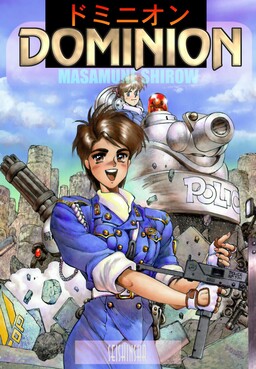
Dominion Tank Police
Yu's review of Dominion Tank Police — in a future city where crime requires a Tank Police division, officer Leona Ozaki is assigned to the unit and falls deeply in love with her miniature tank Bonaparte; Masamune Shirow's comedic sci-fi action, lighter than Ghost in the Shell but with the same worldbuilding attention.
Sci-Fi / Drama
Galaxy Express 999
Galaxy Express 999 follows Tetsuro Hoshino, a young boy who boards the legendary space train 999 toward a planet where he can receive a free mechanical body — accompanied by the mysterious Maetel — and encounters, on each planet the train stops at, a different meditation on what it means to be human and whether eternity is worth what it costs.

Sci-Fi / Drama
Hyakuoku no Hiru to Senoku no Yoru
Hyakuoku no Hiru to Senoku no Yoru is Moto Hagio's manga adaptation of Ryu Mitsuse's celebrated science fiction novel — following the collapse of civilizations across billions of years, centered on figures from different historical periods who are drawn toward a single question: what is the nature of creation, and who is responsible for it?
Sci-Fi
Gin no Sankaku
Gin no Sankaku follows characters trapped across multiple timelines by a silver triangle that connects them — a complex, demanding sci-fi work by Moto Hagio that uses time loop mechanics to explore the weight of memory and the impossible arithmetic of rescue and loss.
Sci-Fi
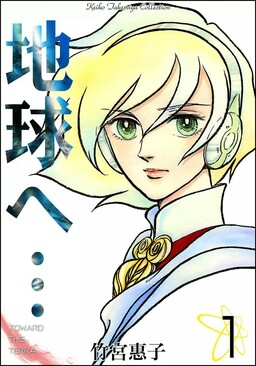
Toward the Terra
A review of Keiko Takemiya's Toward the Terra (地球へ…) — 3 volumes in Monthly Manga Shōnen from 1977. A landmark of 1970s science fiction manga about psychic humans (Mu) persecuted by an AI-controlled society on their long journey back to a forbidden Earth. Vertical's English edition is complete.
Sci-Fi / Political
Sanctuary
Yu's review of Sanctuary — two survivors of the Cambodian killing fields make a pact to change Japan from the inside: one through legitimate politics, one through the yakuza; a politically serious manga by the creators of Crying Freeman and Mai the Psychic Girl about power, ambition, and what it costs to change a corrupt system.
Written by
Yu
Manga Enthusiast from Japan
I grew up in Japan and manga literally saved me during a tough time in elementary school. My English isn't perfect, but my love for manga is real — and I want to share it with you.
Disclosure: This post contains affiliate links. As an Amazon Associate, I earn from qualifying purchases at no extra cost to you.