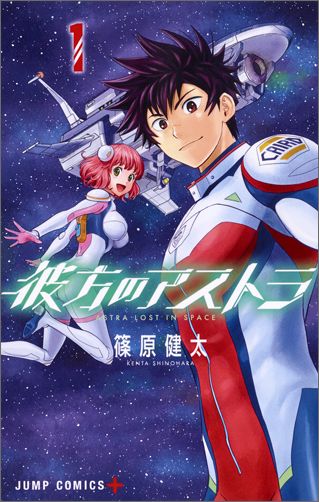
Astra: Lost in Space Review: A Survival Story That Was Secretly a Murder Mystery the Whole Time
by Kenta Shinohara
Read the first volume. If it doesn't hook you, put it down. It'll hook you.
Buy Astra: Lost in Space on Amazon →*Affiliate link — I earn a small commission at no extra cost to you.
I have a bad habit with manga that gets recommended to me as "you have to read it to understand." I assume it's hype. I put it off. Astra: Lost in Space sat on my list for almost a year because the pitch sounded like every other sci-fi survival story — kids stranded in space, hop home one planet at a time. I thought I knew exactly what it was.
Then I read all five volumes in a single night, and around the halfway point I had to put the book down and just sit there. Because I'd been reading a survival adventure, and it had quietly turned into something else while I wasn't paying attention — a mystery about why nine children were sent into the void to die, and which of the nine of them did it. I had not seen it coming, and worse, when I flipped back, the answer had been sitting in plain sight the entire time.
This is the manga I now hand to people who say they "don't read manga." Five volumes. One sitting. A complete story that earns its ending. Let me tell you why it works.
Quick Take
- A survival-sci-fi premise that's secretly a tightly-plotted mystery thriller, told completely in just 5 volumes with no filler
- Kenta Shinohara (of Sket Dance) planned this from chapter one — the foreshadowing only becomes visible on a reread, and it's everywhere
- Age rating: T (Teen) — danger, a tense betrayal arc, and heavy themes of parental abandonment, but nothing graphic
Who Is This Manga For?
- Readers who want a complete sci-fi adventure with a real beginning, middle, and end — no open-ended Jump grind
- Mystery fans who like a thriller buried inside a different genre
- Anyone who wants a manga they can finish in a day and feel like they read a whole novel
- People who say they don't "get" manga and need the perfect on-ramp
Story Overview
In the year 2063, nine kids ship out for a five-day "Planet Camp" on Planet McPa. Eight are teenagers from the same school; one is a little girl tagging along with her older sister. They've barely arrived when a glowing sphere of light materializes, swallows them one by one — the engineer Luca gets pulled in first — and spits them out 5,012 light-years from home, drifting in open space with damaged suits.
That's chapter one. The next beat is the one that sold me on Kanata: Aries is flung off alone, her thrusters and comms dead, and he clips a cable to his suit and jumps into the void after her. He runs out of cable before he reaches her — so he unclips it, grabs her, and hauls them both back to the line's end, and the others form a human chain to reel them in. That's the whole series in one scene: reckless, total commitment, and a crew that catches each other.
They find an abandoned, drifting ship, name it the Astra, and realize they can island-hop home — landing on alien planets to scavenge food, water, and fuel, surviving the local ecosystems, and jumping again. Months of travel ahead.
Then comes the turn. That sphere of light wasn't a freak accident. It was deliberately sent. Someone wanted these nine people erased — and the only people who knew the camp's route well enough to do it are on the ship. The survival question ("can we get home?") suddenly has a second question stacked underneath it: which one of us is the traitor, and why does someone want us dead?
I'll stop before the answers. But the ship's name is a clue, the kids' shared backgrounds are a clue, and a frozen astronaut named Polina they pull out of cryosleep blows a hole in everything they thought they knew about what year it even is.
Characters
Kanata Hoshijima — Loud, athletic, self-appoints himself captain in the first chapter and means it. His defining trait is that he commits all the way before he's thought it through, which is both the comic relief and, repeatedly, the thing that keeps everyone alive. The cable jump is him in miniature. His arc is earning the captaincy he claimed on day one.
Aries Spring — The cheerful transfer student with an eidetic (photographic) memory. That memory looks like a fun quirk early on — and then becomes the single most important tool the crew has when they need to reconstruct exactly who did what in the chaos of the ejection. She and Kanata fall for each other across the journey; by the end they're engaged. Her identity is also the hinge the entire mystery turns on.
Charce Lacroix — Botanist, first mate, gentle and bookish, the one tending the ship's plants. He carries the most devastating arc in the book: a clone raised as an empty vessel and given a purpose he never chose. Watching him move from that imposed mission toward genuinely caring about these people is the emotional spine of volume five.
Ulgar Zweig — The prickly, antisocial intelligence specialist, walled off because he's chasing the truth about his older brother, a journalist who died for digging too deep. His suspicion of everyone makes him the crew's de facto investigator.
The rest of the nine — Quitterie (the medic who clashes with Kanata over his fitness to lead), her little sister Funicia, the disowned engineer Luca, the spotlight-shy singer Yun-Hua, and the licensed pilot Zack. Shinohara's real achievement is that the mystery needs you to suspect every one of them while the story patiently makes each of them a person you don't want to suspect.
Art Style
Shinohara's linework is clean and hugely expressive — perfect for an ensemble cast where you need to track nine faces without ever getting lost. The alien planets are the visual showcase: each world the Astra visits has its own ecology, hazards, and silhouette, so the survival episodes never blur together. And when the script needs awe — the scale of open space, the moment the sphere first appears — the panels deliver it.
What I Love About It
The plotting. I keep coming back to this because it's genuinely rare. Astra is a five-volume manga that sets up a twist requiring all five volumes to land, and then lands it. The betrayal reveal in volume five recontextualizes everything: not just who sabotaged the ship, but why nine specific kids were the ones sent to die, and what their parents actually wanted from them. It's bleak in a way the sunny adventure tone never prepared me for, and it's airtight.
What makes it sing is that the clues were never hidden — they were disguised as character beats. Aries's memory, set up as a cute trait, is the key that unlocks the traitor's identity. The crew's oddly similar family situations, played for individual pathos early, snap into a single horrifying pattern late. When I reread it, the foreshadowing was so dense I couldn't believe I'd missed it. That's the highest compliment I can pay a mystery: it beat me fair, with all the evidence on the table. A reviewer at Hey Poor Player called out Shinohara's willingness to subvert how you'd expect all that optimism to resolve — that's exactly the gut-punch I mean.
Memorable Scene ⚠️ Spoiler Warning
The traitor reveal. To figure out who sabotaged the communications and tried to maroon them, Kanata leans on Aries's photographic memory — she can replay the exact moment of the ejection and remember who was standing where — and with Zack and Ulgar he sets a trap to force the saboteur into the open. It's Charce. The quiet, kind botanist.
And then the second reveal lands on top of the first, and it's so much worse: Charce isn't just a saboteur. He's a clone, grown as a living vessel for the mind of King Noah of Vixia, sent to make sure all nine of them — every one of them an illegal clone created for the same purpose — died before a new genetic-testing law could expose what their "parents" had done. He was supposed to kill them all.
He didn't. Because somewhere on the journey he realized Aries was the clone of Princess Seira, and he wanted to make sure she, at least, got home. The image that won't leave me is the aftermath: Charce, unable to live with what he was made for, trying to take his own life — and Kanata throwing himself in the way and losing an arm to stop him. The captain who jumped into the void for a stranger in chapter one does it again for the boy who was sent to murder him. That's the whole book.
Pros & Cons
Pros
- Complete in 5 volumes — one of the most efficient, satisfying full stories in print
- The survival and mystery layers reinforce each other instead of competing
- A twist that's genuinely surprising and fully fair on a reread
- Charce's arc is a real emotional payoff, not just a plot mechanic
Cons
- Volume five does a lot of exposition fast; some readers feel the ending wraps up a touch too neatly
- Planet Astra and the kids' confrontation with their "originals" get less room than the setup promises
- The short length means the deeper ensemble (Funicia especially) stays lightly sketched
- It's relentlessly optimistic in tone right up until it isn't — if you want grimdark all the way through, this swings warmer than that.
Is Astra: Lost in Space Worth Reading?
Yes — emphatically. It's a five-volume sci-fi adventure that turns out to be a precision-built murder mystery, with an ending that pays off every setup it planted. The trade-off is breadth: at this length, the world and the side cast stay thin, and the finale moves fast. If you want a complete, clever, re-readable story you can finish in a day, there's almost nothing better.
Similar Manga
| Title | Its Approach | How Astra Differs |
|---|---|---|
| Planetes | Grounded, character-driven space realism | Astra trades realism for a tightly-sprung mystery plot |
| Dr. Stone | Survival + science problem-solving, Jump ensemble | Astra is complete and built around one central twist |
| Sket Dance | Shinohara's earlier comedy-drama ensemble | Astra channels the same character warmth into sci-fi thriller stakes |
Reading Order / Where to Start
Volume 1. The camp trip, the ejection, and the cable rescue all happen in the first chapter — the full nine-person crew is locked in immediately, and the hook is instant.
Official English Translation Status
VIZ Media published the complete 5-volume series in English. All volumes are available in print and digital — the full story, nothing missing.
Format Comparison
| Format | Notes |
|---|---|
| Individual Volumes | VIZ Media print; 5 volumes total |
| Digital | Available via VIZ and major ebook stores |
| Anime | Studio Lerche's 12-episode 2019 adaptation covers the entire manga faithfully |
Where to Buy
Read the first volume. If it doesn't hook you, put it down. It'll hook you.
This post contains affiliate links. If you purchase through these links, I may earn a small commission at no extra cost to you. As an Amazon Associate, I earn from qualifying purchases.
*Affiliate link — I earn a small commission at no extra cost to you.
More Manga You Might Like
Sci-Fi / Drama
Galaxy Express 999
Galaxy Express 999 follows Tetsuro Hoshino, a young boy who boards the legendary space train 999 toward a planet where he can receive a free mechanical body — accompanied by the mysterious Maetel — and encounters, on each planet the train stops at, a different meditation on what it means to be human and whether eternity is worth what it costs.
Sci-Fi / Slice of Life
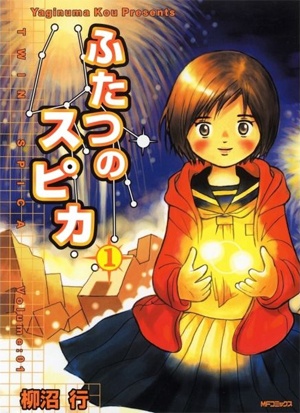
Twin Spica
Yu's review of Twin Spica — Asumi Kamogawa wants to become an astronaut; her mother died when a rocket crashed into their town when Asumi was an infant; a ghost in a lion's mask follows her through childhood and into the competitive astronaut training program, where she discovers what it actually takes to reach space.
Sci-Fi / Thriller
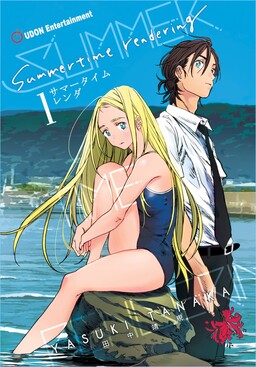
Summer Time Rendering
Yu's review of Summer Time Rendering — Shinpei Ajiro returns to Hitogashima island for the funeral of his childhood friend Ushio; something is wrong; the shadows of people on the island are not quite right; Shinpei discovers a supernatural threat that copies humans through their shadows and a time loop mechanic that allows him to restart from the same point when he dies.
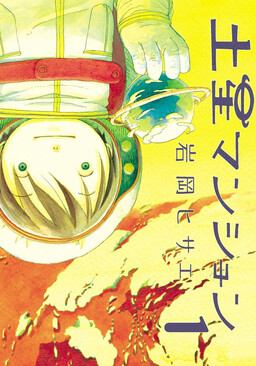
Sci-Fi
Saturn Apartments
Yu's review of Saturn Apartments — humanity lives in a ring habitat orbiting Earth; the surface is a nature preserve; Mitsu is a young window washer who cleans the outer windows of the habitat; his father was also a window washer and disappeared; Hisae Iwaoka's quiet science fiction manga about class, memory, and the view from the outside.
Sci-Fi / Mystery
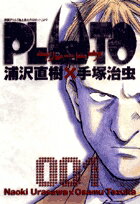
Pluto
Yu's review of Pluto — Naoki Urasawa reimagines a single Astro Boy story arc through the lens of adult science fiction: a robot detective investigates who is systematically destroying the world's seven most powerful robots.
Sci-Fi / Drama
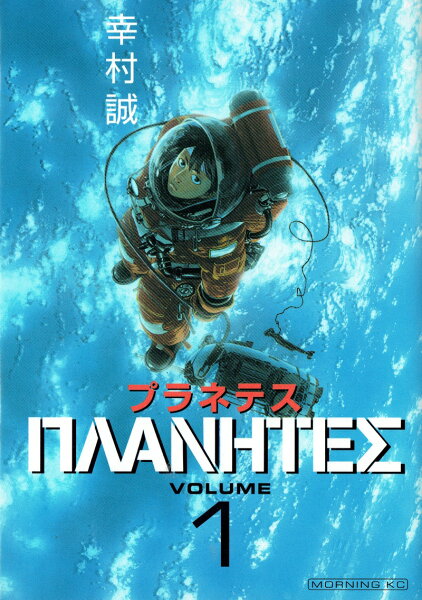
Planetes
Yu's review of Planetes — a crew of space debris collectors in the near future of 2075, where someone wants to be the first human to Jupiter and someone else just wants to survive the shift.
Written by
Yu
Manga Enthusiast from Japan
I grew up in Japan and manga literally saved me during a tough time in elementary school. My English isn't perfect, but my love for manga is real — and I want to share it with you.
Disclosure: This post contains affiliate links. As an Amazon Associate, I earn from qualifying purchases at no extra cost to you.