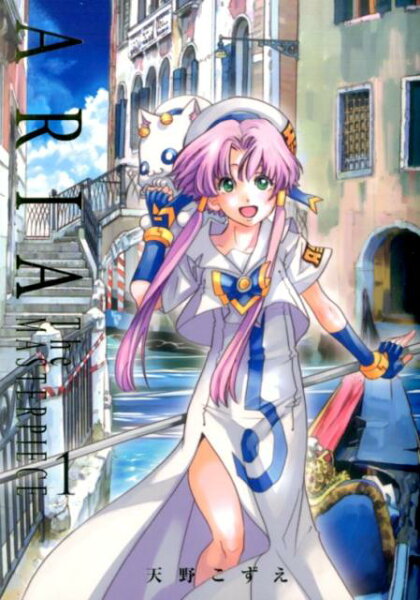
Aria Review — A Terraformed Mars Has Been Made Into Venice, and Akari Is Learning to Be Its Gondolier
by Kozue Amano
Read the first volume. If it doesn't hook you, put it down. It'll hook you.
Buy Aria on Amazon →*Affiliate link — I earn a small commission at no extra cost to you.
I read Aria during a period when I needed slow things. Not slow in the boring sense — slow in the deliberate sense. The kind of slow that makes you notice. Aria gave me that.
I have read all 12 volumes. I have read them more than once. I will read them again. The manga is what I come back to when the world has been moving too fast.
Quick Take
- Kozue Amano's iyashikei (healing) manga set on a terraformed Mars whose main city is a meticulous recreation of Venice
- 12 volumes of Aria (2002–2008), preceded by 2 volumes of AQUA (the original title), with a 2022 sequel
- Age rating: All Ages — pure healing fiction
What Is Aria About?
Aqua is a terraformed Mars. Two hundred years before the manga begins, humanity arrived on Mars, melted the polar ice caps, and turned the planet into a water world. The dominant city — Neo-Venezia (ネオ・ヴェネツィア) — is a deliberate architectural recreation of the Venice of Earth, built on Aqua's canals.
Akari Mizunashi (水無 灯里) is fifteen years old. She has emigrated from Earth to Neo-Venezia to apprentice as an Undine (ウンディーネ) — the local term for gondolier-tour-guides who row visitors and residents through Neo-Venezia's canal system. The Undine profession is unique to Aqua.
Akari works at the Aria Company under her senior Undine Alicia Florence (アリシア・フローレンス), considered one of the city's three "Water Fairies" — the three best Undines in the city. The other two Water Fairies are Akira E. Ferrari (rival company Himeya) and Athena Glory (third company Orange Planet). Each Water Fairy has an apprentice (Akari at Aria, Aika at Himeya, Alice at Orange Planet).
The next 12 volumes follow Akari across multiple seasons:
- Daily Undine work — rowing customers, learning the canals, building professional skill
- Friendships with Aika and Alice, the manga's other apprentice protagonists
- Various small mysteries and adventures of Neo-Venezia — festivals, traditions, encounters with unusual residents
- Growth toward eventual qualification as a Prima Undine (full Undine)
- The slow, accumulated experience of living in a city that has dedicated itself to beauty
The manga is structurally episodic. Each chapter is largely self-contained — a single day or sequence in Akari's life. The arc, when it emerges, is Akari becoming an Undine. The series ends with her qualification and her place in Neo-Venezia confirmed.
AQUA vs ARIA: The Title Change
This often confuses new readers, so worth clarifying:
- AQUA (アクア) — The original title. 2 volumes. Serialized in Monthly Stencil magazine (Enix) from 2001
- ARIA (アリア) — The continuation under a new title. 12 volumes. Serialized in Monthly Comic Blade (Mag Garden) from 2002 to 2008, after Amano moved publishers
- The change happened because of corporate restructuring at Enix; Amano and her work moved to Mag Garden, and the series was relaunched under the new title
For new readers: AQUA is the prequel, ARIA is the main series. The Yen Press English omnibus (7-volume, 2016–2017) covers both.
What Is "Iyashikei"?
A note for English readers: iyashikei (癒し系, "healing type") is a recognized Japanese subgenre of slice-of-life works. The genre emphasizes:
- Atmospheric tranquility
- Low-stakes daily activities
- Character relationships built on small consistent kindnesses
- Beautiful settings the work invites the reader to spend time in
- Restoration rather than tension
Aria is widely considered one of the defining works of the iyashikei tradition, alongside Yokohama Kaidashi Kikou, Yotsuba&!, and others.
Who Is This Manga For?
- Iyashikei readers seeking the genre at its peak
- Slow manga readers who appreciate atmospheric craft
- Sci-fi readers comfortable with sci-fi as setting rather than plot driver
- Venice enthusiasts — Amano's research is detailed
- All-ages readers — appropriate for any age
- Not for: readers wanting plot momentum or conventional conflict
Content Warnings & Age Rating
Age Rating: All Ages Content Warnings: None of significance. Some chapters address emotions like loneliness and homesickness with care.
Characters
Akari Mizunashi — The protagonist. Cheerful, observant, slightly homesick, deeply present in her own life. Akari's specific trait is her willingness to be moved by things — by sunsets, by canal sounds, by small kindnesses. The manga's emotional architecture depends on Akari being the kind of person who notices the city.
Alicia Florence — Akari's senior Undine. Gentle, accomplished, slightly mysterious in her depth. Her relationship with Akari is the manga's most important relationship.
Aika S. Granzchesta — Akari's closest friend, Akira's apprentice. Hot-tempered, loyal, occasionally embarrassed by Akari's earnest emotionality.
Alice Carroll — Athena's apprentice. Younger than Akari and Aika. Genius-level rower; socially reserved.
President Aria — A large white cat with a strange face who is technically the president of Aria Company. (The other two companies have similar cat presidents.) The cats are taken seriously by all human characters.
Art Style
Kozue Amano's art is luminous and detailed. Backgrounds — Neo-Venezia's architecture, water, light, weather — are rendered with extensive care. Amano spent significant time researching Venice; the manga's Neo-Venezia is architecturally accurate to its real-world inspiration.
The character art is gentle and slightly stylized. The visual contrast between detailed environments and gentle characters is part of the manga's atmospheric signature.
Cultural Context
Iyashikei manga flourished in Japanese publishing across the 2000s, partly as a response to faster, louder action manga. Aria is the genre's peak example.
Three anime adaptations by Hal Film Maker covered the manga across three TV series (2005, 2006, 2008) — each season's title homage to musical terminology (ANIMATION, NATURAL, ORIGINATION). The anime is universally well-regarded.
The 2022 sequel Aria the Crepuscolo (theatrical films) and the manga sequel represent the franchise's recent expansion.
What I Love About It
The mid-afternoon scenes.
Across many chapters, Amano gives readers what I have come to call the "mid-afternoon" scene. Akari is between fares. She is sitting on her gondola in a canal. The light is the specific quality of Italian-Mediterranean afternoon light (which Amano draws beautifully). She is looking at the city — at the buildings, at the water, at the small details a tourist would miss but a resident learns to see. She is, for a moment, fully present.
These scenes are not plot. They are the manga. Amano constructs them with such patience that the reader sits with Akari in the moment. The reader's own day slows. The world that has been moving at its usual speed for the reader continues moving, outside the manga, but for the length of these pages we are in Neo-Venezia with Akari, and it is sufficient.
I cannot overstate what this does for me when I am tired. The manga slows my breathing. It does not solve my problems. It does, briefly, let me set my problems down.
That is what iyashikei is for. The manga has been a gift to me.
Memorable Scene ⚠️ Light Spoiler
Akari's promotion to Prima.
Across the 12 volumes, Akari moves through the Undine career path — apprentice (Pair) to single-Undine to Prima (full qualified Undine). Each step requires examination, mentorship, and specific accomplishments.
Akari's promotion to Prima — when she finally earns the qualification she has been working toward — is the manga's most affecting sequence. Amano refuses to make it triumphant. The promotion is quiet. Akari is alone for some of it. The reader, who has watched her work for 11 volumes, understands the weight of the moment. Amano draws Akari's face during the ceremony with extraordinary care.
The chapter is the manga's whole project in one sequence. Showing up. Doing the work. Becoming someone. The reward is not glory. The reward is being who you have been becoming.
Similar Manga
| Title | Its Approach | How Aria Differs |
|---|---|---|
| Yokohama Kaidashi Kikou | Post-apocalyptic iyashikei | YKK is more melancholy; Aria is more affirming |
| Yotsuba&! | Iyashikei via small child | Yotsuba is comedic; Aria is contemplative |
| Hidamari Sketch | Art-school iyashikei | Hidamari is more comedic; Aria more atmospheric |
| Sketchbook | Quiet iyashikei | Same register; smaller scope |
Reading Order / Where to Start
For the English release: the Yen Press 7-volume omnibus (2016–2017) is the recommended edition. It includes both AQUA and ARIA in chronological order.
Official English Translation Status
Yen Press's 7-volume omnibus (2016–2017) is the current canonical English edition and is in print. The earlier Tokyopop volumes are out of print.
The 2022 sequel and various theatrical films have limited English availability.
Pros & Cons
Pros
- One of the defining iyashikei manga
- Amano's art and atmospheric work are exceptional
- 12 volumes complete with a real ending
- Akari is a deeply lovable protagonist
- Yen Press reprint is high quality
Cons
- Slow pace is the genre; readers wanting plot will find none
- Sci-fi premise is decorative rather than central
- 12-volume commitment is real for a low-stakes manga
- The iyashikei register is an acquired taste. It won't land for everyone, especially readers wanting more conventional manga storytelling.
Is Aria Worth Reading?
Yes — for anyone who can engage with slow, atmospheric, deliberately gentle manga. One of the great works of healing fiction in any medium.
Format Comparison
| Format | Notes |
|---|---|
| Physical (Yen Press, omnibus) | 7-volume reprint; in print |
| Digital | Available via Yen Press digital, Kindle |
| Anime (Hal Film Maker, 2005–2008) | Three TV seasons + OVAs; on Crunchyroll |
Where to Buy
Read the first volume. If it doesn't hook you, put it down. It'll hook you.
This post contains affiliate links. If you purchase through these links, I may earn a small commission at no extra cost to you. As an Amazon Associate, I earn from qualifying purchases.
*Affiliate link — I earn a small commission at no extra cost to you.
More Manga You Might Like
Sci-Fi / Slice of Life
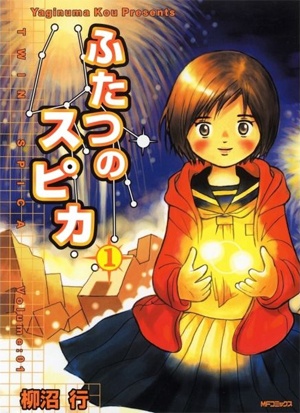
Twin Spica
Yu's review of Twin Spica — Asumi Kamogawa wants to become an astronaut; her mother died when a rocket crashed into their town when Asumi was an infant; a ghost in a lion's mask follows her through childhood and into the competitive astronaut training program, where she discovers what it actually takes to reach space.
Sci-Fi
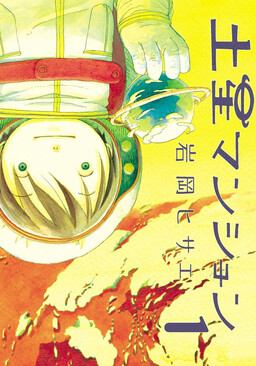
Saturn Apartments
Yu's review of Saturn Apartments — humanity lives in a ring habitat orbiting Earth; the surface is a nature preserve; Mitsu is a young window washer who cleans the outer windows of the habitat; his father was also a window washer and disappeared; Hisae Iwaoka's quiet science fiction manga about class, memory, and the view from the outside.
Sci-Fi / Drama
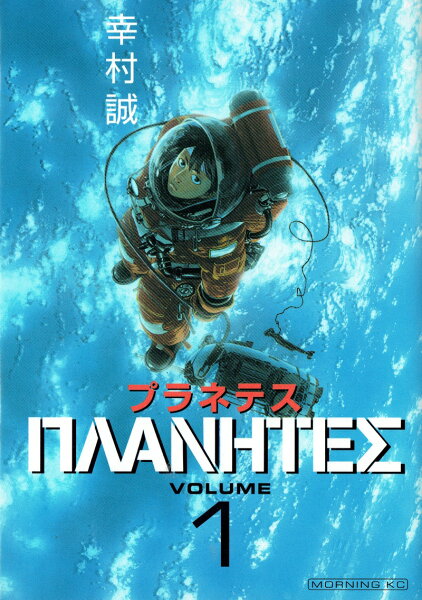
Planetes
Yu's review of Planetes — a crew of space debris collectors in the near future of 2075, where someone wants to be the first human to Jupiter and someone else just wants to survive the shift.
Slice of Life / Drama
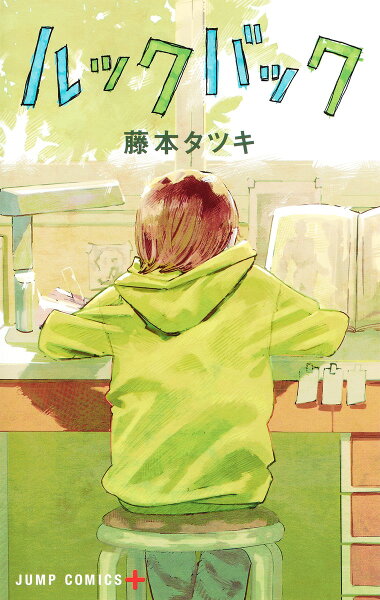
Look Back
Yu's review of Look Back — a single volume about two girls who connect through drawing, whose friendship is the manga's emotional center, and what one page of someone's art can mean to another person across time.
Sci-Fi / Slice of Life
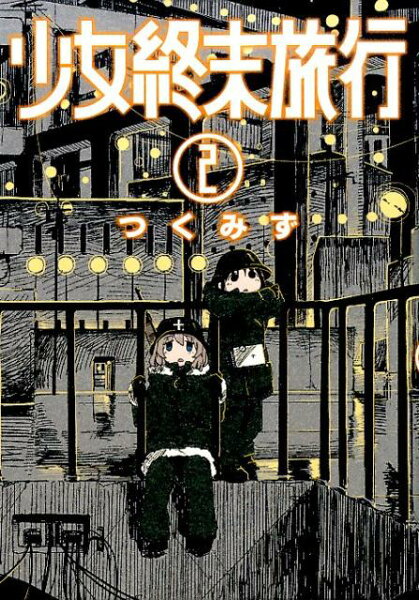
Girls' Last Tour
Yu's review of Girls' Last Tour — two girls travel through a massive post-apocalyptic city on a kettenrad, eating whatever they find, watching it snow, and thinking about what it means to be alive when almost nothing is left.
Sci-Fi / Slice of Life
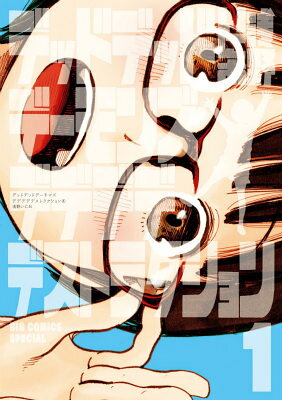
Dead Dead Demon's Dededede Destruction
Yu's review of Dead Dead Demon's Dededede Destruction — giant alien motherships have hovered over Tokyo for three years; Kadode and Ouran go to high school underneath them, play games, take photos, and try to stay friends while the world ends slowly around them.
Written by
Yu
Manga Enthusiast from Japan
I grew up in Japan and manga literally saved me during a tough time in elementary school. My English isn't perfect, but my love for manga is real — and I want to share it with you.
Disclosure: This post contains affiliate links. As an Amazon Associate, I earn from qualifying purchases at no extra cost to you.