Area 88 Review: The War Manga Where Being a Great Pilot Is the Worst Thing That Can Happen to You
by Kaoru Shintani
Read the first volume. If it doesn't hook you, put it down. It'll hook you.
Buy Area 88 on Amazon →*Affiliate link — I earn a small commission at no extra cost to you.
I grew up wanting to be the hero. Naruto, Luffy — guys who were good at fighting because fighting was how they protected the people they loved. So the first time I really sat with Area 88, it broke something in my head, because it's a story about a man who is brilliant at fighting and hates every second of it.
Shin Kazama is the best pilot at Area 88. He shoots down more planes than anyone. And every plane he shoots down is a person, and the better he gets, the more money he earns, and the money is the only thing that can buy him back his life. That's the engine of the whole series, and it's the cruelest engine I've ever seen in a war manga. I read this one long after it was first published — it came out in 1979, before I was born — and it still hit harder than most of the modern military stuff I've tried.
Quick Take
- A 1979 aviation war manga by Kaoru Shintani that helped define the genre — obsessively accurate fighter-jet illustration married to a genuinely bleak meditation on what combat does to a person who never wanted to be there
- The hook is pure tragedy mechanics: Shin can only escape by killing, so getting better at the thing destroying him is the only way out
- 23 volumes, complete in Japanese, T (Teen) — combat-heavy but not graphically gory; the brutality is emotional, not visual
Story Overview
Shin Kazama is training to be a commercial airline pilot in Japan. He has a future, he has a fiancée, Ryoko, and he has a best friend named Satoru Kanzaki. Kanzaki also wants Ryoko. So Kanzaki gets Shin drunk and slides a contract in front of him — and Shin, not reading it, signs his name to a three-year mercenary enlistment with the air force of Aslan, a fictional Middle Eastern kingdom in the middle of a civil war.
That's how Shin lands at Area 88, a desert airbase staffed by foreign mercenary pilots. The terms are brutal and simple. You can leave one of three ways: serve out three years, die, or buy out your contract for $1.5 million. The base pays per enemy plane shot down. So the only way for Shin to earn his freedom fast is to become a killing machine — which is exactly what he becomes, while loathing himself for it.
The series isn't just Shin's countdown, though. It widens into the politics of Aslan's civil war, the schemes of Kanzaki back in Japan, and the lives of the other mercenaries — men who, unlike Shin, chose this. The whole thing builds toward a final confrontation: Shin, in his F-20 Tigershark, hunting down Kanzaki himself, while almost everyone he cared about at the base is already dead. Shintani doesn't soften the ending, and I won't pretend it's a happy one.
Characters
Shin Kazama — The tragedy is that he's a natural. He didn't want to fly fighters, he doesn't want to kill, and he's the best in the squadron at both. His arc is the slow horror of watching a decent man calcify into an ace, holding onto Ryoko as the one thing keeping him from forgetting why he's counting the money. By the end, the cost is total.
Mickey Simon — An American Vietnam veteran who came to Area 88 because he couldn't readjust to civilian life back home. He's Shin's closest friend at the base, the second-best ace there, and the closest thing the series has to a guide for Shin. His fate is one of the gut-punches of the finale.
Saki Vashtar — The base commander, a prince of Aslan's royal family. He runs Area 88 while his own country tears itself apart in civil war, and he's caught between his duty to the throne and what the war is doing to everyone under his command.
Kim Aba — The youngest pilot at the base, mocked by most of the others, mentored and trusted by Shin. He's one of the few major figures who survives — which means he's the one left to witness what the war does to Shin at the very end.
Satoru Kanzaki — The friend who started it all. He betrayed Shin out of jealousy over Ryoko and spends the series scheming back in Japan, his ambitions metastasizing far beyond one stolen girlfriend. He's not a cartoon villain; he's a man who made one selfish choice and kept doubling down on it.
McCoy — The base's arms dealer, a gleefully greedy merchant who sells the pilots everything they need to kill and survive. He's comic relief, but he's also the human face of the economy that traps everyone there — war as a business with a cash register.
What I Love About It
The series never once lets Shin enjoy being good at killing. That sounds obvious, but think about how rare it actually is. Most action manga — the ones I grew up on — eventually let the hero feel the rush, let the violence become cathartic. Area 88 refuses. Every kill bonus Shin earns is also a man's death, and the manga keeps that ledger visible on the page. The money pile that's supposed to buy his freedom is, very literally, built out of corpses, and Shin knows it, and the knowing is what's slowly hollowing him out.
What makes it land for me is that Shintani doesn't preach it. There's no character standing on a wing giving a speech about the evils of war. It's structural. The genius of the premise is that the audience wants Shin to win every dogfight — we're trained by every action story ever to cheer the ace — and Area 88 quietly turns that cheer into complicity. You're rooting for him to shoot down one more plane so he can go home, and one more plane is one more death, and the manga lets you sit in that discomfort. I've never read another war manga that weaponizes the reader's own bloodlust quite like this.
Memorable Scene ⚠️ Spoiler Warning
The image I can't get out of my head is from the final stretch of the manga, after the deaths have piled up — Saki, Mickey, Sela, all gone, Mickey and Sela killed together in an explosion. Shin, who has held himself together through three years of this by sheer will, finally breaks. He doesn't cry. He starts laughing — hysterically, uncontrollably — and young Kim, standing next to him, is terrified by it.
That's the moment the series had been building toward the whole time, and it's so much worse than tears would have been. Grief that comes out as laughter is grief that has nowhere left to go. By the actual ending, after his final duel with Kanzaki, Shin makes it back to Japan and back to Ryoko — but he's lost his memory of Area 88 entirely. Years of his life, simply gone. The manga frames it as the only mercy left to give him, and that's the bleakest possible kind of happy ending: the only way home was to erase the road that got him there.
Pros & Cons
Pros
- Fighter-jet illustration of obsessive technical quality — a huge part of why the series became a touchstone for aviation fans
- A genuinely serious, structurally clever treatment of war's cost, rare for its era
- Shin's slow erosion is one of the most sympathetic and consistent character arcs in classic action manga
- A foundational, influential work of military manga
Cons
- There is no in-print English edition — the old VIZ/Eclipse comic run from the late 1980s was never finished and is long out of print
- The 1979 art and pacing show their age; some narrative conventions feel dated
- The fictional-Middle-East setting takes a little orientation to follow the politics
- Tonally relentless — that's either the point or a dealbreaker depending on you
Is Area 88 Worth Reading?
Yes, if you want one of the most emotionally honest war manga ever drawn and don't mind that it's bleak to the bone. Shintani's aircraft art is gorgeous and the central trap — getting better at the thing that's destroying you is the only way to survive it — is unforgettable. Just know going in that there's no clean, complete English edition, so reading it legitimately means the Japanese release.
Official English Translation Status
Area 88 holds a piece of history: it was among the very first manga ever translated and published in North America, by Eclipse Comics in partnership with VIZ, starting in 1987. But that release was never completed — it was canceled in 1989 after issue #42, and a later serialization in VIZ's Animerica magazine also stopped short of the ending in 1995. There is no modern, in-print English edition. What exists in English is decades-old, incomplete, and only findable as expensive collector back issues. For a complete, legitimate read, the Japanese edition is the only real option.
Where to Buy
There's no in-print, complete English edition of Area 88 — the old VIZ/Eclipse run was abandoned unfinished decades ago. The only way to read the whole story legitimately is the Japanese release, which is still readily available.
Find Area 88 (Japanese edition) on Amazon.co.jp →
This post contains affiliate links. If you purchase through these links, I may earn a small commission at no extra cost to you. As an Amazon Associate, I earn from qualifying purchases.
*Affiliate link — I earn a small commission at no extra cost to you.
More Manga You Might Like
Sci-Fi / Military
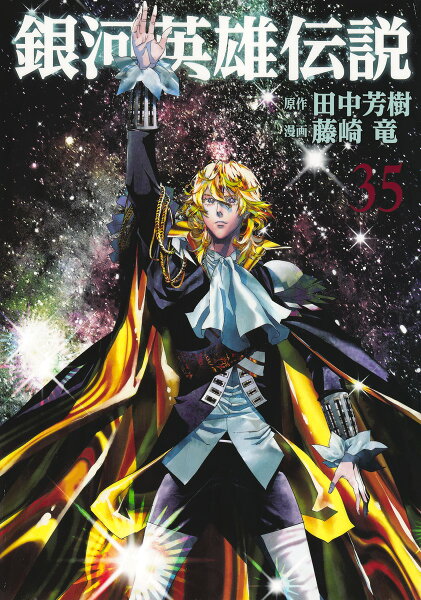
Legend of the Galactic Heroes
Yu's review of Legend of the Galactic Heroes — the manga adaptation of the classic novel series following Yang Wen-li of the Free Planets Alliance and Reinhard von Lohengramm of the Galactic Empire across a war that neither believes in the same terms as the people who sent them to fight it.
Sci-Fi / Military
Mobile Suit Gundam: The Origin
Yu's review of Mobile Suit Gundam: The Origin — Yoshikazu Yasuhiko, the original character designer for the 1979 Gundam anime, re-adapts and expands the One Year War, giving Char Aznable the backstory the original never showed and drawing the Universal Century with 40 years of additional craft.
Sci-Fi / Romance
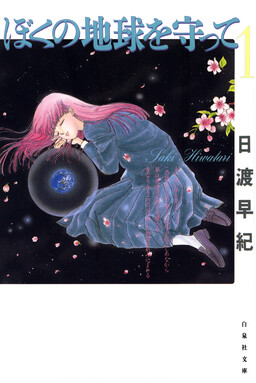
Please Save My Earth
Yu's review of Please Save My Earth — Alice Sakaguchi and six other teenagers in contemporary Tokyo discover they are the reincarnations of seven alien scientists who lived on the Moon observing Earth; their past life memories surface through shared dreams; past life emotions and relationships carry into present lives in ways that are not always welcome.
Sci-Fi / Action
Battle Angel Alita
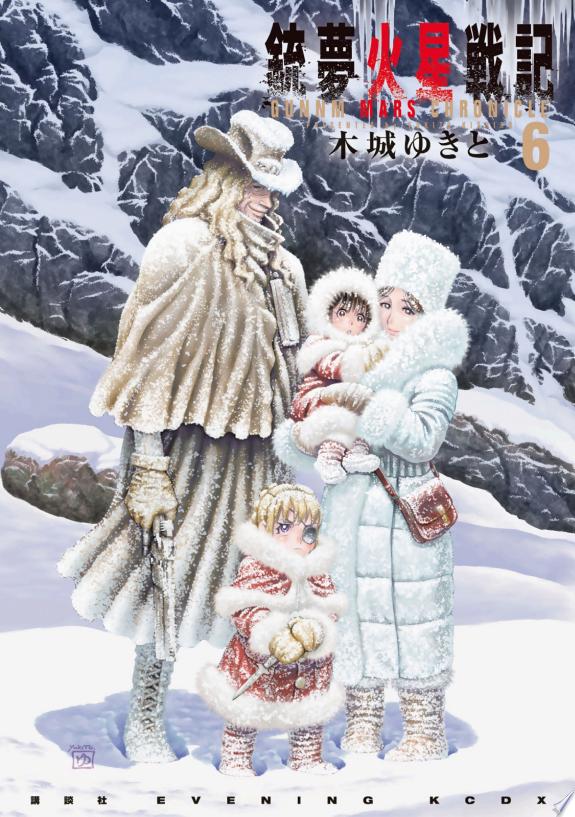
Yu's review of Battle Angel Alita (Gunnm) — a memoryless cyborg pulled from a junkyard fights through bounty hunting, Motorball, and a doomed first love in the brutal world beneath the sky city of Zalem.
Sci-Fi / Action
Akira
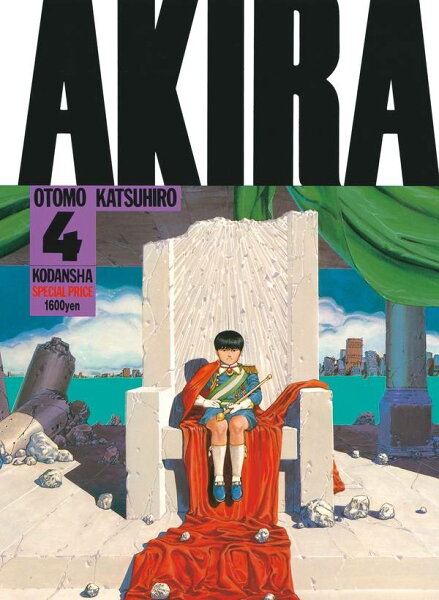
Yu's review of Akira — Katsuhiro Otomo's six-volume monster, serialized 1982–1990. Set in 2019 Neo-Tokyo, a teenage biker tries to save the best friend who suddenly has the power to end the world. The manga that dragged Japanese comics onto the world stage.
Sci-Fi / Action
Choujin Locke
Choujin Locke is one of manga's longest-running sci-fi sagas — a galaxy-spanning space opera following Locke, an immortal esper who drifts through humanity's rise and fall, protecting people he knows he will outlive. Begun by Yuki Hijiri in 1967 and continued until his death in 2022.
Written by
Yu
Manga Enthusiast from Japan
I grew up in Japan and manga literally saved me during a tough time in elementary school. My English isn't perfect, but my love for manga is real — and I want to share it with you.
Disclosure: This post contains affiliate links. As an Amazon Associate, I earn from qualifying purchases at no extra cost to you.