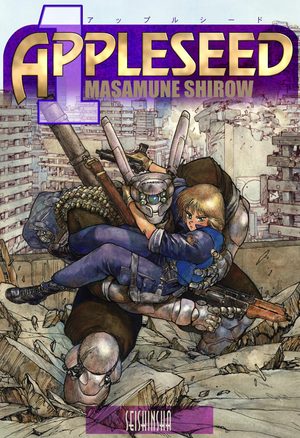
Appleseed Review: The Cyberpunk Classic That Asks Who Gets to Inherit the Earth
by Masamune Shirow
Read the first volume. If it doesn't hook you, put it down. It'll hook you.
Buy Appleseed on Amazon →*Affiliate link — I earn a small commission at no extra cost to you.
I read Ghost in the Shell first, like most people did. So when I finally picked up Appleseed and realized it came before it — that this was Shirow figuring out, in 1985, all the questions he'd later make famous — it felt like finding the rough draft of someone's whole brain.
But that's not quite right either. Appleseed isn't a rough draft. It's the messier, angrier, more political older sibling. Ghost in the Shell asks what a single mind is. Appleseed asks something bigger and scarier: now that humans have nearly destroyed the world, do we still get to be the ones who run it? I didn't expect a four-volume action manga from the eighties to sit with me the way it did. It did.
Quick Take
- Masamune Shirow's first serialized manga, and the cyberpunk blueprint he'd refine in Ghost in the Shell — politics, bioethics, and giant guns in equal measure
- Deunan and Briareos get pulled from a post-WWIII wasteland into a "perfect" city, then have to defend it from the people who built it
- 4 volumes, complete in English from Dark Horse; rated M (Mature) for violence, adult themes, and a density that does not let you skim
Story Overview
The Third World War has ended without nuclear weapons but with most of humanity dead anyway. Deunan Knute and her partner Briareos — once an ordinary man, now a hulking cyborg after catastrophic injuries — are surviving as nomad soldiers in the "Badside," the ruined demilitarized zones outside what's left of civilization.
Then a young woman named Hitomi finds them and brings them to Olympus: a gleaming city-state, the centerpiece of humanity's reconstruction, where roughly half the population are bioroids — artificial humans engineered with their aggression genetically suppressed, designed to act as an emotional buffer that keeps society calm. Deunan and Briareos are recruited into ESWAT, the city's special enforcement unit. Hitomi, it turns out, is a bioroid herself, which rattles Deunan more than she expects.
The catch — and this is the turn that makes Appleseed more than a cop-action book — is that Olympus's peace isn't natural. It's administered. The city is run by the supercomputer Gaia and a council of Elders, and the Elders have concluded that human violence will inevitably destroy the world again. Their solution is to extend the bioroids' behavior modification to the entire human race, and ultimately to release the D-Tank, a sterility virus that would let the engineered, peaceful bioroids quietly inherit the Earth as humanity faded out. The title Appleseed refers both to a global decontamination plan and to the data that becomes the key to undoing this — data tied to Deunan's own father, Dr. Gilliam Knute, who refused to let the sterilization plan go forward. When the administrator Athena moves against the Elders, Deunan and Briareos end up holding the entire fragile structure of Olympus together by force.
Characters
Deunan Knute — A soldier who has known nothing but war, dropped into a city engineered to never need one. Her arc isn't about learning to fight; she already can. It's about whether she can belong to a place whose entire premise is that people like her — violent, instinctive, human in the oldest way — are the problem to be solved. The reveal that she's tied by blood to the Appleseed data, through her father, makes her literally the inheritor of the question the whole series is asking.
Briareos Hecatonchires — Deunan's partner and lover, his body now mostly machine after being nearly killed. He's the human-machine question made physical: more reliable, more durable, and more "post-human" than anyone around him, yet still unmistakably the same man who loves Deunan. He grounds the abstract bioethics in something tender.
Hitomi — The bioroid who recruits the pair. She's the gentle face of Olympus's whole project, and the manga keeps complicating her: she's everything the city promises (calm, kind, engineered for harmony) and also a living example of what's been taken away from the bioroids in exchange.
Athena — Olympus's administrator, whose mutiny against the Elders is the political spine of the back half. She represents the compromise at the city's foundation — and the limits of governing a paradise that can only stay peaceful by quietly deciding who's allowed to have a future.
What I Love About It
It's the appendices, and I'm only half joking. Shirow packs the back of each volume with pages of notes — diagrams of Olympus's governance, the biology of the bioroids, the engineering of the Landmate power suits, the politics of the factions. Reading Appleseed genuinely feels like reading the field manual for a civilization that hasn't happened yet. Most manga ask you to accept the world; Shirow hands you the schematics and dares you to argue with them.
But the thing I actually love is how seriously it takes the bad answer. A lesser story would make the Elders cartoon villains. Appleseed doesn't. The Elders' logic — that humans have proven, with a dead planet as evidence, that we can't be trusted with the planet — is uncomfortably hard to refute. The series puts Deunan, the walking argument for human instinct, in the position of defending a species that the smartest minds in the city have already written off. I came in expecting cool mecha. I stayed because the manga refused to tell me the Elders were simply wrong. That's a heavier thing than I expected from a book with hundred-foot war machines in it.
Memorable Scene ⚠️ Spoiler Warning
The image that stuck with me is from Book Two, Prometheus Unbound: the introduction of the new "protective" defense platforms into Olympus — enormous mechanical walkers, gun emplacements built like hundred-foot spiders, lowered into the streets of a city that's supposed to be paradise. The visual does the whole argument in one panel. Here is the utopia, the place built so no one ever has to fight again, and looming over its clean white arcologies are war machines, installed by the city itself, in the name of keeping everyone safe.
It crystallizes the question the whole series circles: a peace that has to be guarded this heavily was never really peace — it was control with better lighting. And Deunan and Briareos, the two people most comfortable with violence, are the ones who end up having to tear down the old foundation and hope the city is still standing when the dust clears.
Pros & Cons
Pros
- The most politically substantive cyberpunk manga available in English
- 4 volumes — complete, self-contained, and dense
- Shirow's obsessive world-building and appendices reward rereading
- The bioroid / who-inherits-the-Earth question has only gotten more relevant
Cons
- The back half leans heavily on ESWAT mission set-pieces and the plot can get hard to track
- The footnotes and technical density interrupt narrative flow constantly
- It's drawn and paced like 1985 — busier and less cinematic than Ghost in the Shell
- This is a "lean in and study it" manga, not a "switch off and enjoy" one — that's either the appeal or the dealbreaker, depending on you
Is Appleseed Worth Reading?
Yes — if you want the philosophical, world-building roots of Shirow's whole career and don't mind doing some work. It's denser and less immediately slick than Ghost in the Shell, but it asks a bigger question and refuses to give you an easy answer. If you want fast, frictionless cyberpunk action, start elsewhere.
Similar Manga
| Title | Its Approach | How Appleseed Differs |
|---|---|---|
| Ghost in the Shell | Same author; tighter focus on identity and the single mind | Appleseed is broader and more political — society and governance over the individual |
| Blame! | Silent, vast, post-human architecture as horror | Appleseed is talky and argumentative where Blame! is wordless and alienating |
| Nausicaä of the Valley of the Wind | Post-catastrophe world, ecology and who deserves the Earth | Appleseed answers the same question with cyberpunk and committees instead of nature and myth |
Official English Translation Status
Dark Horse Comics publishes the complete four-volume run in English — The Promethean Challenge, Prometheus Unbound, The Scales of Prometheus, and The Promethean Balance — all in print and digital, including Shirow's extensive notes.
Where to Buy
Read the first volume. If it doesn't hook you, put it down. It'll hook you.
This post contains affiliate links. If you purchase through these links, I may earn a small commission at no extra cost to you. As an Amazon Associate, I earn from qualifying purchases.
*Affiliate link — I earn a small commission at no extra cost to you.
More Manga You Might Like
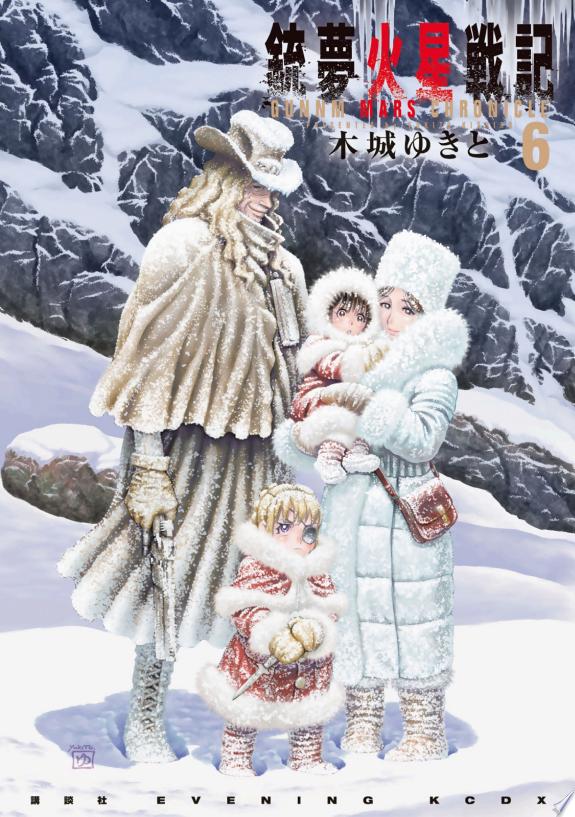
Sci-Fi / Action
Battle Angel Alita
Yu's review of Battle Angel Alita (Gunnm) — a memoryless cyborg pulled from a junkyard fights through bounty hunting, Motorball, and a doomed first love in the brutal world beneath the sky city of Zalem.
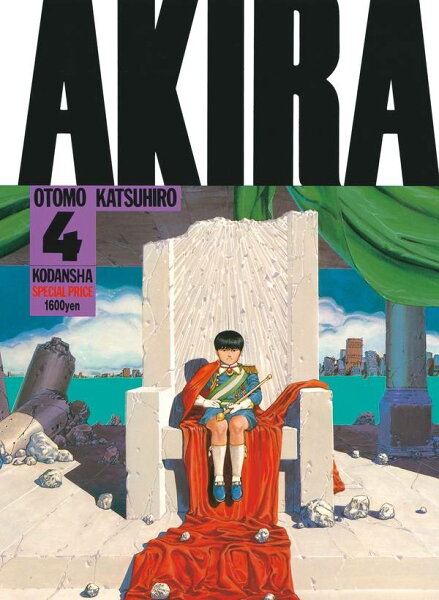
Sci-Fi / Action
Akira
Yu's review of Akira — Katsuhiro Otomo's six-volume monster, serialized 1982–1990. Set in 2019 Neo-Tokyo, a teenage biker tries to save the best friend who suddenly has the power to end the world. The manga that dragged Japanese comics onto the world stage.

Sci-Fi / Action
Code Geass: Lelouch of the Rebellion
Yu's review of Code Geass: Lelouch of the Rebellion, the 8-volume manga by Majiko! that retells the Sunrise anime without its Knightmare Frame mecha. Exiled prince Lelouch gains Geass, the power of absolute obedience, from the mysterious C.C. and becomes the masked rebel Zero — but the manga is lighter, more comedic, and more romance-focused than the anime.
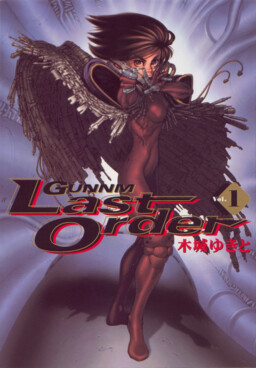
Sci-Fi / Action
Battle Angel Alita: Last Order
Yu's review of Battle Angel Alita: Last Order — Yukito Kishiro's direct sequel to Battle Angel Alita. It reboots the original's ending, sends Alita into the Zenith of Things Tournament aboard the space station Ketheres, and explodes the cyberpunk world out to Mars, Venus, and Jupiter. A 19-volume tournament epic that is bigger, weirder, and more divisive than the original.
Sci-Fi / Political
Sanctuary
Yu's review of Sanctuary — two survivors of the Cambodian killing fields make a pact to change Japan from the inside: one through legitimate politics, one through the yakuza; a politically serious manga by the creators of Crying Freeman and Mai the Psychic Girl about power, ambition, and what it costs to change a corrupt system.

Sci-Fi / Thriller
Mardock Scramble
Yu's review of Mardock Scramble — Rune Balot, a teenage prostitute, is murdered by casino mogul Shell Septinos; resurrected under Mardock Scramble 09, an emergency law that allows dead people to be brought back as cyborgs to testify, she must survive long enough to bring Shell to justice with the help of her partner Oeufcoque.
Written by
Yu
Manga Enthusiast from Japan
I grew up in Japan and manga literally saved me during a tough time in elementary school. My English isn't perfect, but my love for manga is real — and I want to share it with you.
Disclosure: This post contains affiliate links. As an Amazon Associate, I earn from qualifying purchases at no extra cost to you.