
All You Need Is Kill Review: The Loop Only Ends When One of You Dies
by Hiroshi Sakurazaka (original novel) / Ryosuke Takeuchi (story) / Takeshi Obata (art)
Read the first volume. If it doesn't hook you, put it down. It'll hook you.
Buy All You Need Is Kill on Amazon →*Affiliate link — I earn a small commission at no extra cost to you.
I read this one on a train, both ways, in a single day. That's not a figure of speech — VIZ collected the whole thing into one omnibus, and I started it on the way out to a friend's place and finished it on the way back. By the time my stop came up I'd stopped noticing the announcements. I just kept turning pages because I needed to know how many times this kid was going to have to die.
What stayed with me wasn't the action, even though Obata draws armored soldiers better than almost anyone alive. It was the quiet horror underneath it. The book never lets you forget that every clean, confident move Keiji makes was bought with a death you didn't see. He's good now because he's already died doing the thing that didn't work. That idea got under my skin and didn't leave.
Quick Take
- A rookie soldier dies fighting alien invaders called Mimics, wakes at the start of the same day, and gets trapped in a loop that turns him into a perfect killer one death at a time
- Drawn by Takeshi Obata (Death Note, Bakuman), written by Ryosuke Takeuchi, adapted from Hiroshi Sakurazaka's novel — the same novel that became the Tom Cruise film Edge of Tomorrow
- T (Teen): military violence and a lot of dying, but nothing graphic — accessible to almost any reader
Story Overview
Keiji Kiriya is a first-year conscript in the United Defense Force, fighting a losing war against the Mimics — alien creatures that have spread across Earth. On his first real deployment, he dies. Then he wakes up the morning before, with his memories intact, and goes out to die again.
The loop is mechanical, not magical. The Mimics send information backward through time as a defensive reflex, and Keiji got caught in the signal when he killed a specific one in his dying moments. So he resets. Over and over. Each loop he survives a little longer, reads the battlefield a little better, kills with a little less hesitation. The manga keeps a brutal count: by the time the story turns, he is on his 160th repetition. He's no longer a frightened recruit. He's something colder and far more lethal, and the book makes you feel exactly what was traded away to get there.
The turning point is Rita Vrataski — the U.S. Special Forces ace the troops call the Full Metal Bitch — who notices that Keiji is fighting like a veteran when he should be a corpse. She recognizes it because she's been where he is. From there the story stops being about survival and becomes about the loop's exit condition, which turns out to be the cruelest thing in the book: the loop is sustained by two people carrying the same signal, and it cannot end while both of them are alive.
Characters
Keiji Kiriya — His arc is a slow, frightening competence. He starts as a green kid who freezes and dies, and the loop sands that fear off him death by death until he's a killer who barely flinches. What makes Obata and Takeuchi's version land is that they keep showing you the boy underneath the soldier, so the colder he gets, the more you grieve the version of him that's disappearing. Falling for Rita is the one thing that keeps him human.
Rita Vrataski — The legendary ace, nineteen years old, who has already lived through her own loop and come out the other side. She becomes Keiji's mentor not just in combat but in the awful arithmetic of the situation — she knows what ending the loop will cost long before he does. She trains him, fights beside him, and carries the knowledge that one of them is not walking away. Obata draws her as both an icon and a tired, lonely person, and that contrast is the heart of the book.
The Mimics — Less characters than a problem to be solved, but the manga treats them with real menace. They're an ugly, alien presence, and the reveal that the time loop is a side effect of their defense mechanism — antenna units broadcasting backward through time — reframes the whole war as a kind of trap Keiji blundered into.
Art Style
Obata is the reason to own this in print. His mechanical design — the powered "Jacket" battle armor, the weapons, the Mimic anatomy — is dense and convincing, and his action stays legible even when it's chaotic. The VIZ omnibus includes the original color inserts, and they're gorgeous. This is the Death Note artist working in a completely different register: less smirking psychological tension, more weight and grime and motion. If you only know his work from notebooks and apples, the war scenes here will surprise you.
What I Love About It
The body count of the protagonist himself. Most action stories spend everything making the hero's victories feel earned through visible struggle. This one inverts it: Keiji's competence is the evidence of an invisible mountain of failure. Every time he dodges perfectly, you understand he learned that dodge by getting killed. The manga keeps the loop counter present enough — that 160th repetition — that the number itself becomes the emotional weight. He didn't level up. He died into this version of himself.
What I love is how the brevity serves that idea instead of fighting it. There's no padding, no filler arcs, no detours. Two Japanese volumes, one omnibus, one clean line from frightened recruit to hollowed-out killing machine to the single human choice at the end. A longer series would have diluted the horror of the repetition by making it episodic. By keeping it tight, Obata and Takeuchi make every loop feel like it costs something, and the ending hits because nothing was wasted getting there.
Memorable Scene ⚠️ Spoiler Warning
The ending. Once Keiji and Rita understand that the loop is held open by the two of them, they also understand there is no version of this where they both survive — only one signal can leave the cycle, which means one of them has to die at the other's hand. So they fight. Not as enemies, but because it's the only door out.
What wrecks me is what the manga lets happen before that. The two of them sit up talking through the night before the final fight — two people who are, in every way that matters, the only ones who understand each other, spending their last hours as people instead of soldiers. Then they suit up and try to kill each other for real. And as Rita is dying from the wounds he's given her, Keiji tells her he loves her. The film softened all of this into something Hollywood could end on. The manga keeps it bittersweet and lets it hurt. The last image of Keiji is a man who survived, more whole and more human than the killing should have left him, precisely because he loved her — and lost her anyway.
Pros & Cons
Pros
- A complete, self-contained story you can finish in an afternoon
- Obata's art and the color inserts make the omnibus worth owning in print
- The time-loop premise is used for genuine emotional cost, not just spectacle
- A harder, more honest ending than the film adaptation
Cons
- Very short — readers who fall in love with it will wish there were more
- Light on world-building; the focus is the loop, not the wider war
- The bittersweet ending isn't for readers who want a clean victory — that's either the point or a dealbreaker depending on you
Is All You Need Is Kill Worth Reading?
Yes — especially if you want one complete, beautifully drawn sci-fi story you can read in a sitting. It trades scale for focus, using its short length to make a brutal time loop feel like it actually costs the hero something. If you saw Edge of Tomorrow and wanted an ending with more weight, this is the version that delivers it.
Similar Manga
| Title | Its Approach | How All You Need Is Kill Differs |
|---|---|---|
| Death Note | Same artist, taut psychological cat-and-mouse over many volumes | Trades the long mind game for a compact military loop with a tragic core |
| Gantz | Sci-fi horror built on dying and being sent back to fight again | Uses repetition for character cost rather than escalating gore and spectacle |
| Terra Formars | Humans in powered suits against an overwhelming alien threat | Far shorter and more intimate, with one soldier's arc instead of a sprawling cast |
Where to Buy
Read the first volume. If it doesn't hook you, put it down. It'll hook you.
This post contains affiliate links. If you purchase through these links, I may earn a small commission at no extra cost to you. As an Amazon Associate, I earn from qualifying purchases.
*Affiliate link — I earn a small commission at no extra cost to you.
More Manga You Might Like
Sci-Fi / Action
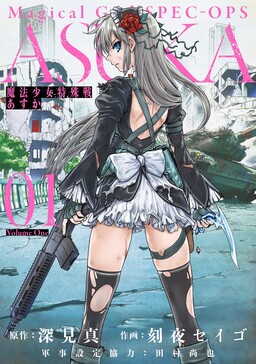
Magical Girl Spec-Ops Asuka
Yu's review of Magical Girl Spec-Ops Asuka — three years after magical girls saved the world from an invasion of magical creatures, Asuka Otori is trying to live a normal high school life; she has PTSD; her allies need her back; she doesn't want to go back.
Sci-Fi / Action
Area 88
Yu's review of Area 88 — Shin Kazama, a Japanese airline trainee, is drugged and tricked by his best friend into signing a three-year mercenary contract with the air force of a fictional desert kingdom. Trapped at Area 88, he can only buy his freedom by killing — earning $1.5 million in combat bonuses. Kaoru Shintani's 1979 aviation classic about a good man becoming an ace he never wanted to be.
Sci-Fi / Action
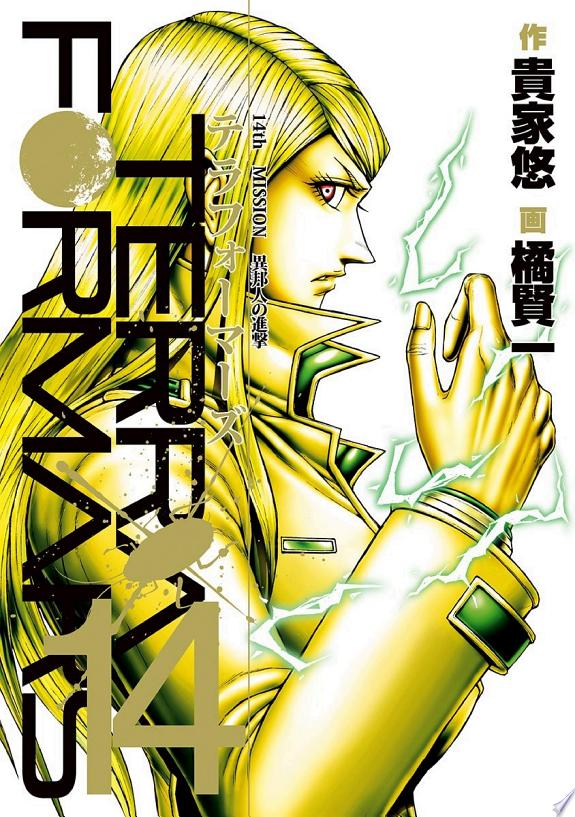
Terra Formars
Yu's review of Terra Formars — humanity seeded Mars with cockroaches to begin terraforming; centuries later, the cockroaches have evolved into humanoid giants with extreme strength, and human soldiers with insect-based genetic modifications are sent to exterminate them.

Sci-Fi / Thriller
Summer Time Rendering
Yu's review of Summer Time Rendering — Shinpei Ajiro returns to Hitogashima island for the funeral of his childhood friend Ushio; something is wrong; the shadows of people on the island are not quite right; Shinpei discovers a supernatural threat that copies humans through their shadows and a time loop mechanic that allows him to restart from the same point when he dies.
Sci-Fi / Military
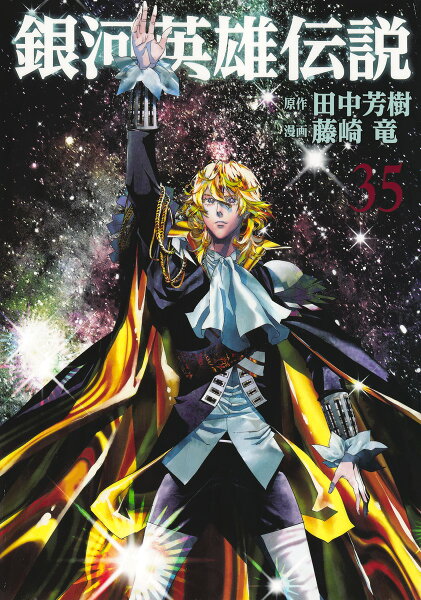
Legend of the Galactic Heroes
Yu's review of Legend of the Galactic Heroes — the manga adaptation of the classic novel series following Yang Wen-li of the Free Planets Alliance and Reinhard von Lohengramm of the Galactic Empire across a war that neither believes in the same terms as the people who sent them to fight it.
Sci-Fi / Military
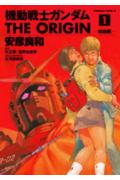
Mobile Suit Gundam: The Origin
Yu's review of Mobile Suit Gundam: The Origin — Yoshikazu Yasuhiko, the original character designer for the 1979 Gundam anime, re-adapts and expands the One Year War, giving Char Aznable the backstory the original never showed and drawing the Universal Century with 40 years of additional craft.
Written by
Yu
Manga Enthusiast from Japan
I grew up in Japan and manga literally saved me during a tough time in elementary school. My English isn't perfect, but my love for manga is real — and I want to share it with you.
Disclosure: This post contains affiliate links. As an Amazon Associate, I earn from qualifying purchases at no extra cost to you.