Alien Nine Review: The Cutest Art Style Hiding the Most Disturbing Manga I Own
by Hitoshi Tomizawa
Read the first volume. If it doesn't hook you, put it down. It'll hook you.
Buy Alien Nine on Amazon →*Affiliate link — I earn a small commission at no extra cost to you.
I bought Alien Nine because of the cover. A little girl in a cute helmet, soft rounded art, pastel colors — I thought it was a gentle sci-fi story for kids. I was at a used bookshop in Tokyo and it was cheap and the art looked friendly, so I took all three volumes home without thinking much about it.
I did not sleep well that week.
There's a specific kind of fear that comes from a story that looks safe and then refuses to be. As a kid I was scared of a lot of things, and the worst fears were always the ones nobody else seemed to notice — the ordinary days that quietly weren't okay. Alien Nine is the only manga I've read that captures that exact feeling. It draws a frightened twelve-year-old in the same soft lines you'd use for a children's picture book, and then it does terrible things to her, slowly, while the adults around her smile and call it an extracurricular activity. I love it. I also can't entirely recommend it. Let me try to explain both.
Quick Take
- A short, dense psychological horror manga where the cute art style is the horror — the gap between how it's drawn and what's happening is the whole point
- Yuri's fear is never treated as weakness to overcome; she's genuinely scared the entire time, and the story agrees with her
- 3 volumes, complete in English (CPM, now out of print — secondhand). M (Mature) for sustained body horror and a child protagonist in real distress
Story Overview
The year is 2014. Aliens fall onto the grounds of School Nine regularly — it's so routine that the school treats it like litter. Someone has to catch them, so each year a few sixth-graders are elected to the "Alien Party." Yuri Otani gets elected because her classmates voted for her. She does not want this. She is afraid of aliens, she's a crybaby, and she says so openly.
It doesn't matter. The election is binding, and the school frames the whole thing as a normal club. To do the job, each girl wears a "Borg" — a symbiotic alien shaped like a frog with wings that clamps onto her head and helps her hunt the other aliens. Yuri accepts hers because there is no version of refusing that improves her situation.
Her two partners handle it differently. Kumi Kawamura is the capable, responsible one, a former class president. Kasumi Tomine is a wealthy, gifted girl who studies piano and ballet — and who, unlike Yuri, is curious about the aliens rather than terrified of them. The early chapters look almost like a sports manga: training, catching aliens, the three girls learning to work together.
Then the floor drops out. The turning point is the slow reveal of what the Borg symbiosis actually is, why the aliens keep falling, and who is really arranging all of it. The Alien Party is not a club. It's a selection process, and the girls are the candidates.
Characters
Yuri Otani — The protagonist, and the reason the book works. Yuri cries. She cries waking up, knowing she has to do this again; in one early scene she crumples to her knees the morning of her own birthday and cries harder when her mother tells her to cheer up. The series never frames this as a flaw she must conquer. She's a small child being forced into something monstrous, and her constant fear is simply the correct response. By the end she has survived — still unfused, still ordinary — which in this story is a kind of miracle.
Kumi Kawamura — The dependable one, and the most quietly horrifying arc in the book. During a battle her arm is torn off, and instead of blood there's a mass of writhing drills under a layer of skin: her Borg interfered with her healing and she has been turning into a Borg without realizing it. Because Borgs want to live fused with a host, Kumi's own desires start to change. She crumples to her knees crying when she sees what her body has become — the same gesture as Yuri's, but for the opposite reason.
Kasumi Tomine — The talented, fearless one, and the cautionary opposite of Yuri. Kasumi is fascinated rather than afraid, and that openness is exactly what destroys her: she's drawn to the "Yellow Knife" alien partly because it reminds her of her older brother, and it absorbs her. Afterward she fights with terrifying efficiency, eviscerating aliens with drills while wearing a serene, innocent smile. She got everything Yuri lacked — confidence, ability, curiosity — and it consumed her.
Ms. Hisakawa — The teacher overseeing the Alien Party. She is the one releasing the aliens for the girls to "train" against, because the entire program exists to raise suitable human hosts for fusion. She herself is a product of that process. She's calm, kind-seeming, institutional — the friendly adult face on top of something predatory.
What I Love About It
The thing I keep coming back to is that Yuri is allowed to never be brave. Shonen and magical-girl stories almost always run the same arc: the scared kid finds courage, transcends the fear, becomes strong. Alien Nine refuses that completely. Yuri is just as frightened on the last page as the first. Her tears aren't a phase she grows out of; they're the most honest thing in the book. The story takes the position that some situations should terrify a child, and that crying through them while still functioning is not weakness — it's the only sane response available.
What makes it land is the art. Tomizawa draws everyone with the soft, round, almost picture-book style you'd expect on a gentle kids' series, and that softness never lets up even when a girl's arm splits open into a nest of drills, or another smiles beatifically while gutting a monster. The cuteness doesn't soften the horror — it sharpens it. You keep wanting the visual register to match the events and it never does, and that mismatch is the most unsettling thing in the whole manga. I've read gorier horror. I've read scarier monsters. I haven't read anything that uses cuteness as a weapon this precisely.
Memorable Scene ⚠️ Spoiler Warning
For me it's Kumi's arm.
It happens mid-battle, fast, almost casual. Her arm gets torn away — and there's no wound the way you'd expect, no spray of blood. Instead, under what looked like a layer of skin, there's a tangle of Borg drills, identical to the appendages her Borg uses. She's been becoming one of them this whole time and didn't know. The drills writhe where her arm should be, and Kumi — the responsible one, the one who was supposed to be in control — drops to her knees and cries.
It's not the gore that stuck with me, it's the gesture. It's the same crumple-and-cry that Yuri does on an ordinary morning, the same body language of a child overwhelmed by something she can't push back against. The book rhymes the two moments on purpose. Yuri cries because she's afraid of what's outside her. Kumi cries because she's discovered what's already inside her. And the soft, gentle linework draws both of them with the exact same tenderness, which somehow makes it worse. I closed the volume after that page and had to sit for a minute.
Cultural Context
Alien Nine ran in Akita Shoten's Young Champion from June 1998 to August 1999, three volumes total (Tomizawa later continued the story in sequels). Critics have widely read it as an allegory for puberty and growing up — the body changing without consent, things invading you from outside, adults presenting frightening transformations as normal and even desirable. The "school as an institution that forces children into impossible situations" reading is right there in the text: the binding election, the smiling teacher, the program that exists to harvest hosts. The horror isn't a monster. It's a system, and the children are inside it.
Pros & Cons
Pros
- The cute-art-versus-body-horror technique is executed about as well as it can be
- Yuri's refusal-to-be-brave is genuinely original and emotionally honest
- Complete and concentrated in just 3 volumes — no padding
- Reads richer the second time, once you know what the Alien Party really is
Cons
- The English CPM edition is out of print; expect a secondhand hunt
- The ending is deliberately ambiguous and open — Yuri survives unfused but the franchise stops mid-thought
- The content is genuinely disturbing; the warnings are not decoration
- A frightened child in sustained distress with no triumphant payoff won't work for everyone — that bleakness is either the point or a dealbreaker depending on you
Is Alien Nine Worth Reading?
If you want psychological horror that earns its dread through atmosphere and implication rather than shock — and you can handle a story that never lets its protagonist win her way out of fear — yes, absolutely. It's short, it's complete, and there's nothing else quite like it. If you need a hopeful arc or a clean resolution, this isn't the one.
Who Is This Manga For?
- Readers who want horror built from unease and wrongness rather than gore for its own sake
- Anyone fascinated by art style used against its content
- Fans of unsettling coming-of-age allegory (think Narutaru, Madoka)
- Readers who want a short, complete series they can finish in an afternoon and think about for weeks
Similar Manga
| Title | Its Approach | How Alien Nine Differs |
|---|---|---|
| Narutaru | Cute creatures and child leads masking brutal, bleak horror | Alien Nine never moves outside its school frame, keeping the horror claustrophobically institutional |
| Puella Magi Madoka Magica | A friendly system that betrays the girls it recruits | Alien Nine's protagonist is afraid from page one and never finds courage as a way out |
| Made in Abyss | Adorable art over genuinely traumatic child endangerment | Alien Nine's horror is invasion of the body itself rather than a dangerous journey |
Official English Translation Status
CPM Manga published the complete English series in three volumes. Because Central Park Media went bankrupt in 2009, the books are out of print in North America — you'll likely be buying secondhand. There's an anime adaptation as well, which covers the early material but ends before the manga's darkest turns.
Where to Buy
Read the first volume. If it doesn't hook you, put it down. It'll hook you.
This post contains affiliate links. If you purchase through these links, I may earn a small commission at no extra cost to you. As an Amazon Associate, I earn from qualifying purchases.
*Affiliate link — I earn a small commission at no extra cost to you.
More Manga You Might Like
Sci-Fi / Horror
DOMU: A Child's Dream
Yu's review of DOMU — Over several years, residents of the Tsutsumi housing complex have been dying or going mad at an inexplicable rate; a detective investigating the deaths suspects something supernatural; an old man with psychic abilities has been killing residents for entertainment; when a young girl moves into the complex with her own abilities, a confrontation becomes inevitable.
Sci-Fi / Drama
Bokurano
Yu's review of Bokurano by Mohiro Kitoh — fifteen children sign a contract to pilot a giant robot called Zearth, only to learn each victory costs the pilot's life, and that every battle won erases another Earth.

Sci-Fi / Action
Magical Girl Spec-Ops Asuka
Yu's review of Magical Girl Spec-Ops Asuka — three years after magical girls saved the world from an invasion of magical creatures, Asuka Otori is trying to live a normal high school life; she has PTSD; her allies need her back; she doesn't want to go back.
Sci-Fi / Action
Abara
Yu's review of Abara — Tsutomu Nihei's two-volume body-horror nightmare about Kudou Denji, a man who turns into a bone-armored Black Gauna to fight the human-eating White Gauna. The dense Nihei work that Tatsuki Fujimoto later called the blueprint for Chainsaw Man.
Sci-Fi / Psychological
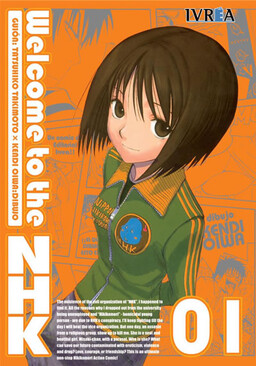
Welcome to the NHK
Yu's review of Welcome to the NHK — Tatsuhiro Sato has been a hikikomori (shut-in) for four years, convinced that Japan's public broadcaster NHK is running a conspiracy to create hikikomori; a mysterious girl named Misaki begins visiting him and offers to help him rejoin society, for reasons he cannot understand.

Sci-Fi / Thriller
Summer Time Rendering
Yu's review of Summer Time Rendering — Shinpei Ajiro returns to Hitogashima island for the funeral of his childhood friend Ushio; something is wrong; the shadows of people on the island are not quite right; Shinpei discovers a supernatural threat that copies humans through their shadows and a time loop mechanic that allows him to restart from the same point when he dies.
Written by
Yu
Manga Enthusiast from Japan
I grew up in Japan and manga literally saved me during a tough time in elementary school. My English isn't perfect, but my love for manga is real — and I want to share it with you.
Disclosure: This post contains affiliate links. As an Amazon Associate, I earn from qualifying purchases at no extra cost to you.