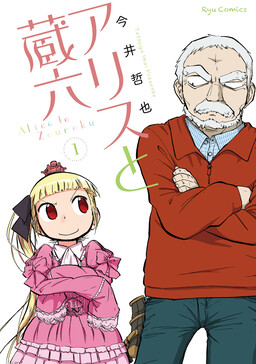
Alice & Zouroku Review: The Reality-Warping Girl Needed a Grumpy Florist, Not a Hero
by Tetsuya Imai
Read the first volume. If it doesn't hook you, put it down. It'll hook you.
Buy Alice & Zouroku on Amazon →*Affiliate link — I earn a small commission at no extra cost to you.
When I was a kid hiding from the world inside manga, the fantasy I reached for most was power. If I just had something — strength, a special ability, anything — the kids who isolated me would stop, and adults would finally see me. That fantasy is everywhere in shonen. Alice & Zouroku is the rare series that takes a child who actually has unlimited power and tells her, very plainly, that it does not matter. You still have to eat your dinner. You still have to say sorry when you're wrong.
I went into this expecting a sci-fi chase story — girl with reality-warping powers, shadowy lab, men in suits. What I got instead was a grumpy old florist named Zouroku scolding a god-tier esper for being rude, and somehow that became one of the most quietly moving things I read that year.
Quick Take
- A sci-fi premise — a child who can materialize anything from imagination — anchored by the most un-sci-fi character imaginable: a cantankerous elderly flower-shop owner who refuses to be impressed
- The series asks what a "child with limitless power" actually needs, and answers: not adventure, but structure, family, and an adult unafraid to correct her
- Rated T (Teen); gentle by genre standards, with brief sci-fi action and unsettling research-facility backstory, but nothing graphic
Story Overview
Sana is one of the "Dreams of Alice" — people who can pull whatever they imagine into physical reality. Her power is so vast she's been kept and studied in a secret research facility for as long as she can remember. The series opens with her escape, fleeing through Shinjuku in a stolen car, hunted by lab agents who can also bend reality.
She runs straight into Kashimura Zouroku, a white-haired florist with a permanent scowl and a deep hatred of anything crooked or dishonest. Sana tries to use her powers to get her way with him. He is completely unmoved. He feeds her anyway — because she's a hungry-looking kid — and that refusal to treat her as special is the engine of the whole story. Zouroku raised his granddaughter Sanae himself after losing his daughter, so he has zero patience for theatrics and zero awe for the supernatural.
The manga moves through several arcs. First, Sana's integration into the Kashimura household and the fallout from the facility, which is eventually raided and shut down by police, its director Kito arrested, after which the government openly acknowledges Dreams of Alice and forms an agency to manage them. Then come the human-scale arcs: Minnie C. Tachibana, an American Dream of Alice trying to resurrect her dead husband through Sana's power, and finally the Wonderland arc centered on Hatori, a lonely elementary schooler whose power has been quietly warping her own family. The story lands not on a world-ending battle but on Sana going to school, sitting in a classroom next to the very kids her story tangled with.
Characters
Sana (the "Red Queen") — Her arc isn't about mastering her power; she already has it from page one. It's about learning that power and connection are different things. She begins as a child who understands force but not relationship, who expects to take what she wants, and ends as someone who can sit at a dinner table, attend school, and exist in genuine bonds with other people. The most important thing about her turns out to be the least flashy.
Zouroku Kashimura — The series' strangest and best idea. He's old, blunt, and "hates anything crooked." He isn't wise about supernatural children; he's just a man who already raised a child and knows kids need rules more than they need awe. His care comes out as structure and expectation, not coddling — and that's exactly what makes it land. When he commits to taking Sana in, it's framed not as heroism but as the obvious thing a man of his generation does.
Sanae Kashimura — Zouroku's granddaughter, gentle and easygoing, who becomes the warm older-sister figure to Sana that balances Zouroku's gruffness. She does the day-to-day softening — the comfort, the patience — that the old man won't.
Minnie C. Tachibana — A former U.S. Marine and Dream of Alice, grief-stricken over her dead husband. Her power manifests as enormous arms shaped like him, and she pursues Sana to access enough power to bring him back. She's an antagonist built entirely out of mourning, not malice.
Hatori — A small girl convinced her parents' constant fighting is her fault. Her Dream of Alice power unconsciously mind-controls them into false harmony, and when she realizes she's been doing it, she's horrified — believing she's become an "evil witch." She's the emotional core of the late series.
What I Love About It
It's the scenes where Zouroku tells Sana, flat-out, that she did something wrong — and her powers mean nothing in that moment. She can reshape reality, and it still doesn't get her out of a scolding. He treats her as a child who needs guidance, not a fragile miracle who needs protecting. Every other adult in the story sees Sana as a weapon, an asset, or a god. Zouroku sees a rude kid who skipped her manners.
What gets me is how the manga uses its own art to argue this. Imai draws the reality-warping sequences with genuine dreamlike scale — impossible spaces, materialized armies, whole skylines bending — and then cuts to a cramped dinner table where an old man is telling a girl to eat her vegetables. The contrast is the entire thesis. The most powerful being in the story is most herself when she's just a kid in a flower shop. I grew up wishing power would fix my loneliness; this manga gently insists that what actually fixes it is someone ordinary deciding you're theirs to look after.
Memorable Scene ⚠️ Spoiler Warning
The Wonderland climax is the payoff. Hatori, drowning in guilt, freezes the entire city, and Sana confronts her — but their powers cancel each other out, so Sana can't manifest a thing against her. Things spiral until Sana ends up trapped inside Wonderland, an alternate dimension born from her own power, which begins expanding outward to swallow the real world.
And the rescue is not a superpower. It's Zouroku. The old florist physically goes to the facility, enters Wonderland to find her, and when the dimension is bulging toward reality and everyone with abilities is helpless to stop it — Zouroku simply yells at Wonderland to stop. And it stops. Not because he has power. Because his authority over Sana, the realness of him as her family, outweighs the warped logic of her own creation. A man with no abilities at all halts a reality-eating dimension by being, essentially, the grandfather who said no. That image — the powerless old man overruling infinite power through sheer relationship — is the whole series compressed into one moment, and I haven't shaken it.
Pros & Cons
Pros
- Zouroku is one of the most unusual and effective adult characters in this corner of manga
- The found-family bond is earned through small daily friction, never just asserted
- Warm without tipping into saccharine; the sci-fi serves the emotion, not the other way around
- Imai's art sells both the dreamlike and the domestic with equal skill
Cons
- Readers craving action-forward sci-fi will find this far too quiet
- The research-facility and lore elements stay thinner than the domestic story
- The pacing is slow and meandering — that's either a flaw or the entire point, depending on what you want from it
Is Alice & Zouroku Worth Reading?
If you want a sci-fi story that uses its high-concept premise to ask a small, human question — what does a powerful child actually need? — then yes, absolutely. It's a gentle, character-first found-family manga with a genuinely original adult lead. If you came for esper battles and lab conspiracies as the main event, you'll be impatient. The power is the hook; the flower shop is the heart.
Official English Translation Status
Seven Seas Entertainment licensed the series and released Volumes 1 through 9 in English (2017–2021). The Japanese manga ran in Tokuma Shoten's Monthly Comic Ryū and concluded at 13 volumes, but the remaining volumes (10–13) have not yet appeared in English. So the English release covers the bulk of the story but is not yet complete — worth knowing before you commit.
Similar Manga
| Title | Its Approach | How Alice & Zouroku Differs |
|---|---|---|
| Sweetness and Lightning | A widowed father learning to cook for and raise his daughter | Swaps the parent for a gruff grandfather and adds a reality-warping sci-fi premise |
| The Girl from the Other Side | A quiet, supernatural bond between a child and a non-human guardian | Trades eerie fairytale dread for grounded, sometimes comedic domestic life |
| A Man and His Cat | An older man and a small dependent finding unlikely family | Replaces the cat with a god-tier esper child, but keeps the same tender register |
Where to Buy
Read the first volume. If it doesn't hook you, put it down. It'll hook you.
This post contains affiliate links. If you purchase through these links, I may earn a small commission at no extra cost to you. As an Amazon Associate, I earn from qualifying purchases.
*Affiliate link — I earn a small commission at no extra cost to you.
More Manga You Might Like
Sci-Fi / Slice of Life
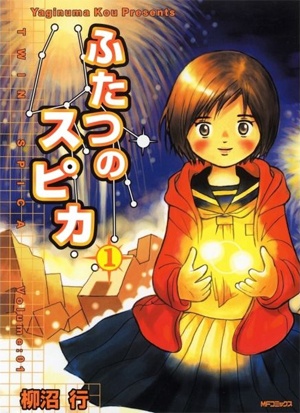
Twin Spica
Yu's review of Twin Spica — Asumi Kamogawa wants to become an astronaut; her mother died when a rocket crashed into their town when Asumi was an infant; a ghost in a lion's mask follows her through childhood and into the competitive astronaut training program, where she discovers what it actually takes to reach space.
Sci-Fi
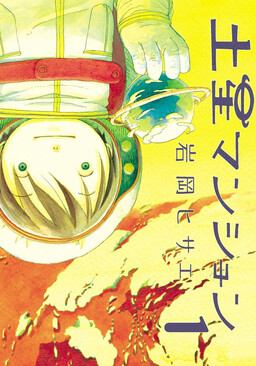
Saturn Apartments
Yu's review of Saturn Apartments — humanity lives in a ring habitat orbiting Earth; the surface is a nature preserve; Mitsu is a young window washer who cleans the outer windows of the habitat; his father was also a window washer and disappeared; Hisae Iwaoka's quiet science fiction manga about class, memory, and the view from the outside.

Sci-Fi / Action
A Certain Scientific Accelerator
Yu's review of A Certain Scientific Accelerator — after losing most of his power protecting Last Order, Academy City's strongest esper can barely speak without a collar that links his broken brain to the network of clones he once slaughtered. When the rogue group DA and a necromancer named Esther Rosenthal collide over Last Order, Accelerator has to fight as a protector, not a monster.
Sci-Fi / Slice of Life
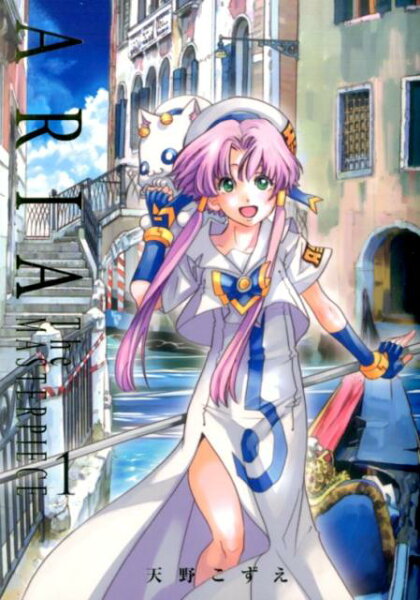
Aria
Akari Mizunashi has emigrated from Earth to Aqua — a terraformed Mars whose dominant city, Neo-Venezia, is a meticulous architectural recreation of Venice. Akari is training as an Undine, a gondolier-tour-guide. The work is hard, the days are long, and the city is beautiful beyond reason. Kozue Amano's iyashikei masterpiece spans 2 volumes of AQUA (prequel) and 12 volumes of ARIA. Complete in English in the Yen Press 7-volume omnibus.

Sci-Fi / Romance
Please Save My Earth
Yu's review of Please Save My Earth — Alice Sakaguchi and six other teenagers in contemporary Tokyo discover they are the reincarnations of seven alien scientists who lived on the Moon observing Earth; their past life memories surface through shared dreams; past life emotions and relationships carry into present lives in ways that are not always welcome.
Sci-Fi / Drama
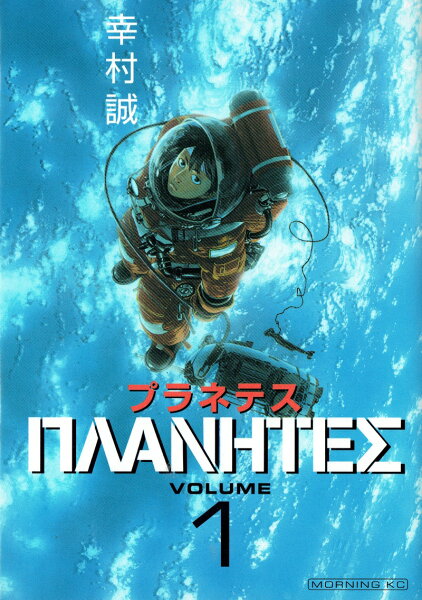
Planetes
Yu's review of Planetes — a crew of space debris collectors in the near future of 2075, where someone wants to be the first human to Jupiter and someone else just wants to survive the shift.
Written by
Yu
Manga Enthusiast from Japan
I grew up in Japan and manga literally saved me during a tough time in elementary school. My English isn't perfect, but my love for manga is real — and I want to share it with you.
Disclosure: This post contains affiliate links. As an Amazon Associate, I earn from qualifying purchases at no extra cost to you.