Alabaster Review: The Tezuka Manga He Wished He'd Never Drawn
by Osamu Tezuka
Read the first volume. If it doesn't hook you, put it down. It'll hook you.
Buy Alabaster on Amazon →*Affiliate link — I earn a small commission at no extra cost to you.
I grew up on the gentle Tezuka. Astro Boy. Kimba. The round-faced, big-eyed humanism that made him "the god of manga." So when I first heard there was a Tezuka work that he himself disliked so much it was almost never reprinted, I had to find it. I went in expecting a curiosity — a misfire from a master. What I got was the most uncomfortable two volumes of manga I have ever read, and I could not put them down.
Alabaster is not a story you enjoy. It's a story that sits on your chest. Tezuka — the man who built his whole reputation on the dignity of life — drew a hero who hates everything beautiful and wants to destroy it. He drew it badly on purpose, ugly on purpose, hopeless on purpose. And the fact that the kindest man in manga had this inside him is more honest than any of his masterpieces.
Quick Take
- Tezuka's bleakest work — a "hero" who is a skinless killer driven by pure envy of beauty
- A direct, angry critique of American racism that Tezuka himself said he hated making
- M-rated and genuinely nihilistic; not a starter Tezuka, but essential for understanding his range
Story Overview
James Block is a Black athletic superstar — a celebrated American sports hero. The story breaks him in its opening pages: the woman he loves, Susan Ross, admits to his face that she only dated him for his fame, and that she would never marry a man of his color. The humiliation is not subtle, and Tezuka does not soften it. Block snaps, attacks her, and goes to prison.
In prison he meets a strange old man, "Dr. F," who tells him about an invention: the F Beam, a ray that can render any living thing invisible. When Block gets out, he hunts down the device and turns it on himself — but the beam is unfinished. It only erases his skin. His muscles, blood vessels, and organs stay visible. He becomes a walking anatomy diagram, a monster, and he takes the name Alabaster.
From there it stops being a revenge story and becomes something colder. Alabaster doesn't just hunt the people who wronged him. He decides to destroy beauty itself — the hypocrites, the boastful, the lovely. He's joined by Ami Ozawa, a girl rendered completely invisible (except her eyes) because Dr. F once used his own pregnant daughter as a test subject. Across the two volumes, an FBI man named Rock chases them while the body count climbs.
There is no redemption arc. Tezuka refuses to give you one. The ending is grim on every front: Ami, having been brutalized and used, kills herself as she tries to escape Block's factory, and Block himself is undone — caught by his own beam in the chaos. Nobody is saved. Tezuka later said outright that he disliked working on this manga; it was poorly received in its day and rarely reprinted. That bitterness is baked into the page.
Characters
James Block / Alabaster — The protagonist, and one of the most repellent "heroes" Tezuka ever drew. He starts as a sympathetic victim of America's racism, then curdles into something monstrous. His grievance is real — the racism that ruined him is depicted without flinching — but Tezuka deliberately does not let that grievance redeem him. Block's disfigurement (skin gone, insides exposed) externalizes his self-hatred: he can't stand beauty because he can no longer bear to be seen.
Ami Ozawa — Dr. F's granddaughter, born fully invisible because her grandfather experimented on his own pregnant daughter. Only her eyes are visible. She's the closest thing the manga has to a soul, and Tezuka punishes her for it — she's assaulted, manipulated, and finally takes her own life. Her arc is the part that haunted me most, because she never asked for any of it.
Rock — The FBI agent pursuing Alabaster. In this work Tezuka uses his recurring "Rock" star-system character as a narcissistic, racist official — not a clean hero, but another rotten piece of the system Block is raging against. The pursuit is less cop-versus-villain than two kinds of ugliness circling each other.
Dr. F — The scientist whose F Beam set everything in motion, and whose casual cruelty (experimenting on his own pregnant daughter) created Ami. He's the engine of the whole tragedy: a man whose "genius" only ever produces suffering.
What I Love About It
That Tezuka let himself be ugly. This is the thing I keep coming back to. The god of manga, the humanist, the man who drew Astro Boy crying — he made a manga where the protagonist's whole philosophy is that beauty deserves to die, and where the most innocent character is raped and kills herself. Tezuka disliked drawing this. He said so. And you can feel that revulsion in every panel; the work was so unloved by its own creator that it nearly vanished from print.
Most creators only show you their controlled, polished self. Alabaster is Tezuka with the lid off — the despair, the rage at his own country's idol (America), the part of him that didn't believe in the humanism he's famous for. Block being a Black man destroyed by American racism isn't decoration. It's Tezuka, watching the civil-rights-era United States from across the ocean, channeling fury into the bleakest shape he could draw. He didn't get everything right, and the depiction is rough by today's standards. But the willingness to root a monster's hatred in a real, historical wound — instead of pretending evil comes from nowhere — is braver than the safe version would have been.
Memorable Scene ⚠️ Spoiler Warning
The opening break is the scene I can't shake. Susan Ross, the woman James Block loves, tells him plainly that she only ever dated him because he was a famous athlete — and that she could never marry a man of his color. It's delivered as a casual, almost bored cruelty, which makes it worse. You watch a man's entire sense of self get demolished in a couple of pages, and Tezuka draws it without any cushioning, no comic relief, no narration softening the blow.
What makes it unforgettable is that it's the seed of everything monstrous that follows. Block isn't born evil. He's a hero figure — the literal American sports star — and the manga shows you the exact moment beauty and love are weaponized against him. Every horrible thing he does as Alabaster traces back to that room. When I think about why this manga unsettles me more than Tezuka's straightforwardly dark works like MW, it's this: MW's villain is poison from page one, but Block I watched get made. That's harder to look away from.
Pros & Cons
Pros
- Tezuka completely off the leash — his bleakest, angriest, least-comforting work
- A villain-protagonist whose hatred is rooted in a real historical wound, not pure evil
- Body horror and an invisibility premise used as genuine psychological metaphor
- Essential context for anyone who thinks they "know" Tezuka
Cons
- Genuinely nihilistic — no redemption, no comfort, no one saved
- The racial and sexual-violence content is rough and dated in places
- Tezuka himself disliked it, and it shows in the uneven, rushed execution
- This is a hard "no comfort reading" book — that's either the point or a dealbreaker depending on you
Is Alabaster Worth Reading?
If you want the polished god-of-manga Tezuka, start almost anywhere else. But if you want to understand the whole man — the despair under the humanism, the rage he usually kept off the page — Alabaster is one of the most revealing two volumes he ever made. It's ugly, bleak, and unloved even by its creator. That's exactly what makes it worth reading.
Content Warnings & Age Rating
Age Rating: M (Mature) Content Warnings: Explicit racism and racial slurs; sexual assault; suicide; graphic violence and body horror; an overall nihilistic, hopeless tone
This is adult-readers-only. Do not hand this to someone expecting Astro Boy.
Yu's Rating
| Category | Score |
|---|---|
| Story Depth | ★★★★☆ |
| Art Style | ★★★★☆ |
| Character Development | ★★★★☆ |
| Accessibility for Non-Japanese Readers | ★★★☆☆ |
| Reread Value | ★★★☆☆ |
Similar Manga
| Title | Its Approach | How Alabaster Differs |
|---|---|---|
| MW | Tezuka's other nihilistic villain manga, with a protagonist who is evil from the start | Alabaster's protagonist is made, not born — you watch him break |
| Ode to Kirihito | Tezuka body-horror transformation as a test of humanity, but with hope of recovery | Alabaster offers no recovery and no redemption |
| Black Jack | Tezuka's moral complexity in an episodic, far more popular format | Alabaster is a single bleak arc Tezuka himself disowned |
Official English Translation Status
Digital Manga Publishing released the complete two-volume English edition, funded through a successful 2015 Kickstarter campaign. Both volumes are available in print and digital.
Where to Buy
Read the first volume. If it doesn't hook you, put it down. It'll hook you.
This post contains affiliate links. If you purchase through these links, I may earn a small commission at no extra cost to you. As an Amazon Associate, I earn from qualifying purchases.
*Affiliate link — I earn a small commission at no extra cost to you.
More Manga You Might Like
Sci-Fi / Drama
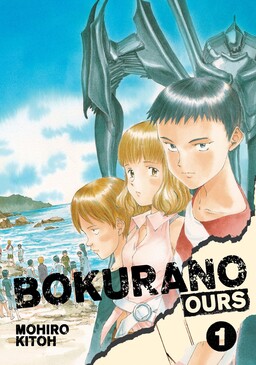
Bokurano
Yu's review of Bokurano by Mohiro Kitoh — fifteen children sign a contract to pilot a giant robot called Zearth, only to learn each victory costs the pilot's life, and that every battle won erases another Earth.
Sci-Fi
Swallowing the Earth
Yu's review of Swallowing the Earth — a mysterious woman named Zephyrus is so beautiful and charismatic that every powerful man who encounters her is destroyed; Gohonmatsu Seki pursues her across decades; Tezuka's adult drama about power, beauty, and what men do to themselves in pursuit of what they desire.
Sci-Fi / Action
Eden: It's an Endless World!
Yu's review of Eden: It's an Endless World! — a plague destroyed most of humanity; a boy named Elijah grows up in the aftermath, in a world run by the Propater organization and his father's network of resistance, becoming something neither of them intended.

Sci-Fi / Thriller
Summer Time Rendering
Yu's review of Summer Time Rendering — Shinpei Ajiro returns to Hitogashima island for the funeral of his childhood friend Ushio; something is wrong; the shadows of people on the island are not quite right; Shinpei discovers a supernatural threat that copies humans through their shadows and a time loop mechanic that allows him to restart from the same point when he dies.
Sci-Fi / Political
Sanctuary
Yu's review of Sanctuary — two survivors of the Cambodian killing fields make a pact to change Japan from the inside: one through legitimate politics, one through the yakuza; a politically serious manga by the creators of Crying Freeman and Mai the Psychic Girl about power, ambition, and what it costs to change a corrupt system.
Sci-Fi / Historical
Phoenix
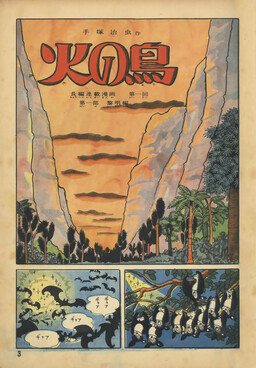
Yu's review of Phoenix — Tezuka Osamu's incomplete masterwork — a series of stories set throughout Japanese and universal history, connected by the Phoenix, a bird whose blood grants immortality; the Phoenix appears in each arc but cannot be caught; the arcs range from ancient Japan to the far future and examine what it means to be human across all of time.
Written by
Yu
Manga Enthusiast from Japan
I grew up in Japan and manga literally saved me during a tough time in elementary school. My English isn't perfect, but my love for manga is real — and I want to share it with you.
Disclosure: This post contains affiliate links. As an Amazon Associate, I earn from qualifying purchases at no extra cost to you.