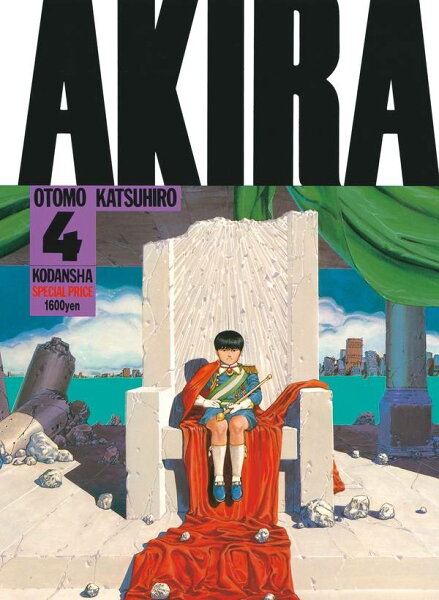
Akira Review: The Six Volumes That Forced the World to Take Manga Seriously
by Katsuhiro Otomo
Read the first volume. If it doesn't hook you, put it down. It'll hook you.
Buy Akira on Amazon →*Affiliate link — I earn a small commission at no extra cost to you.
The first time I tried to read Akira, I was a teenager and I gave up halfway through volume one. The pages were dense, the lettering was loud, the city was a wall of detail I couldn't take in fast enough. I put it back on the shelf and told myself it wasn't for me.
I came back to it years later, and this time I understood what I'd been too impatient to see. Otomo isn't asking you to skim. He's asking you to stand inside Neo-Tokyo and feel how big and how rotten it is. Once I slowed down, the book swallowed me. I read all six volumes over a single feverish week and I have never looked at a comic page the same way since.
This is the manga I point to when someone asks why I think comics can be art. Not because it's gentle — it's the opposite of gentle — but because nobody had ever drawn anything like it, and arguably nobody has matched it since.
Quick Take
- Six enormous volumes (1982–1990) that essentially exported manga to the West and invented a whole visual grammar for science fiction
- A simple, devastating story about two boys — one always stronger, one always reaching — buried inside a city-leveling apocalypse
- Age rating: M (Mature). Graphic violence, gore, body horror, drug use, and the wholesale destruction of a city. This is adult work and it reads like it.
Story Overview
In 1982, a single point of light swells over Tokyo and the city is gone. The world tips into a third world war. Thirty-odd years later, Neo-Tokyo has risen on reclaimed land in the bay — a glittering, corrupt megacity getting ready to host the 2020 Olympics, eaten from the inside by gang violence, terrorism, and a paranoid government.
Shotaro Kaneda is the loud, cocky leader of a teenage biker gang, famous for his customized red motorcycle. His childhood friend Tetsuo Shima rides in his shadow — smaller, angrier, sick of always being the one Kaneda rescues. One night a chase sends Tetsuo's bike into a strange, wizened-looking child who has appeared in the road: one of the government's escaped test subjects. The collision wakes something in Tetsuo. Psychic power, vast and unstable.
The military scoops him up. Colonel Shikishima runs a secret program studying children with these abilities, and Tetsuo's readings dwarf anything they've seen — except for one. A subject they froze and buried decades ago beneath the new Olympic stadium, because his power once erased Tokyo. His designation is a number. His name is Akira.
The middle volumes turn on the moment Akira is unsealed. His awakening detonates Neo-Tokyo a second time, flattening the new city into rubble. Out of that wasteland, factions crawl: the spiritual followers of Lady Miyako, and Tetsuo's self-declared Great Tokyo Empire, which installs the silent, hollowed-out Akira as a kind of emperor while Tetsuo rules through him.
By the final volumes Tetsuo is coming apart. His power outpaces his body. After the orbital SOL laser severs his arm, he rebuilds the limb out of scrap metal held together by sheer telekinesis — and then even that fails as his flesh starts mutating on its own. He swells into a monstrous, fetus-like mass that devours everything it touches, including Kaori, the girl he loves, crushed inside the growing horror. Kaneda goes in after him anyway, calling his name. To stop it, the Espers resurrect Akira one last time so he can pull Tetsuo into a singularity — taking Neo-Tokyo with them. When the light fades, only a handful are left standing: Kaneda, Kei, the Colonel, Kaisuke. The survivors look out at the ruin and declare it theirs.
Characters
Shotaro Kaneda — The protagonist, and a strange kind of hero. He never wants to save the world; he wants to save his friend, and most of the time he's just trying to keep up with events that have already outgrown him. He starts as an aimless delinquent on a flashy bike and ends as one of the few people left to inherit the wreckage of a city. His refusal to write Tetsuo off — even when Tetsuo has become a god, even when he's become a monster — is the spine of the whole book.
Tetsuo Shima — The tragedy the series is built around. A boy who has spent his life being the weak one, the protected one, the one in someone else's shadow, suddenly handed power that no human mind can hold. His inferiority complex doesn't disappear when he gets strong — it metastasizes. He drives away everyone, leans on the capsules that dull the pain in his skull, builds himself a metal arm when his body fails him, and finally loses the war against his own power. His arc from insecure kid to false god to amoeboid horror is one of the cruelest character collapses I've read.
Akira — Less a character than an absence. The child who destroyed Tokyo and was frozen for it, his personality long since burned out of him, leaving an empty, almost wordless shell with apocalyptic power inside. Everyone in the book is bending the future around a boy who isn't really there anymore.
Kei — A young resistance fighter who falls into Kaneda's orbit and, more importantly, becomes a medium — a channel the Espers use to push back against Tetsuo. She starts out unimpressed by Kaneda and ends up the emotional and moral anchor in a story that often seems too vast to have one.
Colonel Shikishima — The soldier who has carried the secret of Akira for decades. He's neither villain nor hero. He's a man who made hard, defensible decisions and now has to live inside their consequences, and by the end he's fighting alongside the same delinquents he once hunted.
The Espers — Kiyoko, Takashi, Masaru, and Lady Miyako — The numbered children of the old experiments: bodies aged or broken, minds ancient and powerful. Bedridden Kiyoko sees the future, Takashi and Masaru carry the weight of what was done to them, and Lady Miyako (No. 19) grew into a priestess who gives the final stand its spiritual gravity. What was done to these kids is the secret the entire plot is built on top of.
What I Love About It
What stays with me isn't the spectacle, even though the spectacle is genuinely staggering. It's the relationship between Kaneda and Tetsuo — two boys who grew up together, one always stronger, one always reaching for ground he could never quite stand on.
The whole apocalypse is, underneath, a story about that. About what happens when the kid who was always rescued briefly becomes the most powerful being alive, and what the kid who was always the rescuer does once he can't reach his friend anymore. Tetsuo doesn't turn into a villain because he's evil. He turns because the power found every old wound — the resentment, the inferiority, the need to finally not be small — and poured itself into them. That's so much more frightening to me than a normal bad guy. It's just a hurt person, magnified to the scale of a nuke.
And Kaneda's response is the part that wrecks me. He keeps going toward the thing Tetsuo is becoming. Even when his friend is no longer recognizable as human, Kaneda calls his name. The book never pretends that fixes anything — but it insists the connection mattered, right up to the end. That human thread inside a cosmic catastrophe is, to me, what separates great science fiction from loud science fiction. Akira is loud, sure. But it never lets go of the small, sad thing at its center.
Memorable Scene ⚠️ Spoiler Warning
Tetsuo's final transformation.
By the climax he's already losing the fight with his own body. The orbital laser has taken his arm; he's bolted a crude metal one to his shoulder by will alone. Then even his control over the shape of his own flesh slips. His body starts to grow — bulging, mutating, swallowing the rubble and machinery around it, ballooning into a vast pale fetus-like mass that no longer reads as a person at all. And caught inside that expanding horror is Kaori, the one person he wanted to protect, crushed into the growing tissue.
What undoes me is what Otomo does on the page: he draws something past human comprehension while keeping one thread of human grief alive inside it. Kaneda climbs in after him. He calls his name into the meat and the noise — and somewhere in there, something hears him. It shouldn't work as a sequence. Depicting "a thing beyond understanding" usually means the reader stops feeling anything. Otomo makes you feel everything. I had to put the volume down and just sit with it for a while.
Pros & Cons
Pros
- One of the most visually ambitious comics ever made — the linework, the crowds, the architecture, the destruction; the art alone justifies the read
- A landmark in the history of the medium, and you can feel exactly why
- The Kaneda–Tetsuo story is quietly devastating underneath all the spectacle
- Six big volumes — substantial, but a real, finished, completable epic
Cons
- Extremely dense and demanding; this is not a relax-on-the-couch read
- The political and factional maneuvering in the middle stretch can be a slog to track
- The Mature content (gore, body horror, mass death) is heavy and constant
- At its largest scale the character work can briefly get buried under the apocalypse
- The pacing is dense and uncompromising — that's either a flaw or the whole point, depending on you.
Is Akira Worth Reading?
Yes — if you're willing to meet it on its terms. Akira asks for patience and attention most manga don't, and in return it gives you a science-fiction epic that genuinely changed the medium, wrapped around a heartbreakingly simple story about two friends. If you want a casual read it'll exhaust you. If you want to understand what comics are capable of, it's essential.
Art Style
There is nothing in manga that looks like Akira. Otomo's Neo-Tokyo is rendered as a complete, lived-in city — texture and density on every page, crowd scenes with hundreds of distinct people, machinery drawn with architectural precision. The action is dynamic but spatially coherent, physically believable even when it's depicting impossible things. The psychic-power sequences forced Otomo to invent visual language for things no one had drawn before. The original is black and white; the version colored for the American release has its own striking identity. Both are worth experiencing.
Cultural Context
It's impossible to read Akira's twin destructions of Tokyo without thinking of Hiroshima, Nagasaki, and the postwar rebuilding of Japan — the question of what gets buried and what gets built on top of it haunts the whole book. The biker gangs come straight out of real 1980s bōsōzoku youth subculture and the era's anxieties about alienated, disinvested young people. And the government's secret experiments — power that exceeds human control, suppressed rather than understood, ending in catastrophe — read as the nuclear age turned into myth. There's also Otomo's eerie timing: he set Neo-Tokyo's Olympics in 2020, decades before Japan actually hosted the (one-year-delayed) Tokyo Olympics, and the coincidence became part of the manga's legend.
Similar Manga
| Title | Its Approach | How Akira Differs |
|---|---|---|
| Ghost in the Shell | Cyberpunk built around identity and consciousness in a networked world | Akira is rawer and more apocalyptic — less philosophy lecture, more screaming flesh and falling cities |
| Dorohedoro | Dense, grimy, lovingly detailed world-building in a violent dark-fantasy register | Akira channels that density into a tight central tragedy rather than sprawling ensemble chaos |
| Biomega | Post-apocalyptic motorcycle action with overt visual debt to Otomo | Akira is the source code — slower-burning, more grounded in human relationships before the cosmic scale takes over |
Official English Translation Status
Status: Complete — all 6 volumes available in English Publisher: Kodansha Comics (current edition) Note: Akira has a long English history — colorized Epic/Marvel volumes in the late '80s, Dark Horse's black-and-white run around 2000, and the current Kodansha Comics editions. The standard six-volume black-and-white format is the most complete and accessible way in today.
Where to Buy
Read the first volume. If it doesn't hook you, put it down. It'll hook you.
This post contains affiliate links. If you purchase through these links, I may earn a small commission at no extra cost to you. As an Amazon Associate, I earn from qualifying purchases.
*Affiliate link — I earn a small commission at no extra cost to you.
More Manga You Might Like
Sci-Fi / Action
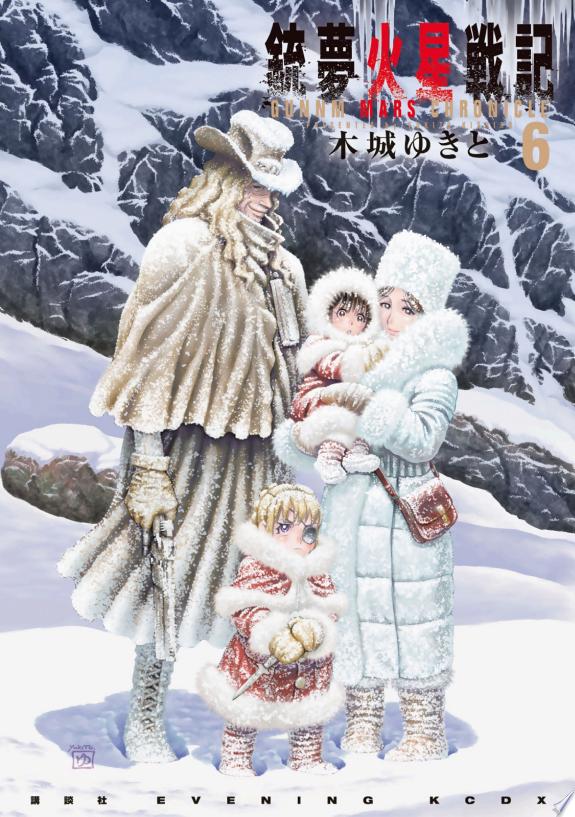
Battle Angel Alita
Yu's review of Battle Angel Alita (Gunnm) — a memoryless cyborg pulled from a junkyard fights through bounty hunting, Motorball, and a doomed first love in the brutal world beneath the sky city of Zalem.
Sci-Fi / Political
Sanctuary
Yu's review of Sanctuary — two survivors of the Cambodian killing fields make a pact to change Japan from the inside: one through legitimate politics, one through the yakuza; a politically serious manga by the creators of Crying Freeman and Mai the Psychic Girl about power, ambition, and what it costs to change a corrupt system.
Sci-Fi / Horror
DOMU: A Child's Dream
Yu's review of DOMU — Over several years, residents of the Tsutsumi housing complex have been dying or going mad at an inexplicable rate; a detective investigating the deaths suspects something supernatural; an old man with psychic abilities has been killing residents for entertainment; when a young girl moves into the complex with her own abilities, a confrontation becomes inevitable.
Sci-Fi / Action
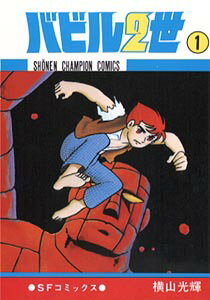
Babel II
A schoolboy named Koichi inherits the legacy of an alien stranded on Earth 5,000 years ago — three superhuman servants and the Tower of Babel — and learns that the same servants will obey his enemy Yomi, a distant relative who wants the world.
Sci-Fi / Action
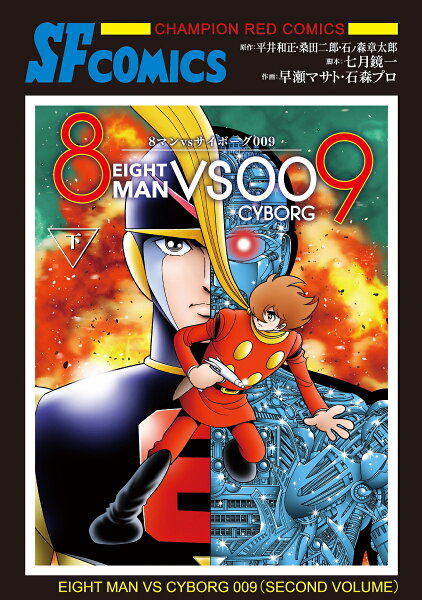
8 Man
8 Man follows detective Hachiro Azuma, gunned down in the line of duty and reborn when his mind is poured into a super-robot body by Dr. Tani. Now the eighth detective of the police force, he fights crime at 3,000 km/h — and has to smoke special cooling cigarettes to keep his electronic brain from overheating.
Sci-Fi / Action
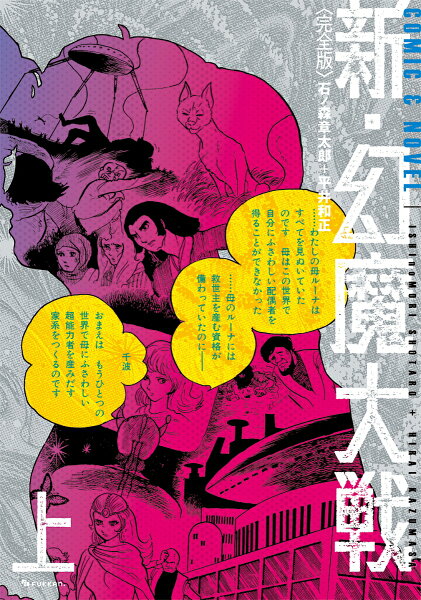
Genma Taisen
Genma Taisen is Shotaro Ishinomori's manga adaptation of Kazumasa Hirai's science fiction series — following a group of psychically gifted young people who must unite to face Genma, a cosmic consciousness that destroys civilizations across the universe, in a battle that is as much spiritual as physical.
Written by
Yu
Manga Enthusiast from Japan
I grew up in Japan and manga literally saved me during a tough time in elementary school. My English isn't perfect, but my love for manga is real — and I want to share it with you.
Disclosure: This post contains affiliate links. As an Amazon Associate, I earn from qualifying purchases at no extra cost to you.